
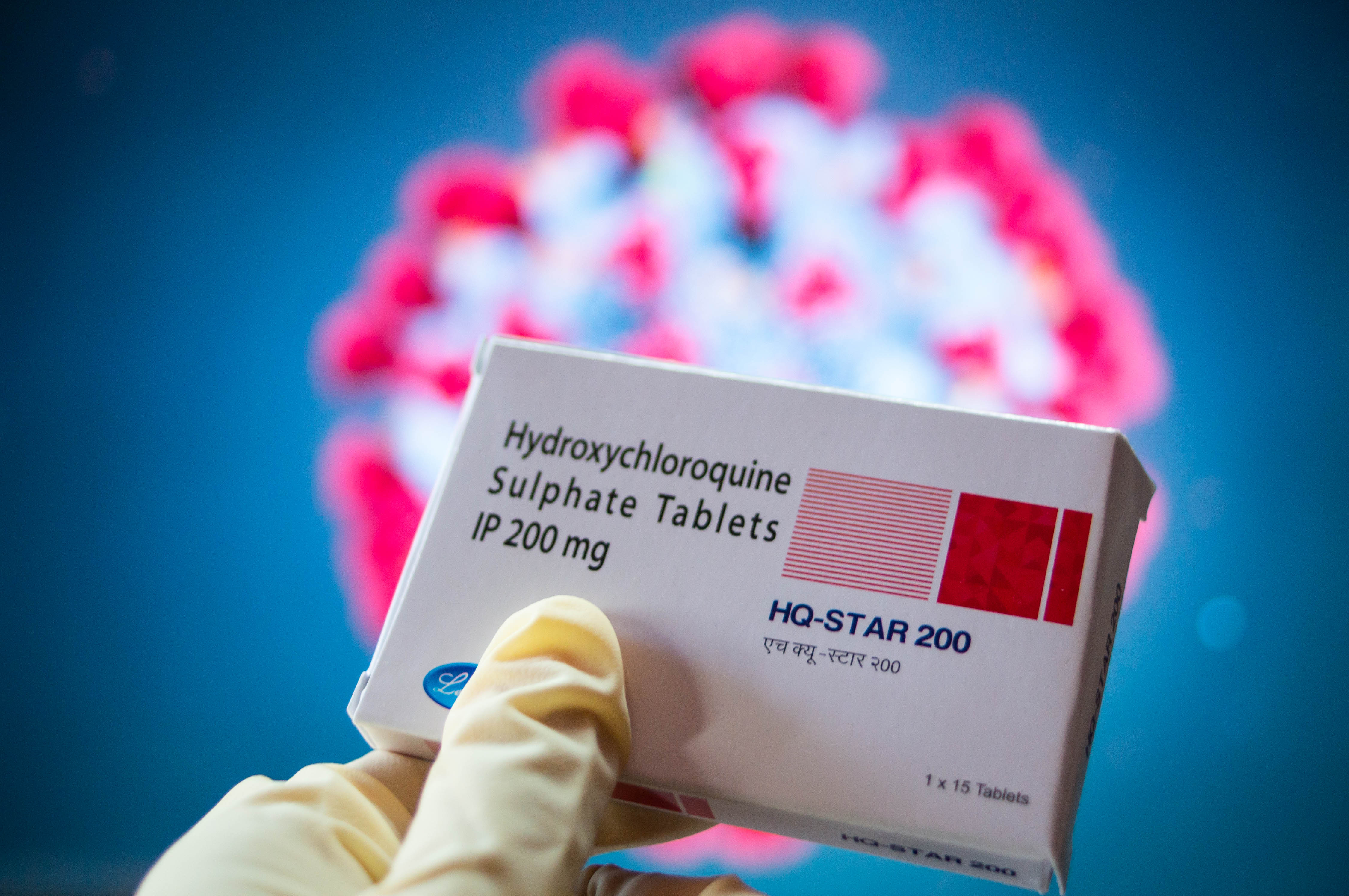
In the throes of a global pandemic, when hope was scarce and uncertainty ruled, a scientific study emerged claiming to hold the key to a breakthrough treatment. What followed was a whirlwind of excitement, controversy, and ultimately, disillusionment. The study, which placed the antimalarial drug hydroxychloroquine at the forefront of COVID-19 treatments, quickly became a flashpoint for debates that extended far beyond the confines of laboratories and medical journals.
Years later, after sparking a global frenzy, influencing policy decisions, and altering public perception, the paper has been officially retracted. But the story doesn’t end there. What led to the fall of one of the most-cited studies in pandemic literature? How did its claims captivate the world, and what were the consequences of its widespread influence?
The Study’s Claims and Immediate Impact
In March 2020, as the COVID-19 pandemic intensified, a study led by French microbiologist Didier Raoult was published in the International Journal of Antimicrobial Agents. The research suggested that hydroxychloroquine, particularly when combined with the antibiotic azithromycin, could significantly reduce viral load in COVID-19 patients. The authors concluded that hydroxychloroquine was “significantly associated with viral load reduction/disappearance in COVID-19 patients” and that this positive effect was enhanced by adding azithromycin.
The study’s rapid publication and its promising results garnered immediate global attention. Notably, then U.S. President Donald Trump publicly endorsed hydroxychloroquine, referring to it as a potential “game-changer” in the fight against the virus. This endorsement led to widespread use of the drug, with prescriptions soaring and some regions experiencing shortages.
However, the study faced swift criticism from the scientific community. Concerns were raised about its small sample size of just 36 participants, lack of randomization, and potential ethical issues. Prominent microbiologist and science integrity advocate Elisabeth Bik highlighted these issues, noting that the peer review process appeared to have been completed within an unusually short timeframe, raising questions about its rigor.
Subsequent research failed to replicate the study’s findings. A retracted paper in The Lancet initially reported adverse effects associated with hydroxychloroquine but was later withdrawn due to data integrity issues.
Additionally, the World Health Organization temporarily halted its hydroxychloroquine trials over safety concerns, though they were later resumed.
Red Flags and Scientific Scrutiny

The 2020 study advocating hydroxychloroquine as a COVID-19 treatment quickly drew intense scrutiny from the scientific community. Concerns emerged regarding its methodological rigor, ethical standards, and the rapidity of its publication process.
Methodological Concerns
- Sample Size and Randomization: The study’s small cohort of 36 participants lacked randomization, undermining the reliability of its conclusions. Randomized controlled trials are considered the gold standard in clinical research for minimizing bias.
- Data Exclusion: Notably, four treated patients were omitted from the final analysis—three required intensive care, and one succumbed to the disease. This selective exclusion raised questions about data integrity and the validity of the reported outcomes.
Ethical and Procedural Issues
- Informed Consent: Doubts arose over whether patients provided informed consent, especially concerning the administration of azithromycin, which was not standard care at the time. The retraction notice stated, “The journal has not been able to establish whether the subjects in this study should have provided informed consent to receive azithromycin as part of the study.”
- Ethical Approval Timeline: Discrepancies in the timeline between obtaining ethical approval and commencing the study led to suspicions that patient recruitment may have begun prematurely. The retraction notice noted, “The journal has been unable to confirm whether any of the patients for this study were accrued before ethical approval had been obtained.”
Rapid Publication and Peer Review
- Timeline: The manuscript was submitted on March 16, accepted by March 17, and published online by March 20, 2020. This unusually swift timeline suggested a lack of thorough peer review, raising concerns about the study’s vetting process.
Subsequent Studies and Analyses
- Lack of Efficacy: A study published in The New England Journal of Medicine found that hydroxychloroquine did not confer a substantial benefit in reducing the risk of intubation or death in hospitalized patients.
- Safety Concerns: Research in The Lancet reported that hydroxychloroquine use was associated with increased mortality and cardiac arrhythmias among COVID-19 patients. However, this study was later retracted due to data integrity issues, underscoring the complexities and challenges in researching this treatment.
The Role of Politics and Misinformation

The politicization of hydroxychloroquine was not confined to the United States. In Brazil, for instance, the Ministry of Health endorsed the drug on its website, contributing to a severe COVID-19 misinformation problem in the country. This endorsement was influenced by an observational study proposing an early outpatient treatment regimen for COVID-19, which was later criticized for lacking new evidence and for its speculative nature.
The rapid spread of misinformation was further exacerbated by social media platforms, where unverified claims about hydroxychloroquine’s efficacy proliferated. A notable example is the dissemination of a video by a group called “America’s Frontline Doctors,” which falsely claimed that hydroxychloroquine was a cure for COVID-19. The video was widely shared, including by President Trump and his son, before being removed by platforms like Facebook and Twitter for violating policies against COVID-19 misinformation.
The intertwining of politics and misinformation had tangible public health consequences. A study by researchers from Harvard T.H. Chan School of Public Health found that two treatments shown to be ineffective against COVID-19—hydroxychloroquine and ivermectin—were more heavily prescribed in U.S. counties with a higher Republican vote share in the 2020 presidential election. This correlation suggests that political affiliation influenced medical decisions, potentially undermining evidence-based treatment practices.
Retraction and Broader Implications
The study’s retraction has profound implications for the scientific community and public health policy. It serves as a cautionary tale about the dangers of disseminating unverified research, especially during global crises where the demand for swift solutions can overshadow the need for thorough validation. The premature promotion of hydroxychloroquine, bolstered by this study, led to widespread use without sufficient evidence of efficacy, potentially causing harm to patients and diverting attention from more effective treatments.
This incident also highlights the susceptibility of scientific research to politicization and misinformation. The rapid endorsement of hydroxychloroquine by political figures, based on preliminary findings, exemplifies how science can be misused to advance agendas, leading to public confusion and erosion of trust in scientific institutions.
In the wake of this retraction, there is a renewed call within the scientific community for greater transparency, adherence to ethical research practices, and the reinforcement of peer review processes to prevent similar occurrences in the future. As noted by scientific-integrity consultant Elisabeth Bik, “This paper should never have been published — or it should have been retracted immediately after its publication.”

Lessons Learned from the Controversy
The retraction of the 2020 hydroxychloroquine study offers several critical insights into the intersection of science, ethics, and public communication during a global health crisis.
- Importance of Rigorous Peer Review: The study’s rapid publication, with peer review completed in an unusually short timeframe, underscores the necessity for thorough evaluation processes. As microbiologist Elisabeth Bik observed, “That suggests that peer review was done in 24h, an incredibly fast time.” This lapse allowed methodological flaws to go unchecked, emphasizing that even during emergencies, maintaining rigorous standards is essential to uphold scientific integrity.
- Ethical Standards in Research: Concerns about patient consent and data integrity highlight the imperative of adhering to ethical guidelines. The inclusion of patients without proper consent and the selective exclusion of data compromised the study’s validity, serving as a reminder that ethical shortcuts can lead to significant repercussions, including harm to patients and loss of public trust.
- Dangers of Politicization and Misinformation: The swift endorsement of hydroxychloroquine by political figures, based on preliminary findings, illustrates how science can be misused to advance agendas. This led to public confusion, widespread self-medication, and potential health risks, demonstrating the critical need for clear and accurate communication from both scientists and policymakers.
- Need for Transparency and Data Sharing: The inability to verify the study’s data due to lack of transparency hindered independent validation and replication efforts. This incident underscores the importance of open data practices, enabling the scientific community to scrutinize and build upon research findings effectively.
Such controversies can erode public confidence in scientific research and healthcare recommendations. Maintaining rigorous standards, transparency, and clear communication is vital to preserve trust, especially during crises when public reliance on scientific guidance is heightened.
Closing the Chapter on a Scientific Scandal
The retraction of the hydroxychloroquine study marks a pivotal moment in the ongoing narrative of the COVID-19 pandemic, serving as both an endpoint and a call to action. While the study initially offered a glimmer of hope during an unprecedented global crisis, its flawed methodology, ethical breaches, and politicization highlight the dangers of rushing science without due diligence.
This controversy reminds us that in times of urgency, scientific rigor must remain uncompromised. Ethical standards, transparency, and responsible communication are non-negotiable, particularly when the stakes are as high as public health and trust. The fallout from this retraction is a sobering lesson for researchers, policymakers, and the public alike: the path to truth is neither swift nor simple, but it is the only one that upholds the integrity of science.
As we move forward, the hydroxychloroquine study’s legacy underscores the importance of learning from past mistakes to better prepare for future challenges. It is a reminder that science is a process of refinement, and even its missteps, when acknowledged and corrected, can pave the way for progress.
Sources:
- Philippe Gautret, Jean-Christophe Lagier, Philippe Parola, Van Thuan Hoang, Line Meddeb, Morgane Mailhe, Barbara Doudier, Johan Courjon, Valérie Giordanengo, Vera Esteves Vieira, Hervé Tissot Dupont, Stéphane Honoré, Philippe Colson, Eric Chabrière, Bernard La Scola, Jean-Marc Rolain, Philippe Brouqui, Didier Raoult, RETRACTED: Hydroxychloroquine and azithromycin as a treatment of COVID-19: results of an open-label non-randomized clinical trial, International Journal of Antimicrobial Agents, Volume 56, Issue 1
