
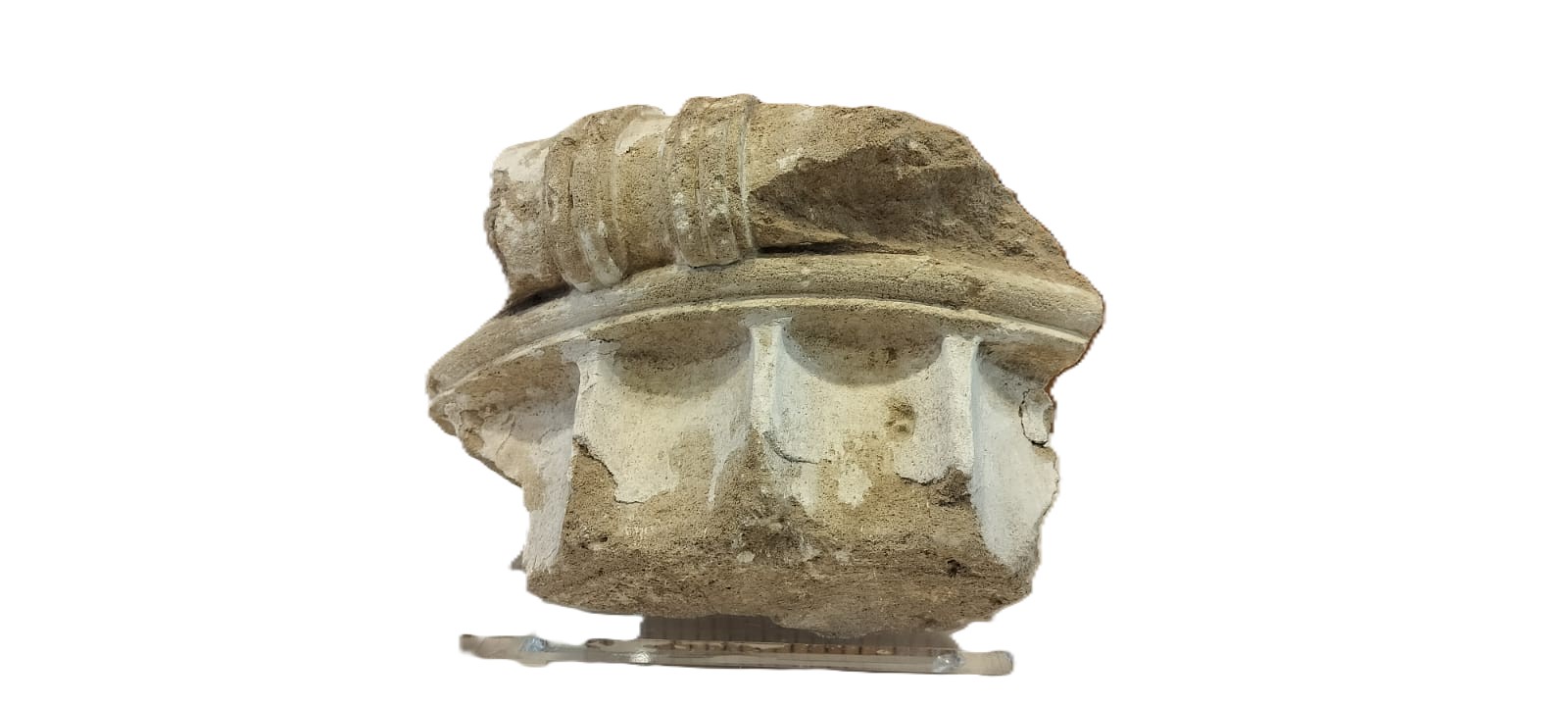
Something sat hidden in a German home for over 50 years. A woman kept a piece of ancient history tucked away, stolen from one of Greece’s most sacred sites during a vacation in the 1960s. Nobody knew she had it. No authorities came knocking. Yet decades later, she decided to give it back.
What changed her mind after half a century? A single catalyst pushed her to finally do what she perhaps always knew was right. On October 10, 2025, Greek officials gathered at the Ancient Olympia Conference Center to welcome home a piece of their heritage. A 2,400-year-old artifact had completed its long journey back from Germany, returned by the very person who took it.
Ancient Olympia holds special meaning for Greeks and the world. Birthplace of the Olympic Games, its ruins stand as monuments to athletic competition and human achievement. Yet someone felt entitled to pocket a piece of that history and carry it across borders.
What She Took From Olympia’s Ancient Grounds

Limestone formed the material of her prize. An Ionic column capital, small enough to hide and transport, measured just nine inches high and 13 inches wide. Workers had carved it around 400 BC during the classical period of Greek civilization. Some plaster remained on its surface, preserved through millennia.
Architects designed these capitals to crown columns with elegant scrollwork. Ionic style features twin volutes that curl outward like rams’ horns. Craftsmen carved each piece with precision, creating architectural elements that supported roofs while adding beauty to structures.
Age makes objects valuable, but context gives them meaning. Researchers identified this capital through its stylistic similarities to other Ionic pieces found at Ancient Olympia. Weight and size suggest workers used multiple capitals to support a grand building’s colonnade.
Inside Leonidaion Where Athletes Once Slept
Leonidas of Naxos funded the construction of the guesthouse that bears his name. Built in the second half of the 4th century BC, the Leonidaion served prominent visitors who traveled to witness athletic competitions at Olympia. German archaeologists uncovered its northern section between 1875 and 1881, then completed the excavation between 1953 and 1956.
Scale defines Leonidaion as exceptional. Measuring 245 feet by 266 feet, it ranks as the largest structure within the sanctuary of Olympia. Four Ionic colonnades wrapped around its exterior, creating covered walkways on all sides. Workers installed 138 ornate columns to support these arcades.
The location placed Leonidaion outside Altes in the southwestern section of the sanctuary. Distinguished guests and dignitaries enjoyed its hospitality during major festivals and games. Athletes competing in events stayed under its roof, surrounded by architectural splendor that matched the prestige of Olympic competition.
Five Decades of Silence in Germany
Between the 1960s theft and 2025 return, 50 years passed. Details about those decades remain sparse. Did guilt plague the woman through the years? Did she display her stolen treasure or hide it away? Sources provide no answers about her motivations for keeping it or what her life looked like during those years.
One fact stands clear: she chose silence over confession for half a century. No record shows authorities searching for the artifact or investigating its disappearance. The small size likely made detection impossible at the time of theft. Security measures at archaeological sites have changed dramatically since the 1960s.
Moral weight can grow heavier with age. What seemed like a harmless souvenir in youth might feel like a burden decades later. Perhaps she told family members. Perhaps she carried the secret alone until recent events triggered her change of heart.
University Returns Sparked Her Change of Heart

Recent repatriation efforts by the University of Münster gave her reason to act. Between 2019 and 2024, Münster returned multiple stolen artifacts to Greece. News of these returns reached her and stirred something inside.
In 2019, Münster sent back a twin-handled wine cup that belonged to Spyros Louis, Olympic champion at Athens’ first modern Olympic Games in 1896. Greeks call it the skyphos of Louis. Museum curators at the Ancient Olympic Games now display it for visitors.
Another return happened in 2024. Münster repatriated a marble male head from Roman times, originally from a cemetery in Thessaloniki. The Archaeological Museum of Thessaloniki now houses this piece.
Watching these returns unfold gave the woman a path forward. She reached out to Münster, knowing they had experience arranging such repatriations. Her decision showed that institutions could inspire individuals to make amends.
How Münster Became the Middleman
Contact with the university set wheels in motion. She surrendered the capital voluntarily, trusting Münster to handle the delicate process of returning stolen cultural property. University officials worked with Greek authorities to arrange proper documentation and transport.
Dr. Torben Schreiber serves as curator of Münster’s Archaeological Museum. He spoke about the institution’s commitment to ethical practices, stating, “It is never too late to do the right thing, the moral and the just.”
Museums face growing pressure to examine their collections and return items acquired through theft or dubious circumstances. Münster’s actions demonstrate how cultural institutions can lead by example. Each successful return builds trust between nations and encourages others to follow suit.
Greek officials praised Münster’s role. According to their press release, “The repatriation of the capital was made possible thanks to the sensitivity and courage of a German woman, who had owned it since the 1960s, after collecting it from the Leonidaion area during a visit to the site.”
Greece Welcomes Back Lost History
October 10, 2025, marked a celebration at Ancient Olympia. Officials from Germany and Greece gathered for the formal handover ceremony. Georgios Didaskalos, Greek Culture Secretary General, spoke at the event.
His words captured the emotion of the moment: “This is a particularly moving moment. This act proves that culture and history know no borders but require cooperation, responsibility, and mutual respect. Every such return is an act of restoring justice and at the same time a bridge of friendship between peoples.”
Representatives from multiple organizations attended. Dr. Katja Sporn, Director of the German Archaeological Institute in Athens, came to witness the return. Dr. Oliver Pilz, who directs German excavations in Olympia, attended along with local authorities and archaeological service executives.
Ceremony attendees understood the symbolic importance beyond one small artifact. Each return signals progress in international cooperation on cultural heritage protection. Countries increasingly recognize that preserving history requires global effort.
Germany’s Track Record of Making Things Right

Münster has built a reputation for doing what ethics demand. Three major artifacts have made their way from Münster back to Greece in recent years. Each return required research, documentation, and coordination between institutions.
Dr. Schreiber emphasized the museum’s position on illicit antiquities. Any object proven to come from illegal trafficking will be returned, regardless of how long the museum has held it. Museums worldwide watch these actions and consider their own collections.
Germany faces particular scrutiny given its history of archaeological expeditions during the 19th and early 20th centuries. Many European museums acquired objects during periods when attitudes about cultural property differed from modern ethical standards.
Voluntary returns avoid lengthy legal battles and build goodwill. Greece appreciates partners who work collaboratively rather than forcing litigation. Each peaceful resolution strengthens diplomatic and cultural ties between nations.
Where Ancient Limestone Goes Next

Conservation work will prepare the capital for public viewing. Specialists will examine the limestone, document its condition, and determine what preservation measures it needs. The remaining plaster requires careful treatment to prevent further deterioration.
Plans call for exhibiting the fragment at Ancient Olympia. Visitors who walk among the ruins will be able to see this piece that went missing for decades. Educational materials will likely explain its theft and return, using the story to teach about cultural heritage protection.
Museums increasingly use repatriated objects to discuss difficult topics. Theft, colonialism, and cultural appropriation become teaching opportunities. Honest conversations about the past help prevent future violations.
Why Cultural Repatriation Matters Now
Momentum builds for returning stolen cultural property to countries of origin. International agreements and changing attitudes push museums to examine acquisition histories. Objects taken during colonial periods or purchased from looters face scrutiny.
Greece pursues multiple campaigns to recover artifacts. The Parthenon Marbles, held by the British Museum since the 19th century, remain a major diplomatic issue. Lord Elgin removed these sculptures from Athens’ Acropolis after receiving Ottoman Empire permission. Greece argues that permission was not legitimate.
Voluntary donations like this column capital demonstrate growing awareness among private citizens. People inherit objects without knowing their origins. Learning the truth prompts some to investigate and return items to their rightful owners.
Each return encourages others. Someone else with a stolen artifact might see this story and contact authorities. Museums with questionable pieces might accelerate provenance research. Countries cooperate more on tracking illegal antiquities trafficking.
Cultural heritage belongs to humanity, but nations serve as stewards for objects created within their borders. Getting artifacts back home restores connections between objects and the places that created them. Future generations deserve to see their heritage in proper locations.
One woman’s decision ripples outward. Her courage to admit wrongdoing and correct it shows that redemption remains possible regardless of how much time has passed.
