
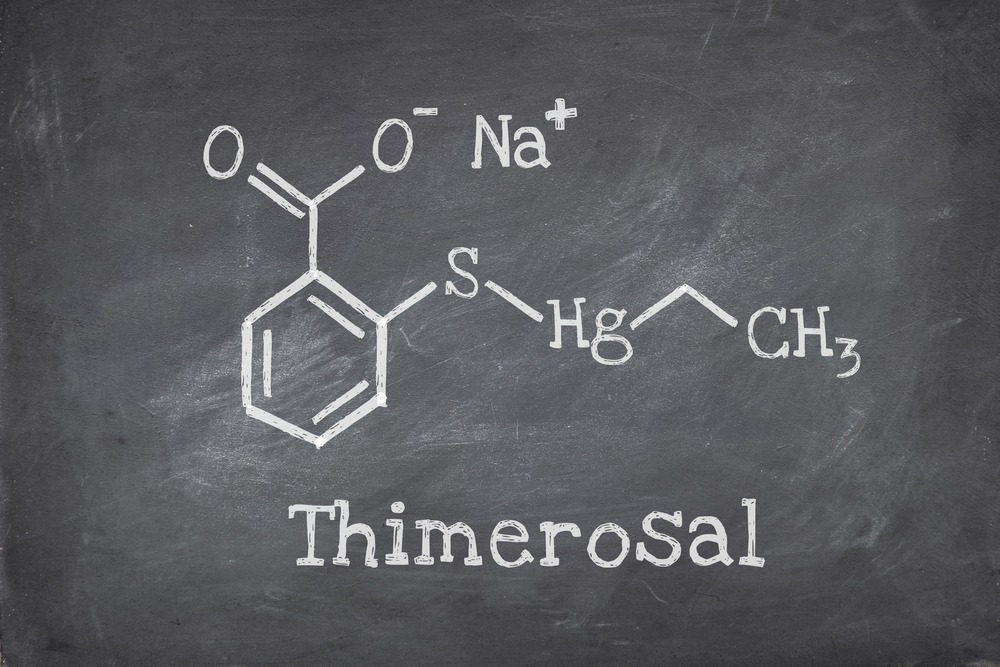
Health and Human Services Secretary Robert F. Kennedy Jr. picked up his pen on July 23, 2025, and signed a document that anti-vaccine activists had pushed for decades. With one signature, he made official what a reconstituted federal vaccine panel had recommended just weeks earlier: remove thimerosal from every flu shot in America.
Scientists say this mercury-based preservative poses no danger. Over 40 studies spanning multiple decades found zero link between thimerosal and developmental delays. Yet Kennedy called the move a victory for safety, claiming it protects vulnerable populations from “unnecessary mercury exposure.”
Something unusual happened before that signature landed on paper. Something that has public health experts sounding alarms about how science gets translated into policy.
The June Vote That Changed Policy
Centers for Disease Control and Prevention’s Advisory Committee on Immunization Practices gathered in Atlanta on June 25 and 26. Members voted 5-1 to recommend that children 18 and younger, pregnant women, and all adults receive only single-dose flu vaccines free of thimerosal.
Kennedy’s signature transformed that recommendation into federal health policy. It affects roughly 4% to 5% of America’s flu vaccine supply, including multi-dose versions of Sanofi’s Fluzone and two products from CSL Seqirus.
Manufacturers confirmed they can replace multi-dose vials that contain mercury. The Vaccines for Children program won’t face disruptions. Adult vaccine supplies will continue flowing.
But that 5% represents more than numbers on a spreadsheet. It represents an option removed from the American healthcare system based on concerns that decades of research have failed to validate.
Kennedy’s Controversial Committee Overhaul

ACIP didn’t look anything like it had looked before. Kennedy had fired all 17 previous members earlier in June, citing conflicts of interest. He replaced them with seven or eight hand-picked appointees.
Among the new members: people known for anti-vaccine activism. Vicky Pebsworth from the National Vaccine Information Center joined the panel. She abstained from the thimerosal vote due to objections about how the question was worded.
Lyn Redwood presented the case against thimerosal at that June meeting. Redwood previously led World Mercury Project, which later became Children’s Health Defense. Kennedy founded and chaired Children’s Health Defense before taking his cabinet position.
Reuters reported that Redwood’s presentation, posted with meeting materials before she spoke, contained a link to a study that doesn’t exist. Career CDC scientists had prepared a presentation about thimerosal safety. According to one of Kennedy’s own vaccine advisers during the meeting, the Secretary’s office pulled that CDC presentation.
Standard ACIP practice involves CDC scientists vetting presentations before committee members see them. Redwood’s presentation appeared to bypass that process. She told the committee she appeared as a private citizen, another departure from normal ACIP procedures.
Understanding Thimerosal: What Science Actually Says
Vaccine makers have used this ethylmercury-based preservative since the 1930s. It prevents bacterial and fungal contamination when needles puncture multi-dose vials multiple times.
People often confuse ethylmercury with methylmercury. Methylmercury accumulates in fish and can cause toxicity at high exposures. Ethylmercury clears from the human body much faster than its methylmercury cousin.
A standard flu shot contains about 25 micrograms of ethylmercury. A three-ounce serving of canned tuna delivers about 40 micrograms of methylmercury. Even accounting for the different types of mercury and their distinct biological behaviors, the comparison illustrates the tiny amounts involved.
Research accumulated over decades tells a consistent story. More than 40 separate studies found no connection between thimerosal and developmental delays. No study linked it to autism. No evidence suggested it causes neurological problems in children or adults.
World Health Organization reviewed the data. The FDA examined the science. AAP analyzed the research. All reached the same answer: thimerosal in vaccines doesn’t cause harm.
The 1999 Agreement: How We Got Here

Something happened in 1999 that set events in motion. U.S. Public Health Service, American Academy of Pediatrics, and vaccine manufacturers reached a joint agreement. Any potential risk from mercury warranted its removal as soon as possible.
Manufacturers removed thimerosal from most childhood vaccines by 2001. Medical authorities made clear they acted out of caution, not because evidence showed harm.
AAP has since changed its position on those initial concerns. In June 2025, AAP released a statement: “Extensive research proves that thimerosal is a safe ingredient in vaccines, and it does not cause neurological problems or autism.”
AAP went further. Banning vaccine ingredients without solid scientific reasons sets a dangerous precedent. It makes children less safe, according to the pediatricians’ group.
Here’s an interesting detail that gets overlooked: autism rates actually rose after manufacturers removed thimerosal from childhood vaccines. If thimerosal caused autism, rates should have dropped. Instead, diagnoses continued climbing, suggesting zero connection between the preservative and the developmental disorder.
The Lone Dissenter: Dr. Meissner’s Science-Based Objection
One ACIP member voted no on all three thimerosal recommendations. Dr. Cody Meissner teaches pediatrics at Dartmouth Geisel School of Medicine. He has served on both the CDC and the FDA vaccine advisory committees.
Meissner called thimerosal an old issue that scientists had already resolved. “After more than two decades of delay, this action fulfills a long-overdue promise to protect our most vulnerable populations from unnecessary mercury exposure,” Kennedy said in his official statement. But Meissner disagreed with the premise behind that statement.
FDA hasn’t removed thimerosal because no evidence shows it causes harm. ACIP generally makes recommendations based on scientific evidence, Meissner pointed out. No scientific evidence supports removing this preservative.
Meissner raised practical concerns, too. Discouraging multi-dose vials could increase vaccination costs. Access might decrease for some populations. He worried about the message America would send to countries where multi-dose flu vaccine formulations are more commonly used.
Several nonvoting ACIP liaison members spoke against the recommendation. They asked for CDC scientists to weigh in. They raised concerns about pandemic flu vaccines, which typically arrive initially in multi-dose formulations.
Most other members, however, accepted arguments about theoretical risk and cumulative mercury exposure. Five members voted yes. One abstained. One voted no.
Supply and Access: What Changes for Americans

Changes take effect for the 2025-2026 flu season. Multi-dose formulations containing thimerosal will disappear from pharmacy shelves and clinic refrigerators.
Vaccine makers confirmed they have the capacity to produce enough single-dose, thimerosal-free vaccines. Supply won’t be interrupted. Government programs providing shots to uninsured and underinsured children will continue operating.
Health experts worry about a different kind of shortage. People might skip flu shots because fewer options exist. Flu kills thousands of Americans in a typical season. Reducing vaccination rates could cost lives.
Cost represents another concern. Single-dose vials typically cost more than multi-dose versions. Healthcare systems operating on tight budgets might face new financial pressures.
Dr. Sean O’Leary, a pediatrician at Children’s Hospital Colorado, said he doesn’t know any pediatric practices that even use multi-dose influenza vaccines. If practices already avoid these products, why make a formal recommendation against them?
Critics suggest the move serves a different purpose: embedding anti-vaccine talking points into national policy.
Global Ripple Effects: Kennedy Urges Worldwide Adoption
Kennedy didn’t limit his message to domestic audiences. “With the U.S. now removing mercury from all vaccines, we urge global health authorities to follow this prudent example for the protection of children worldwide,” he said.
Multi-dose vials matter more in lower-income countries. Single-dose prefilled syringes cost more money. Countries with limited healthcare budgets rely on multi-dose formulations. Thimerosal lets them safely store and use those vials.
WHO vaccine chief Kate O’Brien addressed reporters after the U.S. panel made its recommendations. “There is no evidence of harm from the use of thimerosal,” O’Brien said. “For some of the vaccine supply, this is a very important ingredient in order to assure that we have the doses that are needed to protect children from serious and life-threatening diseases.”
Removing thimerosal globally could reduce vaccine access in places that need it most. Children in developing nations might lose protection against preventable diseases because of unfounded fears about a safe ingredient.
Expert Reactions: Public Health Community Pushes Back

Pharmacists find themselves on the front lines of this debate. Patients arrive with questions. They bring concerns picked up from social media, friends, and news reports.
Dr. Adam James, a pharmacist, explained how professionals can respond: “It’s really important for pharmacists to understand what type of information their patients are consuming. Sometimes, it helps to bring up vaccine ingredients, talk about vaccine safety, and highlight the different products available.”
James noted that almost every vaccine administered in pharmacies comes as a single-dose, prefilled syringe without thimerosal. Being transparent and proactive helps build trust and can counteract misinformation from other sources.
Public health experts express broader concerns about the precedent. If government panels remove safe ingredients because of unfounded fears, what comes next? How do evidence-based recommendations survive when ideology shapes committee membership?
Scientists worry about the message sent to parents and patients. Removing an ingredient implies something was wrong with it. Even explicit statements about safety can’t overcome the implicit message: we removed this because it was bad.
What’s Next: More Vaccines Under Review

Kennedy’s ACIP isn’t done examining vaccines. Other recommendations from the June meeting remain under review.
Committee chair Martin Kulldorff announced two new working groups. One will evaluate the cumulative effects of vaccines on the CDC’s recommended schedule for children and adolescents. Another will examine vaccines in use for more than seven years.
MMRV vaccine faces scrutiny. MMRV combines measles, mumps, rubella, and varicella vaccines. Children typically receive it between 12 months and 12 years old. The first dose goes at 12 to 15 months. The second dose arrives between 4 and 6 years.
MMRV carries a small increased risk of febrile seizures when given as a first dose, compared with separate MMR and varicella shots. Risk appears higher in younger children.
Kulldorff proposed a recommendation for future consideration: if a safe, equal alternative exists, don’t give the MMRV vaccine to children younger than 47 months. He said ACIP will vote on this at a future meeting.
Hepatitis B vaccination at birth may come under review, too. Birth dose vaccination prevents mother-to-child transmission. Babies born to hepatitis B-positive mothers face a high risk without immediate vaccination.
Policy Change Without Scientific Justification
Kennedy delivered on a promise to remove mercury from vaccines. He fulfilled demands that anti-vaccine groups had made for decades. He signed a policy change that science doesn’t support.
Thimerosal works. It’s safe. It prevents contamination. It has protected millions of people who received vaccines over nearly a century of use.
Public health operates best when evidence guides decisions. When ideology shapes panels and predetermined conclusions drive recommendations, trust erodes. Ironically, removing a safe ingredient to boost confidence might achieve the opposite effect.
Parents and patients now face questions about what to believe. If authorities remove something they claim is safe, was it really safe? If science says one thing but policy does another, who deserves trust?
Balance matters between addressing public concerns and maintaining scientific integrity. Kennedy’s signature tips that balance toward concerns that lack evidence. Where it tips next remains an open question, one that will affect vaccine policy and public health for years to come.
