
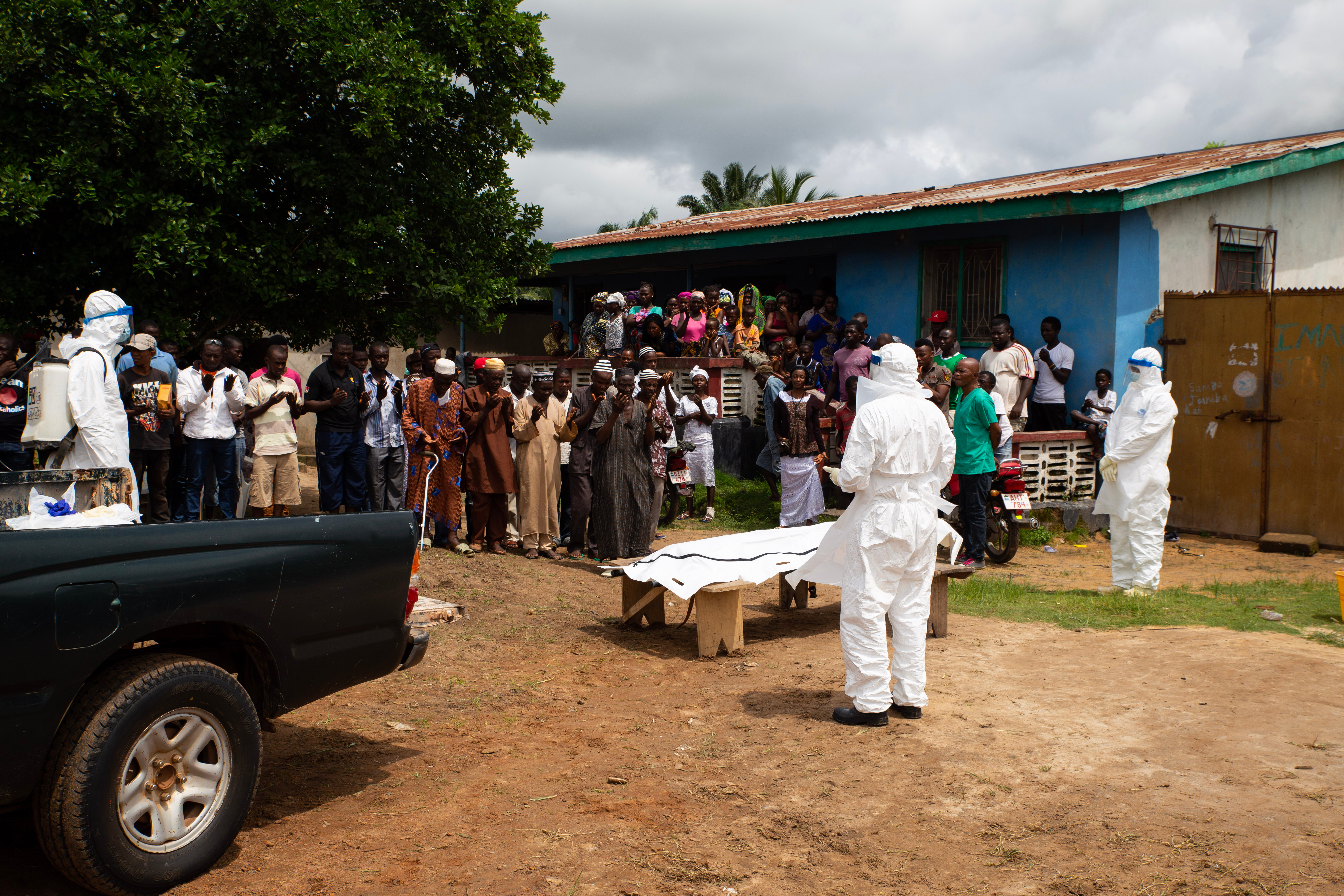
In the remote villages of Congo’s vast rainforests, a deadly and enigmatic illness has emerged, sowing fear and confusion among its inhabitants. Known as the ‘crying disease,’ this sudden outbreak has swiftly claimed dozens of lives, presenting symptoms that mystify even seasoned medical experts. With no clear origin and a death toll rising by the day, health organizations worldwide are on high alert, racing against time to unravel the mystery of this lethal affliction. What is this mysterious disease, and why does it strike so rapidly and fatally?
What We Know About the Outbreak
The ‘crying disease‘ first surfaced in January in the village of Boloko in the northwestern province of Equateur, alarming health officials with its rapid progression and high fatality rate. Originating in a region known for its dense rainforests—a breeding ground for zoonotic diseases—the disease quickly claimed lives, sparking concerns of a new viral hemorrhagic fever. However, initial tests have ruled out common culprits like Ebola and Marburg virus, leaving the exact pathogen a mystery.
As the illness continued to spread, reaching the distant village of Bomate over 120 miles away, the pattern of transmission and the alarming speed of its spread became a major concern for the World Health Organization (WHO) and local health authorities. Despite the geographical distance between the initial outbreaks, the similarity in symptoms and outcomes hinted at a common, yet unidentified, infectious agent. This rapid expansion not only complicates containment efforts but also raises urgent questions about the nature of the disease and its potential to spread beyond regional boundaries.
The spread of the disease has been exacerbated by local dietary habits, particularly the consumption of bat meat, which has been linked to previous outbreaks of viral diseases in the region. This connection has prompted an intense focus on wildlife as a possible source of the infection, though conclusive evidence remains elusive. As cases continue to mount, the pressure to identify the source and method of transmission of the ‘crying disease’ intensifies, with global implications for health security and disease prevention.

Symptoms of the Mystery Illness
As the ‘crying disease’ sweeps through the Congo, the medical community faces a perplexing array of symptoms that challenge both diagnosis and treatment. Infected individuals exhibit a severe onset of symptoms, including high fevers, intense vomiting, severe diarrhea, and in some cases, a distressing symptom that has given the illness its name: persistent crying, particularly noted among affected children. This unique combination of symptoms rapidly deteriorates the health of patients, often resulting in death within 48 hours of symptom onset.
The swift and severe progression of the disease has overwhelmed local healthcare facilities, which are ill-equipped to handle such a rapid influx of critically ill patients. Medical professionals are struggling not only with limited resources but also with the absence of a definitive diagnosis that hampers effective treatment protocols. The lack of a clear understanding of the disease’s pathology means that healthcare providers must rely on symptomatic treatment, which, given the severity and rapid progression of the disease, offers little respite to those affected.
Adding to the complexity is the disease’s unknown etiology. Initial suspicions pointed towards a hemorrhagic fever similar to Ebola, but subsequent laboratory analyses have dismissed this and other known pathogens, leaving researchers and doctors groping for answers. The situation is further complicated by the diverse geographic spread of the disease, suggesting multiple points of origin or a highly contagious vector, raising significant concerns about containment and further spread.
Efforts to Understand and Contain the Disease
In response to the escalating crisis of the ‘crying disease’ in Congo, international and local health agencies have intensified their efforts to understand and contain the outbreak. The World Health Organization (WHO), in collaboration with Congo’s Ministry of Health and other partners, has launched a multi-faceted response aimed at solving the mystery of the disease and preventing further spread.
Central to these efforts is the deployment of metagenomic sequencing technology, which allows scientists to analyze the genetic material of samples collected from affected patients without prior knowledge of what they might contain. This advanced technology is crucial for identifying new or rare pathogens that standard diagnostic tests may miss. Teams of experts, including epidemiologists, virologists, and public health specialists, have been sent to the affected areas to collect data and samples for this analysis.
Concurrently, health officials are working to implement stringent containment measures. These include setting up isolation zones around affected areas, conducting extensive contact tracing to monitor the spread of the disease, and educating local communities about hygiene practices that may help prevent transmission. Public health campaigns are also being rolled out to discourage the consumption of wild meat, which is suspected to be a potential source of the disease.
Potential Causes and Research Directions

One leading hypothesis is that the disease may be caused by a novel virus or a rare mutation of a known virus, which has not previously been documented. The dense rainforests of Congo, known for their biodiversity, are considered hotspots for the emergence of zoonotic diseases—pathogens that jump from animals to humans. The ongoing environmental changes, including deforestation and closer interaction between wildlife and human populations, may facilitate the spillover of these pathogens.
In addition to virological research, other potential environmental and toxicological causes are being investigated. Contaminated water sources or exposure to toxins naturally occurring in the environment could also be contributing to the rapid onset and severe progression of the disease. These factors are being examined through water and soil samples from the affected areas.
The possibility that malnutrition and weakened immune systems in the local population might exacerbate the severity of the disease is another area of concern. Researchers are conducting health surveys to assess the overall health status of the affected communities, which may provide insights into why the disease is particularly lethal in this region.
The collaborative efforts involve not only local health ministries and the WHO but also various international research institutions specializing in infectious diseases. These organizations are pooling their resources and expertise to conduct comprehensive studies that include epidemiological mapping, genetic analysis, and ecological assessments.
Impact on Local Communities
The healthcare infrastructure in the region, already stretched thin, has been pushed to its limits. Many local health facilities lack the necessary equipment, medications, and trained personnel to handle an outbreak of this magnitude. This deficiency not only hampers the treatment of those infected but also affects the broader healthcare provision, as resources are diverted to handle the crisis. Preventative health services and treatments for other diseases are being neglected, which could lead to longer-term health issues in the community.

The outbreak has also affected the social fabric of the villages. Traditional practices and gatherings have been curtailed to prevent the spread of the disease, leading to a sense of isolation and disruption of communal bonds. Moreover, the fear of contagion has sometimes resulted in stigmatization of affected individuals and families, further isolating them from community support.
Economically, the regions hit by the outbreak have suffered. Restrictions on movement and the fear surrounding the disease have disrupted agricultural activities and trade, the lifelines of these rural communities. This economic downturn exacerbates food insecurity and poverty, creating a cycle that may lead to increased susceptibility to disease and slower recovery from the outbreak.
A Call for Global Vigilance and Action
The outbreak of the so-called “crying disease” in the Democratic Republic of the Congo has left more questions than answers. With hundreds of people infected and dozens dead within hours of falling ill, the race is on to uncover what’s causing this terrifying illness. Scientists have ruled out some of the deadliest known viruses, but the mystery remains—what is making people so sick, so fast?
Health officials are working around the clock to stop the disease from spreading, but without knowing exactly how it’s transmitted, containment efforts remain challenging. Theories range from a new infectious agent to contaminated food or water, yet no clear culprit has been found. For now, medical teams on the ground are focused on saving lives and preventing further deaths, but the lack of answers is unsettling.
This outbreak is a sobering reminder of how quickly a deadly disease can emerge and spiral out of control. Until experts uncover the truth, the people in these remote villages remain vulnerable, and the world waits—hoping this isn’t the beginning of something even worse.
