
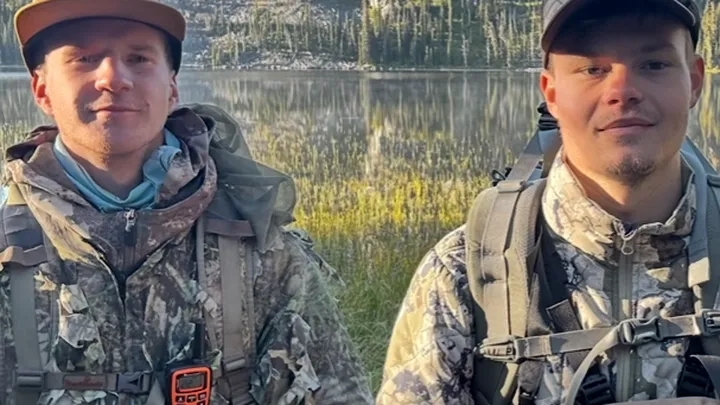
Two 25-year-old hunters, Andrew Porter and Ian Stasko, set out on what should have been a routine elk hunting trip in southern Colorado. Days later, they were found dead. The Conejos County coroner confirmed that a lightning strike ended their lives instantly.

Lightning strikes are rare, yet when they happen, the consequences can be immediate and fatal. This incident raises an important question: how vulnerable are we when caught outdoors during a storm, and what can we actually do to stay safe?
When a Routine Trip Turned Into a Search Operation
What began as a typical elk hunting trip in early September soon raised alarm among family members. On September 11, Andrew Porter and Ian Stasko missed a scheduled check-in, prompting concern when they had previously been consistent about sharing their location. According to a sheriff’s news release, they had “failed to check in with loved ones at a predetermined time.”
By September 13, deputies traced the pair’s vehicle to the Rio De Los Pinos Trailhead. Inside were their camping supplies and backpacks, a sign that they had not yet packed up to leave, even as reports of “heavy rain and bad weather” circulated in the area. That discovery triggered an urgent and multi-day search. Teams relied on helicopters, drones, dog units, and ground crews to comb through rugged terrain near Trujillo Meadows Reservoir, where visibility and access were limited by storm conditions.
The search came to an end a few days later. In a written update, the sheriff’s office confirmed, “On September 18 at 11:00 am, the Conejos County Sheriff’s Office recovered 2 unidentified males 2 miles from the Rio De Los Pinos Trail Head.” The announcement closed the search but opened a difficult chapter for families awaiting answers.
What the Coroner Discovered About the Lightning Strike
The absence of visible injuries on the bodies initially left investigators with questions, but the coroner’s examination pointed toward lightning as the cause. Richard Martin explained to The Colorado Sun that the hunters were found beneath a tree with only “two or three” light burn marks. He added, “A slight burn is like if you take a match and stick it on your arm,” noting how little outward damage was present. According to Martin, “that kind of death is just instant. It’s like you’re alive and now you’re not. Just that quick. Split second.”

He went on to describe the injuries as consistent with a “pretty intense electrical jolt” and reinforced his assessment by saying, “I’m telling you, that’s what it was.” Although the full autopsy report will take about eight weeks to complete, Martin has expressed confidence that the strike explains the sudden deaths. He also highlighted that lightning fatalities often leave minimal external evidence, since the energy can travel through the ground or surrounding objects, making them both swift and lethal.
Voices of Grief and Support from Loved Ones
In the days following the discovery, family members shared messages that conveyed both grief and acceptance. Bridget Murphy, fiancée of Ian Stasko, wrote on Facebook that the strike happened instantly and without suffering. “It is OFFICIAL, that a lightning strike near them took them in an instant. They didn’t do anything wrong; they didn’t feel fear or pain. He was just trying to get back to the car as storms rolled in on Friday – September 12. It was out of everyone’s hands, and I am so grateful we found them so they can be at peace. He was an experienced outdoorsman, who was in the wrong spot at the wrong time.” Her words reflect the difficulty of the loss while also acknowledging the relief of having answers.

At the same time, community members turned their concern into action. A GoFundMe campaign that was first launched to support search and rescue efforts quickly became a source of financial help for the families. Andrew Porter’s aunt, Lynne Runkle, posted an update thanking supporters and explaining how the funds would be used. “We are deeply grateful for the incredible outpouring of support from everyone. Given the change in circumstances, we will be reallocating the remaining funds—originally intended for search and rescue efforts—to help cover memorial services for Andrew and Ian, as well as to support their families during this difficult time. We believe this is the most meaningful way to honour your generous contributions.” By the end of September, the donations had exceeded 78,000 dollars, showing the impact of the tragedy on people well beyond Colorado.

Colorado’s History with Lightning Strikes
Colorado’s geography and weather patterns make it one of the states most affected by lightning. With high elevation, expansive open terrain, and frequent afternoon thunderstorms, the environment creates conditions where lightning strikes are more likely to occur. According to the National Weather Service, the state has averaged “two lightning deaths and 12 injuries each year since 1980,” a rate that consistently places it among the top five states for lightning fatalities. The Colorado Sun has also reported that “between 2008 and 2018, Colorado tied for third nationally in lightning deaths,” underscoring the state’s long-standing vulnerability.

The concern has grown in recent years. In 2025 alone, 14 people in Colorado had already lost their lives to lightning strikes, far exceeding the average. Nationwide, the National Weather Service reports that “30 people are killed and hundreds more injured each year in the United States.” Although the overall odds of being struck remain low, these numbers highlight how severe the outcome can be when it does happen.
Researchers point out that many fatalities occur through ground current rather than direct hits. Outside Online explains that “most lightning deaths are caused not by direct hits but by energy traveling along the ground after striking a nearby object.” This finding demonstrates why relying on chance is not enough and why awareness and preparation remain the most reliable forms of protection.
Understanding How Lightning Affects the Human Body
When lightning strikes, the effects on the body are immediate and severe. The electrical discharge can stop the heart in an instant, leading to sudden cardiac arrest. In many cases, this is the primary cause of death. The nervous system is also highly vulnerable, and survivors often experience confusion, memory loss, or long-term neurological problems after the event.
The skin may show little outward damage, which can make lightning injuries difficult to assess at first glance. As Coroner Richard Martin explained when describing the injuries of Andrew Porter and Ian Stasko, there were only “two or three” small burns, adding that “a slight burn is like if you take a match and stick it on your arm.” Despite the minimal external signs, the internal damage caused by the electrical current is profound.
Ground current is another pathway that makes lightning dangerous. Energy spreads outward from the strike site, traveling through the earth and entering the body through the feet. This mechanism explains why people who are not directly struck can still be fatally injured. Outside Online has noted that “most lightning deaths are caused not by direct hits but by energy traveling along the ground after striking a nearby object.”
Even when people survive, recovery can be complicated. Some face chronic pain, vision or hearing changes, or difficulties with concentration and sleep. These outcomes highlight why prevention is always more effective than treatment.
What to Do If Someone Is Struck by Lightning
Immediate action can make the difference between life and death after a lightning strike. The first step is to call emergency services without delay. While waiting for help, bystanders should not hesitate to approach the victim. It is safe to touch someone who has been struck because the electrical current does not remain in the body.
Cardiac arrest is the most urgent concern. If the person is unresponsive and not breathing, start CPR right away. The American Heart Association emphasizes that chest compressions performed promptly can sustain blood flow until medical professionals arrive. Automated external defibrillators, commonly found in public places, can also restore a normal heartbeat if one is available.
If the victim is breathing, keep them still and monitor closely. Lightning can cause hidden injuries, including nervous system disruption or internal organ damage, even when burns or external wounds appear minor. Avoid moving the person unless there is an immediate danger in the area, such as continuing storms.
Survivors should always be evaluated in a medical facility, even if they appear stable. Complications such as hearing loss, vision problems, chronic pain, or memory difficulties are well documented and can appear later. Early assessment helps doctors manage both immediate risks and long-term effects.
Knowledge Saves Lives
The story of Andrew Porter and Ian Stasko is a sobering reminder that lightning is more than a dramatic display in the sky — it is a public health risk that can claim lives in seconds. Their deaths highlight how important it is to understand the science of lightning, recognize the unique risks in places like Colorado, and take prevention seriously when heading outdoors.

Awareness is the strongest tool we have. Checking forecasts before activities, knowing where safe shelter is located, and responding quickly at the first sound of thunder are small steps that can prevent tragedy. Equally important is knowing how to act in an emergency, since immediate CPR and medical evaluation can save lives and reduce long-term complications for survivors.
Health and wellness go beyond nutrition and fitness; they also include safety and preparedness in the environments where we live, work, and spend time with loved ones. By respecting the power of nature and applying practical knowledge, we can reduce the risks and continue to enjoy outdoor experiences more safely.
Featured Image from Lynne Runkie on GoFundMe
