
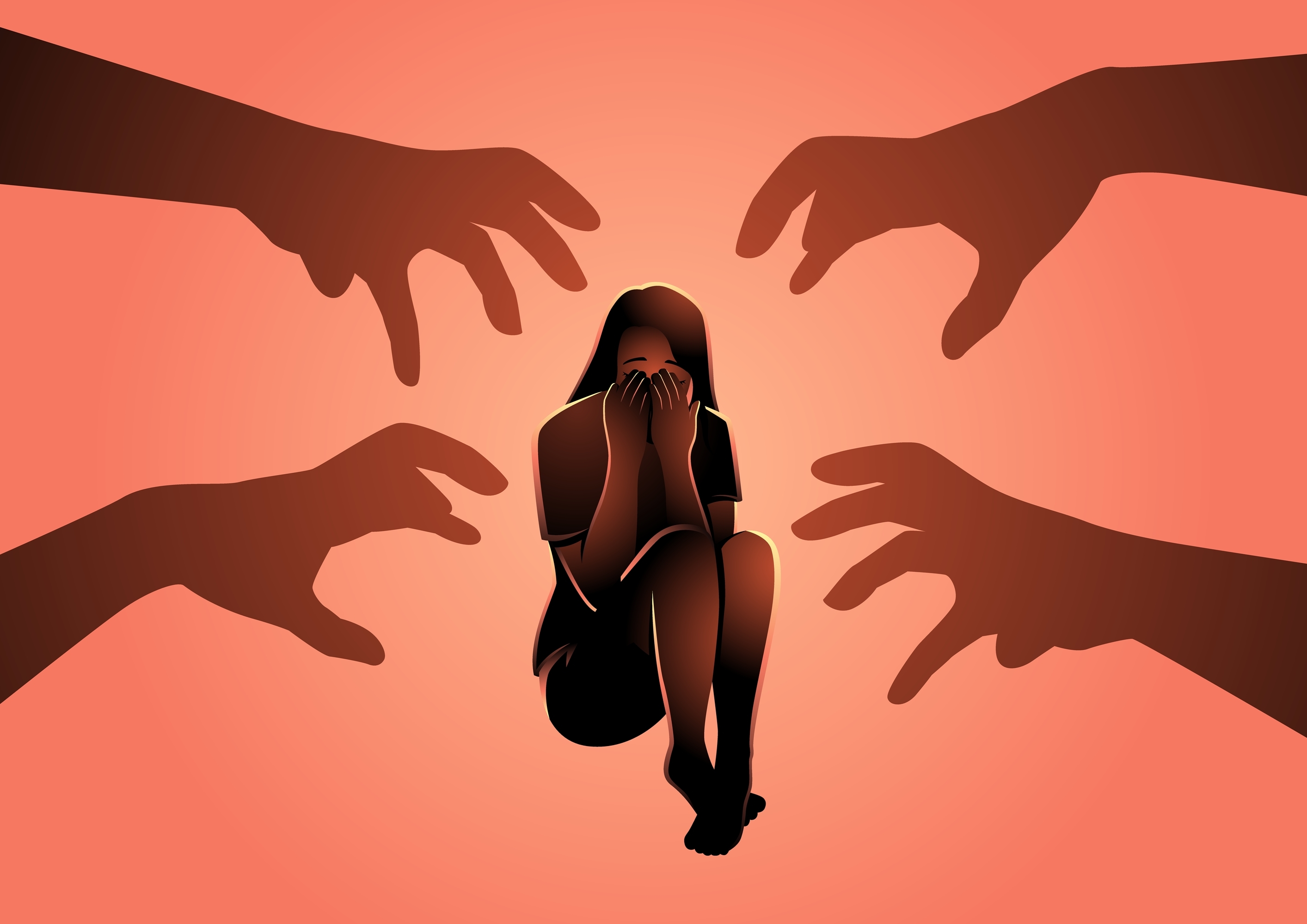
What happens when the person who caused your deepest trauma is also the only one who can help you understand it?
Most stories about sexual violence end at the courtroom or the silence. We hear from survivors, sometimes. Rarely from the ones who inflicted the harm. Almost never from both at once.
But that’s exactly what happened when Thordis Elva, who was raped at 16, decided to reach out to Tom Stranger the man who raped her. Not to reconcile in the feel-good sense of the word. Not to forgive for his sake. But to face the full weight of what happened and drag it, unflinching, into the light.
Together, they’ve done something few can make sense of and many have outright condemned: co-authored a book, stood side by side on stage, and publicly confronted the violent truth that bound their lives.
This is not a redemption story. It’s a disruption. One that forces us to question how we talk about rape, what justice really looks like, and what it takes for a survivor to reclaim power when the system offers none.
A Crime Hidden in Plain Sight
Tom Stranger didn’t fit the image of a rapist. He wasn’t a stranger in a dark alley. He wasn’t armed, masked, or violent in the ways most people are conditioned to imagine. He was Thordis Elva’s boyfriend. He walked her home. He laid her gently in bed. And then he raped her.
That’s exactly why it took Thordis so long to name what had happened to her.
Sexual violence doesn’t always look like a crime scene. It can look like a boyfriend helping a sick partner home from a party. It can look like trust, familiarity, and even affection until it crosses a line that leaves lasting damage.
This is the reality for many survivors: the trauma is real, but the context makes it hard to identify or explain. Thordis wasn’t dragged off the street. She was raped while unconscious in her own bed by someone she loved. At the time, that disqualified it from being “real rape” in her mind because she didn’t fight, didn’t scream, didn’t wake up in a hospital.
Tom, too, refused to see the truth for years. He told himself it was sex, not rape. He buried the memory so deeply that for nearly a decade, he avoided it altogether. He built a new life studying social sciences, becoming a youth worker hoping the person he was now would erase what he had done then. But memory doesn’t work that way. Accountability doesn’t either.
When he finally read Thordis’s letter, something broke open. In his response, he admitted he had been living in denial. “Only me in that room, making choices,” he wrote. “Nobody else.”
Most sexual assaults are committed by someone the victim knows. Often, someone they trust. The danger isn’t just in how these assaults happen it’s in how easily they’re dismissed, minimized, or never named at all.
The Aftermath: Silence, Shame, and the Mental Toll
After Tom left Iceland and returned to Australia, Thordis Elva was left alone with the fallout. She didn’t tell anyone what had happened. Instead, she did what many survivors do: she blamed herself.
Her skirt was too short. She smiled too much. She drank alcohol. These were the messages she’d absorbed growing up messages that told her if something bad happened, she must have invited it. The culture around her didn’t call what happened rape. And so, neither did she.
But her body and mind knew the truth.
Over the next nine years, Thordis’s life quietly unraveled. She developed eating disorders, abused alcohol, and self-harmed. Outwardly, it looked like a teenager struggling with heartbreak or stress. In reality, she was trapped under a weight of unspoken trauma, unable to connect the pain she was living with to the night it all began.
This is what makes sexual violence so corrosive it doesn’t end with the assault. It lingers in the form of guilt, isolation, self-doubt, and anxiety. The shame doesn’t just silence survivors; it eats away at their ability to function, trust, and even survive.
By her mid-20s, Thordis was nearing a complete breakdown. One argument pushed her to the edge. She stormed out of the house, walked into a café, and asked for a pen. What came out onto paper wasn’t planned. It wasn’t crafted with forgiveness in mind. But it was honest.
She wrote a letter to Tom Stranger.
She told him exactly what he had done. She laid out, in plain terms, the damage that night had caused. And then, almost involuntarily, she wrote the words: “I want to find forgiveness.”
Not for him. For herself.
Because the shame wasn’t just his to carry it had reshaped her entire life. And she realized that if she didn’t find a way to release that burden, it would keep defining her.
The Letter That Changed Everything

When Thordis Elva sent that letter, she wasn’t expecting anything from Tom Stranger. No apology. No accountability. Maybe no reply at all. What she needed was to say the truth out loud to someone who had once denied her reality. What came back stunned her.
Tom confessed.
He didn’t argue. He didn’t deflect. He admitted that what he did was rape. And that he had known it, deep down, for years. “I repudiated the entire act in the days afterwards and when I was committing it,” he later wrote. He had told himself it was sex, not assault, and built a life around that denial. But when he read her letter, the façade cracked.
This marked the beginning of something neither of them could have predicted: an eight-year exchange of emails between two people connected by a single, violent act.
Tom began to examine what he had done not as a lapse in judgment, but as a serious, life-altering crime. He admitted that, if there were any justice, he should be in prison. By then, the statute of limitations had long expired. Legal consequences weren’t on the table. But moral accountability was. And Thordis wanted more than words on a screen.
For her, the email exchanges while honest and raw weren’t enough. She needed to see him. To look him in the eye. To ask questions that couldn’t be dodged. To finally, after years of silence and shame, face the past directly.
So she proposed something most people would never dream of doing: a meeting.
Face to face. Just the two of them. Somewhere neutral. Somewhere far from Iceland, and far from Australia.
Cape Town, South Africa, became that meeting point. A place with its own complicated history of reconciliation and justice. Over the course of one intense week, they sat down together and talked about that night, the years that followed, and the separate lives they built around one buried truth.
It was not easy. There were moments when they couldn’t understand each other at all. But there were also breakthroughs. Tom finally said the words out loud: “I raped you.” And that shifted something fundamental. The responsibility, which Thordis had carried alone for so long, began to move back to where it belonged on him.
Why They Went Public And Why It’s So Controversial
After their week in South Africa, Thordis Elva and Tom Stranger decided to take an unthinkable next step: they went public.
Together, they co-authored a book titled South of Forgiveness, detailing the rape, the aftermath, and their long process of dialogue. Then they stood on stage side by side at a TED Talk viewed by millions around the world. Tom became the first admitted rapist to speak openly about his crime without legal compulsion or court proceedings. The reaction was immediate, intense, and deeply divided.
Supporters called it brave. Survivors who had been silenced or ignored said they found power in seeing a victim reclaim control of her story on her terms. Some believed that hearing directly from a perpetrator who took full responsibility could help dismantle the social attitudes that normalize violence and silence accountability.
Critics, however, saw something very different.
Outside venues where Thordis and Tom spoke, protesters held signs that read, “There’s a rapist in the building.” Activists accused them of glamorizing violence or offering a redemption arc to someone who didn’t deserve it. The event was dropped from the Women of the World Festival in London after public outcry, only to be reinstated at another venue.
The sharpest criticism came from those who felt that giving Tom a platform even one rooted in accountability sent the wrong message. That survivors might feel pressured to forgive. That perpetrators might feel emboldened to seek reconciliation as a shortcut to absolution. Some questioned whether Tom’s very presence constituted a new form of harm: a man gaining public attention for an act of violence.
Thordis responded directly to these concerns. In interviews and talks, she emphasized that her decision to engage with Tom was about reclaiming power, not offering comfort. “Forgiveness,” she said, “was for me not for him.” She never asked other survivors to follow her example. In fact, she warned that her path isn’t suitable or safe for most.
Tom, for his part, refused payment for any speaking engagements and donated book profits to charity. He acknowledged the unease surrounding his role and said he wasn’t seeking redemption, only responsibility. Still, as critics pointed out, cultural capital isn’t just about money. A man who once buried his guilt now had a microphone, and not everyone felt that was justified.
What This Means for Survivors, Justice, and Prevention

Thordis Elva’s story doesn’t offer a roadmap for survivors it offers a reminder that there’s no single path to healing. Her decision to confront Tom Stranger, exchange years of dialogue, and eventually share a public stage with him wasn’t about setting a precedent. It was about reclaiming power in a way that made sense for her.
For some, that process might sound empowering. For others, unbearable. Both responses are valid. What matters is that survivors are given space to choose not be told how they should heal, how angry they should be, or whether forgiveness should be on the table.
The case also highlights how often traditional justice systems fail to deliver meaningful accountability. By the time Thordis fully understood that what happened to her was rape, the statute of limitations had nearly expired. Even if she had reported immediately, like the majority of sexual assault cases in Iceland at the time, hers likely would have gone nowhere.
This legal gap left her with two options: carry the weight alone, or create her own form of resolution. She chose the latter not because it was easier, but because it was the only path that made sense within the limits of her reality.
Tom’s willingness to admit his actions and name them clearly as rape was rare, and crucial. Not because it made him redeemable, but because it exposed how dangerous it is to ignore the role of perpetrators in prevention efforts. Too often, conversations about sexual violence focus solely on victims: what they were wearing, how much they drank, what they could have done differently. This keeps attention away from the core issue: the choice to commit harm.
As Tom later admitted, it wasn’t external influences or cultural pressure that raped Thordis it was him. Alone. In a room. Making decisions no one forced him to make.
That clarity matters. Prevention starts with dismantling the myths that let people especially men separate themselves from perpetrators. “I’m not a bad guy” doesn’t mean much if the behavior still caused harm. Until more people are willing to take responsibility, and more communities are willing to hold them to it, prevention will remain a theory.
What Healing Looks Like When Justice Fails

Not every survivor gets a courtroom. Most never see their case go to trial. Many never report at all because they fear they won’t be believed, or because they’ve already seen how systems fail others. In those situations, healing becomes something survivors have to build for themselves, often with no blueprint.
That’s what Thordis Elva did. She didn’t forgive Tom because she was expected to. She didn’t meet with him to give him peace. She did it to stop carrying something that wasn’t hers to begin with. And she’s been clear: this is not a path for everyone. It was hers and hers alone to decide. For other survivors, healing might look very different. What matters is having the right to choose. And that choice can include:
- Naming the harm, even privately. Whether through writing, therapy, or talking with someone trusted, putting words to what happened is often the first step in taking power back.
- Seeking therapy with someone trauma-informed. Not every counselor is equipped to handle the nuances of sexual violence. Survivors need professionals who understand shame, PTSD, dissociation, and the long tail of trauma.
- Reclaiming control over your story. Some people speak out. Others stay private. Both are valid. There is no “right” way to be a survivor.
- Setting boundaries. With family, friends, or even yourself. That might mean avoiding conversations about forgiveness, or saying no to relationships that don’t feel safe.
- Letting go of pressure to forgive. Forgiveness is not a requirement for healing. Anger, grief, numbness these are all natural, legitimate responses. Healing doesn’t have to be polite.
For support networks friends, partners, parents the most important role is not to guide the survivor’s decisions, but to support them without judgment. That means listening without inserting your own expectations. It means believing them without needing more “proof.” It means never asking, “Why didn’t you…?”
When justice systems fall short and they often do healing doesn’t stop. But it becomes deeply personal, often complicated, and almost always nonlinear.
A Call to Rethink Accountability
People will land on different sides. That’s the point.
This isn’t about finding a formula for how to handle sexual violence. It’s about challenging the assumptions we’ve lived with for too long like the idea that rape is only committed by monsters, or that healing only happens through punishment, or that survivors owe the world a certain kind of response.
What Thordis did was radical not because it involved forgiveness, but because it demanded full responsibility from the person who raped her. That’s something our systems rarely achieve. And that demand—clear, direct, and unwavering has the potential to shift the conversation away from victim-blaming and toward something more useful: prevention rooted in accountability.
This story is not a template. It’s not a recommendation. It’s a disruption.
And if it teaches us anything, it’s this: stopping sexual violence won’t happen by focusing only on survivors. It requires turning the spotlight toward the people who cause harm and expecting more than silence, denial, or distance. It requires creating a culture where responsibility can’t be avoided, where harm is named honestly, and where justice isn’t limited to what the legal system can or cannot provide.
Because the burden of ending violence should never fall on those who endured it.
