
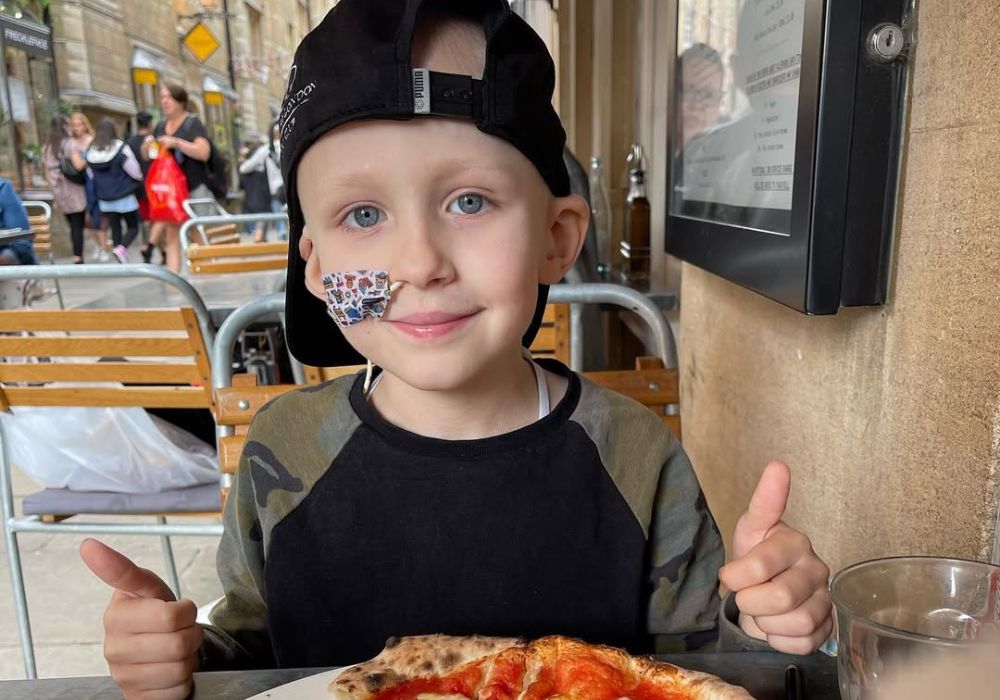
Every parent knows childhood comes with occasional tummy troubles. Bloating, gas, and discomfort happen frequently as young bodies develop and adapt to new foods. Most cases clear up quickly, causing nothing more than temporary discomfort. For six-year-old Hugh Menai-Davis and his family, however, what seemed like a regular bloated stomach turned into a heartbreaking journey that ended far too soon.
Hugh appeared healthy in most ways—active, playful, and full of life. When his stomach swelled in autumn 2020, his parents, Frances, 40, and Ceri, 42, from Hertford, assumed he had caught a common stomach bug. Even their family doctor initially agreed, suggesting that Hugh would likely recover in a few days without special treatment.
Unfortunately, the swelling was a symptom of something far more serious—rhabdomyosarcoma, a rare and aggressive cancer that forms in muscle tissue. Hugh’s story gently reminds parents of the importance of being vigilant about symptoms that linger, and trusting their instincts when they feel something isn’t right.
A Tummy Ache Turns Out to Be Something More

Hugh’s journey began with stomach bloating—something nearly every child experiences at some point. His parents noticed his stomach looking unusually swollen, but had little reason for concern. When Hugh showed signs of fatigue, they attributed it to regular childhood activity. His parents, Frances, 40, and Ceri, 42, from Hertford, assumed that he was suffering a stomach bug, and put subsequent tiredness down to ‘playing all day long’.
Many parents face similar situations daily. Minor symptoms appear, match common childhood ailments, and medical professionals often agree that nothing serious has happened. According to childhood cancer experts, early signs of serious illness frequently mimic everyday childhood complaints—stomach aches, fatigue, bruising, or persistent low-grade fevers.
For Hugh’s family, persistent bloating eventually prompted them to seek additional medical opinions. After weeks without improvement, they insisted on further examination. At this point, their family doctor sent Hugh by ambulance to Lister Hospital for comprehensive testing.
Medical staff conducted various tests, including imaging scans and blood work. Soon after, Hugh’s parents received news no family ever wants to hear. “Our lives changed forever. The consultant said, we think Hugh’s got cancer,” Mr Menai-Davis told MailOnline.
Little Hugh’s Brave Battle Begins

Hugh received a diagnosis of rhabdomyosarcoma, a cancer affecting approximately 55 children yearly in the UK. Usually found in the head, neck, and chest areas, it sometimes develops in the abdominal regions, as in Hugh’s case.
Rhabdomyosarcoma forms in muscle or fibrous tissue, grows quickly, and often becomes resistant to treatment. Many children show symptoms, including lumps or swelling around affected areas. For Hugh, abdominal bloating served as the main warning sign.
After diagnosis, Hugh transferred to Addenbrooke’s Hospital in Cambridge as his condition worsened rapidly. Fluid accumulated in his abdomen, placing pressure on his lungs until breathing independently became impossible. His parents maintained brave faces despite overwhelming fear.
“Fear is learned, so we didn’t want to show him any weakness. We never told him that he wouldn’t be alright,” his father explained.
Hugh faced each medical intervention with remarkable courage. Despite painful procedures and frightening hospital equipment, he maintained a positive spirit throughout treatment.
“Hugh faced everything with innocence and ignorance, and he was just amazing. He never moaned or complained, he just got on with it.”
A Glimmer of Hope in Dark Time
Doctors started Hugh on chemotherapy immediately. Initial treatments showed promising results. His body responded well enough for doctors to discharge him in mid-November 2020, about two months after diagnosis.
At home, Hugh showed signs of improvement that gave his family hope. His energy returned, and he began enjoying childhood activities again. His parents dared to believe they might overcome this terrible disease.
For six months following initial treatment, Hugh visited hospitals every three weeks for additional chemotherapy. Doctors added 16 weeks of radiotherapy to destroy remaining cancer cells. Just before turning six, Hugh celebrated by ringing a bell marking the end of cancer treatment on May 23.
Few moments bring joy to the cancer ward more than witnessing young patients ring bells, signaling completed treatment. For Hugh and his family, this moment represented victory after months of complex procedures, medications, and hospital stays.
Heartbreak When Good News Doesn’t Last
Sadly, Hugh’s recovery proved temporary. Just three and a half months after ringing the bell, scan results showed cancer had returned. Doctors delivered devastating news that no further treatment options existed. Within weeks, on September 18, 2021, Hugh passed away, less than one year after initial diagnosis.
Parents experiencing the loss of a child face unimaginable grief. For Hugh’s parents, finding purpose through helping others became a pathway through grief. Nearly four years later, they speak openly about Hugh’s journey, hoping to help other families recognize warning signs earlier.
Ceri Menai-Davis now advises parents never to delay seeking medical attention if something seems wrong with their child. Even harmless symptoms deserve professional evaluation if they persist or worsen.
“No one knows your child better than you and the majority of the time it is nothing to worry about, but from our experience it is worth the effort.” said Mr Menai-Davis.
Trust Your Gut: What Every Parent Should Watch For
Most childhood illnesses pass quickly without serious consequences. However, specific symptoms warrant prompt medical attention, especially if lasting longer than expected
Persistent stomach bloating or pain lasting more than several days might signal digestive issues or more serious conditions. Unusual lumps or swellings anywhere on the body require evaluation, sometimes indicating infections or growths requiring treatment. Unexplained fatigue lasting more than two weeks can point to various conditions affecting blood cells or organ function.
Recurring fevers without apparent cause often suggest underlying infections or inflammatory conditions needing treatment. Bruising appearing without injury sometimes indicates blood disorders requiring medical assessment. Headaches accompanied by morning vomiting might signal pressure changes within the skull that need immediate attention.
Limping or bone pain, particularly at night, can suggest growth issues or problems within bone tissue itself. Rapid weight loss without dietary changes signals potential metabolic or digestive system problems requiring evaluation.
Medical experts emphasize that most children showing these symptoms do not have cancer. However, early detection of severe conditions dramatically improves treatment outcomes. Parental instinct plays a crucial role in recognizing when something requires medical evaluation.
For children like Hugh, cancer often hides behind common symptoms. Rhabdomyosarcoma specifically might show several distinctive signs. Persistent swelling or lumps that grow over time represent classic warning signals requiring prompt assessment. Bulging eyes or drooping eyelids may appear when cancer affects the head area.
Headaches or sinus congestion that do not respond to usual treatments sometimes indicate growths in the surrounding tissues. Difficulty urinating or having bowel movements might develop if tumors affect the pelvic region. Abdominal bloating or pain often occurs when cancer develops in the stomach area, as happened in Hugh’s case.
Carrying Hugh’s Memory Forward with Love
Following Hugh’s passing, his parents channeled grief into meaningful action. Ceri Menai-Davis walks the London Marathon carrying a weight equal to Hugh’s on his back, raising funds for cancer support. Family established charity called “It’s Never You,” which has raised £40,000 in the current year alone.
Many parents find comfort in creating meaningful legacies that honor children lost to illness. Such efforts transform personal tragedy into support for others facing similar challenges. Hugh’s memory lives on through his parents’ dedication to helping families navigate childhood cancer.
“Campaigning gives me a chance to carry Hugh’s name on and for his courage and kindness to live on,” his father said.
Just two weeks after Hugh passed away in 2021, his father ran the London Marathon, fulfilling a promise made to his son. During treatment, Hugh would tell hospital staff about his father’s upcoming race, showing pride in his dad’s commitment.
“When he was in and out of meds, towards the end of his cancer treatment, Hugh said to me, ‘go run daddy,'” recalls Mr. Menai-Davis.
“It’s Never You” organization now provides emotional, financial, and mental well-being support to parents facing childhood cancer diagnoses. Name serves as a potent reminder that cancer affects any family, regardless of health history or lifestyle.
Staying Vigilant With Children’s Health
Hugh’s story reminds parents about the importance of staying alert to changes in children’s health. Common symptoms often mean nothing serious, but persistence or worsening consistently warrants medical evaluation.
Medical professionals recommend following specific guidelines when assessing childhood symptoms. Monitor duration carefully; symptoms lasting longer than expected deserve attention. Watch for progression, as symptoms that worsen over time need evaluation. Trust parental instinct because parents often sense when something is wrong.
Childhood cancer remains relatively rare, affecting approximately 1,800 children under 15 annually in the UK. It ranks as the leading cause of death by disease among children past infancy. Stories like Hugh’s highlight the importance of awareness and prompt medical care when unusual symptoms persist.
Hugh’s brief life touched many hearts, from family members to medical staff who cared for him. His parents ensure his memory lives on through charity work supporting other families facing similar challenges.
Featured Image Source: Ceri Menai-Davis on Instagram
