
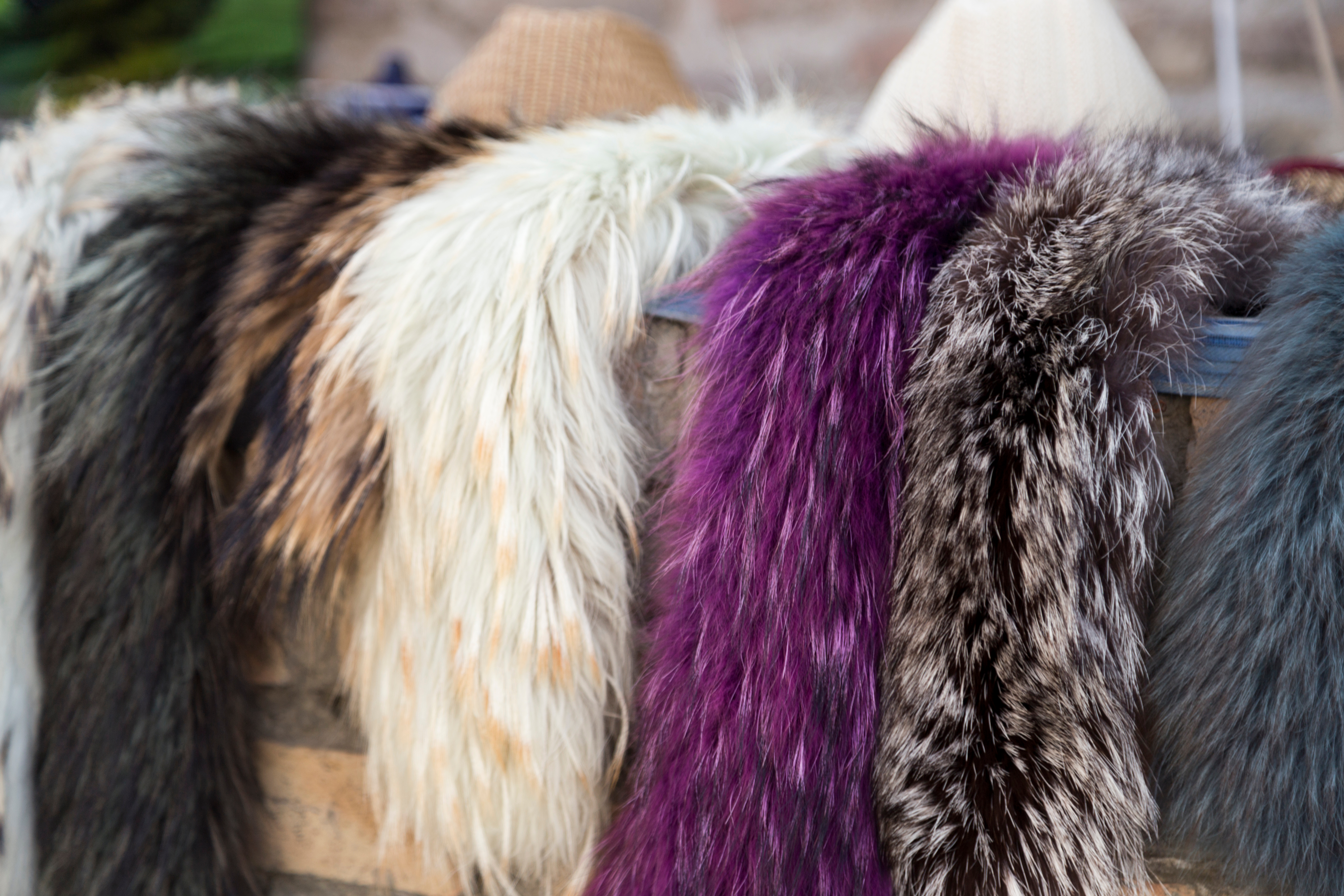
In Melbourne, a children’s vest made from the skins of two cats was recently found for sale in a store, falsely labelled as “100% Australian sheepskin.” Nearby, beanies marketed as acrylic were discovered to contain real fur from foxes and raccoon dogs. These findings, confirmed by laboratory testing, have reignited calls for a total ban on the sale and import of fur in Australia.
While the sale of cat and dog fur is banned under federal law, enforcement is nearly nonexistent. No seizures have been recorded in more than 20 years. Meanwhile, misleading product labels and unchecked imports mean consumers are often unaware they’re buying real fur—sometimes from companion animals like cats.
Mislabeled Fur – A Breakdown of What Was Found
The discovery of fur products mislabelled as synthetic or wool has sparked concern among Australian consumers and animal welfare advocates. A children’s vest, marketed as “100% Australian sheepskin or Australian wool,” was tested and found to be made from the skins of two cats, according to independent fibre analysis by Microtex. Two additional beanies sold at Melbourne’s Queen Victoria Market, labelled as “100% acrylic,” were identified as containing fur from foxes and raccoon dogs.
These items were available for sale at well-known retail locations: the vest at a store in the Suttons UGG chain and the beanies at a busy public market. What they have in common is that none of them were accurately labelled, and all contained real animal fur.
This isn’t an isolated case. Emma Hakansson, founding director of Collective Fashion Justice, stated that “every single time we have sent fur for testing the lab has confirmed it was illegally mislabelled.” She emphasized that this has been happening for years.

Under Australian consumer law, businesses face serious financial penalties—up to $50 million for companies and $2.5 million for individuals—for false or misleading product claims. Despite this, mislabelling continues to occur, and the laws banning the import and export of cat and dog fur (introduced in 2004) have not resulted in a single reported seizure by Australian Border Force in over two decades.
The concern extends beyond just the sale of fur—it’s the fact that consumers are unknowingly purchasing products sourced from animals, including domestic cats, under the assumption that they’re buying wool or synthetic materials. The lack of enforcement and transparency in product labelling has created a gap that allows these practices to persist.
The Legal Loopholes and Lack of Enforcement

Australia officially banned the import and export of cat and dog fur in 2004, but that hasn’t stopped these materials from ending up in stores. In fact, in the two decades since the ban took effect, the Australian Border Force has not reported a single seizure. This isn’t because the problem has been solved—it’s because there’s virtually no oversight. The absence of active enforcement has turned what should be a hard stop into a loophole. Fur sourced from animals overseas, including domestic cats, continues to appear in Australian markets disguised as wool, sheepskin, or synthetic blends. Without robust inspections or routine testing, these products pass through undetected, leaving both consumers and ethical standards unprotected.
Another issue is that Australia has no federal ban on the sale of fur products, regardless of the animal involved. This means even if the fur came from a country with poor animal welfare standards or was produced through unethical means, it can still be sold legally within Australia—so long as the seller claims ignorance or mislabels the item.
And that’s exactly what’s happening. In the recent case of the children’s vest made from cat fur, the retailer, Suttons UGG, said they were told by the manufacturer that it was made from a “kind of special fur,” but they couldn’t confirm if it was cat. This kind of ambiguity not only reveals gaps in the supply chain but also shows how easy it is for businesses to dodge accountability.
These mislabelled fur products also violate Australia’s consumer protection laws, which prohibit false or misleading claims. Companies can face fines of up to $50 million, and individuals up to $2.5 million. But unless someone tests the material, there’s little chance of enforcement. The system relies heavily on advocacy groups like Collective Fashion Justice and political figures like Animal Justice Party MP Georgie Purcell to do the investigative work. Without routine product checks, tougher labelling laws, and clear penalties for violations, businesses have little reason to change their practices. The current legal landscape enables bad actors and leaves ethical retailers at a disadvantage, while ordinary shoppers are kept in the dark about what they’re really buying.
How Mislabelled Fur Ends Up in Australian Stores

The presence of cat, fox, and raccoon dog fur in products sold at well-known Melbourne outlets isn’t just a local mishap—it’s part of a broader global issue. Much of the fur entering the market, especially from countries with weak animal welfare laws, is funneled through complex international supply chains. By the time the product reaches a store shelf in Australia, its true origin is often obscured or intentionally misrepresented.
This is how mislabelling happens. Many fur products are sourced from large-scale farms overseas, particularly in China and parts of Eastern Europe, where animals like cats, rabbits, foxes, and raccoon dogs are confined in cramped cages, often without adequate food, veterinary care, or humane slaughter practices. These furs are then processed and sold to manufacturers who blend them into garments and accessories. Instead of being clearly marked, they’re labelled as synthetic or natural wool to reduce costs and avoid ethical scrutiny.

Testing carried out by groups like Collective Fashion Justice shows that this is not an occasional mistake—it’s a recurring pattern. Every time they’ve sent fur samples from Australian stores for independent analysis, the results have confirmed that the materials were real fur, and that the labels were false. This points to a systemic failure, not a series of isolated incidents. The fact that retailers can sell cat fur under the label of “100% Australian wool” or fox fur as “acrylic” highlights how easy it is for illegal fur to slip into the market.
The lack of mandatory labelling laws for animal-derived materials further fuels the problem. In Australia, there’s no legal requirement for garments to disclose whether or not they contain real fur. This puts the burden on consumers to detect deception, which is nearly impossible without lab testing. Even retailers often claim they were unaware, relying entirely on information provided by suppliers—many of whom are thousands of kilometres away, operating under vastly different regulatory standards.
What Consumers Can Do – Practical Steps to Avoid Real Fur
For the average shopper, it can be difficult to tell the difference between real and fake fur—especially when labels are misleading or outright false. But there are steps consumers can take to reduce the risk of unknowingly supporting the fur trade.
1. Don’t trust the label alone: As this case has shown, items marked “100% acrylic,” “wool,” or even “sheepskin” may contain real animal fur. Labels are not always accurate or regulated, especially when dealing with imported goods or small market vendors.
2. Know how to spot real fur: A simple way to check at home or in store: Separate the fur fibers and look at the base. Real fur is attached to animal skin (leather), while faux fur typically has a fabric or mesh backing. Real fur also tapers at the ends, like human hair, and feels smoother and warmer to the touch. Faux fur is usually stiffer and more uniform.
3. Shop from fur-free certified brands: Some retailers are part of the Fur Free Retailer program, a global initiative that verifies companies who have publicly committed to not selling real fur. Checking this list can help you make informed choices without doing extra detective work for every purchase.
4. Ask direct questions: Whether you’re in a store or browsing online, contact the retailer and ask for confirmation of the materials used—especially in items with trim, linings, or pom-poms, which are common places for hidden fur. If the staff can’t give you a clear answer, that’s a red flag.
5. Be cautious at markets and small retailers: Many fur-tainted items are sold through independent stalls or discount outlets, where sourcing transparency is low. If the price seems too low for a wool or faux fur item, that might be a sign it’s real fur labelled incorrectly.
6. Support legislation: Stay engaged with campaigns pushing for fur bans and stricter labelling laws. Write to your local MP, support petitions, and follow advocacy groups like Collective Fashion Justice or the Animal Justice Party to stay informed.
Choosing not to buy fur—knowingly or unknowingly—isn’t just a fashion decision; it’s an ethical one. And while laws still lag behind in some areas, consumer awareness is a powerful driver of change.
Why a Complete Ban Is the Only Real Solution

Despite existing bans on cat and dog fur imports, the continued sale of mislabelled fur products in Australia shows that piecemeal regulation doesn’t work. As long as it remains legal to sell fur—regardless of the species involved—there will always be loopholes for unethical products to enter the market. Advocates argue that anything short of a complete ban on all fur sales and imports leaves room for abuse. Georgie Purcell, Animal Justice Party MP, stated plainly: “The time for regulation is done. The only thing left to do is to completely ban fur.” This stance is supported by fashion industry leaders like Emma Hakansson, who pointed to Melbourne Fashion Week’s decision to go entirely wildlife-free as a model for state-wide action. Victoria became the first region in the world where a major fashion week banned all fur, feathers, and wild animal skins—proof that industry reform is possible and already happening at influential levels.
Internationally, more regions are following suit. Countries like the United Kingdom, Israel, and cities such as Los Angeles and San Francisco have already banned the sale of fur. These examples show that fur bans are not only feasible, but increasingly expected in a world where animal cruelty and sustainability are major concerns for consumers.
The lack of enforcement, combined with ongoing mislabelling and a supply chain riddled with opacity, demonstrates why Australia can’t rely on partial restrictions or consumer vigilance alone. A complete and enforceable ban on all fur products—regardless of animal origin or label—would eliminate ambiguity, close legal loopholes, and align Australia with growing global standards.
Until that happens, unethical fur will continue to reach Australian stores, and consumers will continue to unknowingly support an industry built on animal suffering. The tools to stop this exist. What’s missing is the political will to act decisively.
