
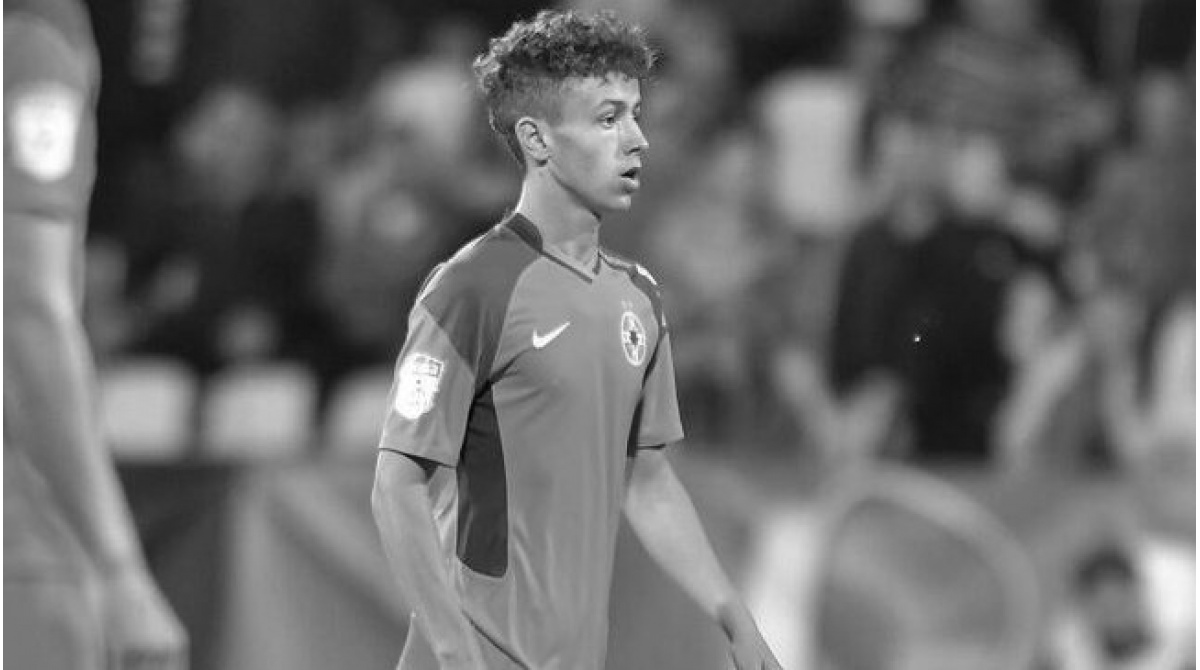
Romanian football community mourns the loss of 19-year-old midfielder Luca Manolache, who died on February 28 after suffering from a mysterious illness for months. His passing came under particularly heartbreaking circumstances on the phone with his mother during his final moments.
According to reports from Romanian media, Luca began feeling severely unwell while out with his mother, Ana’s godson. As his condition rapidly deteriorated, an ambulance was called, and during this medical emergency, Luca reached out to his mother by phone.
Upon receiving her son’s desperate call, Ana immediately rushed from Bucharest, where she works, to County Hospital in Târgovișt,e where Luca was being transported. Tragically, she didn’t make it in time. While still en route, Luca’s sister called to inform her that her son had passed away despite doctors’ efforts to save him.
Unusual Medical Cause

Autopsy results revealed an infrequent cause of death that has shocked medical professionals. According to official reports, Luca essentially drowned in his stomach acid, complicated by a severe lung infection.
Additional details suggest he suffered a ruptured aorta that triggered an internal hemorrhage. Medical staff who treated Luca reportedly told his mother that the circumstances surrounding his death were highly unusual even for experienced healthcare professionals.
Before his death, Luca had vomited large amounts of blood, after which his body began to react negatively with his stomach acid. This catastrophic physiological cascade ultimately led to his drowning from within, a phenomenon rarely seen, especially in someone so young and previously athletic.
While official autopsy findings provide a clinical explanation for how Luca died, they don’t fully address why his body reacted this way or what underlying condition might have precipitated such a severe reaction. This medical mystery compounds tragedy for the family who spent months seeking answers to his deteriorating health.
Months of Mystery Symptoms

Luca’s final medical crisis didn’t emerge suddenly but followed months of concerning health episodes that had progressively worsened since August 2024, eventually forcing him to stop playing football.
Throughout this period, Luca battled an array of debilitating symptoms that baffled medical professionals. He suffered from prolonged fatigue that seemed disproportionate to his activity levels. Dizziness frequently overcame him, alongside chills that would strike unexpectedly. Perhaps most alarmingly, he experienced bloody stools, a symptom that typically warrants immediate medical investigation.
His deteriorating condition became increasingly evident on the football pitch. Formerly energetic and skilled, Luca struggled to complete even half a match. During one particularly concerning incident, his symptoms became so severe that an ambulance had to be called when he complained that his vision had suddenly turned black, leaving him essentially blind temporarily.
Physical assessments revealed a shocking decline in his stamina and resilience. During one medical evaluation, Luca could only run on a treadmill for approximately 10 minutes before stopping. More concerning still, after stopping exercise, he immediately began shaking uncontrollably and developed a fever and physiological responses suggesting serious underlying issues.
Teammates and coaching staff initially wondered if he might be unprepared for matches or not training adequately. However, as a pattern of symptoms persisted and worsened, it became clear something was medically wrong with the young footballer.
Extensive Medical Testing

Throughout months of declining health, Luca underwent extensive medical testing as healthcare providers attempted to identify the cause of his symptoms. Frustratingly, many of these tests yielded expected results, creating diagnostic challenges.
X-rays of his lungs came back precise multiple times, as did numerous blood tests, creating false reassurance that perhaps nothing serious was wrong. During one particularly severe episode, Luca spent two weeks hospitalized as doctors conducted more comprehensive examinations.
One doctor noted peripheral blood vessels in Luca’s lungs during these investigations. While this finding wasn’t considered serious then, it prompted treatment with anticoagulant injections and medications to prevent blood clotting, which Luca followed for approximately six months.
Throughout this treatment period, medical professionals prohibited him from exercising. An onerous restriction for dedicated young athletes. His parents, desperate for answers, took the additional step of bringing him to private clinics for further examinations and second opinions.
Despite all these medical interventions and investigations, no definitive diagnosis emerged that explained the full constellation of his symptoms or predicted catastrophic outcomes that would eventually claim his life. This lack of conclusive findings left Luca and his family in medical limbo, knowing something was wrong but uncertain precisely what they were fighting.
Football Career Cut Short
Before illness overtook his life, Luca showed promising talent as a midfielder. His career included stints with prestigious Romanian clubs, including former Steaua Bucharest (now known as FCSB) and Dinam,o before joining Metaloglobus București.
His football journey reflected the dedication and passion typical of young players dreaming of professional success. Known for his commitment, Luca reportedly hated missing any game or training session, making enforced medical absence from the sport all the more difficult for him to accept.
Metaloglobus București, in their tribute message, recalled: “The last appearance in the Metaloglobus shirt was on August 24, 2024, in the match against CS Afumati, playing 10 minutes from the reserve position.”
This final brief appearance just 10 minutes as a substitute marked the end of a football career that had barely begun. Following this match, the club noted: “Following the game against CS Afumati, the player complained of fatigue during training, which led the technical staff to stop him from training and recommend thorough medical examinations.”
This decision by the coaching staff potentially saved Luca from experiencing a medical crisis on the pitch, though ultimate tragedy couldn’t be averted. Their recommendation for a comprehensive medical examination reflected growing concern about his health that transcended normal athletic fatigue or temporary illness.
At just 19, what should have been the building phase of a promising sports career instead became a prolonged medical mystery that ultimately cut his life tragically short.
Family Left Devastated
For Luca’s parents, Ana Maria and Viorel Manolache, their son’s death represents unimaginable loss made more painful by months of watching him suffer without clear explanation or effective treatment.
Ana, who works in Bucharest, experienced a particularly haunting final connection with her son through that desperate phone call where he expressed fear and inability to continue fighting. Her frantic journey to reach him at the hospital only to learn en route she was too late adds another layer of heartbreak to the family’s experience.
During their brief conversation, Luca’s voice was filled with fear, and he uttered what would become his final words to her: “Mum, Mum, I can’t do it anymore.”
Reports differ slightly on what followed. According to some sources, he asked his mother, “Do you think I’m dying?” while another account suggests he directed this haunting question to a nurse attending to him. Regardless of whom he asked, such words from someone so young reveal profound awareness and fear, making his story even more tragic.
On the day Luca died, he had been with Ana’s godson when his condition suddenly worsened. This family member called an ambulance, initiating an emergency response that ultimately couldn’t save the young footballer’s life. Having another family member witness Luca’s distress yet being unable to prevent tragedy likely compounds the family’s grief.
Throughout Luca’s months-long health struggle, his parents actively sought answers and solutions. Their pursuit of multiple medical opinions and willingness to seek private healthcare reflect a parental determination to find help for their suffering child. That these extensive efforts still couldn’t prevent his death likely leaves them with painful questions about what more could have been done.
Romanian media reports describe the family as utterly devastated, an expected response to losing a child so young under such confusing and frightening circumstances. Beyond grief of loss itself, lingering questions about what exactly caused Luca’s death and whether it might have been prevented with different or earlier interventions may haunt the family for years to come.
Team Pays Tribute
Metaloglobus București, where Luca last played, expressed collective grief through heartfelt social media tribute. Club wrote: “We are shocked and deeply saddened by this tragic loss. His love for football and his smile brought happiness on the field.”
This sentiment captures the dual impact of Luca’s death, both shock at losing someone so young and recognition of the joy he brought to sport and teammates during his brief time with the club. Reference to his smile suggests a personality that transcended athletic ability, a young man who brought positive energy to those around him.
Within the football community, Luca was affectionately known as “Mano,” a nickname that reflected personal connections beyond professional relationships. The team uses this nickname in their tribute (“Rest in peace, dear ‘Mano'”) signals closeness and familiarity lost with his passing.
The club extended sincere condolences to the grieving family, acknowledging the devastating impact of losing someone so young and promising: “Sincere condolences to the grieving family; the entire Metaloglobus family is with you in these devastating moments.”
Football clubs often describe themselves as “families,” and such bonds become particularly evident in moments of tragedy like this. Metaloglobus positioned themselves as sharing in grief rather than merely acknowledging the loss of a player, suggesting Luca had become an integral part of their community despite a relatively short time with them.
Medical Mystery Remains

Despite autopsy findings providing an immediate cause of death, the broader medical mystery surrounding Luca’s condition remains largely unsolved. While drowning in stomach acid explains the final mechanism of his death, the underlying condition that led to this catastrophic physiological failure hasn’t been fully explained.
For months, Luca experienced symptoms suggesting serious illness, yet multiple medical examinations failed to identify a definitive diagnosis. X-rays, blood tests, and other diagnostic procedures repeatedly came back normal or inconclusive, creating the false impression that perhaps nothing seriously wrong existed.
Doctors’ presumption that Luca suffered from “strong infection” led to treatment with antibiotics, paracetamol, and pain medication interventions that didn’t address fundamental issues affecting his health. The finding of peripheral blood vessels in the lungs prompted a six-month course of anticoagulant therapy, but this, too, proved insufficient to prevent a fatal outcome.
The medical community may find valuable lessons in analyzing what was missed in Luca’s case. Could different diagnostic approaches have identified a serious underlying condition sooner? Were signs of potential aortic weakness or vulnerability present but overlooked? Did a constellation of seemingly unrelated symptoms actually represent a recognizable syndrome that went unidentified?
For other young athletes experiencing unusual symptoms, Luca’s story may serve as a cautionary tale about the importance of persistent and comprehensive medical investigation when symptoms don’t resolve or worsen despite initial negative findings.
What Luca Manolache’s Story Teaches Us
Luca Manolache’s story raises important questions about how we care for young athletes. His case is a powerful reminder that sometimes, symptoms like extreme fatigue or dizziness aren’t just signs of a tough training session—they can point to something much more serious. His story underscores the need for medical staff and sports organizations to stay alert and take early warning signs seriously.
The decision by Metaloglobus București to stop Luca from training and recommend further medical checks was a responsible move that more clubs should consider. For doctors, it’s a reminder that what might seem like isolated symptoms could actually be part of a bigger problem—something that could easily be missed if not looked at as a whole.
Although Luca’s life and career were tragically cut short, his story has already sparked important conversations about how we monitor the health of young athletes. His death reminds us that getting the right diagnosis early can make all the difference. As the football community mourns, we can only hope that the lessons from Luca’s life will lead to better care and prevention for others.
Featured Image Source: Luca Manolache on Instagram
