
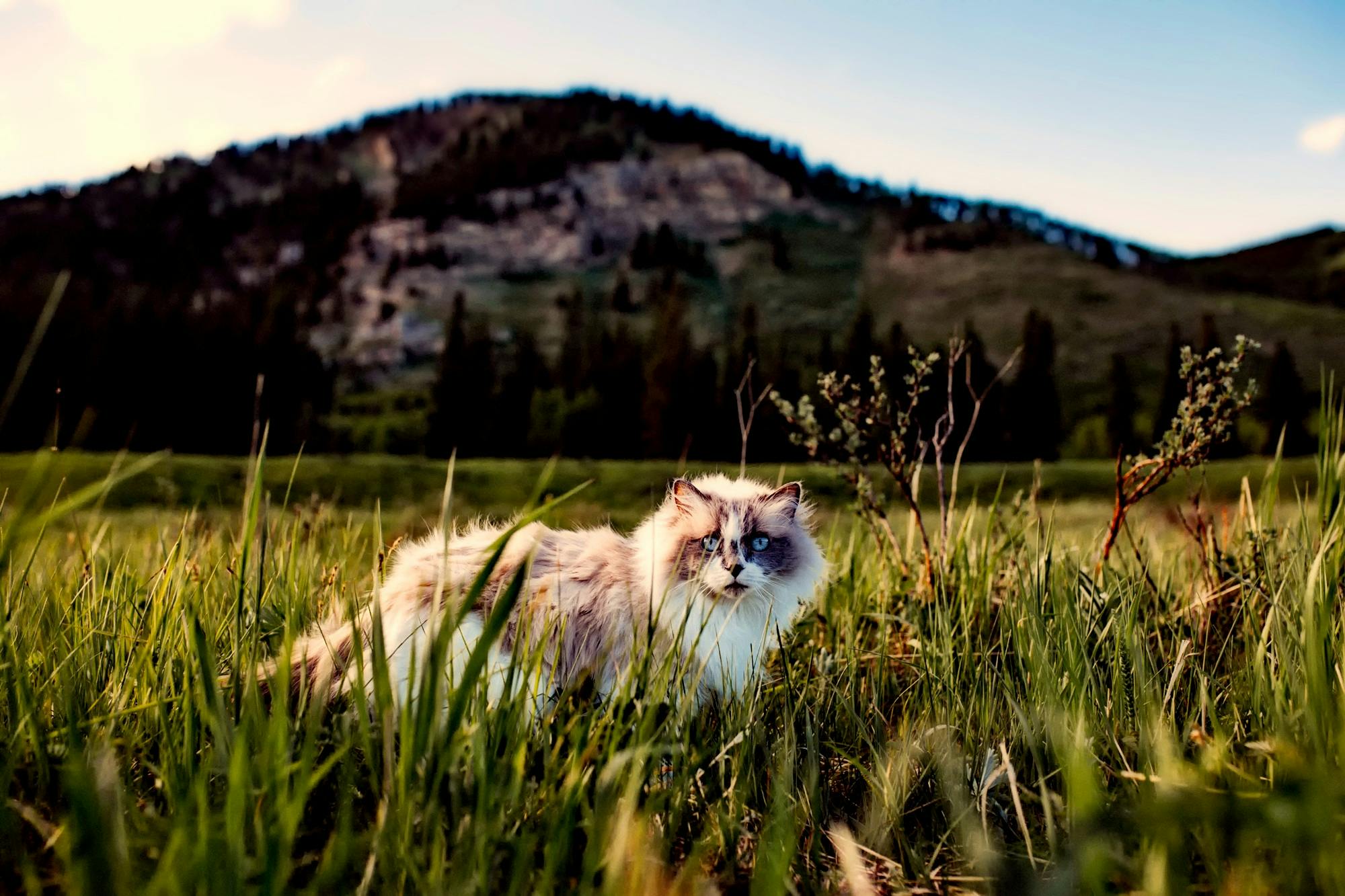
High in the frozen wilderness of Arunachal Pradesh, where icy winds scour mountaintops and valleys echo with silence, an unexpected celebrity has emerged. A single camera-trap image, grainy but undeniable, has revealed the first photographic evidence of the elusive Pallas’s cat in this part of the eastern Himalayas. At nearly 5,000 metres above sea level, a round-faced feline with a scowl that could curdle milk stared into the lens, unaware that it was about to become an internet icon. The Pallas’s cat, also known as the manul, has long been the stuff of whispers in conservation circles rarely seen, even more rarely photographed, and often mistaken for myth. Yet here it is: not a rumor, not a shadow, but a flesh-and-fur reminder that the Himalayas remain a landscape of secrets waiting to be uncovered.
The discovery is more than just a whimsical photograph of nature’s grumpiest cat. It is a scientific milestone, a conservation rallying point, and a cultural spark that has already spread across social media. Beneath the viral charm of the manul’s perpetual scowl lies a story of painstaking fieldwork, community effort, and ecological wonder. Researchers from WWF-India and the Arunachal Pradesh Forest Department endured months of brutal Himalayan weather, trekking through treacherous terrain to place 136 camera traps across 2,000 square kilometres. Their persistence paid off not only with the Pallas’s cat but also with unprecedented records of other wildcats, owls, and squirrels pushing the limits of altitude. This is a story about resilience of wildlife, ecosystems, and the humans working to understand and protect them. It is also a reminder that sometimes the smallest, most irritable-looking creatures can spark the biggest waves of curiosity and hope.
The Cat Behind The Scowl
To the casual observer, the Pallas’s cat looks like a house cat that woke up on the wrong side of the cave. Its wide face, squat legs, and plush coat give it an expression that is simultaneously comical and intimidating. But every feature of this animal is a carefully honed evolutionary adaptation. The low-set, rounded ears flatten against the head, helping the cat blend seamlessly into rocky landscapes where prey might otherwise notice movement. The dense, silvery-grey fur is not just luxurious it is armor against the ferocious cold of high-altitude winters, where temperatures plummet far below freezing. Unlike more athletic big cats, the manul is built for stealth, not speed, preferring to crouch in silence until the moment to ambush arrives.
This lineage is ancient. Genetic studies suggest that Pallas’s cats diverged from leopards more than 5 million years ago, making them one of the oldest surviving wild feline species. In a sense, they are living fossils, carrying forward a design that has endured through ice ages and shifting climates. At roughly the size of a domestic cat, the manul hardly looks imposing, but its survival strategy has been remarkably successful.
It hunts rodents, birds, and reptiles, primarily during the twilight hours, when cover is deepest and prey is less wary. In one of nature’s more endearing survival tricks, it even stands on its thick, bushy tail to protect its paws from the frozen ground. These adaptations are not just quirky facts; they are the blueprint of a predator that has mastered the art of survival in some of Earth’s harshest environments.
For conservationists, however, the Pallas’s cat remains frustratingly enigmatic. Its elusive nature makes it one of the least studied wild cats in the world. Observing its habits directly is nearly impossible, and its range maps are often speculative, based on scattered reports and occasional photographic confirmations. That is why the image from Arunachal Pradesh is so vital. It doesn’t just add a dot on a map; it provides a concrete foothold for future research, a chance to ask new questions about distribution, population size, and ecological role. Beneath the viral jokes about its scowl lies an urgent truth: to protect the Pallas’s cat, we must first learn to understand it.
How The Surprise Was Caught

The photograph was not the result of luck alone. Between July and September 2024, teams from WWF-India and the Arunachal Pradesh Forest Department hauled camera equipment across landscapes where most humans rarely venture. The survey area stretched across West Kameng and Tawang districts remote highlands carved by glaciers and bound by snow. Researchers and local guides placed 136 camera traps at 83 sites, often at elevations above 4,000 metres, where oxygen thins and every step is laborious. Once set, the cameras remained in place for more than eight months, silently recording movement through winter storms, blizzards, and freezing nights.
When the results came back, they were extraordinary. At an elevation of 4,992 metres, one camera had captured a Pallas’s cat, its fur bristling against the cold, eyes narrowed in characteristic displeasure. This was not only the first photographic evidence of the species in Arunachal Pradesh but also one of the highest elevations at which the animal has been documented globally. The discovery extends the known range of the manul, which had previously been recorded in Sikkim, Bhutan, eastern Nepal, and more recently, Himachal Pradesh. In one shutter-click, Arunachal Pradesh moved from blank space to confirmed habitat.
The sheer scale of the effort behind this discovery cannot be overstated. Researchers endured altitudes that challenge even seasoned climbers, battling not just geography but also logistics. Supplies had to be carried on foot or by pack animals. Cameras had to be positioned in landscapes that were both scientifically promising and physically punishing. That dedication speaks to the growing recognition of Arunachal Pradesh as a biodiversity hotspot — one whose secrets will only be revealed through persistence and partnership. And as this survey shows, the payoff can be monumental: rewriting what we know about where species live and how they endure.
A Mountain Of Cats: The Species The Survey Found

The Pallas’s cat may have stolen the spotlight, but it was not the only star of the survey. The camera traps delivered a cascade of revelations about high-altitude wildlife. A common leopard, normally considered a lower-altitude species, was photographed at 4,600 metres the highest such record for India. A clouded leopard appeared even higher, at 4,650 metres, a surprising altitude for an animal often associated with forested foothills. The marbled cat, another elusive species, was spotted at just over 4,300 metres, pushing the boundaries of its known range. And of course, the snow leopard, long celebrated as the apex predator of the Himalayas, made several appearances, proving that even legends leave their paw prints for science.
Beyond felines, the cameras revealed a supporting cast of unexpected characters. A Himalayan wood owl appeared at over 4,100 metres, and a grey-headed flying squirrel was photographed at around 4,500 metres both records for their species in India. These sightings suggest that wildlife communities are not only surviving but thriving at elevations once thought inhospitable. Each new record challenges assumptions about the limits of animal adaptation and hints at broader ecological shifts that are still poorly understood.
Perhaps the most intriguing behavioral observation came not from altitude but from interaction. At one site, both a snow leopard and a common leopard were captured scent-marking the same location. This rare overlap raises fascinating questions about how large predators navigate territory and resources in shared landscapes. Are these cats adapting to coexistence as ranges shift? Or are they in conflict, vying for dominance in shrinking alpine niches? For ecologists, such images are gold rare glimpses into the secret lives of predators.
Why This Discovery Matters For Conservation

On the surface, the Pallas’s cat’s viral debut feels like a lighthearted moment, an animal with a perpetual scowl giving us something to smile about. But beneath the levity lies a much more serious story about conservation, climate, and coexistence. Confirming the presence of the manul in Arunachal Pradesh does more than add a quirky new face to the state’s wildlife roster it reshapes how scientists and policymakers think about conservation in the region.
First, range confirmations like this directly affect conservation planning. Protected areas, funding priorities, and anti-poaching strategies are guided by knowledge of where species live. A confirmed population of Pallas’s cats could mean expanded monitoring, new research initiatives, and greater investment in safeguarding high-altitude rangelands. Second, the survey highlights the fragility of alpine ecosystems. These are environments finely balanced between climate, prey availability, and human activity. Even minor disruptions roads, overgrazing, poaching, or climate change can cascade into major ecological consequences.
The survey also demonstrates how much we still don’t know about high-altitude biodiversity. If animals like leopards, owls, and squirrels are being documented at higher elevations than ever before, is this evidence of adaptation, migration, or desperation in the face of warming climates? Scientists stress that more data is needed to answer these questions. Finally, the discovery underscores the role of local communities. Many of the camera trap sites were only accessible with the help of herders and guides who know these mountains intimately. Their knowledge, stewardship, and participation are not just helpful they are essential. Conservation in the Himalayas must work with, not against, the people who have lived there for centuries.
For experts like Rishi Kumar Sharma of WWF-India and Ngilyang Tam of the Arunachal Pradesh Forest Department, the message is clear: discoveries like this remind us that the Himalayas remain one of the world’s great biodiversity frontiers. Protecting them is both a local responsibility and a global imperative.
What This Tells Us About The Himalayas

The image of a scowling manul has already circled the globe, but what it represents is far larger than a viral meme. It tells us that even in 2025, vast parts of the world’s mountains remain underexplored. The Himalayas, often portrayed as remote and desolate, are alive with ecological complexity. Yet each new discovery brings with it a cascade of questions. Does the presence of the Pallas’s cat indicate a stable, breeding population in Arunachal Pradesh, or are these transient individuals passing through? How many such cats exist across the Himalayas, and how connected are their populations to one another?
These uncertainties highlight the need for deeper, more sustained research. Camera traps are invaluable tools, but they offer only snapshots. To truly understand species like the Pallas’s cat, scientists will need to combine genetic analysis, prey surveys, and perhaps even satellite tracking. Equally important is the need to understand the drivers behind altitude shifts. Are prey species moving upward as warming alters vegetation patterns, pulling predators along with them? Or are predators adapting to exploit underutilized niches? These are not idle questions; the answers will shape how we predict and mitigate the impacts of climate change on alpine ecosystems.
Another layer of complexity lies in the human dimension. The same camera traps that recorded wild cats also photographed herders and their livestock. For centuries, pastoral communities have coexisted with predators in the Himalayas, balancing protection of flocks with respect for the land. But as pressures from tourism, development, and climate change grow, that balance is under strain. Understanding human–wildlife dynamics is not just an academic exercise; it is key to designing conservation strategies that are fair, effective, and sustainable.
How To Turn A Viral Snapshot Into Lasting Protection

The viral fame of the Pallas’s cat offers a rare opportunity. For once, conservation has a mascot that combines scientific importance with internet appeal. But turning that attention into action requires strategy. Experts are already outlining a path forward, and it begins with expanded monitoring. More camera traps, seasonal surveys, and even GPS collaring could help map the true range and behavior of high-altitude species. Such data would allow conservationists to make informed decisions about protected areas and management practices.
Equally important is prioritizing high-altitude habitats in conservation planning. Too often, rangelands and alpine zones are overlooked in favor of forests or wetlands. Yet these cold deserts are vital ecosystems, supporting unique species and acting as water towers for millions downstream. Recognizing their importance and integrating them into protected networks is essential.
Community engagement is another pillar. The survey’s success was built on collaboration with local villagers and guides, and future efforts must deepen those ties. Training herders as eco-guards, creating community-led tourism initiatives, and integrating traditional knowledge into monitoring can all build resilience. Conservation cannot succeed without the support of the people who share space with these animals.
Mitigating infrastructure impacts is also critical. Roads, hydropower projects, and night lighting all threaten fragile alpine ecosystems. Policymakers must weigh development needs against ecological costs, and when possible, redesign or reroute projects to minimize harm. Protecting prey populations is equally urgent. Pikas and voles, the manul’s primary food sources, are sometimes targeted by poisoning campaigns in efforts to protect grazing lands. Safeguarding these small mammals means safeguarding the predators that depend on them.
Finally, there is the matter of disease and competition. Free-ranging dogs, often associated with herding, pose both direct threats and indirect pressures on wildlife. Managing these populations through vaccination, sterilization, and community education could reduce risks to species like the Pallas’s cat. Conservation, in short, is a web of interconnected actions, each supporting the resilience of the whole.
A Grumpy Icon, A Hopeful Future
In the end, the viral image of the Pallas’s cat is both lighthearted and profound. Its perpetually disgruntled expression has delighted millions online, but it has also opened a window onto a world that remains astonishingly underexplored. That one photo is a scientific milestone, a conservation call, and a cultural touchstone rolled into one. It demonstrates that wonder still exists in the wild, and that even in an age of satellites and drones, there are discoveries waiting just beyond the next ridge.
For scientists, the manul is a research puzzle a chance to ask new questions about evolution, adaptation, and survival. For policymakers, it is a reminder that fragile ecosystems need urgent protection. For local communities, it is recognition that their stewardship of these lands matters. And for the rest of us, it is a reason to care a small, grumpy ambassador reminding us that the wild still lives, still surprises, and still needs defending.
The Pallas’s cat may never know that it has gone viral. It will continue prowling rocky slopes, standing on its tail in the snow, glaring at the world with the same eternal disapproval. But for us, its brief appearance before the camera is a gift proof that mystery endures, and a call to ensure it is not lost. If conservation begins with wonder, then perhaps a scowling little feline has just given us the spark we need to protect the high Himalayas for generations to come.
