
What’s more familiar than the sound of paws scrambling toward the door when the postman arrives? For many pet owners, it’s a harmless routine—dogs bark, tails wag, and letters hit the floor. But what happens when that everyday moment takes a violent turn?
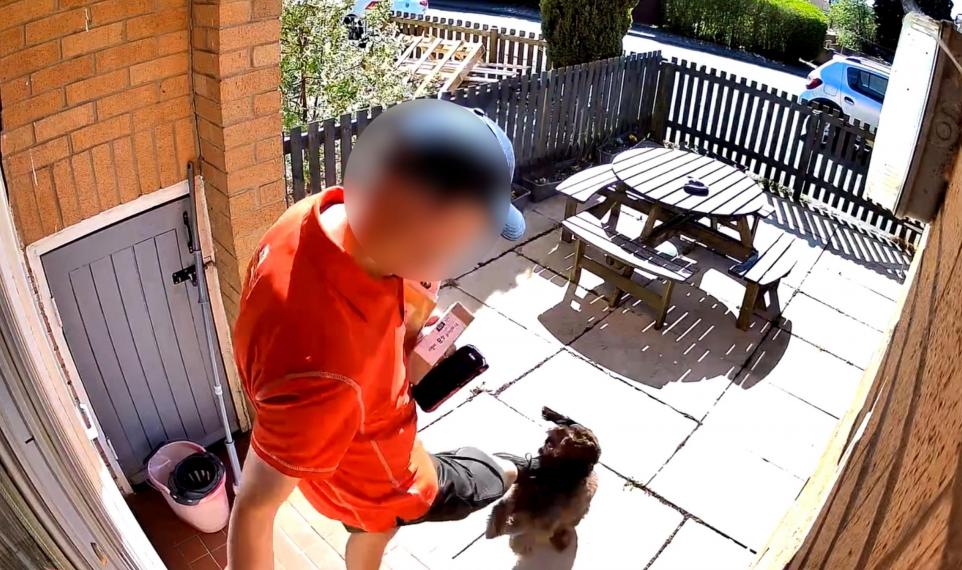
In Leeds, a doorbell camera captured a postman kicking a one-year-old cockapoo named Bella in the face—an act that set off a wave of outrage, debate, and scrutiny. The footage showed no snarling or lunging, just a small dog running toward a visitor with visible excitement. Seconds later, she was yelping in pain and cowering on the couch.
Royal Mail stood by its broader safety policy, citing more than 2,200 dog attacks on postal workers in the past year. But this incident struck a nerve—because what many saw wasn’t self-defense. It was an overreaction. A trusted public employee using force on a dog that posed no clear threat.
Where should the line be drawn between caution and cruelty? How much responsibility do dog owners carry—and what happens when delivery workers make the wrong call?
What Really Happened
On April 17 in Leeds, a one-year-old cockapoo named Bella was kicked in the face by a Royal Mail postman. The moment was recorded on a doorbell camera and quickly spread online, sparking public outrage.
According to Bella’s owner, Nikki Walker, the puppy had leapt through a ground-floor window after hearing the garden gate open—a typical reaction from a dog excited by a visitor. Bella ran toward the postman, tail wagging, showing no signs of aggression. As she approached, the man turned and kicked her directly in the face with his right foot.
The impact sent Bella tumbling backwards. She immediately squealed, ran into the house, and curled up on the sofa—shaken and visibly in pain. Nikki, who was working from home, rushed outside after hearing the yelp. When she confronted the postman, he denied kicking the dog and claimed he had simply raised his leg to stop her from jumping. His parting words: “Do what the f*** you want.”

Once Nikki reviewed the footage, her anger turned to disbelief. She described Bella as affectionate and docile—”a cuddle-loving puppy” who has never shown aggression toward anyone. Her daughter, who also watched the video, was reportedly in tears.
Despite the footage, Royal Mail’s initial response focused on worker safety. They offered Nikki £100 in compensation and requested she install a new fence—at her own expense—before mail service to her address could resume. The postman was eventually removed from her delivery route, but no details were provided about further disciplinary action.
What made the situation worse, in the eyes of many, was how quickly the conversation shifted from the dog’s trauma to the company’s protocols. And while Royal Mail cited two previous worker complaints about Bella growling—none involved actual bites or physical harm.
For many who saw the footage, Bella wasn’t a threat. She was a friendly dog reacting to a familiar sound, and the postman’s response didn’t look like fear—it looked like aggression.
A Tense History

Dog encounters are nothing new for postal workers. The image of a dog chasing the mailman isn’t just a cartoon stereotype—it’s based on real, frequent incidents. In the UK alone, Royal Mail reported 2,206 dog attacks on postal staff in the 12 months leading up to March 2024, a 15% increase from the year before. These aren’t minor nips, either—some incidents result in life-altering injuries, with workers sidelined for weeks or even months. One attack led to an entire street in Liverpool being cut off from mail service for six months.
This long-standing friction often comes down to instinct. Dogs are territorial. They react to perceived intrusions—someone entering a garden, reaching through a letterbox, or walking up the front path. And for postal workers, those same actions are part of their daily routine. Over time, Royal Mail has adapted by issuing safety guidance, suspending deliveries to addresses deemed high-risk, and even pursuing legal action against dog owners when necessary.
But the conflict isn’t just about safety—it’s about unpredictability. Most dog-related incidents happen in the front garden or at the door. Some dogs bark but stay put. Others slip through a gate or bolt out of the house. And postal workers are expected to make split-second decisions in these moments, not all of which are well-judged.
Still, not every encounter with a dog justifies physical force. The tension between risk and responsibility is where this issue gets murky. Yes, workers face real danger. But when an animal shows no aggressive behavior—no barking, no lunging, no signs of threat—a kick to the face raises serious questions.
Bella’s case stands out because it challenges the assumption that all dog-postman interactions are confrontational by default. It shows what can happen when a real safety concern becomes a blanket justification for harmful actions. And it forces both postal services and pet owners to reconsider how we define—and respond to—risk.
Understanding the Line Between Safety and Cruelty

Dog-related injuries are a serious and growing concern for postal workers. Royal Mail reported over 2,200 dog attacks on staff in the past year alone—a 15% increase from the previous year. Some of those incidents have led to life-changing injuries, time off work, and even private prosecutions. Given these numbers, it’s clear why the company emphasizes safety protocols and urges pet owners to secure their dogs during deliveries.
But the question in Bella’s case is not whether safety matters—it’s whether the postman’s response matched the situation in front of him.
The doorcam footage shows Bella running toward the delivery worker with her tail wagging. There’s no growling, no barking, and no signs of aggression. She doesn’t leap or snap. Instead, she’s abruptly kicked in the face mid-stride. For many viewers—including dog trainers, animal advocates, and everyday pet owners—that moment didn’t resemble a defensive action. It looked like a deliberate kick.
Royal Mail maintained that the postman was acting to protect himself and cited previous reports of Bella growling at other workers. But even if those reports were accurate, they involved no contact, no chasing, and no injuries. More importantly, on the day in question, there was no indication that Bella posed a threat.
Self-defense isn’t just about fear—it’s about proportional response. A worker turning away, stepping back, or even using a firm vocal command would’ve been understandable. A boot to the face isn’t just excessive—it’s violent. And when that action is captured on video, with no visible provocation, it stops being a matter of “safety” and becomes a question of judgment.
This also highlights a larger issue: Are delivery workers given the tools and training to assess animal behavior under pressure? Recognizing the difference between an enthusiastic dog and an aggressive one isn’t always easy—but it’s critical. Because when they get it wrong, the consequences aren’t just professional. They’re personal—for both the pet and the family behind the front door.
What Dog Owners Need to Know

Under UK law, it’s a criminal offence to have a dog that is “dangerously out of control,” even on your own property. According to the Crown Prosecution Service, this doesn’t just mean if your dog attacks someone. If your dog causes someone to fear they might be injured, that alone can count as being out of control. And it’s not just humans—if your dog harms another animal or causes a person to fear injury while trying to protect their pet, you could still be liable.
There are limited exceptions. One of them is the so-called “householder exemption,” which protects you if a trespasser is attacked inside your home. But this does not apply to delivery workers. In a key case, the court ruled that putting fingers through a letterbox does not make a postman a trespasser. The same logic applies to front gardens and driveways.
If your dog is found to be out of control and causes harm, the penalties can be serious:
- Injury to a person can lead to up to 5 years in prison, or 14 years if the person dies.
- Injury to another animal or even causing someone fear can lead to fines or control orders.
- Courts may also order your dog to be destroyed, regardless of whether it was the first incident.
In addition to criminal consequences, you could face a civil lawsuit. Royal Mail offers compensation for injured staff, and dog owners can be held liable under the Dogs Act 1871. That means even if you avoid criminal charges, you may still have to pay compensation for injuries, time off work, or psychological distress.
Royal Mail has made it clear: if your dog is deemed a risk—even if there’s no physical contact—they can suspend deliveries to your home. This policy has already been enforced in some areas, including an entire street in Liverpool that went without mail for six months after a serious dog attack.
For dog owners, the takeaway is simple: being friendly or small doesn’t exempt a pet from scrutiny. If your dog is able to reach the front garden during delivery hours, you’re at risk. Even a one-off incident can lead to mail suspension, legal trouble, or worse.
How to Prevent Incidents Like This

Preventing incidents like the one involving Bella doesn’t require major changes—just a few clear steps that reduce risk for everyone involved. Whether your dog is anxious, protective, or just overly excited, simple precautions can prevent stressful encounters or potential injuries during deliveries.
- Secure your dog during delivery hours: Keep your dog away from areas with delivery access. Use child gates indoors and make sure outdoor gates are latched and locked. Don’t leave windows or doors open where your dog could slip through. Even a quick moment of distraction is enough for some dogs to bolt.
- Train for door behavior: Teach basic commands like “stay,” “leave it,” or “go to bed” to control your dog’s behavior when someone knocks or rings the bell. Dogs don’t need to be aggressive to intimidate someone—they just need to approach quickly or bark loudly. Professional training can help if your dog struggles with boundaries at the door.
- Install secure physical barriers: If your dog has access to the front garden or yard, a proper fence is essential. Make sure gates are high enough, can’t be jumped, and self-close with a latch. Delivery suspensions from Royal Mail or other services are often triggered by inadequate fencing.
- Use clear signage: Put up signs that say “Dog in Garden – Do Not Enter” or “Please Wait, Dog Inside.” It sets clear expectations for delivery workers before they walk onto your property.
- Leverage technology: Use a video doorbell to monitor interactions. It gives visibility into your dog’s behavior and can document how delivery staff respond. Smart locks or secure drop boxes can also help reduce direct contact, especially if you’re not home.
- Understand and respect your dog’s triggers: Know what makes your dog react—whether it’s strangers, high-visibility jackets, or sudden noises. Don’t assume they’ll stay calm just because they’ve “never done it before.” Honest self-assessment can prevent problems before they happen.
None of these steps are complicated—but they’re often overlooked until something goes wrong. Taking the time to create physical boundaries, train key behaviors, and communicate clearly protects everyone: your dog, your delivery workers, and your own peace of mind.
Safety Without Cruelty

At the end of the day, this isn’t just a one-off incident—it’s a reminder of how quickly things can go wrong when we rely on assumptions instead of awareness. Delivery workers shouldn’t have to feel unsafe doing their jobs, and dogs shouldn’t be treated like threats just because they happen to be in the wrong place at the wrong time. Both safety and compassion can—and should—exist in the same space.
The real issue here is how we prepare for these everyday interactions. It’s easy to react in the moment, especially when you’re under pressure or unsure of what a dog might do. But that’s exactly why training matters. It’s why boundaries matter. And it’s why responsibility needs to be shared—between employers who equip their staff to make good decisions, and pet owners who create environments that minimize risk. Blaming one side or the other misses the point. The system only works when everyone involved takes their part seriously.
The truth is, this isn’t about choosing between people and pets. It’s about choosing to slow down, pay attention, and act like both matter. Because they do. A little more awareness, a little more empathy, and a little more accountability could prevent a lot of harm. That’s not idealism—it’s just basic common sense.
Featured Image Source: Kennedy News and Media
