
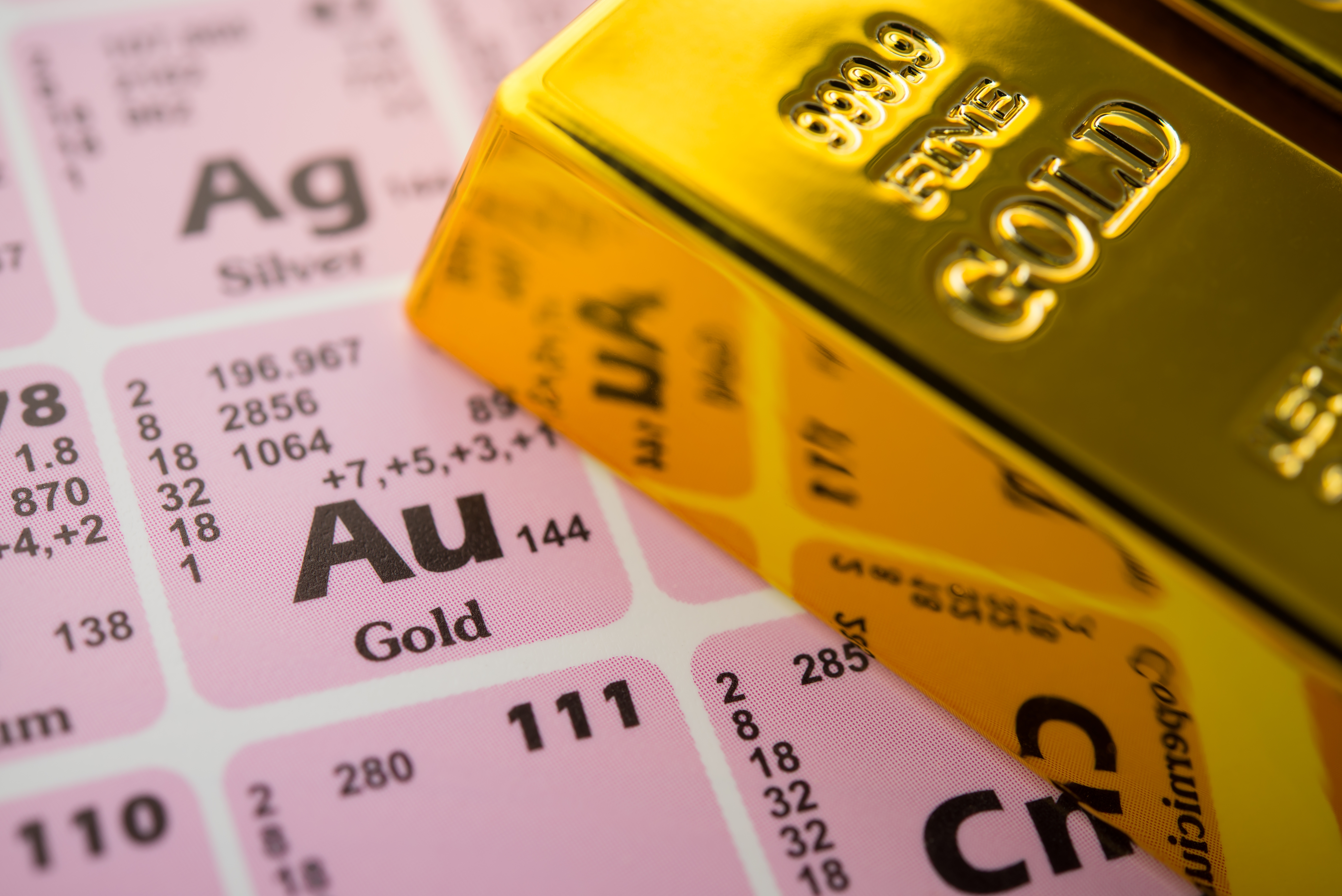
For centuries, alchemists huddled in shadowy laboratories, mixing potions and chanting incantations, desperately trying to transform common lead into precious gold. They called it chrysopoeia, the art of making gold, and countless fortunes were squandered in pursuit of this impossible dream. These medieval proto-scientists believed that since lead and gold had similar weights, one could be transformed into the other with the right magical formula.
They were wrong about the magic part. But it turns out they weren’t entirely wrong about the transformation itself.
Scientists at CERN have just achieved what those ancient alchemists could only dream of. Using the Large Hadron Collider, they’ve successfully converted lead atoms into gold. Before you quit your job to become a particle physicist, though, there’s a catch. There are several catches. However, the fact remains: for the first time in history, we’ve witnessed the deliberate transformation of lead into gold under controlled conditions, and we’ve the data to prove it.
The Age-Old Obsession: Alchemists’ Search for Gold

The quest to turn base metals into gold dominated scientific thought for over a thousand years. Alchemists observed that lead and gold shared remarkably similar densities—lead weighs 11.34 grams per cubic centimeter, while gold weighs 19.32 grams per cubic centimeter. This observation fueled centuries of experimentation with mercury, sulfur, and increasingly bizarre concoctions.
What these early researchers couldn’t have known was that they were attempting to achieve nuclear transformation using chemical methods. It’s like trying to reprogram a computer by painting the monitor—you’re working at entirely the wrong level. Elements are defined by the number of protons in their nucleus: lead has 82, gold has 79. No amount of heating, mixing, or mystical chanting can change those numbers.
Enter the ALICE collaboration at CERN’s Large Hadron Collider. These scientists weren’t trying to get rich or prove ancient theories; a passion for discovery drove them. They were studying what happens when lead nuclei traveling at 99.999993% the speed of light barely miss each other. That “barely” is crucial—we’re talking about near-misses measured in femtometers, distances so small they make atoms look enormous.
“It is impressive to see that our detectors can handle head-on collisions producing thousands of particles, while also being sensitive to collisions where only a few particles are produced at a time, enabling the study of electromagnetic ‘nuclear transmutation’ processes,” says Marco Van Leeuwen, ALICE spokesperson.
When Lead Atoms Get Hit by Invisible Lightning
Imagine two cars speeding toward each other on a highway. Now imagine those cars are lead nuclei, the highway is a circular tube 27 kilometers in diameter, and the speed is so close to the speed of light that Einstein himself would be impressed. When these nuclei pass close to each other without colliding, something extraordinary happens.
Each lead nucleus carries 82 protons, and each proton has a positive electric charge. At the mind-bending speeds inside the LHC, these charges create electromagnetic fields of staggering intensity. As the nuclei zip past each other, these fields interact like invisible lightning bolts, strong enough to knock protons out of the passing nucleus literally.
This process, known as electromagnetic dissociation, is nature’s form of particle surgery. When exactly three protons get knocked out of a lead nucleus (which has 82 protons), you’re left with 79 protons. And what element has 79 protons? Gold. It’s that simple and that complicated at the same time.
The mechanism is surprisingly gentle compared to the violent collisions for which the LHC is famous. Instead of smashing nuclei together to create exotic particles, this process delicately plucks protons away using pure electromagnetic force. It’s like using tweezers instead of a sledgehammer—if those tweezers were made of concentrated lightning moving at nearly the speed of light.
A Trillion Years to Make a Gold Ring?
Here’s where reality crashes the party. The LHC currently produces gold at a maximum rate of about 89,000 nuclei per second at the ALICE collision point. That sounds like a lot, right? You might be imagining gold atoms piling up like sand in an hourglass.
Not quite. Let’s put this in perspective. During the entire Run 2 of the LHC from 2015 to 2018, the total mass of gold created was approximately 29 picograms. For those keeping track at home, that’s 0.000000000029 grams. To put it another way, you’d need to run the LHC at full capacity for about a trillion years to make enough gold for a wedding ring.
But wait, it gets worse. These gold nuclei don’t stick around for a victory lap. They exist for just a tiny fraction of a second before slamming into the beam pipe or collimators, where they immediately fragment into individual protons, neutrons, and other particles. The gold exists just long enough for scientists to detect it and confirm its presence.
“Thanks to the unique capabilities of the ALICE ZDCs, the present analysis is the first to systematically detect and analyse the signature of gold production at the LHC experimentally,” says Uliana Dmitrieva of the ALICE collaboration. In other words, we can prove we made gold, even if we can’t keep it.
Inside ALICE’s Underground Gold Factory
ALICE (A Large Ion Collider Experiment) sits 100 meters underground near Geneva, Switzerland. It’s one of four major experiments at the LHC, specifically designed to study what happens when heavy ions, such as lead nuclei, collide. The detector itself is a technological marvel, the size of a house, packed with instruments sensitive enough to track individual particles moving at nearly the speed of light.
The key to detecting these fleeting gold nuclei lies in devices called zero-degree calorimeters (ZDCs). These instruments are positioned 112.5 meters from the collision point, designed to catch particles flying straight forward from the interaction. When electromagnetic dissociation creates a gold nucleus, it carries tremendous energy and flies directly into these detectors.
The ZDCs don’t see the gold nucleus itself—remember, it only exists for an instant. Instead, they detect the shower of particles created when the gold nucleus hits the beam pipe and fragments. By analyzing these particle showers, scientists can work backward to determine what made them. It’s like being a detective at a crime scene, except the crime is nuclear transformation and the evidence disappears in nanoseconds.
The precision required is staggering. The detectors must distinguish between events where one, two, three, or more protons are knocked out, all while handling the background noise of thousands of other particles created in nearby collisions. It’s like trying to hear a specific conversation in a crowded stadium while fireworks are going off.
Why Scientists Are Excited About Invisible Gold

You might wonder why anyone cares about gold that exists for less time than it takes to blink and in quantities too small to see with any microscope. The answer lies not in the gold itself but in what it teaches us about the universe.
First, this achievement confirms our theoretical understanding of electromagnetic interactions at extreme energies. The fact that we can predict and then observe nuclear transformation through electromagnetic dissociation validates decades of atomic physics theory. It’s like successfully predicting exactly which card will be on top of a shuffled deck—except the deck has a trillion cards and they’re all moving at light speed.
Second, understanding these processes is crucial for the operation of current and future particle accelerators. “The results also test and improve theoretical models of electromagnetic dissociation which, beyond their intrinsic physics interest, are used to understand and predict beam losses that are a major limit on the performance of the LHC and future colliders,” adds John Jowett, also of the ALICE collaboration.
When lead nuclei lose protons and become gold or other elements, they can damage accelerator components or create background noise in detectors. By understanding exactly how and when these transformations occur, engineers can design more effective accelerators and operate existing ones more efficiently.
From Alchemy to Atom Smashing: A Quick History

The dream of transmutation predates recorded history. Ancient Egyptian texts describe attempts to create gold from other metals. Greek philosophers theorized that all matter consisted of four elements that could be rearranged and recombined. Islamic scholars developed sophisticated chemical techniques in pursuit of the philosopher’s stone.
By the Renaissance, alchemy had evolved into a complex blend of chemistry, philosophy, and mysticism. Isaac Newton spent more time on alchemy than on physics. European kings bankrupted themselves funding alchemical research. The quest for artificial gold drove some of humanity’s earliest systematic investigations into the nature of matter.
The dream didn’t die with the advent of modern chemistry; it just got more realistic. In 1919, Ernest Rutherford achieved the first artificial nuclear transformation, converting nitrogen into oxygen. By the 1940s, scientists had developed a method to create gold by bombarding mercury or platinum with neutrons. But these methods were stupendously expensive and produced radioactive gold isotopes that would decay back into other elements.
What makes the CERN achievement special isn’t that they made gold—it’s how they made it and what they learned in the process. This is the first systematic study of gold production through electromagnetic dissociation at these energies, providing data that improves our understanding of nuclear physics.
Why This Gold Rush Won’t Make Anyone Rich

Let’s address the golden elephant in the room: no, this won’t make anyone rich. The energy required to run the LHC for one second exceeds the value of all the gold it could produce in a century. We’re talking about a machine that uses enough electricity to power a small city, cooled by liquid helium to temperatures colder than outer space, all to produce amounts of gold so small they’re essentially theoretical.
Even if we could capture and keep the gold nuclei, which we can’t, the production rate means you’d wait longer than the current age of the universe to accumulate enough for a single coin. The medieval alchemists, for all their failures, at least dreamed of practical applications. Modern particle physics has achieved its dream in the most impractical way possible.
But that’s not the point. We didn’t go to the moon to collect rocks, and we don’t smash particles together to make jewelry. These achievements represent humanity’s drive to understand the universe at its most fundamental level. The ability to transform elements at will, even in microscopic quantities, shows how far we’ve come from those smoke-filled alchemical laboratories.
The real gold here isn’t the atoms we briefly create; it’s the knowledge we gain about how the universe works. And unlike those fleeting gold nuclei, that knowledge is permanent, valuable, and available to all humanity. The alchemists would be proud, even if their bank accounts wouldn’t be.
Source:
- ALICE detects the conversion of lead into gold at the LHC. (2025, June 6). CERN. https://www.home.cern/news/news/physics/alice-detects-conversion-lead-gold-lhc?fbclid=IwY2xjawK94BJleHRuA2FlbQIxMABicmlkETA4dEswYmlqR2k3NXJhYVh1AR5toIOxgjQ_6SycWe3gVYgS-djgoww8bIhwyyCnLmeh9yIzkS1NbUWSokyh3Q_aem_A5R6uLeIQIokEGFfJPssDA
- Acharya, S., Agarwal, A., Rinella, G. A., Aglietta, L., Agnello, M., Agrawal, N., Ahammed, Z., Ahmad, S., Ahn, S. U., Ahuja, I., Akindinov, A., Akishina, V., Al-Turany, M., Aleksandrov, D., Alessandro, B., Alfanda, H. M., Molina, R. A., Ali, B., Alici, A., . . . Zurlo, N. (2025). Proton emission in ultraperipheral Pb-Pb collisions at sNN=5.02 TeV. Physical Review. C, 111(5). https://doi.org/10.1103/physrevc.111.054906
