
Most of us think of black holes as distant science concepts that rarely change. In reality, they can surprise researchers years after an event appears to be over. Astronomers recently revisited a stellar disruption first recorded in 2018 and found that it had become far more powerful than anyone expected.

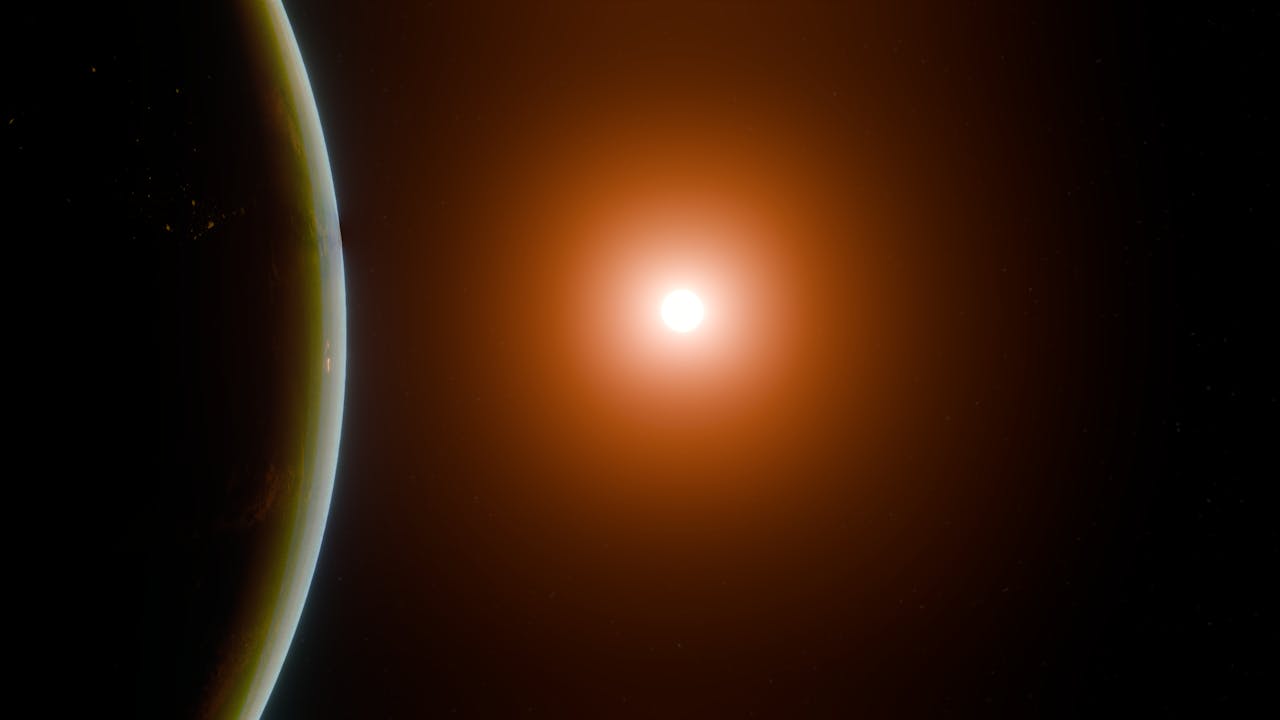
The event, known as AT2018hyz, began when a star was pulled apart by a supermassive black hole in a galaxy about 665 million light years away. At first, it looked like a typical tidal disruption event, which is what scientists call it when a black hole tears a star apart. Years later, the system started producing an intense jet of charged particles moving at nearly the speed of light. The amount of energy involved now exceeds estimates of the fictional Death Star laser often used as a cultural comparison.
What makes this discovery important is not the pop culture reference. It is the reminder that scientific conclusions are often provisional. Events that seem routine can evolve, and continued monitoring can reveal changes that reshape existing models. In this case, long term observation transformed an ordinary classification into one of the most energetic black hole events ever recorded.
The Event That Initially Looked Routine
When astronomers first recorded AT2018hyz in 2018, it did not stand out as unusual. The flare came from a galaxy about 665 million light years away that had not shown signs of ongoing black hole activity. The signal matched what researchers expect when a star gets too close to a supermassive black hole and is pulled apart by gravity. These events, known as tidal disruption events, are rare but documented, with just over one hundred confirmed cases observed so far. Based on the initial optical data, AT2018hyz appeared to fall squarely within that known category.

The brightness rose and declined in a pattern consistent with models of stellar debris partially falling into the black hole while some material was expelled outward. Spectroscopic analysis allowed scientists to measure the temperature and velocity of the glowing gas, confirming that the flare was caused by a star being torn apart rather than a supernova or another type of cosmic explosion. The name AT2018hyz followed standard astronomical naming conventions, indicating the year of discovery and its sequence among recorded transient events.
At the time, there was no reason to suspect that this case would evolve into something exceptional. As radio astronomer Yvette Cendes told Space.com, “There was nothing from that initial discovery that made us think something like this was going to happen years later.” Based on the evidence available in 2018, the event aligned with existing theoretical expectations, and there were no immediate signs that it would later become one of the most energetic jet producing systems ever documented.
Why Scientists Took a Second Look
For several years after the initial flare, AT2018hyz followed the expected pattern of a tidal disruption event. Then in 2022, radio telescopes detected something unusual. Instead of continuing to fade, the source began emitting stronger radio waves. The increase was sustained over multiple observations, indicating that particles were still being accelerated and interacting with surrounding material at high energy levels.
The radio signal matched what scientists identify as synchrotron radiation, which occurs when charged particles spiral through magnetic fields at speeds close to that of light. This type of emission allows researchers to confirm that a structured outflow, likely a jet, is present. In most tidal disruption events, any outflow tends to be slower and more evenly distributed. Only about 1 percent of these events are known to produce relativistic jets. In this case, the radio brightness continued to rise rather than level off, suggesting an active and evolving system rather than a brief aftereffect.

The scale of change has been significant. The jet is now about 50 times more luminous in radio emissions than when first detected. As Yvette Cendes told Space.com, “Planets are going to be destroyed for the first few light-years. I’m just not sure how far out from the jet this would be the case.” The continued increase in brightness suggests that energy is still being fed into the outflow instead of being released all at once. For researchers, this offers a rare opportunity to study how a powerful jet develops and interacts with its environment over time, rather than relying on a single moment of observation.
Why the Radio Signal Appeared Years Later
One of the most important questions about AT2018hyz is why the strong radio emission appeared years after the initial optical flare. The gap suggests that activity near a supermassive black hole does not always happen in a single continuous phase. After the star was torn apart, the remaining material likely continued to move and reorganize around the black hole before conditions were right for a powerful jet to become detectable. This staged process challenges the assumption that the most energetic phase must occur immediately after the disruption.
Scientists propose that the delay may be linked to how the stellar debris behaves after being pulled apart. Material falling back toward the black hole does not instantly form a stable structure. Turbulence, collisions, and the exchange of angular momentum can slow the formation of a jet. In addition, strong magnetic fields are thought to play a key role in launching relativistic jets, and those fields may need time to strengthen or align before they can channel energy into a focused stream.

Another possibility is that the jet formed earlier but was not initially visible from Earth. If the outflow was directed away from our line of sight, its radiation would have appeared much weaker. As the jet interacts with surrounding material, it can slow and widen, making more of its emission detectable from our position. As Yvette Cendes explained, “And now it is entering our line of sight as the jet decelerates.” Whether the jet developed late or simply became visible later is still uncertain, and ongoing observation will be needed to determine which explanation best fits the data.
Why Follow Up Changes the Story
AT2018hyz offers a useful reminder about how we interpret early signals. When the flare was first recorded in 2018, the available data pointed to a standard tidal disruption event. Nothing suggested it would evolve into one of the most energetic jet producing systems ever observed. Only years of continued monitoring revealed that the system was still active and changing. The later radio surge did not contradict the earlier findings, but it showed that the initial picture was incomplete.

The same principle applies when tracking physical health. A single reading, whether it is blood pressure, blood sugar, cholesterol, or inflammation markers, provides a moment in time. It may fall within expected ranges, but that does not always reflect what is developing beneath the surface. Trends over months or years often reveal patterns that short term data cannot capture. Just as astronomers rely on repeated measurements across different instruments, long term health monitoring provides a more accurate understanding than isolated results.
What AT2018hyz ultimately demonstrates is the importance of consistency. Ongoing observation allows researchers to detect shifts that would otherwise remain hidden. In both science and personal health, steady follow up can turn what seems routine into information that changes how a system is understood and managed.
Sometimes the Real Story Comes Later
AT2018hyz shows that first impressions can be incomplete, even when they are based on solid evidence. What began as a typical tidal disruption event eventually revealed sustained energy release and one of the most powerful black hole jets ever recorded. The shift did not happen overnight, and it was not visible without continued observation. It required time, updated measurements, and a willingness to revisit earlier assumptions. That process is not a flaw in science. It is how science works.

The broader takeaway is simple and practical. Complex systems rarely reveal their full story in a single moment. Whether studying distant galaxies or tracking long term health patterns, consistent monitoring provides clarity that snapshots cannot. AT2018hyz is a reminder that meaningful changes can unfold quietly over time, and that careful follow up is often what transforms routine findings into deeper understanding.
