
Imagine a volcano the size of a major city one that erupts without warning, reshapes the seafloor, and creates plumes of microbial life in total darkness. Now imagine it’s happening nearly a mile beneath the surface of the Pacific Ocean, far from any coastline, where most people wouldn’t even know it exists.
That volcano is called Axial Seamount, and it’s not just active t’s restless. Located 300 miles off the Oregon coast, it’s one of the most closely watched underwater volcanoes in the world. And according to scientists, it’s on track to erupt again very soon.
Unlike the dramatic eruptions we associate with Mount St. Helens or Vesuvius, this one won’t make headlines for ash clouds or lava fountains. But that doesn’t make it any less important. In fact, what’s happening at Axial Seamount is giving scientists a rare chance to observe one of the most fundamental and least understood forces shaping our planet in real time.
What Is Axial Seamount and Why It Matters
Axial Seamount is an underwater volcano sitting nearly a mile beneath the surface of the Pacific Ocean, about 300 miles off the coast of Oregon. While it’s far from view and quieter than volcanoes on land, it’s one of the most active on Earth and one of the best understood. Roughly the size of a major city, Axial rises about 3,600 feet from the seafloor and sprawls across a wide stretch of the ocean bottom.
What makes Axial especially important is where it’s located: right at the intersection of two powerful geological features. It sits on the Juan de Fuca Ridge, where tectonic plates are slowly pulling apart, and it also sits directly above a hotspot a plume of molten rock rising from deep within the Earth’s mantle. This combination means magma is constantly pushing upward and outward, forming new ocean crust and regularly triggering eruptions. It’s one of the few places in the world where these two volcanic drivers overlap.
Axial has erupted three times since the late 1990s in 1998, 2011, and 2015. Each eruption has been gradual, not explosive. Lava oozes out and spreads across the seafloor, rather than blasting into the air. This makes the volcano safer to study and easier to monitor without putting people or coastal communities at risk.
That safety, paired with its activity, is a big part of why Axial Seamount matters so much to scientists. Unlike many volcanoes that erupt unpredictably after decades of silence, Axial operates on a somewhat regular cycle. It also shows measurable signs of movement between eruptions. For example, the seafloor around it swells as magma builds up and drops when an eruption occurs like a balloon inflating and deflating. This kind of repeatable behavior offers rare insight into volcanic processes that are usually hidden or chaotic.
In a world where most volcanic activity happens out of sight under the sea some estimates say as much as 80% Axial Seamount offers a unique window into the Earth’s inner workings. It’s more than just a scientific curiosity; it’s a living, shifting feature of our planet that may help answer bigger questions about how Earth forms, evolves, and supports life in even the harshest conditions.
How Underwater Eruptions Work

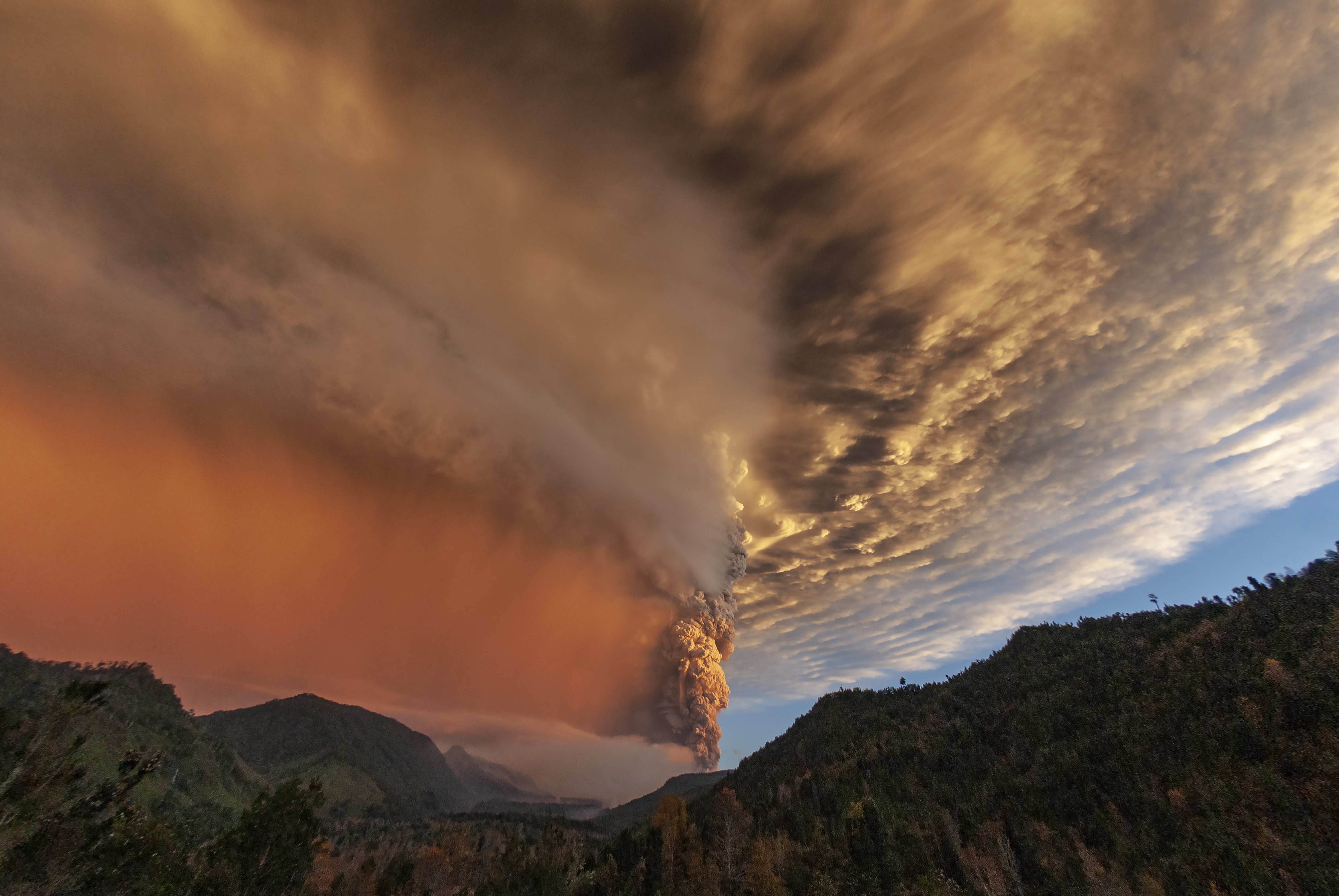
When most people think of a volcanic eruption, they picture towering ash clouds, lava fountains, and the kind of destruction seen in events like Mount St. Helens or Pompeii. But underwater volcanoes like Axial Seamount behave very differently and more quietly.
Instead of exploding, Axial oozes lava. Its magma is relatively fluid, allowing gas to escape without building the kind of pressure that causes violent blasts. As a result, its eruptions are more like a slow spill than an explosion. The lava seeps out from fissures, spreading across the ocean floor for miles. During its last eruption in 2015, lava traveled roughly 25 miles along the seafloor.
The eruption starts with a sharp increase in small earthquakes as magma forces its way upward. That seismic activity can spike to thousands of tiny quakes in a day. Once the lava breaks through, it interacts with the frigid seawater instantly cooling the outer layer into hard rock, while the inside stays molten. This creates bulbous formations called “pillow basalts,” a hallmark of underwater lava flows.
But what makes these eruptions even more fascinating is what happens at the hydrothermal vents cracks in the seafloor where superheated, mineral-rich water shoots out. When magma moves through the crust, it heats surrounding seawater that eventually vents back out into the ocean. During an eruption, these vents can become supercharged, releasing plumes filled with billions of microbes and white clumps of waste material. Scientists call these “snowblowers” because of how they shoot out microbial matter like underwater snowfall.
While the lava itself is lethal to anything in its direct path, the effects are surprisingly limited. Marine life near the surface like whales or large fish aren’t impacted. But deep-sea ecosystems living around the hydrothermal vents, including unique microbes, tube worms, and clams, can be wiped out. Even then, these ecosystems often begin to recover within months, showing an extraordinary ability to bounce back in some of Earth’s most extreme environments.
What Scientists Know and What They’re Still Figuring Out

Axial Seamount is one of the best-monitored volcanoes on the planet not just underwater, but anywhere. Thanks to a high-tech network of sensors called the Regional Cabled Array, scientists can track what’s happening at the seafloor in real time. This system, operated by the University of Washington, includes more than 150 instruments that monitor pressure, temperature, seismic activity, and ground deformation across the volcano. That’s allowed researchers to detect subtle shifts and patterns that would be impossible to catch on land-based volcanoes.
One of the most reliable indicators of an impending eruption at Axial is the inflation of the seafloor. As magma accumulates beneath the surface, it pushes the ground upward. Then, during an eruption, the pressure is released, and the seafloor deflates. This inflation-deflation cycle has occurred consistently before each of the volcano’s past three eruptions.
In 2015, scientists correctly forecast the eruption months in advance by tracking this inflation pattern. They’ve since used the same approach to predict the next event. In mid-2024, researchers noted that the inflation had picked up again at a steady pace. Based on that data, volcanologists Bill Chadwick and Scott Nooner projected another eruption by the end of the year. Their predictions are public and so is their caution. As Chadwick noted, “It wouldn’t shock me if it erupted tomorrow, but I’m thinking it’s not going to be anytime soon on the whole.”
Seismic activity, however, tells a more complex story. In March 2024, the number of earthquakes around Axial spiked to more than 1,000 a day. But by April, that number had dropped to a few hundred per day. That dropoff raises questions about whether the volcano is simply “treading water” or preparing for a delayed eruption.
Another variable scientists are exploring is how external forces like tides and the Earth’s orbit might influence eruptions. All three past eruptions happened between January and May the time of year when Earth moves away from the sun. Researchers have also observed that earthquake activity tends to spike during low tide, when the ocean’s pressure on the seafloor is at its lowest. These tidal effects may subtly push an already-stressed magma chamber past its tipping point, but the connection isn’t fully understood.
The reality is that even with advanced instruments and historical patterns, predicting exactly when a volcano will erupt is still part science, part educated guess. What makes Axial Seamount valuable is its consistency it’s teaching scientists how to recognize eruption patterns with more confidence, while also exposing the gaps in what we still don’t fully grasp.
What’s at Stake Below the Surface

While an eruption at Axial Seamount won’t shake buildings or send ash into the sky, it dramatically reshapes the world beneath the ocean’s surface. The lava that oozes out during an eruption doesn’t just cover bare rock it destroys entire ecosystems. And what’s at risk isn’t just marine life, but one of the most extreme and scientifically valuable environments on Earth.
At the heart of this ecosystem are hydrothermal vents underwater hot springs that form when seawater seeps into the crust, gets superheated by magma, and then rises back out through the seafloor. These vents release fluids rich in minerals and gases, creating chemical conditions that support life completely independent of sunlight. Microbes thrive by converting volcanic gases into energy, forming the base of a food web that includes giant tube worms, spider crabs, clams, and even deep-sea octopuses.
During eruptions, these vent communities can be completely buried by lava. In 2011, one of the main venting areas at Axial Seamount was wiped out. But three months later, scientists returned to find new microbial life and animals already beginning to recolonize the area. The speed of recovery surprised researchers and revealed how resilient and adaptable these ecosystems can be, even after severe disruption.
Still, every eruption is a reset. Microbial communities that have evolved under specific chemical conditions may not come back exactly the same way. Each new lava flow alters the landscape, changes vent chemistry, and may favor different species. That makes Axial Seamount not just a site of destruction and renewal, but a living laboratory for studying how life adapts to change.
Beyond biology, there’s also valuable technology at stake. The region is wired with sensitive scientific instruments pressure sensors, seismometers, and robotic cameras. Lava flows can damage or bury this equipment, cutting off data streams and complicating future monitoring efforts. Replacing it requires deep-sea missions that are costly and planned years in advance.
What You Can Learn from This

Even if Axial Seamount never affects your daily life, what’s happening there is more than just an obscure geological event. It’s a window into how Earth works and why we should pay attention, even when the action is happening a mile underwater.
For one, Axial is teaching scientists how to improve volcanic forecasting. Predicting eruptions has always been difficult, especially on land where stakes are high and warning signs can be subtle or erratic. But because Axial is active, monitored in real time, and erupts fairly often, it’s helping researchers develop more reliable models. That kind of insight may one day save lives if it can be applied to more dangerous, less predictable volcanoes.
Second, it reminds us that the deep ocean is far from lifeless. Hydrothermal vents, where extreme heat and chemistry support entire ecosystems without sunlight, are among the most fascinating habitats on Earth. They show how life can emerge and survive in conditions that were once thought impossible. That’s not just trivia it’s reshaping our understanding of where life could exist, not only on Earth, but possibly on other planets or moons with subsurface oceans.
If you’re curious to follow along, much of the monitoring data is made public. The Ocean Observatories Initiative (OOI) provides updates and visualizations from its 300-mile Regional Cabled Array. If the next eruption happens while instruments are intact, it may even be livestreamed offering a rare, real-time look at an active underwater eruption.
Why This Quiet Volcano Deserves Attention
Axial Seamount may never make the evening news. It won’t send up ash clouds, disrupt flights, or force evacuations. But that’s exactly why it matters. Because it erupts without threatening lives, it gives scientists a unique opportunity to observe a volcano in action up close, over time, and without fear of catastrophic consequences.
What’s happening under the Pacific isn’t just a local event it’s part of the planet’s ongoing process of creation and change. Every new lava flow at Axial builds new ocean floor, reshapes ecosystems, and pushes our understanding of geology, biology, and climate forward. The data gathered here could one day help improve forecasts for far more dangerous eruptions on land. It might even help answer deeper questions about how life starts, survives, and adapts in extreme environments.
So while this volcano may be out of sight, it shouldn’t be out of mind. In a world where so much feels unpredictable, Axial Seamount offers something rare: a chance to see a natural process unfolding with surprising regularity and to learn from it while we still can.
