
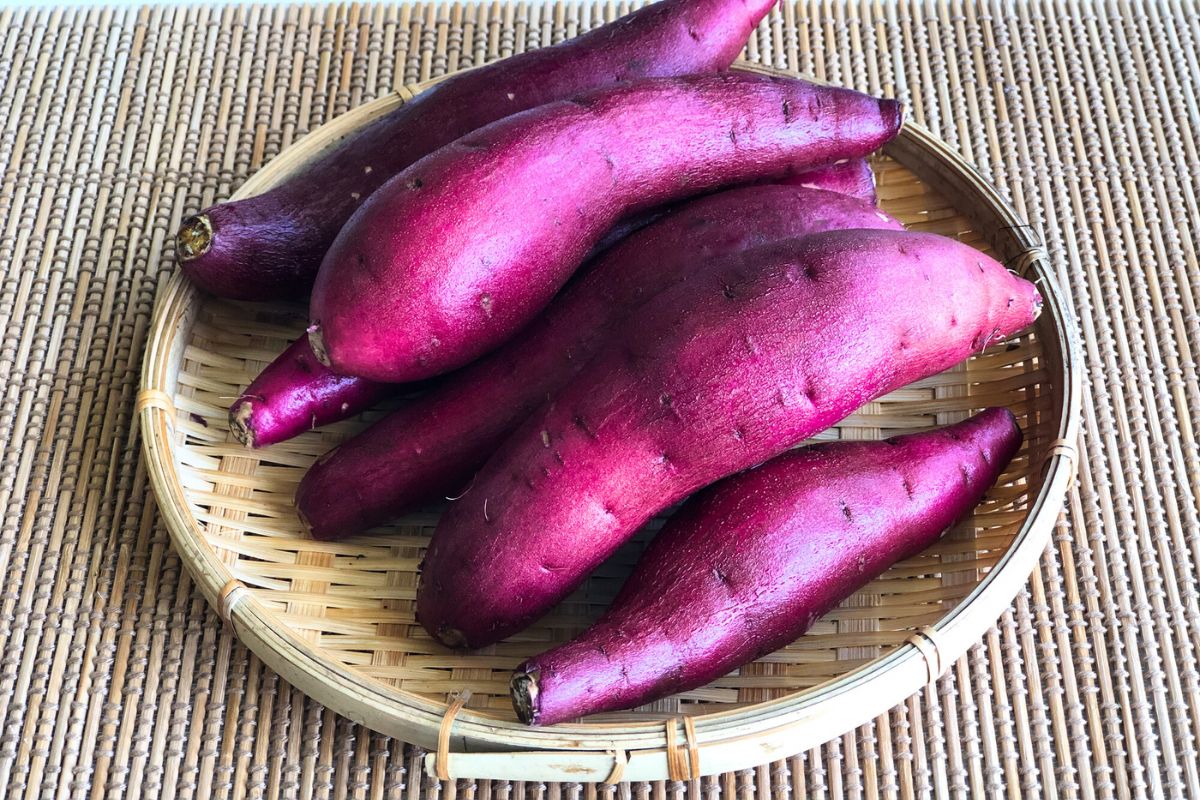
When it comes to longevity, few places fascinate researchers more than Okinawa, a Japanese island famous for having three times as many centenarians as most regions of the world. The island’s elderly aren’t just living longer — they’re staying healthier too. While lifestyle and community play an important role, diet is often singled out as the key factor. And at the centre of it all is a humble but powerful vegetable: the purple sweet potato, known locally as beni imo.
Why Okinawans eat purple sweet potato every week
Studies into the so-called “Blue Zones” — regions with unusually high life expectancy, a concept highlighted by researcher Dan Buettner — have repeatedly pointed to Okinawa’s reliance on plant-based foods. For decades, beni imo made up as much as 70% of the island’s daily caloric intake.
There’s a practical reason behind its popularity: the crop is hardy. Unlike many vegetables that suffer during typhoons or extreme weather, purple sweet potatoes grow underground, shielded from the elements. This made them a reliable staple for generations of Okinawans, especially when other foods were scarce.
Packed with antioxidants and nutrients
Beyond its resilience, beni imo is a nutritional powerhouse. Its striking purple hue comes from anthocyanins, natural pigments with strong antioxidant properties. These compounds are believed to help slow age-related decline and protect against chronic diseases.
The vegetable is also high in fibre, vitamins, and minerals, while being low in calories and having a moderate glycaemic index. This means it supports steady energy levels and can help with weight management — no small factor in a community where many people live well into their nineties and beyond.
Not a miracle food, but part of a lifestyle
It would be misleading to call the purple sweet potato a “magic bullet.” Okinawan longevity is built on more than one ingredient. Their diet is rich in vegetables, soy, and fish, with very little red meat or processed food. This is paired with an active lifestyle and strong social bonds — both of which are repeatedly cited in longevity research as vital to healthy ageing.
So, while beni imo is important, it’s best seen as part of a bigger picture: a balanced diet that nourishes the body while avoiding excess.
How to bring purple sweet potato into your meals
The good news is that beni imo is making its way into international shops and specialist food markets. Preparing it is refreshingly simple: roast it, steam it, or mash it as a side dish. Its natural sweetness also makes it perfect for smoothies or even desserts — in Japan, it’s often used in cakes and ice creams for a colourful twist.
A lesson from Okinawa
The purple sweet potato may not be a miracle cure, but it serves as a reminder that everyday choices matter. Eating more vegetables, favouring natural foods over processed ones, and finding balance in our diets can all contribute to a longer, healthier life.
In Okinawa, a weekly serving of beni imo is more than just a tradition — it’s part of a philosophy that has helped its people thrive well into old age. And perhaps, by adopting some of their habits, the rest of us might get a little closer to that goal too.
