
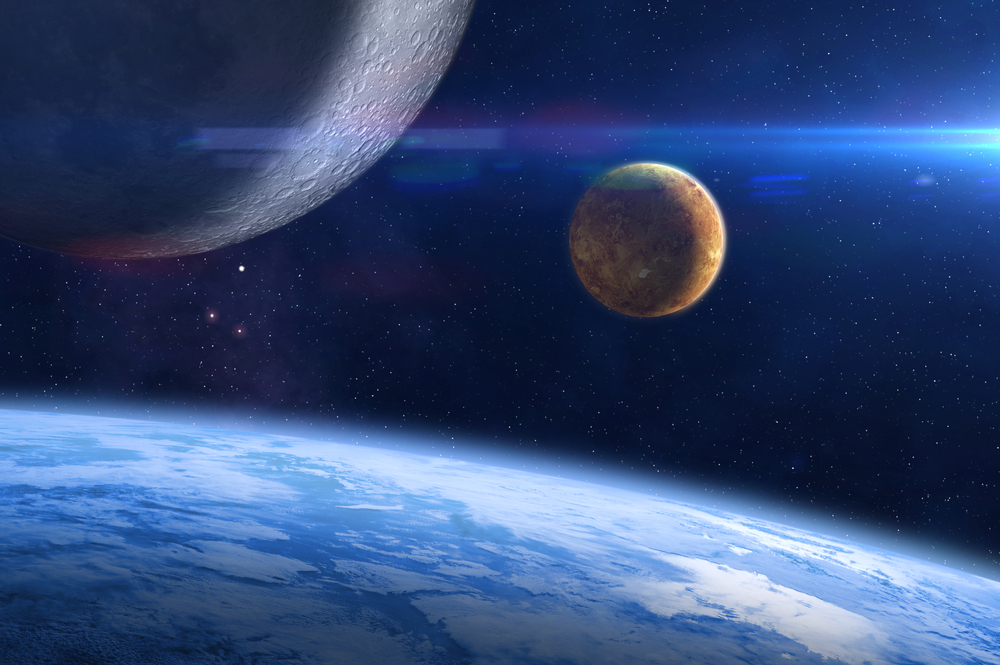
Have you ever stepped outside on a bright sunny day and felt instant warmth on your skin, then wondered how that same Sun exists next to a universe that is close to absolute zero. It feels counterintuitive. The Sun is a massive ball of burning energy, yet space remains bitterly cold. This contrast often sparks curiosity, confusion, and even awe.
Understanding why space is cold is not just a physics lesson. It also offers powerful insight into how the human body works. Just as Earth relies on specific conditions to stay warm and alive, your body depends on balance, absorption, and protection to maintain health. Energy alone is not enough. What matters is how it is received and used.
This question also reveals how fragile life truly is. Earth exists in a narrow comfort zone where heat is retained just enough to support living systems. The same principle applies to wellness. You may have access to nutrients, sunlight, and movement, but without the right internal environment, those inputs may not benefit you.
By exploring why space stays cold despite the Sun’s heat, you can gain a deeper appreciation for both planetary health and personal wellbeing. The science behind this mystery offers lessons about protection, circulation, and balance that translate surprisingly well to daily life.

The Sun Produces Heat But Space Does Not Hold It
The Sun generates an enormous amount of energy through nuclear fusion. Deep within its core, hydrogen atoms combine to form helium, releasing vast quantities of radiant energy. This energy travels outward in the form of electromagnetic radiation, including visible light and infrared warmth. When that energy reaches Earth, it warms the land, oceans, and atmosphere.
Space, however, is almost completely empty. It lacks the dense matter needed to trap and store heat. Heat is not something that simply exists on its own. It requires particles that can absorb energy and then release it slowly. Earth’s atmosphere plays this role by capturing solar radiation and preventing it from escaping too quickly.
Without an atmosphere, energy passes straight through. Space receives sunlight, but it does not keep it. Once radiation moves past an object, there is nothing to hold it in place. As a result, temperatures in space remain extremely low even in regions close to stars.
This idea has a clear wellness parallel. Consuming healthy food does not automatically improve health. Your body must be able to absorb nutrients, circulate them, and store energy efficiently. Without proper digestion, circulation, and cellular function, valuable inputs pass through without lasting benefit.
Why Earth Stays Warm While Space Freezes
Earth’s warmth depends on more than distance from the Sun. The atmosphere acts like a protective blanket made of gases such as nitrogen, oxygen, carbon dioxide, and water vapor. These gases absorb incoming solar energy and release it gradually, keeping surface temperatures stable.
The oceans also play a vital role. Water stores heat and redistributes it around the planet through currents. This prevents extreme temperature swings between day and night. Together, the atmosphere and oceans create a self regulating system that supports life.
Space lacks these stabilizing features. With no air, no liquid water, and no pressure, there is nothing to slow the loss of energy. Objects exposed to sunlight may become hot on one side and freezing on the other. Astronauts rely on specially designed suits because the environment offers no natural protection.
Your body follows similar rules. Skin, fat tissue, circulation, and metabolic processes help regulate internal temperature. When these systems are compromised, you may feel cold, fatigued, or unwell even in a warm environment. Health depends not just on exposure to resources, but on your ability to retain and regulate them.

The Vacuum Of Space And The Role Of Insulation
Space is considered a vacuum, meaning it contains very few particles. Heat transfer through conduction or convection requires matter. Without particles to collide and exchange energy, these forms of heat transfer cannot occur. Radiation becomes the only method, and it is inefficient for warming empty space.
This is why satellites and spacecraft use insulation materials that reflect heat back inward. Without these layers, vital equipment would fail due to extreme temperature shifts. Engineers design systems that carefully manage energy rather than assuming heat will naturally remain.
The human body also depends on insulation and boundaries. Your skin acts as a protective barrier, while fat tissue helps conserve energy. On a cellular level, membranes control what enters and leaves each cell. When these boundaries weaken, balance is lost.
Chronic stress, poor sleep, and nutrient deficiencies can damage these protective systems. You may feel drained even when you eat well or rest frequently. Like space, the body can lose energy rapidly if it lacks proper insulation and internal regulation.

What Cold Space Teaches Us About Energy And Burnout
One of the most striking lessons from cold space is that constant exposure to energy does not guarantee warmth. Astronauts orbiting Earth see the Sun repeatedly, yet they remain surrounded by freezing conditions. Without protective systems, energy alone cannot sustain comfort or function.
This mirrors modern burnout. Many people stay busy, productive, and stimulated, yet feel exhausted. They receive constant input but lack recovery, grounding, and nourishment. Over time, this leads to depletion rather than vitality.
Wellness requires pauses and buffers. Rest allows your nervous system to process stimulation. Sleep helps consolidate energy. Quiet moments act like an atmosphere for the mind, preventing emotional energy from dissipating too quickly.
By respecting recovery as much as action, you create conditions where energy can be stored and used wisely. Just as Earth maintains warmth through balance, your body thrives when effort is paired with restoration.

Using Nature’s Lessons To Support Daily Wellness
Nature consistently shows that balance creates stability and resilience. Earth does not try to overpower the cold of space by generating endless heat. Instead, it depends on systems that capture energy, distribute it wisely, and prevent it from escaping too quickly. This same principle applies to the human body, where health is created not by excess effort but by efficient use of what is already available.
When digestion is strong, nutrients are absorbed instead of wasted. When circulation is healthy, oxygen and energy reach every part of the body. When sleep is deep and regular, repair happens naturally. These processes allow your body to hold on to what it receives, just as Earth holds on to warmth through its atmosphere and oceans.
Sunlight is another powerful example of natural balance. Gentle exposure supports vitamin D production, mood, and sleep cycles, while too much can cause damage. The goal is not maximum exposure, but the right amount at the right time. When your daily habits follow these rhythms, energy stays within you instead of slipping away unnoticed.
By living in harmony with these natural principles, you protect your internal environment. Wellness becomes less about forcing results and more about creating conditions where health can arise on its own. This is how the body, like Earth, stays stable in an otherwise demanding universe.
A Cosmic Reminder For Human Health
The coldness of space is not proof that the Sun is weak. It is proof that without protection and regulation, even enormous energy cannot create warmth. Earth survives because it has systems that hold, recycle, and balance what it receives. This same truth applies to your body, which depends on internal stability more than sheer effort.
When your nervous system is calm, your digestion is steady, and your sleep is deep, you naturally feel stronger and clearer. When these systems are strained, even good food, exercise, and motivation fail to restore you. Health is built on foundations that quietly preserve energy rather than constantly spending it.
This perspective invites a more compassionate view of yourself. Feeling tired does not mean you are weak. It often means something in your system is leaking energy instead of storing it. Healing begins when you protect those systems instead of pushing them harder.
Just as Earth must defend its atmosphere to remain habitable, you must protect your internal balance to remain well. Strength grows from stability, not from pressure.

The Next Time You Feel the Sun
The next time sunlight touches your skin, remember that warmth is not automatic. It exists because Earth has built a delicate shield that captures and holds that energy. Without it, the Sun would still shine, but the planet would be as cold as the empty space around it.
Your body works the same way. Energy from food, rest, and movement only becomes vitality when your internal systems can absorb and protect it. When those systems are nurtured, you feel steady and alive instead of drained and scattered.
This realization turns everyday health into something deeply meaningful. Caring for your body is not indulgence. It is maintenance of the atmosphere that allows your life to thrive. Small habits of rest, nourishment, and balance quietly keep your inner world warm.
In a universe that is mostly cold and empty, both Earth and the human body are rare spaces where energy becomes life. Protecting that space is one of the most important things you can do.
