
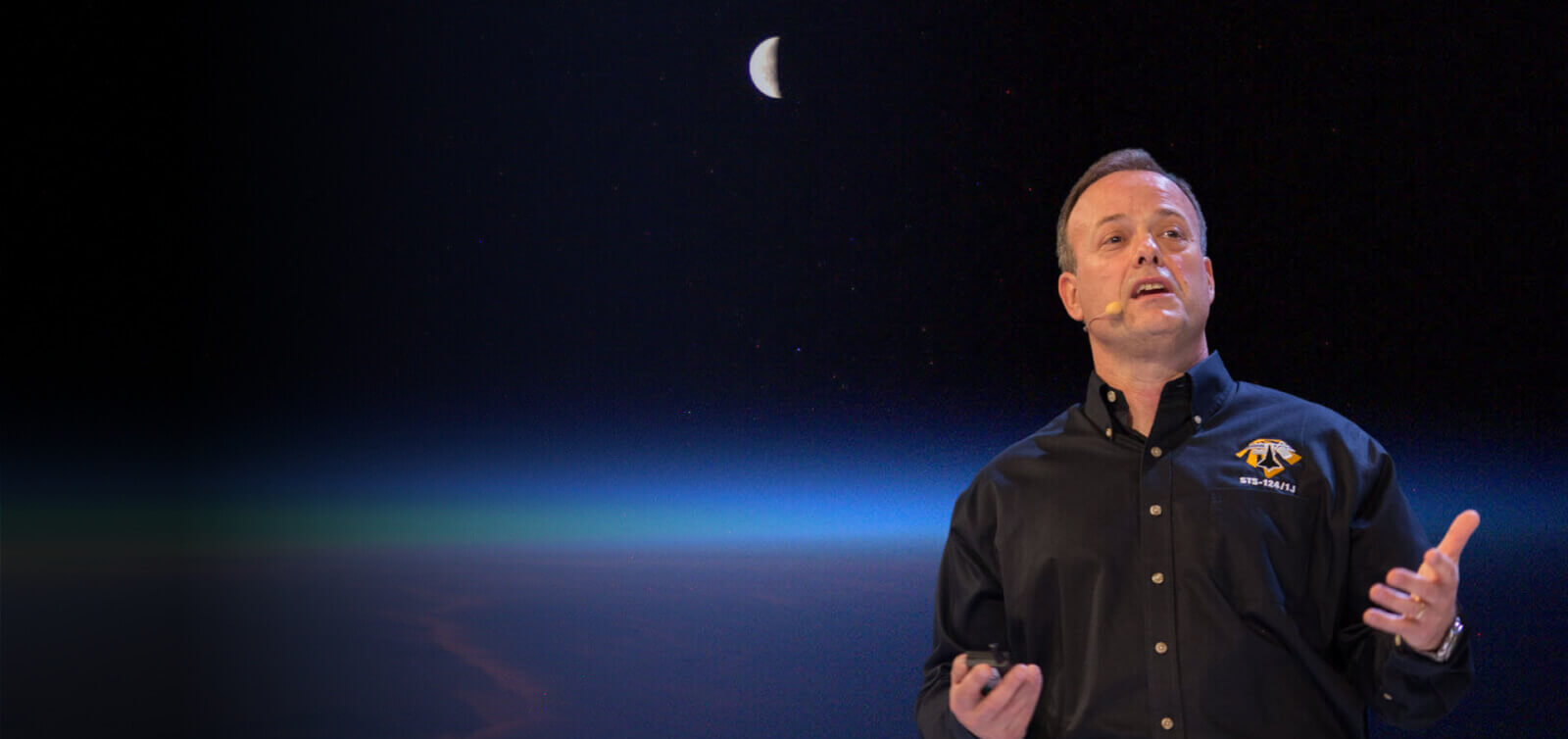
What does Earth look like from the silence of space? Astronaut Ron Garan spent nearly half a year orbiting our planet, and what he saw changed his perspective forever. Suspended 250 miles above the Earth’s surface, Garan was not only a witness to the planet’s stunning natural beauty but also to a profound truth that challenges our everyday understanding of life here on Earth. This unique perspective from space brought him face to face with the “Big Lie,” a realization that questions the very foundations of how we perceive and prioritize our existence.
Seeing Earth as It Truly Is
From the vantage point of the International Space Station, astronaut Ron Garan experienced Earth in a way that few humans ever will. Orbiting 250 miles above the planet, he witnessed breathtaking natural phenomena that revealed the sheer beauty and complexity of our world. Streaks of lightning illuminated continents below, resembling flashes from a celestial photographer. Above, shimmering auroras in vibrant greens and purples danced across the skies, creating an ethereal glow that felt almost tangible.
These awe-inspiring sights offered more than visual splendor—they revealed the interconnectedness of Earth’s systems. From this high perspective, the political and geographical borders we impose disappeared entirely, replaced by the vision of a unified, living planet. Earth appeared as a singular, fragile organism, its systems intricately intertwined. Storms surged, auroras glowed, and the planet seemed to pulse with life—a vivid reminder that the actions in one corner of the globe ripple across the entire biosphere.
This profound view inspired Garan to reflect on our collective responsibility to care for our planet. From space, Earth’s beauty and fragility are undeniable, urging us to look beyond divisions and recognize the shared stewardship required to preserve its delicate balance. The awe he felt wasn’t just about the majesty of the view but about the message it conveyed: we are all part of a larger, interconnected whole.
The “Big Lie” Revealed From Space

From the solitude of space, astronaut Ron Garan experienced a striking epiphany he later called the “Big Lie.” What caught his attention wasn’t just what he saw from orbit, but what was missing. Political borders, economic divisions, and the structures that dominate our lives on Earth were invisible from his vantage point. Instead, his focus shifted to something far more significant: Earth’s fragile atmosphere—a thin, delicate veil that makes life possible yet is constantly under threat from human activity.
The “Big Lie,” as Garan describes it, is the illusion that human-made systems, like economies and borders, are the foundation of our existence. In reality, these constructs pale in comparison to the natural systems—air, water, and ecosystems—that sustain all life on the planet. From space, the imbalance becomes crystal clear: while we pour resources into artificial priorities, the very biosphere that supports us is at risk.
Garan’s realization is part of a phenomenon known as the “Overview Effect,” a mental shift many astronauts experience when they see Earth from orbit. This view fosters a sense of connection and unity, underscoring the simple truth that our survival depends not on man-made divisions, but on the health of the planet we all share.
Rethinking Our Place on a Fragile Planet

Ron Garan’s unique perspective from space serves as a call to action, shedding light on the critical challenges facing our planet. His observations underscore the fragile interconnectedness of Earth’s systems and the urgent need to address the environmental crises threatening our shared home.
The Unseen Cost of Global Warming
From space, Earth’s atmosphere looks like a delicate shield—a reminder of just how vulnerable it is. The reality of global warming hits hard when you consider how weather extremes, disrupted ecosystems, and biodiversity loss are all connected to our actions.
The interconnected web of life becomes unmistakable. Yet, deforestation continues to sever these vital connections. Each tree lost isn’t just about the land—it’s about the planet’s ability to breathe, regulate water, and sustain life.
Why Society Needs a Reality Check
Our world is built on systems that prioritize profit over sustainability. But as Garan observed, these artificial constructs pale in importance next to the natural systems keeping us alive. It’s time to rethink our priorities and focus on what really matters.
Instead of viewing Earth as a resource to exploit, we need to see it as a home to care for. Shifting our perspective can inspire policies and actions that balance human progress with the planet’s long-term health.
Ron Garan’s message is clear: the choices we make today will shape the future of our planet. It’s time to stop taking Earth’s resilience for granted and start building a sustainable path forward—for ourselves and for generations to come.
One Earth, One Humanity

When astronaut Ron Garan looked down on Earth from space, he didn’t see borders, politics, or divisions. He saw one planet—fragile, interconnected, and shared by all of humanity. This view, which he calls the “Orbital Perspective,” is a powerful reminder that the challenges we face, like climate change and resource depletion, affect everyone and can only be solved if we work together.
Garan points to the International Space Station (ISS) as proof of what global collaboration can achieve. Built and operated by multiple nations working toward a common goal, the ISS is a symbol of what’s possible when we put aside differences. If we could bring that same level of cooperation to solving Earth’s problems, from protecting ecosystems to ensuring equitable use of resources, the impact would be transformative.
The Orbital Perspective also emphasizes shared responsibility. Every action we take—whether it’s deforestation, pollution, or innovation—creates ripples that touch the entire planet. By thinking and acting as global citizens, we can inspire a shift toward sustainability and fairness, ensuring that future generations inherit a world that’s thriving, not just surviving. It’s a perspective that urges us to see Earth not as divided, but as one home we all share and must protect together.
Embracing Our Shared Responsibility for Earth
Ron Garan’s journey to space didn’t just provide stunning views of Earth—it offered a profound lesson about the interconnectedness of life and the shared responsibility we have as its stewards. From the vast expanse of space, the divisions that often consume our focus—borders, politics, and economies—melt away, revealing a fragile planet united by its delicate ecosystems and shared destiny.
This perspective challenges us to rethink our priorities. The survival of humanity doesn’t rest on the systems we’ve created, but on the health of the natural world that sustains us. It calls for bold collaboration, like the kind that built the International Space Station, to address the pressing challenges of climate change, biodiversity loss, and resource depletion. It also asks each of us to take ownership, recognizing that our actions ripple across the planet in ways we can’t always see.
Ultimately, Garan’s “Orbital Perspective” is an invitation for all of us to see Earth not as a collection of nations or resources to exploit, but as one shared home. By embracing unity, empathy, and shared responsibility, we have the power to shape a future where humanity and the planet can thrive together. The time to act is now—not just for our survival, but for the generations who will inherit the choices we make today. Let’s rise to this challenge and build a better, more sustainable world, together.
Featured Image Source: The Ron Ragan official website
