
You reach for a glass bottle at the grocery store, feeling good about your choice. Plastic often receives a bad reputation, and glass appears to be a safer choice for your health and the planet. Yet, recent research from France’s food safety agency, ANSES, has turned conventional wisdom on its head. Scientists discovered something nobody expected when they analyzed beverages sold across France, and their findings might change how you think about your next drink purchase.
Glass Bottles Pack a Surprising Punch of Plastic Particles
Guillaume Duflos leads research at ANSES, where his team decided to measure microplastic contamination in various beverages sold throughout France. His group wanted to understand how different containers might affect the amount of these tiny plastic fragments that end up in our drinks. When the results came back, even the researchers could barely believe what they were seeing.
Glass bottles contained an average of 100 microplastic particles per liter in soft drinks, lemonade, iced tea, and beer. Plastic bottles and metal cans, by contrast, showed far lower contamination rates. Glass containers held five to 50 times more microplastic particles than their plastic counterparts, depending on the beverage type. PhD student Iseline Chaib worked on the research and described the team’s reaction when she told AFP that they expected the opposite result.
Scientists have found microplastics everywhere in recent years, from the air we breathe to the food we eat. Human bodies now contain these particles in blood, organs, and tissues. Nobody knows yet whether this widespread contamination poses serious health risks, but researchers around the world are racing to understand the scope of the problem. France became the first country to examine microplastic levels in beverages sold within its borders, filling a gap in scientific knowledge about what people actually consume.
Bottle Cap Paint Turns Out to Be the Real Culprit

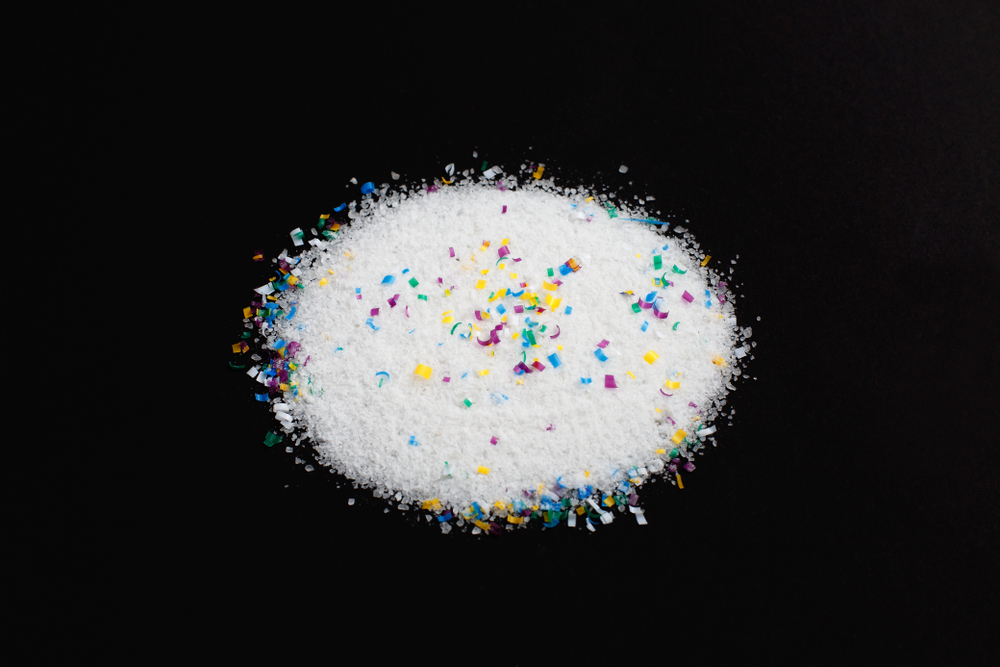
After recovering from their initial shock, researchers began investigating why glass bottles performed so poorly. Chaib and her colleagues examined the particles under microscopes and ran chemical analyses to determine their composition. A pattern emerged that explained everything. Particles pulled from glass bottle beverages matched the paint on bottle caps in three key ways. They shared the same shape, exhibited identical colors, and contained the same polymer composition as the exterior paint coating on metal caps.
Cap manufacturers apply alkyd thermosetting resin or polyester-based paint to the outside of bottle caps. Scientists found these same materials floating in the beverages inside. When researchers looked closer at new, unused caps, they discovered something revealing. Tiny scratches covered the cap surfaces, invisible without magnification. Caps rub against each other during storage and transportation, creating friction that damages the paint layer. Paint fragments break free from these scratched surfaces and fall onto the inner side of caps, where they eventually make contact with beverages.
ANSES experimented to confirm their theory. Scientists filled clean, sterilized glass bottles with filtered water and sealed them with brand-new caps. Sure enough, microplastic particles matching the cap paint appeared in the water. When researchers analyzed the rinse water from cleaned caps, they found an average of 47.8 yellow particles per cap, providing direct evidence that cap paint generates contamination.
Beer Takes the Biggest Hit While Wine Gets a Pass

Different beverages showed varying levels of contamination in the study. Beer emerged as the most affected drink, containing around 60 microplastic particles per liter when sold in glass bottles. Lemonade came in second with 40 particles per liter, while soft drinks averaged 30 particles per liter. Small glass beer bottles (0.33 liters) contained even higher concentrations than larger bottles, reaching 133.7 particles per liter compared to just 32.8 particles per liter in 0.75-liter bottles.
Water told a different story altogether. Both sparkling and still water showed relatively low contamination across all container types. Glass water bottles contained 4.5 particles per liter, while plastic bottles held just 1.6 particles per liter. Mineral water had slightly higher levels than spring water, and sparkling varieties contained more particles than still versions, but overall contamination remained minimal compared to other beverages.
Wine presented the biggest mystery in the entire study. Despite having painted metal caps just like other glass bottles, the wine contained remarkably few microplastics. Red wine averaged 8.5 particles per liter, white wine reached 12 particles per liter, and rosé wine contained only 2.6 particles per liter. Scientists cannot explain why wine resists contamination from cap paint when other beverages absorb it so readily. Duflos acknowledged that this discrepancy “remains to be explained” and requires further investigation.
Particle Size Matters in Contamination Analysis

Researchers focused on particles between 30 and 500 micrometers in size because smaller fragments become too difficult to identify reliably with current technology. Most contamination fell in the 50 to 100 micrometer range, though particles throughout the size spectrum appeared in samples. Fragments outnumbered fibers across every beverage category, with fragments making up between 72.9 and 96.9 percent of all particles found.
Chemical analysis revealed that polyester clusters dominated in glass containers. Soft drinks in glass bottles contained 33.2 particles per liter of polyester materials, lemonades had 28.5 particles per liter, and beer reached 95.9 particles per liter. Polyolefin materials (including polyethylene and polypropylene) also appeared throughout samples, though at lower concentrations. Glass bottles contained up to 24.7 particles per liter of polyolefins, while plastic bottles rarely exceeded 1.3 particles per liter.
Scientists worry about particle size because smaller fragments pose greater risks to human health. As microplastics break down into smaller pieces, they become harder to detect, filter, and remove from water supplies and food systems. Nanoparticles can cross cell membranes and potentially enter organs, raising concerns about long-term health effects that researchers have only begun to study.
Health Risks Remain Unclear But Warrant Attention

More than 4,000 hazardous chemicals have been identified in various plastics, including substances known to disrupt hormones and cause cancer. Microplastics can carry these chemicals into beverages as they leach from packaging materials. Studies have linked microplastic exposure to inflammation, hormone disruption, and DNA damage in laboratory settings. Respiratory illnesses, cardiovascular problems, and certain cancers are also under investigation for potential connections to plastic particle exposure.
Despite growing concern, scientists still cannot say definitively whether the contamination levels found in this study threaten human health. No established reference level exists for toxic amounts of microplastics in beverages or food. Regulatory agencies have not set safety limits because researchers lack sufficient data about how these particles affect the human body over time. ANSES noted that without toxicological data, determining whether current contamination levels pose risks remains impossible.
Human exposure to microplastics happens through multiple routes. We inhale particles in the air, consume them in food and drinks, and potentially absorb them through skin contact. Ingestion represents the primary exposure pathway because microplastics have infiltrated the food chain at every level. Fish, shellfish, and other aquatic organisms accumulate these particles, which then move up the food chain when humans consume seafood. Salt, honey, sugar, and even fresh produce have tested positive for microplastic contamination in various studies.
Simple Cleaning Steps Could Slash Contamination by 60 Percent
Manufacturers have a straightforward solution available to reduce microplastic contamination from bottle caps. ANSES researchers tested a cleaning procedure that involves blowing caps with compressed air before bottling, then rinsing them with water and alcohol. Chaib explained that in the glass samples “the particles emerging from the samples were the same shape, color and polymer composition” as the cap paint, confirming that cleaning would remove the source material.
Studies have shown that “tiny scratches, invisible to the naked eye, probably due to friction between the caps when there were stored” create the contamination problem. Cleaning caps before use removes loose paint fragments that would otherwise fall into beverages. When researchers analyzed bottles filled after cap cleaning, microplastic levels dropped by 60 percent compared to bottles with untreated caps.
Even with cleaning, some contamination persists because the fundamental problem lies in the cap design and storage methods. Scratches form during transportation and warehousing as caps jostle against each other in bulk packaging. Manufacturers could redesign packaging to minimize cap-to-cap contact, or they might develop paint formulations that resist flaking and fragmentation. Some companies could switch to alternative closure systems that eliminate painted surfaces, though such changes would require significant investment and infrastructure modifications.
What Consumers Should Know About Their Beverage Choices

Glass bottles no longer represent the plastic-free option that consumers assume they are buying. People who switched from plastic to glass bottles, hoping to reduce their plastic exposure, may actually be increasing it, depending on which beverages they choose. Beer drinkers face particularly high exposure levels, while those who prefer wine appear to dodge most contamination for reasons scientists cannot yet explain. Water remains relatively safe regardless of container type, with both glass and plastic bottles showing minimal contamination.
Consumer awareness can drive meaningful change in packaging practices. When enough people demand cleaner products, manufacturers respond by improving their processes. France’s study represents just the beginning of understanding microplastic contamination in beverages, and scientists need data from other countries to determine whether these findings apply globally or reflect local manufacturing practices.
