
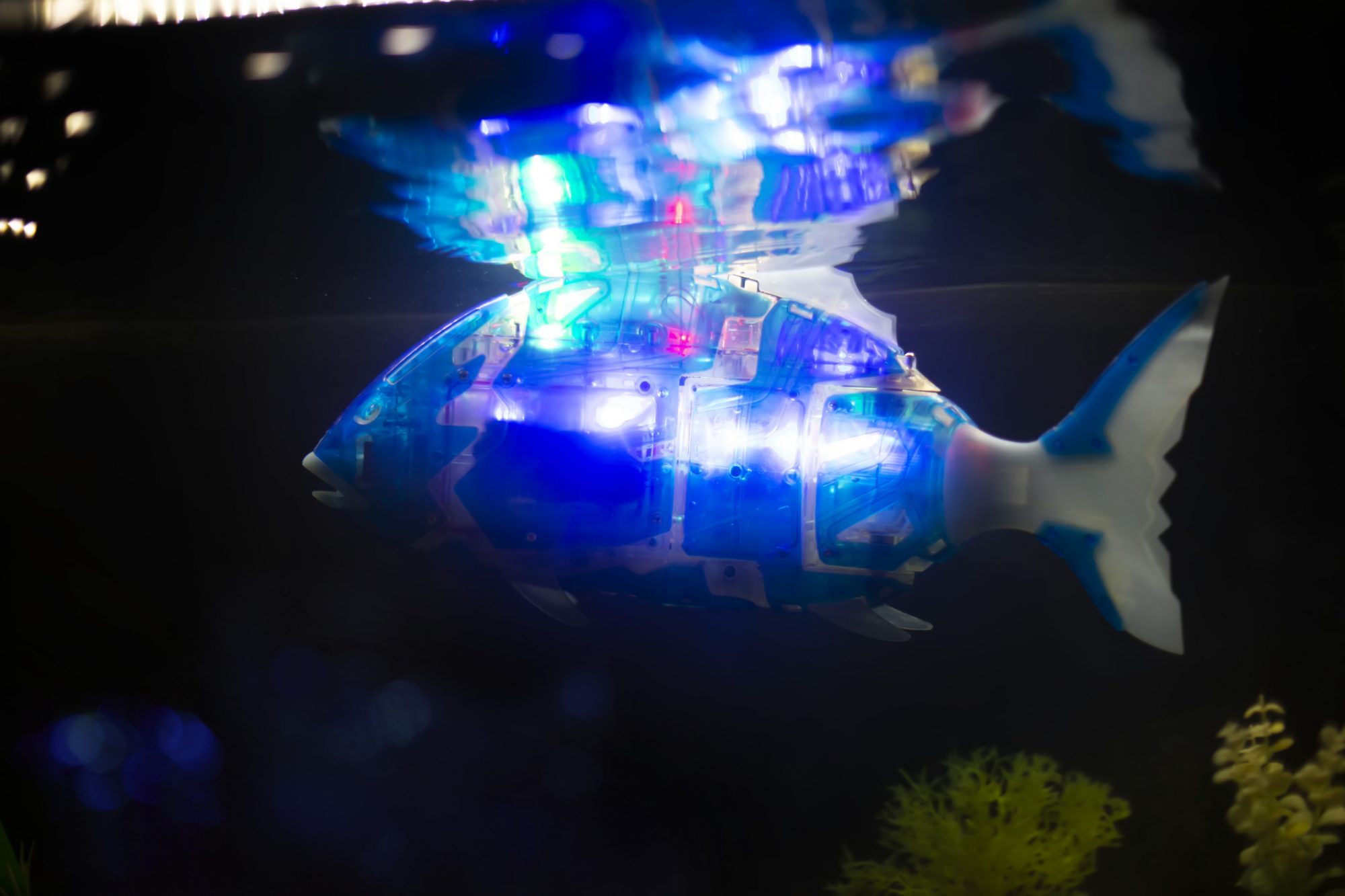
Microplastic pollution is one of the most challenging environmental issues today, with microscopic plastic fragments contaminating our water, food, and even our bodies. While the scale of the problem can seem overwhelming, new scientific developments are providing targeted solutions. Researchers have recently created something that sounds like science fiction: a tiny, self-healing robot fish designed to actively hunt and collect these pollutants, signaling a new direction in how we can fight back against this invisible threat.
The Scale of Microplastic Contamination

Every plastic product we use—from water bottles and synthetic clothing to car tires and food containers—sheds microscopic fragments over time. These particles, known as microplastics, are defined as being smaller than five millimeters in length. They are now one of the most widespread pollutants on Earth, flowing from our homes and roads into rivers and, eventually, the ocean.
The contamination is extensive. Scientists have found these tiny plastic fragments in nearly every environment on the planet, from the deepest parts of the ocean to remote mountain peaks. More concerning is their entry into the food chain.

As marine animals ingest these particles, they accumulate in their tissues and make their way into our bodies through the food we eat and the water we drink. Research has confirmed the presence of microplastics in human blood, lungs, and even the placentas of unborn babies.
The primary challenge in addressing this issue is the size of the pollution. Most cleanup technologies are designed to capture large plastic debris like bags and bottles, leaving these microscopic particles to spread unchecked. Because they are so small and dispersed, filtering them out of entire oceans or rivers with conventional methods is currently impossible, which is why scientists are now developing new technologies designed to operate on a microscopic scale.
A Solution Inspired by Nature

To solve the problem of capturing microplastics, researchers looked to nature for a blueprint. Their inspiration came from nacre, also known as mother-of-pearl, the iridescent material that lines the inside of clam shells. Nacre is known for its unique combination of strength and flexibility, which comes from a layered nanostructure that transitions from hard calcium carbonate to soft silk protein. This gradient design allows it to withstand significant pressure without breaking.
A team of scientists from the Polymer Research Institute at Sichuan University in China decided to mimic this natural engineering.
They hypothesized that a material replicating nacre’s layered structure could be durable enough to survive in harsh aquatic environments while remaining soft and flexible enough to interact with microscopic particles.
By layering different molecules to copy the chemical gradient found in nacre, the team developed a new type of nanocomposite material. According to Yuyan Wang, a lead author of the study, the specific goal was to use this material to build the first soft robots designed to accurately find and collect microplastic pollutants from water.
How the Self-Healing Robo-Fish Works

The resulting robot is a soft-bodied fish just 13 millimeters long. Instead of a motor or battery, it is powered by a near-infrared laser aimed at its tail. The laser causes the material to bend and flap, propelling the fish through the water at up to 30 millimeters per second—a speed that allows it to navigate currents effectively while mimicking the movement of plankton.
The fish’s primary function is to collect microplastics, and it does so through chemical attraction. The nanocomposite material it’s made from is engineered to form strong chemical bonds with pollutants commonly found in or on microplastics, including organic dyes, antibiotics, and heavy metals.
As the robot swims, these particles adhere to its surface through electrostatic forces, effectively turning the fish’s entire body into a passive collection device. Researchers can then retrieve the robot to analyze the type and concentration of pollutants it has gathered.
Perhaps its most advanced feature is its durability. The material has a self-healing efficiency of 89%, meaning that if the robot is cut or torn, the chemical bonds within the material can reform and repair the damage without any external intervention. This is critical for functioning in real-world aquatic environments where debris or rough surfaces could easily damage a typical small robot. In addition to being able to heal, the material is surprisingly strong. Lab tests showed a single 13mm fish could lift up to 5 kilograms, demonstrating a physical robustness that makes it well-suited for its environmental mission.
5 Practical Ways You Can Reduce Your Plastic Footprint

While advanced technology will play a role in cleanup, reducing the amount of plastic we produce and use is a critical part of the solution. Here are five practical steps you can take to lower your contribution to microplastic pollution.
- Choose natural fibers: A significant source of microplastics comes from synthetic fabrics like polyester, nylon, and acrylic, which shed tiny fibers during every wash cycle. Whenever possible, choose clothing and textiles made from natural fibers such as cotton, linen, wool, or hemp.
- Rethink single-use plastics: Single-use items are a primary source of plastic waste that eventually breaks down into smaller particles. You can make a direct impact by using reusable water bottles, coffee cups, shopping bags, and food containers instead of their disposable counterparts.
- Use a certified water filter: To reduce your personal exposure, consider using a water filter at home. Look for filtration systems that are specifically certified by organizations like the NSF (National Sanitation Foundation) to remove microplastics from your drinking water.
- Be mindful of tire wear: Vehicle tires are made from a mix of rubber and plastic polymers that wear down into dust as we drive. You can reduce this by ensuring your tires are properly inflated, which slows down wear. When practical, opting for public transportation, cycling, or walking also helps.
- Support sustainable businesses: Use your purchasing power to support brands that are actively working to reduce their plastic footprint. Look for companies that use plastic-free packaging and support policies aimed at holding corporations accountable for plastic waste.
Technology and Personal Responsibility

Innovations like the self-healing robot fish are a significant step forward, offering powerful new tools to help clean up the pollution already in our environment. However, this technology is not a cure-all. It addresses the symptoms of plastic pollution, not the source.
The most effective approach to cleaning our planet will require a dual strategy: we must continue to develop and deploy advanced cleanup technologies while simultaneously reducing our global production and consumption of plastic. While scientists work on solutions like the robo-fish, the choices we make every day—from the clothes we buy to the containers we use—directly impact the amount of plastic entering our environment.
Ultimately, addressing the microplastic crisis requires both technological ingenuity and a fundamental shift in our habits. Your individual actions are a necessary and powerful part of the solution for creating a healthier, cleaner future.
Source:
- Wang, Y., Su, G., Li, J., Guo, Q., Miao, Y., & Zhang, X. (2022). Robust, healable, Self-Locomotive integrated robots enabled by noncovalent assembled gradient nanostructure. Nano Letters, 22(13), 5409–5419. https://doi.org/10.1021/acs.nanolett.2c01375
