
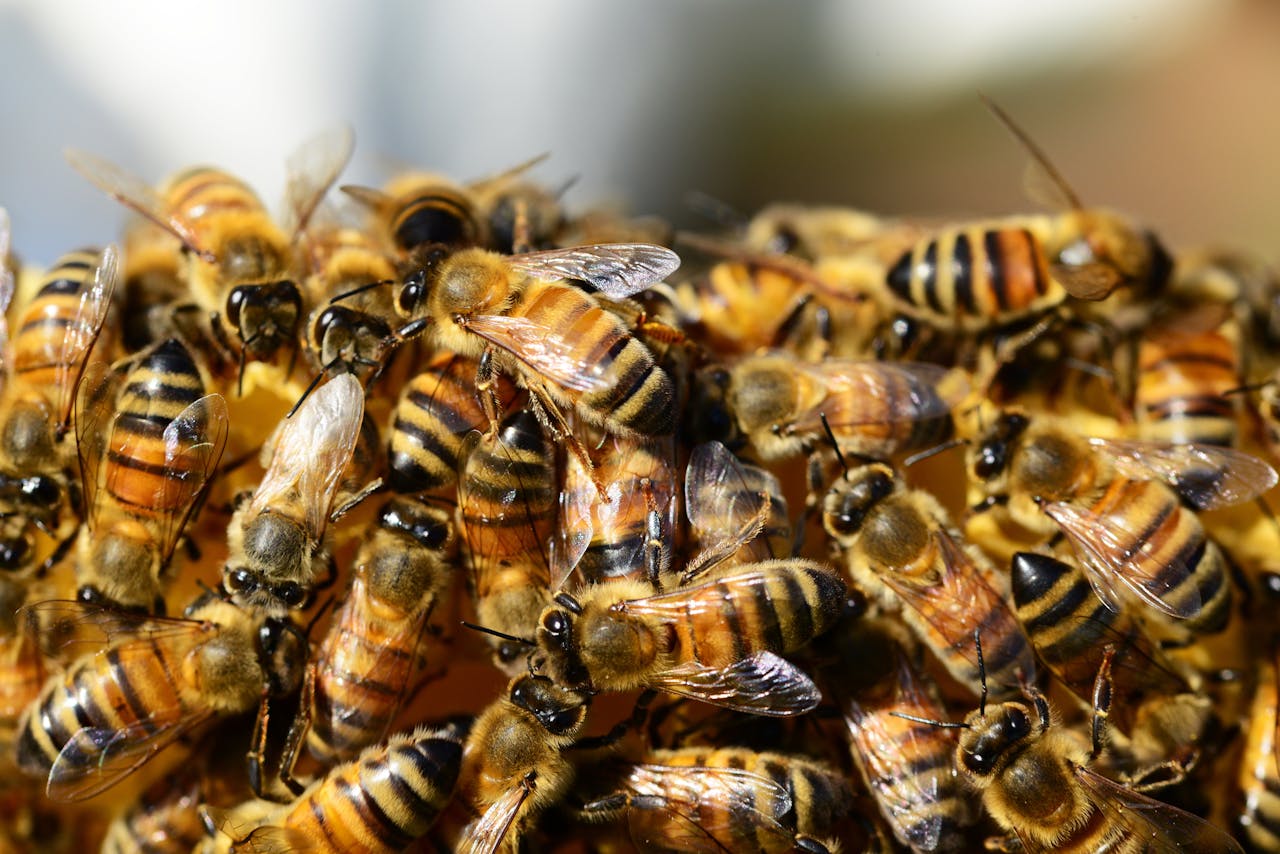
We are surrounded by signals from mobile networks, Wi-Fi, and other wireless technologies. These radiofrequency electromagnetic fields (RF-EMFs) move through our streets, homes, and farmlands, carrying calls, videos, and data. While they help us stay connected, research shows they may also affect the smallest species that play a vital role in our survival — pollinators like honeybees.
Recent studies conducted inside active beehives suggest that these invisible signals can alter bee health and behavior. Understanding these findings is important not only for protecting pollinators, but also for safeguarding our food supply and ecosystem health.
How Wireless Signals May Be Affecting Bees
Bees play an essential role in our food system. They pollinate about one third of the crops we eat, including apples, almonds, and coffee. Without them, many fruits, vegetables, and nuts would become harder to grow and more expensive to produce.
While we often focus on threats like pesticides, habitat loss, and climate change, scientists are also looking at another factor: exposure to radiofrequency electromagnetic fields (RF EMFs) from wireless technology. These are the same signals used by mobile networks and Wi Fi, particularly around the 900 megahertz (MHz) frequency range.

Researchers in Poland found that just one hour of exposure to 900 MHz RF EMF, similar to the output of many cell towers, altered key enzymes in bees. These enzymes are involved in protein metabolism, a process that helps maintain normal cell function. The same short exposure also triggered stress related genes, indicating that the bees’ cells were responding to the signal as a form of environmental stress.
In Croatia, a separate year long study looked at bee colonies living at different distances from cell tower antennas. Colonies in higher exposure areas showed signs of oxidative stress, which can damage cells and tissues, especially in developing larvae. These effects were observed even at exposure levels that are considered safe for humans.
These findings raise important questions. If RF EMFs can cause measurable biological changes in bees, what could that mean for pollination, crop production, and the overall stability of ecosystems?
What One Hour of Wireless Exposure Did to Bees
In a laboratory in Wrocław, Poland, scientists set out to answer a direct question: How quickly can signals from modern communication technology affect a honeybee’s body? The test subjects were one day old worker bees, newly emerged from the comb, kept in small wooden cages with food always available. They were divided into groups and placed at different distances from a 900 megahertz (MHz) radiofrequency electromagnetic field (RF EMF) source. This setup simulated exposure similar to that found near mobile phone base stations. The researchers tested three electric field strengths, 12 volts per meter, 28 volts per meter, and 61 volts per meter, and three exposure durations of fifteen minutes, one hour, and three hours.
After just one hour of exposure, two key enzymes involved in protein metabolism, alanine aminotransferase (ALT) and aspartate aminotransferase (AST), dropped significantly. These enzymes are essential for how a bee processes and uses proteins, and changes in their activity can signal cellular stress or damage. Another enzyme, gamma glutamyl transpeptidase (GGTP), also decreased sharply, but only in bees exposed to the highest field strength for the longest time.
The biochemical changes were only part of what the researchers observed. At the genetic level, the bees began producing higher amounts of two stress related proteins, heat shock protein 70 (Hsp70) and heat shock protein 90 (Hsp90). These proteins help repair and stabilize damaged proteins within cells. Other stress markers, such as Hsp10 and vitellogenin, did not change, suggesting the bees were not simply experiencing heat stress but responding to a specific kind of stress similar to ultraviolet B light exposure.
This type of reaction is called a disruption in proteostasis, which is the balance between creating, folding, and breaking down proteins. When that balance is disrupted, the cell must shift energy toward repair, leaving less available for growth, immune defense, and other vital functions. For an individual bee, this means a reduced ability to handle other threats. For a colony, it may be an early step toward long term decline.

How Long Term Wireless Exposure Affected Bee Colonies
In 2024, researchers in Croatia studied how continuous exposure to 900 megahertz (MHz) radiofrequency electromagnetic fields (RF EMFs) from cell tower antennas affected honeybee colonies over the course of a full year. Fifteen colonies were placed in three locations, each with different electric field levels. The bees lived and foraged normally, just as they would in any active hive.
The scientists measured markers of oxidative stress, which occurs when there is an imbalance between harmful reactive oxygen compounds and the body’s ability to neutralize them. Oxidative stress can damage cells and tissues over time. The results showed that larvae, the youngest stage of bee development, were the most affected. In colonies with the highest RF EMF exposure, larvae had elevated levels of thiobarbituric acid reactive substances (TBARS), which indicate damage to cell membranes.
Antioxidant enzyme activity also changed. Enzymes such as catalase, superoxide dismutase, and glutathione S transferase varied depending on the developmental stage of the bees and the level of exposure. In some cases, these enzymes increased early in the exposure period, possibly as a defense response. However, the effects were not uniform across all colonies, suggesting a complex relationship between exposure and biological response.
Observations from related work by the same research team reported that colonies in higher exposure areas showed changes in behavior, including increased aggressiveness, restlessness, and silent queen replacement, where a queen is replaced without typical swarming activity.
The combination of physiological stress and altered behavior suggests that long term RF EMF exposure can create ongoing pressure on bee colonies. While it may not cause immediate collapse, it could weaken colony stability over time, especially when combined with other environmental stressors.
Why Bee Health Matters for Your Food and Daily Life
Bees are not just important for honey production. They play a critical role in pollinating many of the fruits, vegetables, and nuts we eat every day. Without pollination, foods like apples, almonds, blueberries, cucumbers, and coffee would become more difficult and expensive to grow. According to global estimates, about one third of the food we consume depends on pollinators like honeybees.
When bees are exposed to constant stress, whether from pesticides, habitat loss, climate change, or radiofrequency electromagnetic fields (RF EMFs), their ability to forage, reproduce, and maintain healthy colonies is reduced. Over time, fewer healthy bee colonies mean less pollination, which can lead to smaller harvests and higher prices in grocery stores.
This does not only affect fresh produce. Many packaged foods, plant based products, and even beverages rely on crops pollinated by bees. Almond milk, coffee, certain oils, and a wide range of spices could all be impacted. A decline in pollination services can also limit dietary variety, making it harder for people to access nutrient rich, fresh foods.
For people who value healthy eating and a natural lifestyle, bee health is directly linked to food quality and availability. Protecting pollinators helps ensure a steady supply of diverse, nutrient dense foods that support long term wellness.
How You Can Help Protect Bees and Your Food Supply
You do not need to be a beekeeper to support pollinator health. Small changes in daily habits and choices can make a difference. Here are practical ways you can help:
- Plant pollinator friendly flowers and herbs: Grow plants that attract bees such as lavender, basil, sunflowers, and rosemary. Even small spaces like balconies or windowsills can provide food sources for pollinators.
- Choose produce from bee friendly farms: When possible, buy from local farmers or brands that avoid harmful pesticides and protect wild habitats. This supports agricultural practices that help pollinators thrive.
- Limit chemical use in your garden: Avoid synthetic pesticides and herbicides. Use natural alternatives like neem oil or compost tea to manage pests without harming beneficial insects.
- Support organizations focused on pollinator conservation: Contribute to or volunteer with groups that protect bee habitats and fund research into environmental factors affecting pollinators.
- Stay informed and spread awareness: Read reliable sources on pollinator health and share the information with friends, schools, and community groups. Awareness can lead to more people making pollinator friendly choices.
These actions can help strengthen bee populations, which in turn supports a stable and diverse food supply. Protecting pollinators is not just about the environment, it is about ensuring access to healthy food for the future.
The Bigger Picture
Bees are more than just part of the natural world. They are a direct link in our food chain. The research on radiofrequency electromagnetic fields shows that even small, invisible factors in our environment can affect their health in measurable ways. While the technology that powers our daily lives is not going away, we can make choices that reduce additional stress on pollinators.

By planting bee friendly spaces, supporting responsible farming, avoiding harmful chemicals, and staying informed, each person can contribute to healthier bee populations. Protecting bees is not only an environmental concern. It is a step toward protecting the variety and quality of food we rely on every day.
