
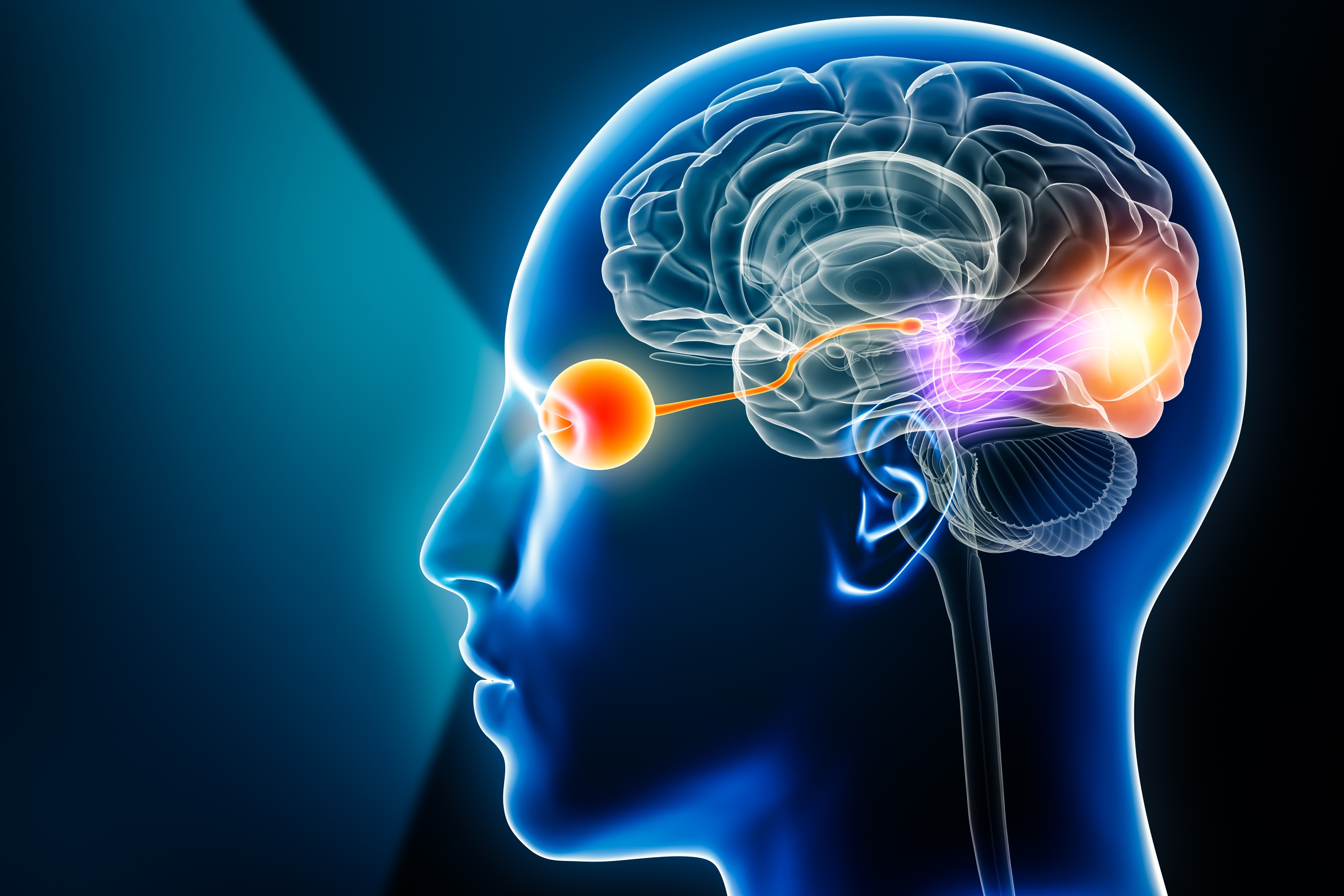
Night vision has traditionally required bulky, battery-powered headgear. Now, researchers have developed contact lenses that can do the same job—with no external power and no equipment. Created by a team led by neuroscientist Tian Xue at the University of Science and Technology of China, these lenses use embedded nanoparticles to convert invisible infrared light into visible wavelengths the human eye can detect. Even more surprising: they work with your eyes open or shut. What started as a lab concept has already shown real-world results in both animal and human trials, and its potential reaches far beyond tactical or military use. From emergency response to color blindness support, this technology could change how we see—literally.
How These Contact Lenses Make Infrared Light Visible

These contact lenses work by converting infrared light—which the human eye can’t see—into visible light using specially engineered nanoparticles embedded in the lens material. Human vision typically stops at around 700 nanometers, while infrared wavelengths range from about 800 to 1,600 nanometers. The nanoparticles in the lens absorb this invisible infrared radiation and re-emit it as visible light, effectively translating information from beyond the visual spectrum into something the eye can process in real time. What makes the technology especially practical is that it requires no external power source or bulky equipment; the conversion happens passively within the lens itself. The design builds on earlier animal research where infrared-sensitive nanoparticles were injected into the eye, but instead of using invasive methods, the team embedded the particles into flexible, biocompatible polymers already used in soft contact lenses. The result is a noninvasive, power-free way to detect infrared light—remarkably, even with closed eyes, since near-infrared wavelengths penetrate eyelid tissue more efficiently than visible light. This feature could be useful in environments where visibility is compromised, like smoke-filled rooms or low-light rescue operations, giving users a clear functional edge without the need for traditional night vision gear.
What Testing Revealed: Mice, Humans, and Real-World Results

To evaluate whether the lenses genuinely enabled infrared vision, researchers first tested them on mice using behavioral and physiological markers. Mice were given a choice between a dark enclosure and one lit only by infrared light—something mice cannot normally see. Those wearing the infrared lenses avoided the lit area, suggesting they were able to detect the infrared light, while control mice showed no preference, indicating no such perception. Physiological responses backed up these observations: the pupils of lens-wearing mice constricted in response to infrared exposure, and brain scans showed activation in the visual cortex when infrared light was present. These consistent biological and behavioral cues provided strong evidence that the infrared signals were being processed by the animals’ visual systems as actual visual information.
Human testing followed, focusing on whether people could perceive and interpret infrared stimuli while wearing the lenses. Participants were exposed to flashing infrared lights that mimicked patterns like Morse code, and they were asked to identify the signals and the direction of the light source. Without the lenses, subjects saw nothing. With them, they reported clear perception of both the light and the signal pattern, confirming that the lens-enabled infrared input was not just being detected but actually understood as visual information. These findings suggest that the technology doesn’t just work in theory—it produces results people can use and act on in real-world settings, even without prior training.
What makes these results more significant is the consistency across both species and testing conditions. In mice, you have involuntary physiological reactions like pupil constriction and neural activation, while in humans, you have conscious recognition of signals and directional awareness. Taken together, the data strongly support the claim that these contact lenses do more than passively respond to infrared—they give the wearer an active new layer of visual input. This positions the technology as not just a scientific curiosity, but a practical tool with the potential for use in fields ranging from emergency response to secure communication.
Color-Coding Infrared Light: Helping the Color-Blind and Expanding Visual Input

One of the standout features of these lenses is their ability to not only detect infrared light but also translate different infrared wavelengths into specific visible colors. By engineering the nanoparticles to respond uniquely to various infrared frequencies, researchers created a system where each range of infrared light gets mapped to a distinct visible hue—980 nanometers becomes blue, 808 nanometers becomes green, and 1,532 nanometers becomes red. This makes it possible for users to differentiate between infrared sources based on color alone, which adds a layer of information that traditional night vision systems can’t offer. It also opens the door to applications where knowing the exact nature of an infrared signal—such as heat signatures or specific types of light sources—could matter in real-time decision-making.
This same mechanism has strong potential for helping people with color vision deficiencies. By converting problematic wavelengths into more distinguishable colors, the lenses could allow color-blind users to perceive contrasts they would otherwise miss. For example, someone who struggles to differentiate red from green might see these hues as entirely separate colors when processed through the lens’s infrared-to-visible conversion. This could have practical benefits in everything from reading color-coded data to interpreting environmental cues in professional settings. While the lenses weren’t originally designed as assistive devices for the visually impaired, this unintended benefit makes them even more promising from a public health and accessibility standpoint.
Beyond aiding the color-blind, this kind of color-coded infrared detection could become a tool for professionals who need to quickly analyze complex environments. Firefighters might use it to distinguish between heat signatures at different temperatures, while security personnel could identify different types of surveillance or communication equipment based on the infrared frequency it emits. Even in consumer applications—like augmented reality—the ability to assign specific colors to different kinds of light could improve user interfaces and make digital overlays more intuitive. The core takeaway here is that the lens doesn’t just enhance what we see; it adds new dimensions to how we process and interpret visual information.
Practical Uses and What It Could Mean for You
While these infrared contact lenses may sound like something out of a sci-fi movie, their real-world applications are already taking shape—and not just for soldiers or scientists. In fields like security and law enforcement, the ability to see in the dark without bulky equipment could make surveillance and field operations more efficient and less conspicuous. Emergency responders working in smoke-filled buildings or dark disaster zones could gain clearer visual access without relying on handheld gear, freeing up their hands and reducing delays. Even for people working in industrial settings or remote areas with limited visibility, being able to detect heat sources or electrical faults through infrared could improve both safety and productivity.
For the average person, you might not need night vision on a daily basis—but this technology could evolve to enhance how we interact with information in everyday life. Augmented reality systems could eventually integrate this lens technology to display useful data overlaid on the physical world, like directions, translations, or health metrics. People with color blindness might use future versions of the lenses to distinguish color-coded warnings or interpret charts more accurately. And if the cost and accessibility of production improve, it’s not unrealistic to imagine versions tailored for consumer use—such as night biking, hiking, or even personal security during low-light commutes.
That said, this isn’t something you’ll be picking up at your next eye exam just yet. The technology is still under active development, and while safety tests so far have shown promising results, longer-term studies are still needed. But knowing what’s possible—and on the way—can help people start thinking about how they might use or benefit from this tech down the line. Whether it’s a practical tool for work or an accessibility aid for visual limitations, the impact could extend well beyond specialized fields.
Expanding Human Vision Without the Gear
The development of infrared contact lenses marks a shift in how we think about human vision—not just enhancing it, but fundamentally expanding it without adding bulk or power. This isn’t about replacing glasses or upgrading goggles; it’s about integrating new capabilities into the body with minimal interference. That shift has broader implications. As the technology improves—higher resolution, better sensitivity, wider infrared detection range—it could redefine what we consider “normal” vision in professional and personal contexts. It’s not a stretch to imagine a future where enhanced vision is built into routine tasks, from first responders navigating disasters to individuals with vision disorders using lenses to make their world easier to interpret.
But as with any breakthrough, it’s important to stay grounded in what’s real. These lenses are not consumer-ready yet, and it will take more time and testing before they’re approved for wide use. Ethical concerns around surveillance, privacy, and unintended uses will also need to be addressed. Still, the fact that this level of functionality is already achievable without surgery, wires, or batteries is a clear signal: wearable tech is moving toward minimalism and deep integration with how we already live and function.
For now, what matters most is awareness. This is no longer just lab research—it’s a working prototype with tested results in both animals and humans. As the technology matures, staying informed will help consumers, professionals, and policymakers make better decisions about how to use it, regulate it, and eventually, benefit from it. Seeing in the dark may no longer be a superpower—it might just be the next upgrade to your prescription.
