
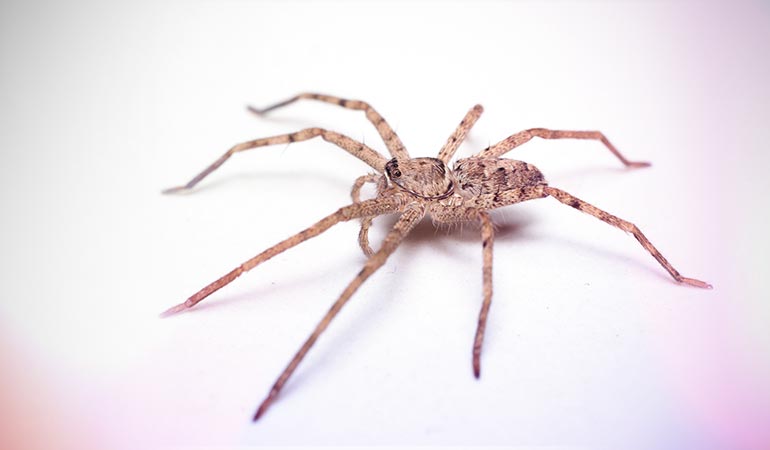
Most people would panic if they found one venomous spider in their home. A family in Kansas unknowingly shared their 19th-century house with thousands of them. For more than five years, parents and their two young children went about their daily lives while something sinister lurked in the walls, behind picture frames, and under furniture. Kids did homework at the kitchen table. Parents folded laundry and made beds. Everyone slept soundly at night, completely unaware of what occupied the dark spaces around them.
Occasional spider sightings didn’t raise alarms. Houses in rural Kansas get spiders. Nobody thought twice about the brown arachnids that would occasionally scuttle across a floor or hide in a corner. Summer 2001 changed everything when someone finally brought a specimen to an expert for identification. What happened next would lead to one of the most shocking spider discoveries ever documented. When researchers finished counting every last arachnid occupant, the final tally made even spider experts shake their heads in disbelief.
A Family Shares Their Home With Thousands of Venomous Spiders
In 1996, a family of four moved into a historic limestone home in Lenexa, Kansas. At the time, their children were just 8 and 13 years old. Over the following years, family members would occasionally spot spiders scuttling across floors or hiding in corners. Like many homeowners, they assumed these eight-legged visitors were harmless house spiders.
Summer 2001 changed everything. Someone finally captured a specimen and brought it to a University of Kansas expert for identification. News came back that sent chills down their spines. Every spider they had been casually coexisting with for five and a half years was Loxosceles reclusa, better known as the brown recluse. Researchers soon descended on the property to document what would become one of the most extreme spider infestations ever recorded.
Brown Recluse Spiders Make Themselves at Home
Brown recluse spiders earned their name through reclusive behavior. “Brown recluse are hunting spiders that wander at night in search of prey. Females make retreats in which they hide and ambush prey. A retreat consists of a mat of silk spun in a hidden location such as in a wall void or behind a picture frame,” according to the Illinois Department of Public Health.
Once these spiders establish themselves in a structure, eviction becomes nearly impossible. Female brown recluses possess a reproductive superpower that makes them formidable invaders. A single-mated female can produce offspring throughout her entire life without ever mating again. She can also survive for months without eating, patiently waiting in her silken retreat.
Spiders of this species live for several years, giving them ample time to reproduce and expand their territory. What starts as one pregnant female can explode into hundreds or thousands of spiders across multiple generations. Old homes with plenty of hiding spots offer perfect conditions for population growth.
Inside the 19th-Century Kansas Home

Researchers chose their study site for good reason. Built in the 1850s, the Lenexa property featured 45-centimeter-thick exterior limestone walls that had weathered over a century of Kansas seasons. Local legend claimed Wild Bill Hickok once called the place home during the mid-1800s.
The architecture of the era created an ideal spider habitat. Three floors provided 270 square meters of living space, but spiders cared more about the spaces humans couldn’t see. Multiple attics contained 8 centimeters of blown insulation where spiders could hide and breed. Original wood shingles sat beneath three layers of asphalt roofing. Interior stone walls wore coats of old plaster that had cracked and separated over decades.
Additions from the 1920s and 1960s had enclosed an exterior wall, creating a labyrinth of voids and gaps between old and new construction. Several outbuildings dotted the 4-hectare property, including a horse barn, chicken coop, and garage. Trees and pasture surrounded the home, which sat 200 meters from the nearest neighbor. Rural isolation meant spider populations could flourish without human interference.
Five Years of Living With Unknown Roommates
From 1996 through early 2001, family members went about their normal activities while spiders multiplied in hidden spaces. Children did homework, parents cooked meals, and everyone slept in their beds. Nobody realized venomous spiders were breeding in the walls around them.
Occasional spider sightings didn’t raise alarms. Houses get spiders. People in rural Kansas expect to share their space with insects and arachnids. Without proper identification, brown recluses look similar to several harmless spider species common in the region.
Discovery came by chance in mid-June 2001 when someone finally brought a specimen to an expert at the University of Kansas. Verification of the species identity prompted an immediate response. Researchers contacted the family and proposed a thorough collection effort to document the scope of the infestation.
Researchers Launch Six-Month Spider Hunt

Two people began nightly collections in mid-June 2001, spending roughly 90 minutes each night hunting spiders throughout the house. Teams searched every room, peered into every crevice, and investigated every hiding spot they could access. When they found spiders, they tried to capture them alive for measurement and documentation. Many escaped attempts at gentle collection, forcing researchers to kill them to prevent getaways. Every spider, whether preserved or destroyed, got logged and counted.
Sticky traps supplemented manual collection efforts. Researchers deployed 15 flat-tray glue boards starting in late June. By August, they had increased trap coverage to 36 units placed throughout the home. Collections continued intensively through mid-September, then shifted to approximately weekly hunts through November as spider numbers dwindled.
Researchers categorized manually collected spiders into three size groups. Large specimens measured over 6 millimeters in body length. Small specimens included recently hatched spiderlings. Medium spiders fell between these extremes. Every spider went into a size category, creating a demographic snapshot of the population.
Staggering Numbers From the Collection
Six months of methodical hunting produced jaw-dropping results. “2,055 brown recluse spiders were collected or killed in 6 [months], 842 from sticky traps and 1,213 from manual sampling,” researchers reported in their published findings.
Breaking down manual collections by size revealed a population dominated by juveniles. Small spiders accounted for 51 percent of manually captured specimens. Large spiders made up 27.4 percent, while medium spiders represented 21.6 percent. Sticky traps caught predominantly tiny spiderlings, though they also snared 51 larger specimens capable of delivering venomous bites.
As summer turned to fall, collectors noticed they were catching fewer big spiders. Two factors explained the pattern. Larger spiders were easier to spot and capture, so intensive hunting removed them from the population first. Natural demographic shifts also played a role as the breeding season progressed and young spiders matured at different rates.
Spiders Found in Every Corner of Family Life

Brown recluses didn’t limit themselves to basements or attics. Researchers documented 90 spiders discovered during everyday activities throughout the home. Spiders turned up in bedrooms where children slept. Kitchens where families ate meals harbored the arachnids. Even bathrooms contained the eight-legged occupants.
One large spider crawled up someone’s arm while they stuffed bedding into a washing machine. Another person felt something on their skin while lying in bed and discovered a medium-sized brown recluse crawling on them. A third family member picked up clothing from the floor and found a spider on their finger.
High-traffic areas proved just as infested as forgotten storage spaces. Spiders had established themselves wherever they could find dark corners and patient hunting grounds. Humans and arachnids had been living side by side in intimate proximity for over five years.
Zero Bites Despite 400 Bite-Capable Spiders

Brown recluse spiders reach envenomation capability at roughly 5 millimeters in body length. Based on size measurements, researchers estimated the Kansas home contained 488 spiders large enough to deliver medically significant bites. Using conservative calculations, they put the number at around 400 dangerous specimens sharing space with the family.
Yet something remarkable happened, or rather, didn’t happen. “Despite a conservative estimate of 400 envenomation-capable brown recluses in the Kansas home (≈20 percent of the total recluses captured), no envenomations of the occupants occurred.”
Not one family member showed evidence of a spider bite during 5.5 years of occupancy. Nobody got bitten during the six-month collection period when researchers and residents were handling spiders nightly. Four people, including two children who grew up in the home, emerged completely unscathed.
Similar findings emerged from a Chilean study where researchers found between 106 and 222 potentially dangerous Loxosceles laeta spiders in each of five heavily infested homes. Residents of those homes also reported zero bites.
Medical Misdiagnosis Problem in Non-Endemic Areas
Brown recluse spiders live in a defined geographic range spanning from southeastern Nebraska to Texas, then east to southernmost Ohio and Georgia. Outside these endemic areas, established populations don’t exist. Verified specimens from non-endemic regions typically number fewer than 10 per state.
Yet physicians across North America diagnose brown recluse bites with troubling frequency, often in places where the spiders don’t live. Doctors base these diagnoses on clinical examination of dermatological lesions without any evidence of spider involvement. Someone develops a mysterious wound, and medical professionals blame an arachnid that isn’t present in the area.
Research from the Kansas infestation has profound implications for these diagnoses. If a family can live unbitten among hundreds of venomous spiders for years, how likely is it that someone in Wisconsin or California actually got bitten by a brown recluse? For diagnoses in non-endemic areas to be accurate, those regions would need to support populations of hundreds or thousands of spiders. Evidence shows they don’t.
Emerging medical research reveals that many conditions produce skin lesions mistakenly attributed to spider bites. Bacterial infections, fungal diseases, and various inflammatory conditions can create wounds that look like envenomation. Without verifying the presence of Loxosceles spiders at the specific location where someone allegedly got bitten, attributing wounds to brown recluses becomes speculation rather than diagnosis.
Brown Recluse Bites Are Less Dangerous Than Believed

Public perception of brown recluse venom far exceeds actual danger. Medical literature often focuses on rare, severe reactions that make dramatic case studies while ignoring the typical outcomes. Most brown recluse bites produce only localized redness and swelling that resolves without intervention.
Severe necrosis, the flesh-destroying reaction people fear, occurs in fewer than 10 percent of actual brown recluse bites. Even when necrosis develops, bacterial infection of the wound may cause more tissue damage than the venom itself. Spiders get blamed for outcomes that antibiotics could have prevented.
Brown recluses prefer to run rather than fight. When cornered or pressed against skin, they may bite defensively, but encounters rarely reach that point. Even the Kansas family, who accidentally put their hands directly on spiders multiple times, never provoked a bite response.
What We Learn From Living With Loxosceles reclusa
A family living among 2,055 venomous spiders without a single bite tells us something important about both spider behavior and medical diagnosis. Brown recluses, despite their fearsome reputation, pose less danger than commonly believed. Real risk requires not just the presence of spiders, but specific circumstances that force defensive biting.
For people living in endemic areas, the Kansas case offers strange comfort. Hundreds of spiders in your walls don’t mean you’ll get bitten. For those in non-endemic regions, the research suggests your unexplained skin lesion probably isn’t a spider bite. Evidence-based diagnosis requires evidence of spiders, not just wounds that might look like envenomation.
Researchers removed over 2,000 spiders from one Kansas home, yet similar infestations exist throughout the endemic range. Most go undetected because spiders stay hidden, and homeowners don’t realize what shares their space. Perhaps ignorance really is bliss when it comes to creepy crawlies in the crawlspace.
