
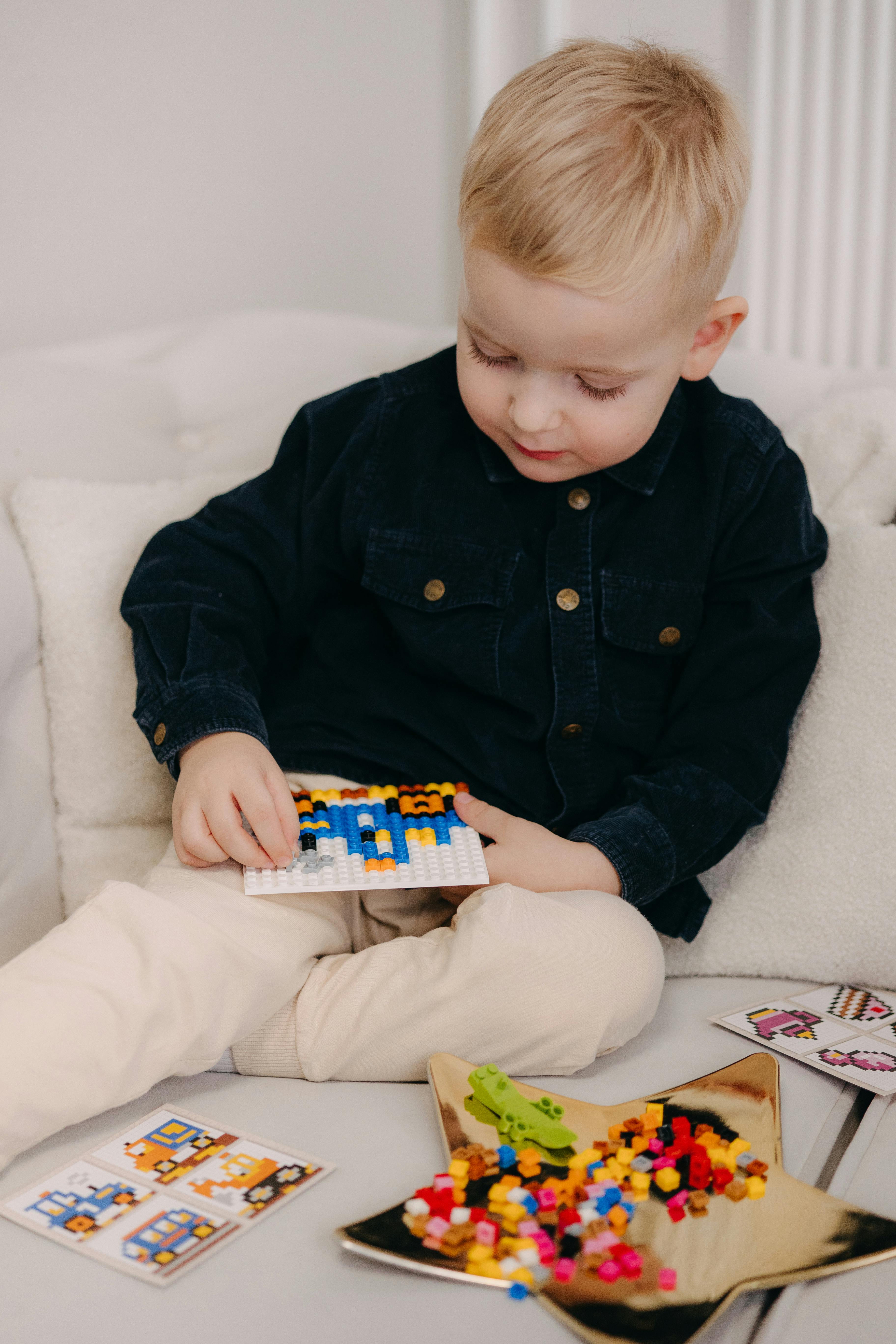
When a child steps into a hospital for an MRI scan, the bright lights, sterile smell, and the sight of a massive humming machine can feel like stepping into an alien world. For many young patients, it’s an overwhelming experience filled with anxiety, confusion, and sometimes tears. Parents stand by helplessly as nurses explain what will happen, but words alone rarely soothe the fear of lying still inside a noisy, tube-shaped scanner that seems to swallow them whole. For decades, hospitals have relied on sedation or anesthesia to get through these moments an effective but not ideal solution that carries risks, costs, and lingering side effects. Yet, a humble toy is now transforming this story of fear into one of confidence, curiosity, and play.
That toy is the Lego MRI Scanner set. Developed by the Lego Group and the Lego Foundation, this miniature model of a hospital’s imaging suite has already reached more than one million children worldwide. It’s simple a patient bed, a scanner, cheerful staff minifigures, and accessories but its effect has been nothing short of revolutionary. Across hospitals from Denmark to Scotland, California to Edinburgh, medical professionals are finding that this playful approach reduces anxiety, builds trust, and nearly halves the need for sedation. It’s not a high-tech medical breakthrough, yet it’s delivering measurable improvements in pediatric care. The power of these little bricks isn’t just in their color or construction it’s in their ability to make the unknown familiar and the frightening manageable.
Turning Fear into Curiosity
At first glance, the Lego MRI Scanner looks like a child’s toy box fantasy: a small, colorful hospital scene complete with smiling minifigures and a movable scanner bed. But for doctors, nurses, and child life specialists, it has become one of the most valuable teaching tools in pediatric medicine. The process of an MRI short for magnetic resonance imaging can be particularly daunting for children. The machine is large, the noises are loud, and the experience requires absolute stillness for up to an hour. For an adult, that can be uncomfortable; for a five-year-old, it can be terrifying. Sedation or anesthesia often becomes the fallback solution, helping children stay still long enough for doctors to capture accurate images.
That’s where the Lego MRI set comes in. By allowing children to handle the miniature scanner, place a Lego patient inside, and see what happens step by step, hospitals are demystifying a process that once felt overwhelming.

The effect is profound. Research by the Lego Group revealed that 96% of healthcare professionals using the model report calmer, less anxious children, while 46% have seen a drop in the use of sedation or general anesthesia. It’s a powerful reminder that understanding reduces fear. When kids can visualize the procedure, ask questions, and play their way through it, their brains move from panic mode to problem-solving mode.
At NHS Lothian’s Royal Hospital for Children and Young People in Edinburgh, five-year-old Ivy experienced this transformation firsthand. Before her second MRI, her mother, Rachel, introduced her to the Lego model. “If we hadn’t played with it beforehand, I think she would have had a full meltdown,” Rachel said. “It made everything go smoothly. She was even a bit excited!” Ivy’s story mirrors countless others small acts of play translating into enormous relief for children and their families.
Real Stories, Real Courage

Image source: Website @Lego
Beyond statistics, the Lego MRI Scanner is a collection of deeply human stories. There’s Sam Lane, a 14-year-old cancer patient from Boston, who built one of the hospital’s Lego MRI sets while recovering from treatment. When nurses asked him to help assemble it for younger children, he insisted on completing the project despite fatigue. “Nope, this is important,” he told his mother. “I need to help other kids.” The set he built now helps dozens of children each week face their own scans without tears. Sam’s mother, Christina, described it best: “To have a little Lego buddy that they can identify with is incredible.” For Sam, who is now cancer-free, the MRI no longer feels frightening it’s just another part of his recovery journey.
In Scotland, the same story unfolded with little Ivy. After playing with the Lego model, she entered the scanning room calm and confident. Instead of sedation, she managed the entire procedure awake and aware, clutching the memory of the toy’s reassuring familiarity. “I liked playing with the Lego toy,” she said afterward. “It made me feel relaxed.” Her mother added that Ivy’s understanding of the process helped their entire family feel calmer. These stories highlight something profound: when children are given agency and understanding, they rise to the challenge with remarkable bravery.
Across the Atlantic, at Kaiser Permanente Roseville Medical Center in California, child life specialist Traci Aoki-Tan described what happens every time she walks into a room with the Lego MRI set. “The kids’ faces light up. Even anxious parents you can see their shoulders drop.” What begins as a toy quickly becomes a bridge of empathy between families and clinicians. It’s not just the children who benefit; parents feel less helpless, reassured that their child’s emotional wellbeing is being cared for as much as their physical health.
The Science of Calm: Why Play Works

What makes the Lego MRI Scanner so effective isn’t magic it’s neuroscience. Play, particularly hands-on imaginative play, activates multiple regions of the brain at once, stimulating the release of dopamine and endorphins chemicals that produce feelings of pleasure and calm. In psychological terms, this creates a state of “approach motivation,” where curiosity replaces fear. A once-terrifying MRI machine becomes something to explore rather than endure.
By touching and manipulating the Lego set, children are doing what psychologists call “cognitive rehearsal.” They’re mentally and physically practicing the event in a safe, controlled environment. This gives them a sense of predictability something crucial when facing medical uncertainty.

Familiarity breeds confidence; confidence replaces fear. And when fear recedes, cooperation improves. That’s why many hospitals using the Lego MRI model report shorter scan times and fewer motion-related errors in imaging results.
Play also provides a way for children to express emotions they can’t articulate verbally. A child might make their Lego patient scared or have the doctor figure offer reassurance subtle ways of processing their own emotions through storytelling. As Sara Anderson, a therapist at Sutter Medical Center, put it, “When a child builds, they aren’t just stacking bricks they’re building understanding.” Through play, fear becomes narrative, and narrative becomes mastery.
A Quiet Revolution in Healthcare

Image source: Website @Lego
The Lego MRI project began as a small-scale experiment in Denmark but has since evolved into a global movement. Since 2023, more than 10,000 sets have been donated to hospitals through partnerships with organizations such as the Starlight Children’s Foundation, Fairy Bricks, and United Way. Each donation represents more than a gift it’s a shift in philosophy. Healthcare providers are recognizing that emotional preparation is as vital as medical precision.
At Aarhus University Hospital in Denmark, radiographer Jannie Bøge Steinmeier Larsen described the change as “invaluable.” Children who once needed anesthesia now complete their scans awake, curious, and calm. Families report feeling “seen and heard,” and staff describe smoother, faster procedures. What began as a social responsibility initiative by Lego has become a clinical tool with measurable outcomes. Reducing sedation rates by nearly 50% isn’t just good for patients it saves time, resources, and reduces potential complications.
This shift reflects a broader movement in pediatric care: integrating empathy into medical practice. Where once medicine was viewed as purely technical, projects like the Lego MRI Scanner remind us that healing also depends on comfort, connection, and understanding. By reframing care through the lens of play, hospitals are not just treating illness they’re nurturing resilience.
Beyond the Bricks: Building Hope
The most striking thing about the Lego MRI initiative is how it unites two seemingly opposite worlds medicine and play. Yet at their core, both seek to restore balance: one heals the body, the other heals the spirit. A single Lego brick might seem trivial, but when assembled thoughtfully, it becomes a symbol of creativity and courage.
For the children who use it, the Lego MRI Scanner is more than a toy it’s a source of empowerment. It teaches that fear can be understood, that machines can be friendly, and that bravery doesn’t mean the absence of fear but the ability to face it with knowledge. For parents, it’s a lifeline of reassurance, proof that their child’s emotional safety is being taken seriously. For medical professionals, it’s a reminder that empathy can be engineered as deliberately as any machine.
Diana Ringe Krogh, Lego Foundation’s Vice President of Social Responsibility, summarized it perfectly: “A simple act of play can have a big impact. We’re helping children feel safer and more in control.” That sentiment captures the heart of this story. Whether it’s a five-year-old in Edinburgh or a teenager in Boston, each child who touches the Lego MRI Scanner adds their own small chapter to a larger narrative one where fear is replaced with curiosity, and hospitals become places of learning, not dread.
As medicine advances with cutting-edge technologies and AI-driven diagnostics, the Lego MRI Scanner reminds us that sometimes the most powerful innovations are the simplest ones. A handful of colorful plastic bricks, arranged just so, can do what machines alone cannot: comfort, teach, and empower. In that sense, Lego has done more than design a toy it has built a bridge between science and the human spirit, one brick, one smile, and one brave little patient at a time.
