
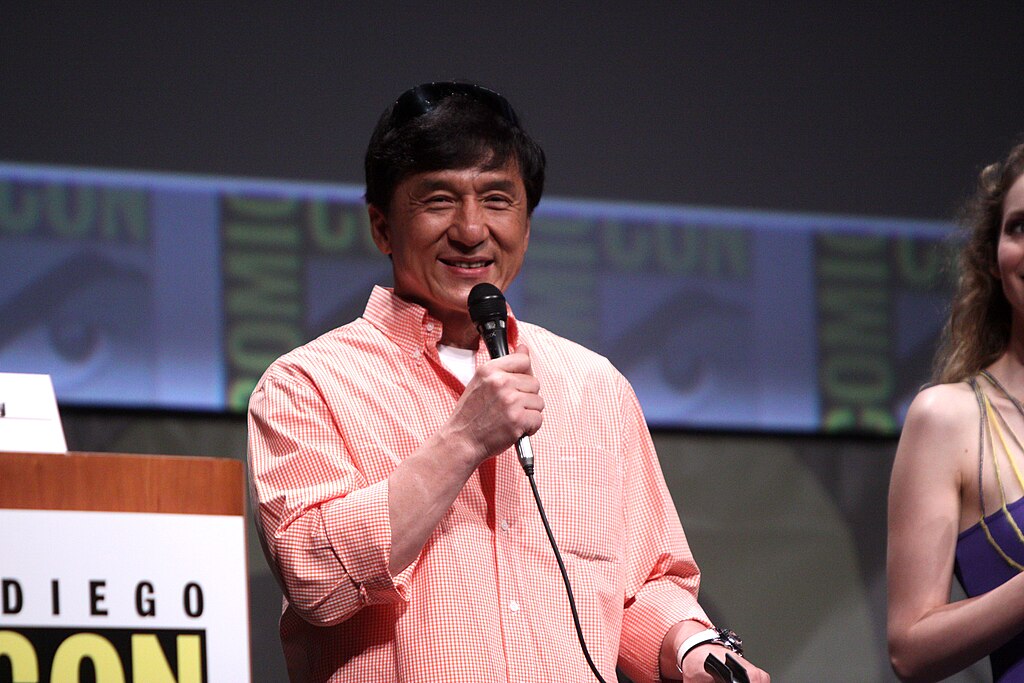
Few entertainers have shaped global cinema the way Jackie Chan has. For more than half a century, he has leapt off buildings, choreographed breathtaking fight scenes, and carved out a genre that blends humor with danger. His films have pulled in billions at the box office, and his name carries weight in both East and West.
But behind the blockbuster career and a fortune estimated at hundreds of millions lies a decision that has surprised many. Instead of passing down his wealth to his only son, Chan has chosen a very different path—one rooted in lessons he’s carried from childhood through decades of hard-won success.

Why Jackie Chan May Leave Nothing Behind
Despite a lifetime of cinematic success and an estimated net worth of $400 million, Jackie Chan has made it clear that his fortune may not be passed down to his son, Jaycee. This isn’t a decision born out of estrangement or anger. Instead, it reflects a deeper belief: that wealth earned without effort has little value.
In a 2011 report, Chan was quoted saying, “If he is capable, he can make his own money. If he is not, then he will just be wasting mine.” His stance sparked public debate, especially given the traditional expectation in many cultures that wealth should be passed on to one’s children.
Jaycee Chan, now in his forties, has tried to follow his own path in music and film. However, his career has not mirrored the success or global reach of his father’s. His reputation was further impacted in 2014 when he was arrested in Beijing for marijuana possession and sentenced to six months in prison. At the time, Jackie Chan—who was serving as an anti-drug ambassador in China—publicly expressed shame and disappointment over the incident.

Still, this isn’t about punishment. It’s about personal responsibility. Throughout his life, Chan has emphasized the importance of working hard, earning success, and never relying on privilege. He has argued that inherited wealth can erode ambition, a viewpoint that resonates with a growing number of wealthy public figures.
Actor Daniel Craig has called large inheritances “distasteful,” explaining that he intends to “give it away” rather than pass it down. Ashton Kutcher has shared that while he and Mila Kunis may help fund their children’s business ideas, they don’t plan to leave behind trust funds. Shaquille O’Neal has stated plainly, “We ain’t rich. I’m rich,” adding that his children must earn degrees before being eligible for any inheritance.
For Chan, the message is simple: earning your place matters more than being handed one. In his eyes, a legacy built on discipline, values, and perseverance is more powerful than a bank account.
From Humble Training to Global Stardom
Jackie Chan’s rise wasn’t built on opportunity—it was forged through endurance. At seven years old, he was enrolled in the Chinese Opera Research Institute, where training was relentless and discipline brutal. He later described those early years as a blur of dawn-to-midnight routines, where any sign of weakness was met with punishment. “Every day we would train from dawn to midnight, and anyone caught taking it easy would be whipped and starved,” he said. He credits those years for the creativity behind his fight choreography but adds that he would never put a child through the same regimen.
Chan’s earliest roles were underwhelming, in part because studios were trying to replicate Bruce Lee’s image. He was cast in serious, stoic roles that never quite fit. The turning point came when Chan began rejecting imitation and leaned into his strengths—choreographed chaos, physical comedy, and charisma. It was this unique blend that set him apart. Chan pushed back and pivoted to a style that mixed precision fighting with physical comedy. “I was contracted to Lo Wei, but he wanted to turn me into another Bruce Lee. I had a different style to Bruce, my own style, so that wasn’t working, and I was looking to make a change.” His success in Hong Kong quickly followed, and with it came creative control. He became the highest-paid actor in the region, known for designing his own stunts and rarely using doubles.
Cracking the American market proved more difficult. Early Hollywood ventures like The Big Brawl and The Protector didn’t land. Directors were hesitant to relinquish creative control over fight scenes, a dynamic that clashed with Chan’s deep experience in action choreography. But he kept pushing. Rumble in the Bronx in 1995 gave him a foothold, and Rush Hour in 1998 turned him into a household name. The film’s global box office success marked a cultural shift—one that confirmed Chan’s brand of action was not just entertaining but universally resonant.
Building Wealth and Influence
Jackie Chan didn’t just break into global cinema—he built a financial empire behind it. As of 2025, his net worth is estimated at $400 million, according to Celebrity Net Worth, a figure built not only on acting but also on production, endorsements, and long-term business strategy.
By the early 2000s, Chan had moved beyond starring roles and began producing and directing his own films, taking a larger share of the profits. His contracts often included backend points—a percentage of a film’s earnings—allowing him to earn well beyond a flat salary. For major Hollywood releases like Rush Hour 2 and Rush Hour 3, reports estimate he earned $15 million upfront per film plus 15% of gross earnings, translating to over $126 million from those two sequels alone.

In China and Hong Kong, Chan’s earnings per film were already high decades earlier. Around 1996, it was widely reported that he was commanding 30 million Hong Kong dollars per movie—roughly $4 million USD—plus a share of box office profits, according to multiple contemporaneous media reports.
Outside of film, Chan diversified. He launched branded merchandise, licensed his name to gyms and clothing lines, and developed the Jackie Chan Stunt Team—a group of professional martial artists and stuntmen who work primarily on his films and related projects. He also profits from numerous brand endorsements and real estate investments across Asia.
Even in his 70s, Chan remains one of the highest-earning actors globally. In 2020, Forbes reported his annual earnings at $40 million, ranking him among the world’s top 100 highest-paid celebrities that year. These figures reflect decades of strategic positioning—not just on screen, but behind the scenes.
Chan’s wealth is a direct outcome of ownership, calculated risk-taking, and an understanding of how to turn creative control into sustained financial gain. It’s not simply a reward for acting—it’s the return on years of building infrastructure around his brand.
Giving Back: The Legacy Jackie Chan Is Choosing Instead
Jackie Chan has deliberately structured his legacy around empowerment—not inheritance. Rather than preserving his wealth for family, he has directed considerable resources toward charity, especially in education and disaster relief.
In 1988, he founded the Jackie Chan Charitable Foundation, initially focused on providing scholarships, medical assistance, and emergency support to vulnerable people in Hong Kong and across Asia. The Forbes profile calls Chan “philanthropy’s hardest-working man,” citing the foundation’s early mission to “offer scholarships and other help to young people.”
In 2004 (though some sources say 2005), he established the Dragon’s Heart Foundation, designed to bring aid to rural and remote regions of China. The foundation has reportedly built around 20 schools, supported elderly residents, and responded to disasters like the Sichuan earthquake.
Chan has also served as a UNICEF Goodwill Ambassador since 2004, using his platform to advocate for children’s rights, education, and disaster recovery efforts. UNICEF documents note his long-standing dedication since establishing his charitable foundation.
These efforts testify to his belief that meaningful impact comes from building systems—not distributing wealth. By funding education, infrastructure, and humanitarian aid, Chan is creating lasting opportunities for communities that far outlive monetary inheritance.
Lessons in Legacy: What We Can Learn from Jackie Chan’s Philosophy
Jackie Chan’s decision to forgo traditional inheritance highlights principles that can apply far beyond celebrity wealth. Here’s how those values translate into real-world action:
- Earned success is more powerful than gifted comfort
Don’t default to handing things over. Create environments where people, especially children, feel the reward of earning. It builds identity and confidence—something wealth alone can’t buy. - Support doesn’t have to mean financial dependence
You can be emotionally present while still holding firm boundaries. Chan didn’t abandon his son; he simply refused to offer unearned luxury. - Lead by example, not by lecture
Discipline and perseverance are better taught through action. Show your values in how you work, make decisions, and handle failure. These become the real lessons. - Think beyond inheritance—invest in impact
Consider shifting focus from leaving money behind to leaving opportunities behind. Donations, mentorships, and community projects can outlast a bank account. - Accountability and love can exist together
Mistakes don’t mean rejection. Chan’s public disappointment in his son came with expectations—not abandonment. Set standards, but leave space for redemption. - Teach how to manage wealth—not just receive it
If you do plan to pass on money, couple it with financial literacy. Knowledge protects wealth better than a trust fund alone. - Success is defined by integrity, not image
Chan didn’t chase Hollywood formulas. He built a brand rooted in what he believed in. Encourage others to define success on their own terms—not society’s checklist.
Beyond Money: A Spiritual View of Legacy
Jackie Chan’s refusal to pass down his wealth isn’t just a financial choice. It’s a spiritual one.
By choosing to give to causes instead of bloodlines, Chan invites a shift in how we define what it means to leave something behind. Legacy, in this view, is not a transaction—it’s a transmission of values. It’s not measured in assets, but in the lives made better because you existed.
In a world obsessed with accumulation, Chan’s decision pushes against the grain. It challenges the belief that love is proven through inheritance, or that success is best passed on through material gain. Instead, it brings attention back to presence, responsibility, and impact.
Spiritual traditions across cultures echo this perspective. Whether it’s the Buddhist principle of non-attachment, the Stoic idea of living in service of virtue, or Indigenous teachings about stewardship and collective wellbeing, the message is similar: the most meaningful legacies are not owned—they’re shared.
Chan’s philanthropy, public values, and emphasis on self-reliance point to a truth that often gets lost in headlines—what we give to the world shapes us far more than what we keep. His story isn’t about withholding wealth. It’s about returning it—strategically, intentionally, and in service of something larger than the self.
In this way, Chan’s legacy becomes not just a career milestone or a financial decision, but a call to redefine what it means to live a successful life. Not by what we earn, but by what we elevate.
Featured Image from Gage Skidmore from Peoria, AZ, United States of America, CC BY-SA 2.0, via Wikimedia Commons

.jpg)
