
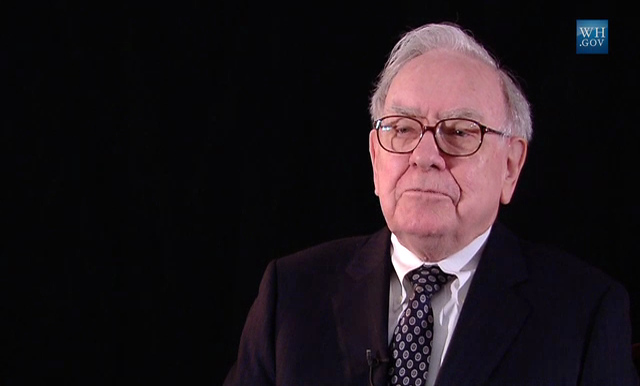
At 94 years old, Warren Buffett is still reshaping what it means to leave a legacy. In 2025, he stunned the world once again with a single act of generosity that pushed his lifetime giving to an unprecedented milestone. It wasn’t just about billions in stock or the mechanics of philanthropy—it was about one man’s decades-long commitment to give more than he ever planned to keep.
This moment forces us to pause and ask: What drives someone to part with nearly all of their fortune? And what can the rest of us learn from a life defined not by accumulation, but by how much has been given away?

The Details of the $6 Billion Gift
In late June 2025, Warren Buffett made headlines once again when Berkshire Hathaway confirmed he had donated more than 12.3 million Class B shares, valued at roughly $6 billion, to five charitable foundations. The transaction, disclosed in a company filing, marked his largest annual contribution since he began giving away his fortune nearly two decades ago.
The bulk of the gift—9.43 million shares, worth around $4.6 billion—went to the Bill & Melinda Gates Foundation Trust, continuing Buffett’s long-standing support of its global health and education programs. The remainder was divided among four family-run charities: 943,384 shares to the Susan Thompson Buffett Foundation, which focuses on reproductive health and scholarships, and 660,366 shares each to the Sherwood Foundation, the Howard G. Buffett Foundation, and the NoVo Foundation.
Even after the donation, Buffett remains the largest individual shareholder of Berkshire Hathaway. He retained more than 198,000 Class A shares and over 1,100 Class B shares, representing about 13.8 percent ownership of the company. Before this transaction, his net worth was estimated at $152 billion, ranking him fifth on Forbes’ list of the world’s richest people. After the donation, he shifted down one spot to sixth
Importantly, Buffett reiterated that these gifts are not part of any plan to liquidate his holdings. In a public statement, he emphasized, “During the following 19 years, I have neither bought nor sold any A or B shares nor do I intend to do so.” This reflects his steady approach to stewardship of Berkshire, even as he continues to transfer large portions of his wealth to philanthropy.
This latest round of giving also reaffirmed a standing policy: while Buffett has directed tens of billions to the Gates Foundation during his lifetime, those contributions will end upon his death. After that point, the foundation will no longer receive allocations from his estate.
Tracking a Lifetime of Giving
Step back from the latest headlines and a clear pattern emerges. Since 2006, Warren Buffett has treated philanthropy as a standing commitment with a defined schedule and annual delivery, not as a series of one-off gestures. His 2025 donation lifted his cumulative giving to well above 60 billion dollars, the result of steady, formula-based transfers of Berkshire Hathaway stock over nearly two decades. Major outlets documented that milestone at the time and emphasized the scale of his latest contribution in relation to prior years.

Buffett himself framed the long arc of those gifts in a company news release, noting that the five recipient foundations have received Berkshire shares that were worth “about 60 billion dollars, substantially more than my entire net worth in 2006.” That line captures both the dollar tally and the philosophy behind it, which he set in motion when he began the annual program in 2006.
The cadence has been consistent. In 2006 he laid out terms for recurring stock gifts in a letter to Bill and Melinda Gates, establishing an annual transfer that would continue throughout his lifetime subject to specific conditions. That framework has guided the timing and method of his giving ever since, using conversions of Class A into Class B shares to facilitate distributions.
Recent years illustrate the regularity. In June 2024 he delivered approximately 5.3 billion dollars in Berkshire shares, and in November 2024 he followed with an additional 1.14 billion dollars to family foundations. Those transactions preceded the 2025 gift that pushed his lifetime total past 60 billion dollars.
Alongside the mechanics, there is a durable pledge. Buffett is a co-founder of The Giving Pledge, an initiative launched in 2010 that invites billionaires to commit at least half of their wealth to charitable causes. He has long said his own target is far higher than that threshold and has repeatedly characterized his lifetime commitment as exceeding 99 percent of his wealth.
Planning Beyond His Lifetime
Buffett has already laid out what happens after he is gone. In late 2024 he updated his estate plan so that 99.5 percent of his remaining fortune will go to a charitable trust overseen by his three children, with a requirement that they reach unanimous decisions on how to deploy the funds. Reuters reported that they will have about ten years to distribute the assets, and also noted Buffett’s clarification that donations to the Gates Foundation will end upon his death. These provisions describe a governance model designed to be decisive, time bound, and aligned with his lifetime approach to giving.
He put that model in writing. In a Berkshire news release dated November 25, 2024, Buffett explained the unanimity rule in plain terms, writing, “They express particular surprise at my requirement that all foundation actions will require a unanimous vote.” He also named potential successor trustees in case his children cannot serve, emphasizing that each is known to the family and acceptable to all of them. The document makes clear that decision quality and family cohesion are part of the design, not afterthoughts.
The philosophy behind these choices is equally explicit. In the same release, Buffett wrote, “I’ve never wished to create a dynasty or pursue any plan that extended beyond the children.” That stance on dynastic wealth helps explain why his posthumous plan prioritizes impact over inheritance, and why he has concentrated decision making in a small circle that he trusts to act with shared values and clear guardrails.
The Foundations and Their Impact
Behind Warren Buffett’s record-breaking donation lies a carefully chosen network of philanthropic organizations, each tasked with tackling a different corner of human need. What sets these foundations apart is not only their funding but their focus—deep-rooted issues approached with long-term, structural solutions.
The Susan Thompson Buffett Foundation, named after Buffett’s first wife, plays a critical role in advancing reproductive health and expanding educational access in the United States. It is widely regarded as one of the nation’s most influential yet low-profile funders of contraception access, family planning research, and scholarships for underserved students. Its grantmaking quietly supports clinics, public policy work, and organizations that navigate some of the most divisive areas of health care with evidence-based interventions.
In contrast, the Sherwood Foundation stays close to Buffett’s home base of Nebraska. Led by his daughter Susie, it focuses primarily on social justice and equity through local education and community partnerships. It has funded everything from early childhood initiatives to nonprofit capacity-building—prioritizing long-term change in systems rather than short-term charity. This regional emphasis highlights Buffett’s enduring connection to Omaha, where he built his career and continues to live.
The Howard G. Buffett Foundation, directed by his eldest son Howard, brings a more international lens. Its efforts target food insecurity, land degradation, and public safety in fragile states. Past initiatives have included building irrigation infrastructure in arid regions, training police forces to combat human trafficking, and supporting farmers in conflict-affected areas. Its work spans more than 40 countries, with a philosophy rooted in sustainable development and post-crisis stabilization.
Meanwhile, the NoVo Foundation, co-chaired by his youngest son Peter and daughter-in-law Jennifer, centers its grantmaking on transforming systems of oppression. Its core work includes supporting indigenous rights, ending gender-based violence, and investing in grassroots community leadership. Rather than issuing prescriptive solutions, NoVo often provides flexible, multi-year funding—trusting communities to direct their own change.
Though each foundation operates independently, together they reflect a vision of philanthropy that goes beyond writing checks. They are deeply embedded in their respective fields, partnering with practitioners, researchers, and advocates to shift outcomes over time. The diversity of their missions also demonstrates a rare willingness to tackle politically charged, complex issues that other funders often avoid.
By channeling his wealth into this constellation of highly specialized organizations, Buffett has essentially decentralized his philanthropic influence—placing trust not only in institutions, but in the values and convictions of those closest to him.
How to Give Like Buffett — Without Being a Billionaire
- Start with what’s realistic, but make it regular
Buffett didn’t give everything away at once—he gave steadily over time. You can do the same by setting aside a small amount each month for causes you believe in. Consistency builds real impact, even with modest resources. - Support causes that reflect your core beliefs
Don’t give out of pressure or trend. Buffett chose foundations aligned with his and his family’s values. Identify what matters most to you—whether it’s education, community aid, or health—and focus your efforts there. - Trust the organizations you support
Buffett avoids micromanaging the foundations he donates to. Instead, he empowers them. When you give, choose groups you trust and let them do the work. Impact grows when you give space, not strings. - Treat generosity as part of your lifestyle, not just a reaction
Giving shouldn’t be reserved for holidays or crises. Build it into your routine, just like saving or exercising. Small, regular actions—like monthly donations, mentorship, or volunteering—create lasting change. - Give with humility, not for attention
Buffett’s giving is public by scale, but never showy. Whether you give anonymously or share your actions to inspire others, keep the focus on the cause, not the credit. - Make generosity collaborative
Buffett’s children aren’t just beneficiaries of his wealth—they help direct its impact. You can apply this mindset by involving your family, friends, or team in giving decisions. It builds shared purpose and passes down the value of service.

A Broader Reflection — Redefining Wealth and Purpose
Warren Buffett’s story isn’t just about money—it’s about what we choose to do with what we have. His billions may seem distant from the lives of most people, but the logic behind his choices is surprisingly close to home. At its core, Buffett’s life of giving challenges a deeply held assumption: that wealth exists to be preserved, passed on, or displayed.
Instead, he treats wealth as something to be used—a tool for solving problems, reducing suffering, and expanding opportunity. It’s not just a financial strategy. It’s a worldview. One where value isn’t measured by what we accumulate, but by what we redistribute.
There’s also a quiet urgency in how he structures everything—from his annual donations to his posthumous trust. Buffett doesn’t wait for perfect timing or ideal conditions. He acts, plans, and gives with a clear understanding that wealth is temporary, but its effects can last long after we’re gone.
For everyday people, this offers a different kind of wealth management. Not in numbers, but in intention. We all manage something—time, energy, influence, kindness. How we spend those resources defines the kind of life we live and the kind of world we help shape.
In the end, Buffett’s legacy isn’t just philanthropic. It’s philosophical. It invites us to think less about what we own, and more about what we can offer.
Featured Image from USA White House, Public domain, via Wikimedia Commons

