
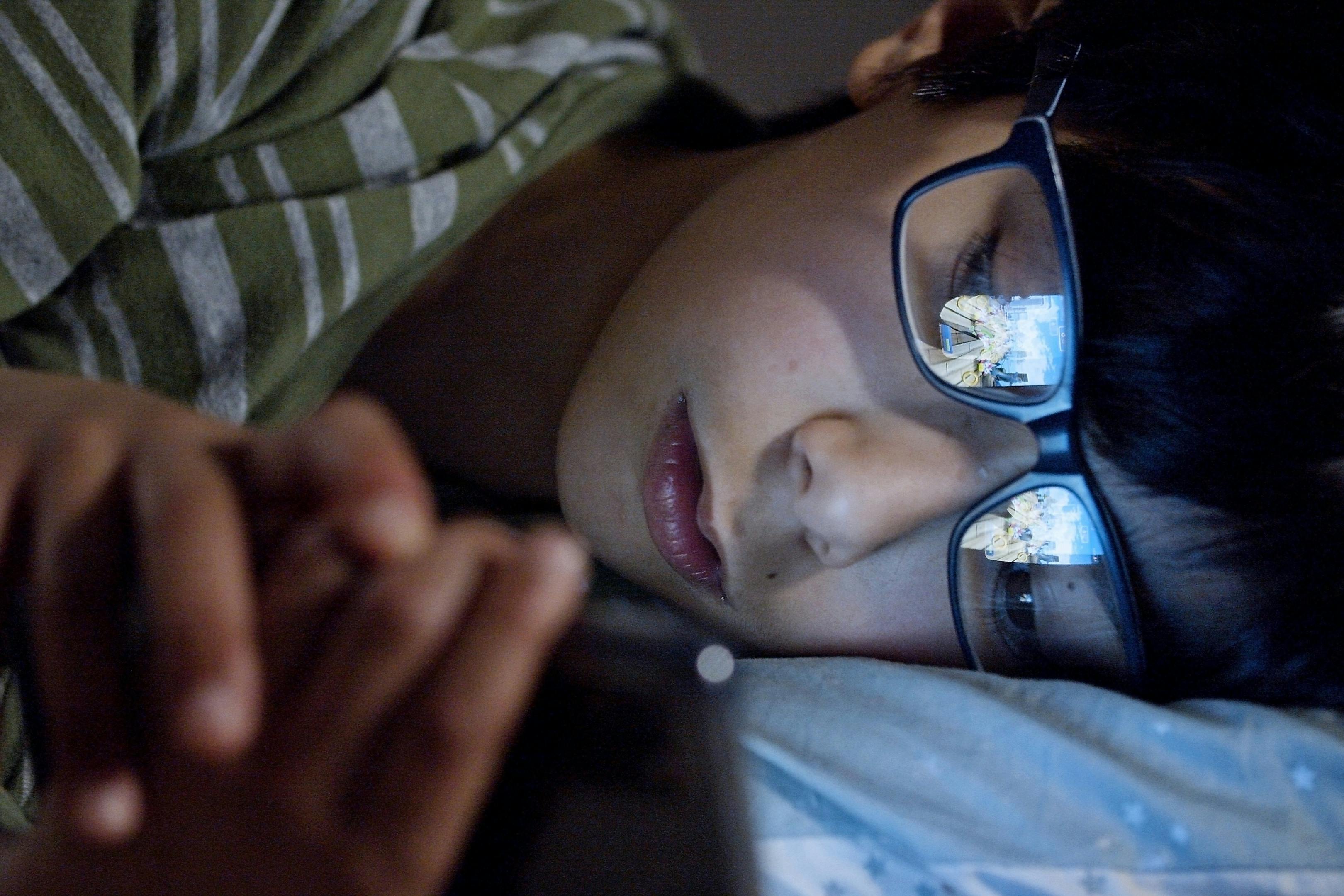
The Danish prime minister, Mette Frederiksen, has sparked global debate after announcing plans to ban children under 15 from using social media. In a passionate speech to parliament, she accused phones and social networks of “stealing our children’s childhood.” Her words, raw and urgent, struck a chord well beyond Denmark’s borders, tapping into an international anxiety about what screens and algorithms are doing to young minds. For years, parents, teachers, and psychologists have sounded the alarm over rising rates of anxiety, depression, and attention problems among children. Now, Denmark has decided to act.
Frederiksen’s announcement marks a bold departure from the cautious tinkering seen elsewhere in Europe. She declared, “We have unleashed a monster,” warning that technology companies have prioritized engagement over wellbeing. The proposal, which could take effect as early as next year, would restrict social media use for anyone under 15, with parental exceptions starting at 13. It builds on Denmark’s earlier ban on mobile phones in schools and after-school programs, positioning the Scandinavian nation as a leader in digital child protection. Yet while some celebrate the move as overdue, others fear that such a sweeping ban risks oversimplifying a deeply complex issue.
A Nation Takes a Stand Against Digital Dependence
When Frederiksen stood before the Danish parliament to open the legislative session, she framed the issue not merely as a policy question, but as a moral one. “Never before have so many children and young people suffered from anxiety and depression,” she said, adding that “on screens they see things no child or young person should see.” Her remarks were underpinned by grim statistics: 60% of boys aged 11 to 19 reportedly spend most of their free time alone, while nearly all seventh graders have social media accounts before the age of 13. These numbers paint a picture of a generation immersed in a digital world before they have the maturity to navigate it.
Denmark’s move follows a pattern emerging across the developed world. Australia, for example, became the first country to legislate a national ban on social media use for under-16s in 2024, imposing fines of up to $50 million AUD on non-compliant platforms. Norway has announced plans to follow Denmark’s lead, proposing a stricter age minimum for digital participation.

Across Europe, conversations about a so-called “age of digital adulthood” have gained traction, with Greece calling on the European Union to set a standard that would prevent children from joining social platforms without parental consent.
To Danish officials, these developments are not about nostalgia for a pre-digital age, but about the need to reassert control over childhood. Caroline Stage, Denmark’s minister of digitalisation, described the proposal as a “breakthrough,” saying, “We’ve left children’s digital lives to platforms that never had their wellbeing in mind. We must move from digital captivity to community.” It’s a vision that resonates with many parents who feel outmatched by technology companies’ ability to shape young behavior.
The Social Cost of Growing Up Online

The evidence that prompted Denmark’s decision is as psychological as it is social. Studies have repeatedly shown correlations between heavy social media use and increased rates of depression, loneliness, and self-harm among teenagers. Yet numbers alone fail to capture what parents and teachers see daily: a generation distracted, sleep-deprived, and struggling to concentrate. The Wellbeing Commission, a Danish government body, found that children spend an average of three hours a day on YouTube and TikTok. Many of them, the commission warned, were forming their identities under the influence of algorithms optimized for attention, not emotional stability.
Frederiksen’s concern echoes those of neuroscientists who compare social media’s dopamine-driven design to gambling. Each like, share, or comment acts as a tiny chemical reward, reinforcing compulsive behaviors that can reshape developing brains. While the platforms defend their role as spaces for creativity and connection, critics argue that these benefits are dwarfed by the mental health toll. “Phones and social media are stealing our children’s childhood,” Frederiksen repeated, framing the issue as both public health and moral crisis.
The problem, however, is not confined to Denmark. In the United States, more than half of teenagers report that social media makes them feel worse about themselves, according to Pew Research Center surveys. Meanwhile, teachers worldwide lament shrinking attention spans. The world’s digital infrastructure designed for adults has engulfed children without fully understanding their psychological vulnerabilities. Denmark’s proposed ban represents an attempt to draw a boundary, to remind society that childhood is not a market.
Freedom, Practicality, and Unintended Consequences

Critics of Denmark’s plan warn that banning social media outright may not produce the desired results. Digital literacy experts and child psychologists have voiced concerns that prohibition could drive teenagers toward riskier, less regulated online spaces. With tools like VPNs (Virtual Private Networks) easily accessible, enforcing age-based restrictions might become an endless game of digital hide-and-seek. Some argue that it would be more effective to teach responsible use rather than impose blanket bans.
Dr. Fiona Scott, a media researcher at Sheffield University, argues that such bans “obfuscate larger and more complex issues” about young people’s digital identities. Children, she notes, turn to social media not just for entertainment but for social connection and self-expression. A sudden cutoff might deprive them of crucial skills needed for digital citizenship later in life. Similar concerns have been raised in France, where nearly half of underage users reportedly bypass online restrictions. “If we isolate them completely,” said one Danish educator, “we risk creating a generation unprepared for the online world that awaits them.”
Others point out the ethical dilemmas. Who decides what platforms count as social media? What happens when education or friendship networks depend on digital communication? For all the idealism of Denmark’s approach, some critics view it as paternalistic, suggesting it underestimates young people’s resilience and adaptability. Yet even these skeptics concede one point: the current situation is unsustainable. Children, they agree, are being shaped by technologies that care little for their wellbeing.
A Global Movement for Digital Childhood Reform

Denmark’s policy is not an isolated phenomenon but part of a growing international reckoning with the power of Big Tech. Australia’s pioneering ban has already inspired debate across Europe. Norway, France, and Greece are exploring their own frameworks for youth protection, while the United Kingdom’s Online Safety Act places direct legal responsibility on tech firms to safeguard minors. These efforts reflect a philosophical divide between two schools of thought: regulate access or regulate design.
Countries like New Zealand and the Netherlands favor the latter approach, investing in education and digital literacy rather than imposing age bans. Their argument is that awareness, not abstinence, is the key to long-term resilience. Denmark’s government, by contrast, sees the harm as too immediate to wait for gradual reform. By likening social media to tobacco or alcohol products once thought harmless but later proven addictive it has reframed digital wellbeing as a public health issue. This framing gives the proposal moral weight, even as it invites criticism for its simplicity.
The European Union is also watching closely. A continent-wide “digital age of consent” could soon emerge, standardizing access rules and enforcement mechanisms. Such a move would push companies like Meta, TikTok, and Google to implement stricter verification systems or risk heavy fines. While corporate lobbyists warn that these measures might stifle innovation, public opinion in many countries has turned sharply against Big Tech. For parents who have watched their children vanish into screens, Denmark’s approach feels less like censorship and more like self-defense.
Redefining Modern Childhood

The deeper question behind Denmark’s decision is not about social media itself but about what kind of childhood society wants to protect. The modern child grows up in a paradox: surrounded by endless connectivity yet often lonelier than ever. Social media amplifies this paradox by offering simulated intimacy constant contact without genuine connection. When Frederiksen described a generation that “no longer meets friends in their free time,” she was mourning something both intangible and profound: the slow erosion of human presence.
At the same time, banning social media cannot bring back the past. Technology is woven into every aspect of contemporary life. From school communication to creative exploration, digital spaces are where many children learn and express themselves. The challenge, then, is not to eliminate screens but to balance them to help children use technology without being consumed by it. In that sense, Denmark’s move could be understood less as an endpoint and more as a provocation: a call for societies to rethink how they raise digital citizens.
Some analysts believe the Danish experiment could force tech companies to design safer, less addictive products. Others predict it will spark a wave of similar legislation worldwide, setting off a new era of digital reform. Either way, the impact will be felt far beyond Denmark’s borders. The country’s small size belies its influence, especially in social policy, where Scandinavian models often set global precedents. If this policy works, it could reshape how nations define the boundaries of childhood in the 21st century.
A New Age of Digital Responsibility
Whether one agrees with Denmark’s proposal or not, it represents a rare political moment: a government willing to confront the psychological consequences of the digital age head-on. In doing so, it has transformed a vague cultural unease into a concrete legislative agenda. The message is clear: protecting childhood is not a private concern but a public duty.
The conversation Denmark has ignited is unlikely to end soon. Some will praise the country for its courage; others will warn of overreach. But the fact that nations are now debating the limits of children’s digital exposure suggests a shift in collective consciousness. The age of uncritical technological optimism is waning, replaced by a more cautious, human-centered vision of progress.
Denmark’s ban, whether fully implemented or not, may come to symbolize the first major attempt by a Western democracy to reclaim time, attention, and innocence from the clutches of the algorithmic economy. It’s a reminder that childhood, once taken for granted, must now be defended deliberately and that the fight for it may define the next decade of digital policy around the world.
