
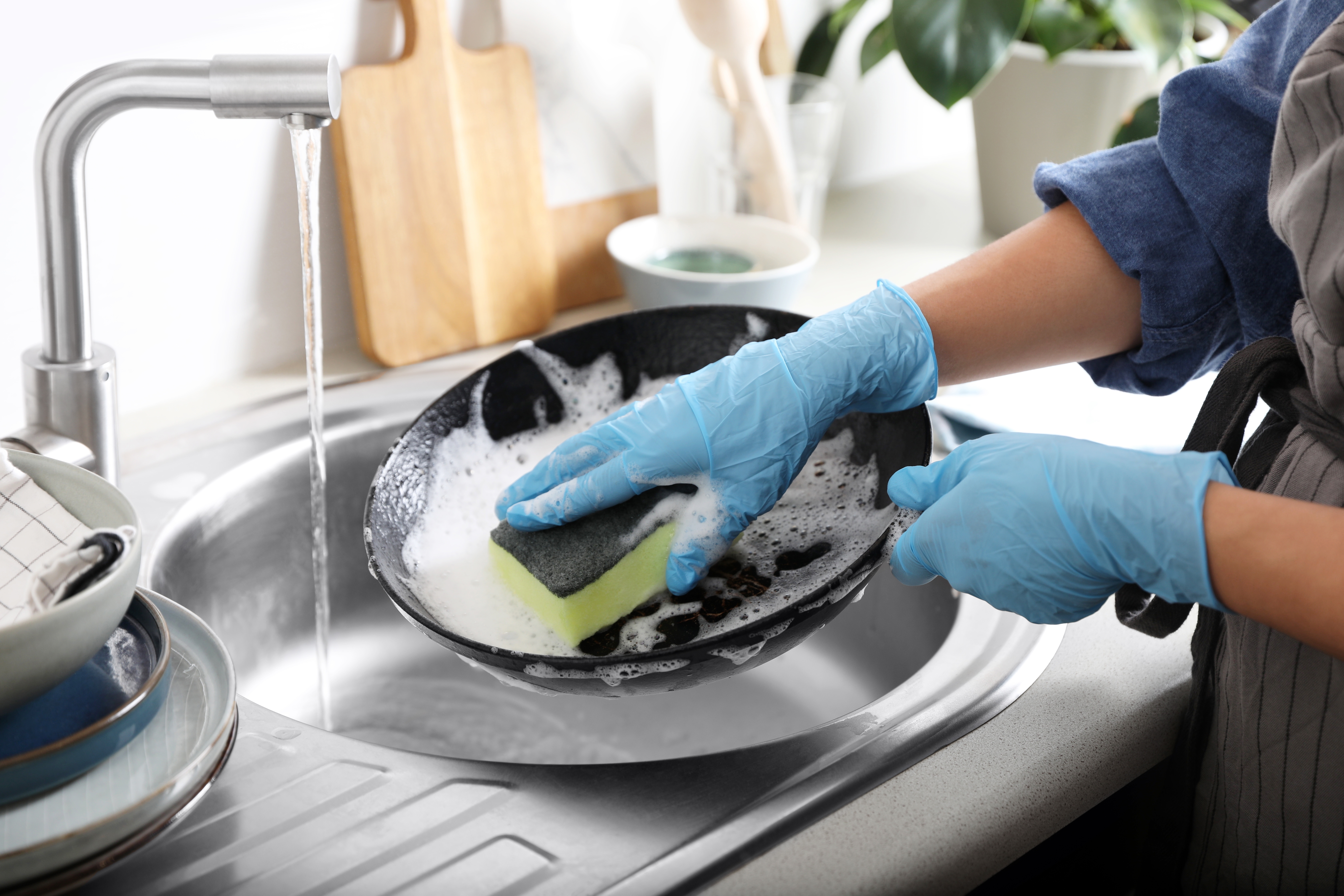
A single scratch on a Teflon-coated pan might seem harmless, but research suggests otherwise. That tiny flaw could release thousands—potentially millions—of microplastic particles into your food, exposing you to chemicals that don’t break down easily in the body or the environment.
A study by researchers from the Global Centre for Environmental Remediation found that a five-centimeter scratch on a nonstick pan can shed over 9,000 microplastic and nanoplastic particles. With continued use, a heavily worn pan could release up to 2.3 million particles during cooking. These microscopic fragments, along with per- and polyfluoroalkyl substances (PFAS)—also known as “forever chemicals”—have been linked to various health concerns, including increased cholesterol, weakened immune function, and a higher risk of certain cancers.
For decades, nonstick cookware has been a kitchen staple, but this research raises serious concerns about its safety. If something as simple as a scratch can introduce toxic particles into food, what are the long-term risks? And how can consumers protect themselves? The answers lie in understanding the science behind nonstick coatings and making safer choices in the kitchen.
How a Single Scratch Releases Thousands of Particles

For many, nonstick cookware is a kitchen essential, but a closer look at its wear and tear reveals an alarming issue. Researchers from the Global Centre for Environmental Remediation conducted a study to determine just how many microplastic and nanoplastic particles are released when a Teflon pan is scratched—and the results were staggering.
Using Raman imaging and an advanced algorithm, scientists measured the number of plastic particles shed from nonstick surfaces. They found that a single five-centimeter scratch could release over 9,000 microplastic and nanoplastic particles into food. If the pan had significant wear, this number skyrocketed to 2.3 million particles per cooking session.
Microplastics are tiny plastic particles, less than five millimeters in size, that result from the breakdown of larger plastics, including damaged cookware. These particles have been found in human tissues, including the placenta and bloodstream, raising concerns about their long-term effects on health. Researchers warn that once ingested, microplastics and per- and polyfluoroalkyl substances, known as PFAS or “forever chemicals,” don’t simply pass through the body—they accumulate, potentially leading to serious health issues.
Health Risks of Ingesting Microplastics and PFAS

Microplastics and PFAS do not simply pass through the body unnoticed. Research shows that once ingested, these substances can accumulate in tissues and organs, potentially leading to serious health concerns. One of the most well-documented effects is the disruption of cholesterol metabolism. Studies have linked PFAS exposure to elevated levels of LDL, or “bad” cholesterol, increasing the risk of heart disease and stroke. The immune system is also vulnerable—evidence suggests that PFAS can weaken immune responses, reducing the body’s ability to fight infections and lowering vaccine effectiveness. Children exposed to PFAS during pregnancy may face developmental issues, including lower birth weight, delayed puberty, and changes in bone density, which could have long-term health implications.
Perhaps most alarming is the association between PFAS exposure and cancer. Researchers have found strong links between high levels of PFAS in the body and an increased risk of kidney, testicular, and thyroid cancers. These chemicals have been shown to cause cellular damage and promote chronic inflammation, both of which can contribute to tumor growth. Additionally, PFAS are known endocrine disruptors, meaning they interfere with hormone function. This disruption can affect metabolism, reproductive health, and thyroid regulation, with potential consequences ranging from fertility issues to metabolic disorders. Since PFAS take years to break down in the body, continuous exposure—especially through contaminated cookware—can lead to a cumulative effect, raising the risk of chronic disease over time.
Although older, more toxic forms of PFAS, such as perfluorooctanoic acid (PFOA), have been phased out of cookware manufacturing, newer-generation PFAS are still widely used. Their long-term health effects remain under investigation, but early studies indicate they may pose similar risks. Given how persistent these substances are in both the human body and the environment, minimizing exposure is critical.
How Discarded Nonstick Pans Contribute to Pollution
The dangers of scratched nonstick cookware extend far beyond personal health. When these pans are discarded, the Teflon coating does not biodegrade, adding to the growing issue of plastic pollution. Over time, broken-down nonstick coatings release microplastics into landfills, waterways, and even the air. These particles contaminate soil and marine ecosystems, making their way into the food chain as fish and other animals inadvertently consume them. Scientists have detected microplastics in seafood, drinking water, and even the air we breathe, highlighting how widespread the problem has become.
Disposing of nonstick cookware is also a challenge. Incinerating Teflon-coated pans releases harmful fumes, including PFAS chemicals, which can persist in the environment for decades. Some recycling programs accept nonstick cookware, but the process of safely removing the coating before recycling the metal base is complex and not widely available. As a result, millions of nonstick pans end up in landfills each year, contributing to environmental contamination. Research suggests that PFAS chemicals from waste sites leach into groundwater, affecting drinking water supplies and increasing human exposure to these toxic compounds. In the United States alone, studies have found that nearly 99% of Americans have detectable levels of PFAS in their bloodstream, in part due to widespread environmental contamination.
Regulatory agencies worldwide are beginning to recognize the risks posed by PFAS, leading some governments to impose restrictions on their use. The Environmental Protection Agency (EPA) has issued guidelines limiting PFAS levels in drinking water, while certain states have moved to ban these chemicals in consumer products, including cookware. Some European countries have also taken steps to phase out PFAS-containing materials. However, enforcement remains inconsistent, and manufacturers continue to use alternative PFAS compounds whose long-term safety remains uncertain. Until stricter regulations are in place, the best way to reduce exposure is through informed consumer choices—opting for safer cookware materials and properly disposing of worn-out nonstick pans.
Choosing Safer Cookware Alternatives

Switching to safer cookware is one of the most effective ways to reduce exposure to harmful chemicals from scratched nonstick pans. Here are some options:
- Ceramic-Coated Cookware: Ceramic-coated pans provide nonstick properties without PFAS, making them a safer alternative to Teflon. They are scratch-resistant and do not release toxic fumes when overheated. Studies suggest ceramic coatings have better durability and wear resistance compared to traditional nonstick surfaces.
- Cast Iron Cookware: Cast iron offers excellent heat retention and becomes naturally nonstick with seasoning. Its durability allows it to withstand high temperatures, making it suitable for various cooking methods. Proper seasoning enhances performance, reducing the need for excess oil while preventing rust.
- Stainless Steel Cookware: Stainless steel is a long-lasting, non-reactive option that does not leach chemicals into food. It is oven-safe, easy to clean, and highly resistant to rust and corrosion, making it a practical choice for everyday cooking.
- Carbon Steel Cookware: Similar to cast iron but lighter, carbon steel heats quickly and provides better temperature control. It develops a natural nonstick surface over time, making it a durable and versatile alternative to Teflon.
Investing in PFAS-free cookware ensures a safer cooking environment while reducing health risks and environmental waste. Choosing high-quality materials over convenience is a step toward a healthier kitchen.
Expert Advice on Cookware Safety
Choosing the right cookware is essential for maintaining a safe and healthy kitchen. Experts warn that damaged nonstick pans can introduce harmful particles into food, making material selection crucial.
Flinders University researcher Professor Youhong Tang underscores the importance of understanding the risks posed by Teflon plastic debris in daily cooking. During a press release, he stated, “It gives us a strong warning that we must be careful about selecting and using cooking utensils to avoid food contamination,” says Professor Tang from the College of Science and Engineering at Flinders University.
Dr. Michael Greger, a physician and internationally recognized nutrition expert, also advocates for stainless steel cookware as a safer choice. According to Dr. Greger: “Stainless steel is an excellent option. It’s the metal chosen for use in applications where safety and hygiene are considered to be of the utmost importance, such as kitchenware.”
Safer Cookware for Better Health
A single scratch on a nonstick pan may seem insignificant, but research shows it can release thousands—potentially millions—of microplastic and PFAS particles into food. These invisible contaminants don’t just pass through the body; they accumulate over time, potentially contributing to serious health risks such as increased cholesterol, weakened immunity, hormonal imbalances, and even certain cancers. Beyond personal health, discarded nonstick cookware adds to global plastic pollution, further extending the problem to the environment.
While regulatory efforts to limit PFAS use are growing, the best protection comes from informed consumer choices. Switching to safer alternatives like ceramic-coated, cast iron, stainless steel, or carbon steel cookware can significantly reduce exposure to harmful chemicals. Simple kitchen practices, such as using non-abrasive utensils, avoiding overheating nonstick surfaces, and storing food in glass or stainless steel containers, can also help minimize contamination risks.
Protecting long-term health starts with small but meaningful changes. By being mindful of the cookware used daily and making smarter choices, individuals can reduce exposure to toxic substances while promoting a safer, more sustainable kitchen. The decision to move away from nonstick cookware isn’t just about convenience—it’s about safeguarding well-being for years to come.
Sources:
- Luo, Y., Gibson, C. T., Chuah, C., Tang, Y., Naidu, R., & Fang, C. (2022). Raman imaging for the identification of Teflon microplastics and nanoplastics released from non-stick cookware. The Science of the Total Environment, 851, 158293. https://doi.org/10.1016/j.scitotenv.2022.158293
- Cole, M., Gomiero, A., Jaén-Gil, A., Haave, M., & Lusher, A. (2024). Microplastic and PTFE contamination of food from cookware. The Science of the Total Environment, 929, 172577. https://doi.org/10.1016/j.scitotenv.2024.172577
