
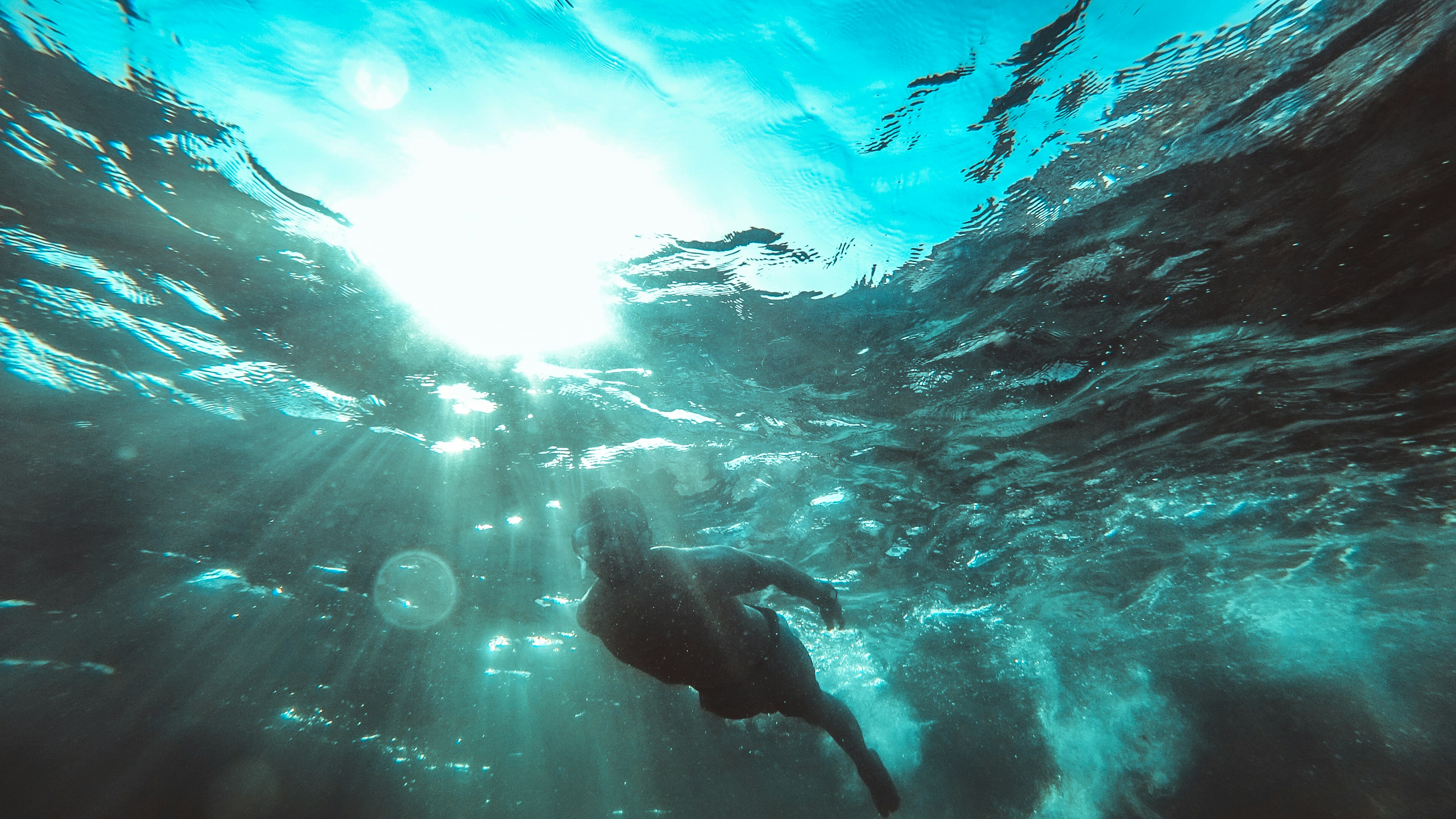
Medical science suggests the human brain can suffer damage after just a few minutes without oxygen. So how did freediver Vitomir Maričić hold his breath underwater for a staggering 29 minutes and 3 seconds, and surface completely fine? The record-shattering performance wasn’t magic; it was a demonstration of extreme training, mental control, and a specific scientific method that pushes the body far beyond its natural limits.
How is a 29-Minute Breath-Hold Even Possible?
The secret to this seemingly superhuman feat lies in the 10 minutes before Maričić entered the water. During this critical preparation phase, he breathed 100% pure oxygen from a tank. This procedure, known as denitrogenation, is permitted under the rules for this specific record. It works by flushing out the inert nitrogen gas that makes up roughly 78% of the air we normally breathe and replacing it almost entirely with life-sustaining oxygen.
The physiological consequences are dramatic. The protocol supercharges the body, increasing the amount of usable oxygen available by an estimated fivefold. This massive surplus is stored not only in the red blood cells but also dissolved directly into the blood plasma, creating a vast internal reservoir that can sustain vital organs for an extraordinary length of time. With such a huge oxygen buffer, the immediate danger of blacking out from hypoxia (a lack of oxygen to the brain) is pushed far into the future.

This preparation completely changes the primary challenge of the breath-hold. For anyone holding their breath, the overwhelming urge to breathe is not triggered by a lack of oxygen. Instead, it’s driven by the buildup of carbon dioxide (CO2) in the blood, a condition called hypercapnia. As our cells use oxygen, they produce CO2 as waste. This CO2 increases the acidity of the blood, which is detected by specialized chemoreceptors in the brainstem. When CO2 levels cross a certain threshold, these receptors send urgent alarm signals, triggering the powerful, involuntary spasms of the diaphragm we feel as an desperate urge to breathe.
Breathing pure oxygen beforehand effectively “hacks” this system. The high concentration of oxygen in the blood significantly dulls the sensitivity of the CO2 receptors. This allows a diver like Maričić to endure levels of carbon dioxide—and the increasingly painful diaphragm contractions it causes—that would be intolerable under normal circumstances. The challenge becomes less about avoiding unconsciousness and more a grueling test of mental endurance against severe, prolonged physical discomfort.
Meet Vitomir Maričić: The Man Behind the Record
Vitomir Maričić is far more than an endurance artist; he is a deeply knowledgeable and multi-talented athlete. Born in 1985, he is a world champion freediver, a Molchanovs Instructor Trainer (one of the highest teaching qualifications in the sport), and the president of AIDA Croatia, his country’s national freediving organization. His background extends beyond the water, with experience as a professional climber and academic studies in IT, physics, and sports science. This diverse knowledge base gives him a uniquely analytical and scientific approach to his training and performance.
Crucially, his oxygen-assisted achievement is built upon a world-class physiological foundation. Without any oxygen assistance, Maričić can hold his breath for a remarkable 10 minutes and 8 seconds. This baseline ability places him in the top echelon of elite freedivers and proves his body is already highly adapted to apnea through years of rigorous training. His record is a combination of this elite conditioning and the strategic use of oxygen, not a result of the technology alone.
His personal account of the 29-minute dive reveals the intense mind-over-body battle that defines this discipline. “After the 20-minute mark, everything became easier, at least mentally,” he reported, suggesting he was able to enter a deep meditative state, effectively separating his consciousness from his body’s distress signals. This mental calm was in stark contrast to his physical reality, which he described as getting “worse and worse, especially for my diaphragm, because of the contractions.” This ability to mentally detach while enduring escalating physical agony is a hallmark of elite apnea performance and key to his record-shattering success.
Beyond his personal achievements, Maričić leveraged the high-profile nature of his record attempt for a greater cause. He partnered with the Sea Shepherd conservation society, using the event as a platform to raise awareness and financial support for protecting the world’s oceans.
The Freediver’s Toolkit for Everyday Stress

You don’t need to hold your breath for half an hour to benefit from the mental techniques of a world-class freediver. The same principles they use to stay calm under extreme pressure can be applied to manage daily stress and anxiety. Here are a few simple exercises inspired by their training.
- The 4-Second Reset: When you feel overwhelmed, try this simple breathing exercise, sometimes called “box breathing.” Inhale slowly through your nose for a count of four, focusing on expanding your stomach rather than your chest. Hold that breath for a count of four. Then, exhale slowly and completely through your mouth for a count of six. The slightly longer exhale is key, as it helps to activate the parasympathetic nervous system—the body’s natural “rest and digest” response. Repeat this cycle four or five times to feel a noticeable shift in your state, whether you’re in traffic or preparing for a meeting.
- Acknowledge, Don’t Fight: Freedivers are trained not to ignore the painful contractions that signal the urge to breathe. Instead, they acknowledge the sensation, accept it, and remain calm. You can apply this same principle to stressful thoughts or feelings. Instead of trying to push them away (an act that often gives them more power), simply notice them without judgment. Say to yourself, “I’m noticing a feeling of anxiety right now,” and then gently redirect your focus back to your breath. This practice of mindfulness detaches you from the feeling, reducing its power over you.
- Rehearse Your Success: Elite athletes don’t just train their bodies; they train their minds. Just as Maričić mentally prepares for every second of his dive, you can prepare for challenging situations in your own life. Before a big presentation, a job interview, or a difficult conversation, take five minutes to close your eyes and visualize it going exactly how you want. Imagine yourself feeling confident, speaking clearly, and achieving a positive outcome. This mental rehearsal builds and strengthens neural pathways, making the desired behavior feel more familiar and automatic when the real event happens.
Oxygen-Assisted vs. Unassisted Apnea
To fully appreciate Maričić’s performance, it’s vital to distinguish between his oxygen-assisted record and unassisted static apnea, which is considered the purest form of the discipline in the competitive freediving community. The two are fundamentally different sports.
Under the rules of the primary freediving federations, AIDA and CMAS, athletes are only permitted to breathe normal atmospheric air (containing about 21% oxygen) before their performance. In this category, the primary limiting factor is severe hypoxia. The athlete is in a direct race against their dwindling oxygen supply and the inevitable loss of consciousness that will occur when it runs out.
This fundamental physiological difference is reflected in the massive gap between the records. The official unassisted men’s world record, set by Stéphane Mifsud way back in 2009, stands at an incredible 11 minutes and 35 seconds. The fact that this record has remained unbroken for over 15 years is a powerful testament to its difficulty and suggests that it lies very close to the absolute limit of natural human physiology. Maričić’s 29-minute record exists in a different stratosphere entirely, made possible only by technology that fundamentally changes the physiological game from one of oxygen management to one of pain tolerance.
Redefining Human Potential
What Vitomir Maričić did shows just how far the human body and mind can go. While his physical fitness was undeniable, his performance was ultimately a triumph of mental control, proving that he could calmly override his body’s most powerful survival instincts.
After this, a 30-minute breath-hold with oxygen seems entirely possible. The main hurdle isn’t physical—it’s a test of pure willpower. The record for holding a breath without extra oxygen, however, is a different beast. That 11.5-minute barrier is set by the hard limits of our biology, and breaking it would take a truly unique person.
But these athletes do more than just set records. They offer a window into how our bodies work under extreme stress. By studying them, scientists can learn more about how to help people in critical medical situations, like during a stroke or heart attack. Ultimately, Maričić’s achievement is a powerful reminder that often, the biggest barrier we face is our own mind.
