
Your immune system kills thousands of threats every single day. Viruses. Bacteria. Microbes you’ll never know existed. All are eliminated before they can harm you. Yet this same protective force could easily destroy you from the inside.
Pathogens don’t wear uniforms. Many evolved to look exactly like your own cells, molecular camouflage perfected over millennia. Your immune system must make split-second decisions: attack or protect? Kill or ignore? One wrong choice means either a deadly infection or your body turning against itself.
Most people walk through life never developing serious autoimmune diseases. Organs function normally. Tissues remain intact. Something stops friendly fire before it starts. But what?
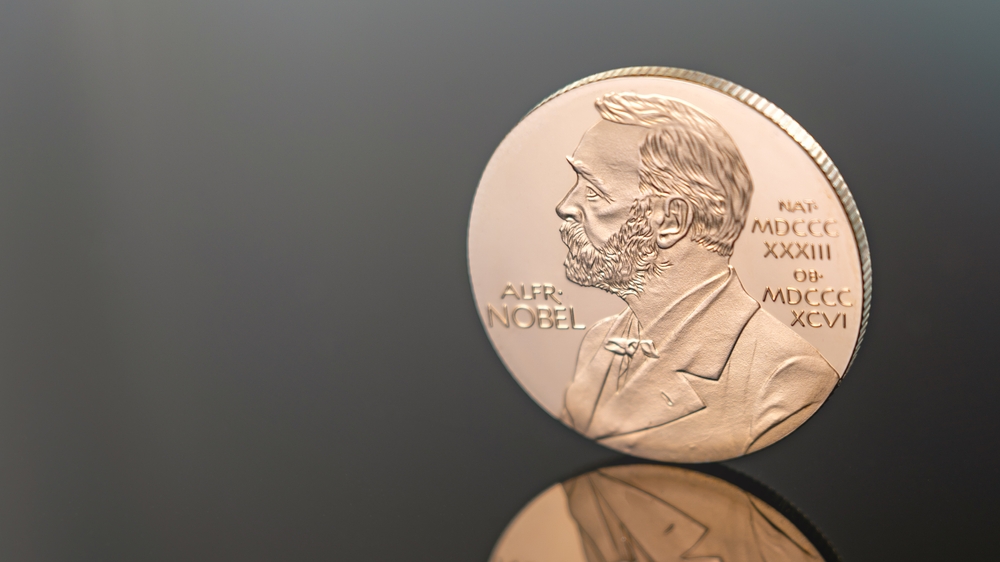
Scientists spent decades convinced they knew the answer. They were wrong. Three researchers discovered the immune system’s hidden security force cells that constantly patrol your body, preventing catastrophic self-destruction. Their work just earned them the 2025 Nobel Prize in Physiology or Medicine and opened doors to cancer treatments, autoimmune therapies, and successful organ transplants.
Your Immune System Protects You From Thousands of Microbes Daily
Every moment of every day, hostile organisms attempt invasion. Bacteria probe for entry points. Viruses seek cells to hijack. Fungi search for vulnerable tissue. Most never make it past your skin. Those who do face an army.
White blood cells called T cells serve as front-line defenders. Helper T cells patrol constantly, scanning for threats. When they detect invaders, they alert other immune cells to mount attacks. Killer T cells eradicate infected cells and destroy tumor cells trying to hide.
Each T cell carries specialized receptors on its surface, molecular sensors shaped differently on every cell. Random gene combinations create over one quadrillion possible receptor shapes. This vast diversity ensures some T cells will recognize any possible threat, including viruses humanity has never encountered.
But random generation creates a problem. Some T cell receptors inevitably recognize your own healthy tissue as a threat. If these cells attack, your immune system destroys organs, joints, skin anything it mistakes for an enemy.
Scientists Thought They Knew How Your Body Avoided Attacking Itself

By the 1980s, researchers believed they’d solved this mystery. T cells mature in an organ called the thymus. During development, cells undergo testing. Any T cell recognizing the body’s own proteins gets eliminated. Scientists named this process central tolerance.
Problem solved, they thought. Self-attacking cells die before they can cause damage. Case closed.
Some researchers suspected another layer of protection existed, cells they called suppressor T cells that handled any dangerous cells slipping through the thymus screening. But several researchers in this field drew questionable conclusions from experiments. When evidence for suppressor T cells turned out to be fabricated, the entire hypothesis collapsed. Researchers abandoned the field almost completely.
One scientist refused to give up. Shimon Sakaguchi at Aichi Cancer Center Research Institute in Nagoya, Japan, suspected something more was happening.
Baby Mice Without Thymus Glands Destroyed Their Own Organs
Sakaguchi drew inspiration from puzzling earlier experiments. Researchers had surgically removed thymus glands from newborn mice, expecting weaker immune systems with fewer T cells. Results shocked them.
When operations happened three days after birth, the immune systems didn’t weaken; they went berserk. Mice developed multiple autoimmune diseases as their immune systems attacked organs throughout their bodies. Something about the thymus removal at that specific timing triggered catastrophic friendly fire.
Sakaguchi began his own experiments in the early 1980s. He isolated T cells that had matured in healthy mice and injected them into mice born without thymus glands. Recipients became protected from autoimmune diseases.
Some T cells could apparently stop other T cells from attacking the body. But which cells? How did they work?
Ten Years of Work Led to One Class of Protective Cells

Finding these protective cells took Sakaguchi over a decade. Researchers differentiate T cells by surface proteins. Helper T cells carry a protein called CD4. Killer T cells display CD8. Sakaguchi needed to find another distinguishing marker.
In 1995, he published breakthrough findings in the Journal of Immunology. His newly discovered T cells carried both CD4 and a second protein called CD25 on their surfaces. These cells, which he named regulatory T cells, calmed the immune system instead of activating it. They monitored other immune cells and prevented attacks against the body’s own tissues.
Revolutionary discovery. Game-changing implications. Yet many scientists responded with skepticism. They wanted more proof. Memories of the false suppressor T cell claims made researchers cautious. Sakaguchi’s findings needed independent confirmation.
Validation would come from an unexpected source: sickly mice born during atomic bomb research.
Scurfy Mice Were Born in 1940s Manhattan Project Labs

Oak Ridge, Tennessee, housed laboratories studying radiation effects as part of the Manhattan Project atomic bomb development. Among thousands of research mice, some males were born with severe problems. Flaky, scaly skin. Massively enlarged spleens and lymph glands. Life expectancy is measured in weeks.
Researchers named the strain “scurfy” and realized the mutation causing this disease lived on the X chromosome. Males have only one X chromosome, so half inherited the deadly mutation. Females carry two X chromosomes—one healthy copy protects them from disease while they pass the mutation to new generations.
By the 1990s, molecular tools had advanced enough to investigate what killed scurfy mice. Autopsy revealed T cells attacking organs and destroying tissue. Some mutation was causing the immune system rebellion, but which gene?
Brunkow and Ramsdell Decided to Hunt for the Mutant Gene
Mary Brunkow and Fred Ramsdell worked at Celltech Chiroscience, a biotech company in Bothell, Washington, developing autoimmune disease drugs. Scurfy mice offered crucial clues. If they could identify the molecular mechanism causing disease in these mice, they’d gain insights into how autoimmune conditions arise in humans.
They committed: find the scurfy mutation.
Today, mapping entire mouse genomes takes days. In the 1990s, searching for one mutation among 170 million DNA base pairs on the X chromosome required years of painstaking laboratory work. “It was really a molecular slog, to get to that exact mutation,” Brunkow later explained. “It was just a very small genetic alteration that results in quite a profound change in the immune system.”
Years of Work Ended With the Twentieth Gene

Brunkow and Ramsdell narrowed their search to roughly 500,000 nucleotides in the chromosome’s middle section. Detailed mapping revealed 20 potential genes in that region. They compared each gene between healthy and scurfy mice.
One gene. Then another. Then another. Nineteen genes showed no differences. Only the twentieth and final gene revealed the answer. Years of dedicated searching had finally succeeded.
They named the previously unknown gene Foxp3, part of the forkhead box gene family that regulates other genes and affects cell development. Their 2001 Nature Genetics paper revealed the cause of scurfy mice’s suffering.
During their research, they’d suspected a rare human disease called IPEX might be the human version of scurfy disease. Both are linked to X chromosome mutations. Both caused severe autoimmune symptoms in boys. They found the human equivalent of Foxp3 and collected samples from IPEX patients worldwide.
Analysis confirmed their hypothesis. Mutations in the human FOXP3 gene cause IPEX. Mouse disease and human disease share the same genetic root.
Sakaguchi Linked the Two Discoveries in 2003
Laboratories worldwide erupted with activity after Brunkow and Ramsdell’s publication. Researchers suspected connections between Foxp3 and Sakaguchi’s regulatory T cells.
Two years later, Sakaguchi proved the link. The Foxp3 gene controls regulatory T cell development. These cells express Foxp3. Experiments showed that other T cell types could be converted into regulatory T cells by activating Foxp3 expression. Scurfy mice lacked regulatory T cells entirely.
All puzzle pieces fit together perfectly. Regulatory T cells act as security guards, preventing other T cells from mistakenly attacking body tissue. Scientists call this peripheral immune tolerance. These cells also calm immune responses after threats are eliminated, preventing systems from running at maximum intensity indefinitely.
Nobel Committee Chair Olle Kämpe summarized the significance: “Their discoveries have been decisive for our understanding of how the immune system functions and why we do not all develop serious autoimmune diseases.”
Why Most People Don’t Develop Autoimmune Diseases

Regulatory T cells patrol constantly, monitoring other immune cells for dangerous behavior. Anyone without autoimmune disease owes gratitude to these microscopic guards. They maintain the delicate balance between attacking genuine threats and protecting healthy tissue.
Without regulatory T cells, the immune system would destroy organs, attack joints, and eliminate healthy tissue throughout the body. Multiple sclerosis. Lupus. Rheumatoid arthritis. Type 1 diabetes. All represent failures in this protective system.
Tumors Hide Behind Walls of Regulatory T Cells
Cancer cells exploit regulatory T cells for protection. Tumors attract large numbers of these immune-calming cells, building protective barriers that shield cancer from immune system attacks. Researchers are now developing strategies to dismantle these walls, exposing tumors to destruction.
Reducing regulatory T cell activity in tumor environments could revolutionize cancer treatment by allowing the immune system to access and eliminate cancer cells it currently can’t reach.
Autoimmune Disease Treatments Boost Regulatory T Cell Numbers

Autoimmune conditions require the opposite approach. Instead of reducing regulatory T cells, treatments aim to increase them. Researchers give patients interleukin-2, essentially food for regulatory T cells, promoting the formation of more protective cells.
Other strategies involve isolating regulatory T cells from patients, multiplying them in laboratories, then returning amplified populations to patients’ bodies. Some modified cells receive antibody “address labels” directing them to specific organs, like transplanted livers or kidneys, protecting transplants from immune attacks.
Over 200 clinical trials currently test regulatory T cell approaches for cancer, autoimmune diseases, and transplant rejection. Companies like Sonoma Biotherapeutics, cofounded by Ramsdell, engineer regulatory T cells to dampen harmful inflammation. Scientists can now control immune system brakes, turning responses up or down as needed.
Fred Ramsdell Was Backpacking Off-Grid When He Won
Monday morning, Ramsdell’s colleagues tried reaching him repeatedly. No response. He was backpacking in Idaho with no cell service. Only Monday evening, after returning from his trip, did he learn he’d won a Nobel Prize.
Mary Brunkow received her call around 4 a.m. in Seattle. Photographs show her overcome with emotion. Fellow scientists expressed particular pleasure at her recognition. She “has not always received the credit she deserves for her work,” noted Thomas Boehm of the Max Planck Institute of Biology.
Sakaguchi called the award a happy surprise. Speaking at the University of Osaka, he thanked students and collaborators who made his research possible. “I was never working alone—there were people all over the world who shared similar ideas,” he said. “I see this award as one that represents all of those people who have contributed to this research alongside me.”
Decades of Basic Research Now Saving Lives
Sakaguchi’s first experiments happened in the early 1980s. Brunkow and Ramsdell published in 2001. Clinical applications are arriving now, decades after initial discoveries. Blue-sky research asking fundamental questions about how bodies work has transformed into life-saving treatments.
Three scientists split approximately $1.1 million in prize money. Brunkow works at the Institute for Systems Biology in Seattle. Ramsdell serves as scientific adviser at Sonoma Biotherapeutics in San Francisco and Seattle. Sakaguchi continues as a professor at Osaka University, Japan, exploring how to fine-tune immune responses to help the body fight cancer.
Their discoveries revealed how your immune system avoids destroying you every single day. Regulatory T cells, security guards you never knew existed, constantly protect you from friendly fire. Understanding these cells opened doors to treatments that seemed impossible decades ago. Cancer therapies. Autoimmune disease cures. Successful transplants. All because three scientists refused to accept that we already understood everything about how immune systems work.
