
Space isn’t empty—and it’s getting more crowded by the day. Thousands of low-Earth orbit satellites, led by Elon Musk’s Starlink project, now circle the planet, promising faster internet and global connectivity. But as the number of satellites grows, so do the risks—both to the satellites themselves and to the scientists trying to study the universe beyond them.
Right now, two major forces are converging. One is natural: the sun has entered a volatile phase in its 11-year solar cycle, triggering geomagnetic storms that are actively shortening satellite lifespans and increasing the risk of debris re-entering Earth’s atmosphere. The other is manmade: the radio interference leaking from these satellites is disrupting astronomy, compromising efforts to detect signals from the early universe.
The result? A space environment that’s becoming harder to manage and less predictable, with consequences that reach far beyond orbit. From data loss in scientific research to the growing threat of satellite fragments falling to Earth, the challenges are no longer theoretical. They’re already unfolding—and they affect more than just the space industry.
A Solar Storm Reality Check — Why Satellites Are Struggling

The sun has entered a peak phase in its natural 11-year cycle, known as the solar maximum, and the effects are no longer just theoretical—they’re playing out in orbit. This period is marked by a spike in solar activity, including more frequent solar flares and coronal mass ejections. When these bursts of solar energy reach Earth, they trigger geomagnetic storms, which are known for producing spectacular auroras. But the impact extends beyond light shows. These storms are heating the upper layers of Earth’s atmosphere, causing it to expand. This swelling increases atmospheric drag, making it harder for satellites in low-Earth orbit to maintain altitude. In practical terms, this means satellites begin to slow down and drop lower, accelerating their path toward re-entry.
NASA space weather scientist Denny Oliveira has been studying the effect of these geomagnetic storms on modern satellite constellations, particularly Starlink. According to Oliveira, satellite lifespans can be shortened by as much as 10 days during periods of heightened solar activity. For massive satellite networks like Starlink, which already deploy and deorbit hardware on a regular basis, this change compounds quickly. “We found that when we have geomagnetic storms, satellites re-enter faster than expected,” Oliveira told New Scientist. He also warned that this could soon become the norm, with re-entries becoming a daily occurrence. That would create an entirely new layer of risk and operational complexity for satellite operators who rely on predictability and orbital stability.
What makes this even more significant is the timing. This is the first solar maximum to occur during what experts now call the “mega constellation era”—a time when companies like SpaceX are launching thousands of satellites to build global coverage for services like internet connectivity. The sheer scale of these constellations makes them particularly vulnerable to environmental variables that were less critical when only a few hundred satellites orbited the Earth.

Increased drag not only shortens satellite life but also raises concerns about how and when satellites are removed from orbit. If not properly managed, dead or deorbiting satellites can turn into space debris, threatening other operational spacecraft.
While there is a potential upside—namely, that increased atmospheric drag could help speed up the removal of inactive satellites—there are real-world consequences to consider. In August 2023, a five-pound fragment of a Starlink satellite survived re-entry and landed on a farm in Saskatchewan, Canada. It’s the only confirmed case of Starlink debris reaching the ground, but it illustrates a growing possibility: if more satellites begin re-entering at a faster rate, the odds of material surviving the descent increase. And with companies continuing to launch at record pace, that risk only grows. As Samantha Lawler, an astronomer at the University of Regina, noted, “This is the easiest place in the world to find Starlink debris. If we found one here, how many did we miss?”
In short, the solar maximum isn’t just an astronomical event—it’s a pressing engineering challenge for modern satellite infrastructure. The relationship between solar activity and satellite durability is now unavoidable. If companies like SpaceX hope to maintain sustainable operations in low-Earth orbit, they’ll need to factor solar weather into the core design and management of their fleets.
Starlink’s Growing Numbers—and Growing Interference
SpaceX’s Starlink project began as a bold plan to provide global internet coverage using thousands of satellites in low-Earth orbit. As of mid-2025, that ambition is well underway, with more than 7,600 satellites currently in orbit—roughly two-thirds of all active satellites in existence. But this rapid expansion is creating significant and largely unintended consequences for the scientific community, particularly for astronomers who rely on clean, interference-free skies to study the universe.
One of the most pressing concerns is the interference Starlink satellites are causing with radio astronomy. A team of researchers at Curtin University in Australia, led by radio astronomy professor Steven Tingay, analyzed nearly 2,000 Starlink satellites using a prototype telescope from the Square Kilometre Array-Low (SKA-Low) observatory. Their findings were clear: unintended radio emissions from Starlink’s onboard electronics are leaking into frequency ranges specifically reserved for astronomical research. These emissions aren’t part of the satellites’ internet-transmitting signals—they’re unintentional, and they’re powerful enough to disrupt a significant portion of scientific data.
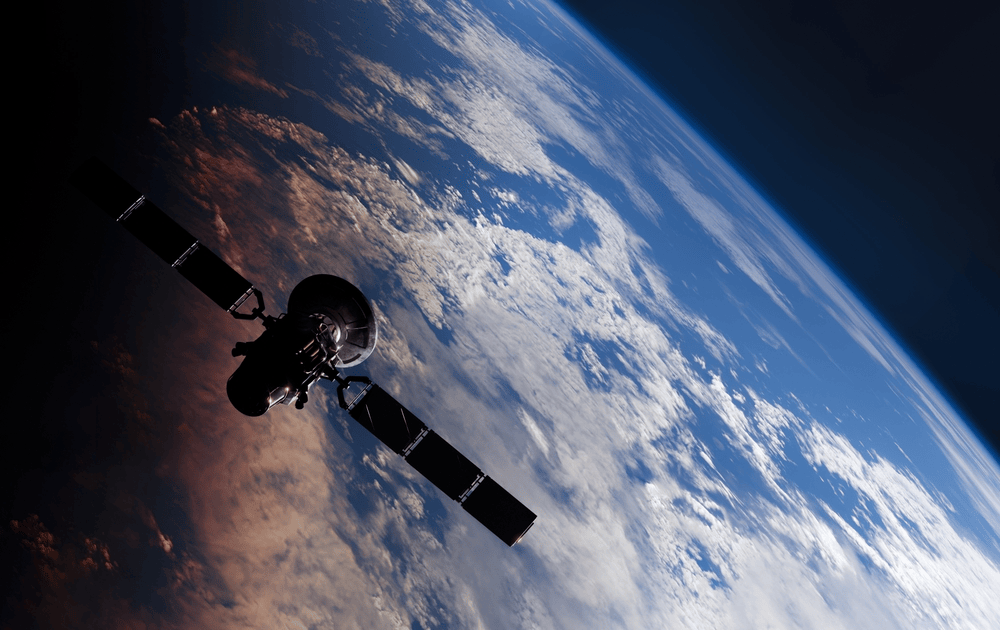
Tingay’s team found that about one-third of their observational data was being affected by this interference. That’s not a marginal issue—it’s a major setback, particularly for projects like SKA-Low, which are designed to detect faint radio signals from the earliest epochs of the universe. According to Tingay, “If you look at the signal strength produced by these unintended emissions, it’s not unusual for them to be comparable to the brightest natural radio sources in the sky.” In other words, satellites that weren’t supposed to be part of the data are now dominating it.
This kind of interference has implications beyond just one research facility. Astronomers worldwide depend on sensitive equipment to study cosmic phenomena, from star formation to gravitational waves to the cosmic microwave background. If the radio frequency environment is polluted with artificial signals, it becomes harder—and in some cases impossible—to detect the extremely faint natural ones. Worse, these emissions are currently unregulated. Tingay confirmed that SpaceX is not breaking any rules, because no specific regulations exist to control these types of leaks. That gap in oversight is now under discussion by the International Telecommunication Union (ITU), but no clear enforcement mechanism is in place yet.
How Radio Leaks Threaten the Future of Space Science

The unintended emissions from Starlink satellites are not just a technical nuisance—they pose a direct threat to some of the most ambitious and sensitive space science projects underway. These electronic “leaks” are interfering with specific radio frequencies that astronomers rely on to observe the early universe. These frequencies are supposed to be protected under international agreements because they carry signals from neutral hydrogen clouds formed shortly after the Big Bang—critical data for understanding the birth and evolution of stars, galaxies, and cosmic structure.
Steven Tingay and his colleagues at Curtin University made it clear: the interference isn’t random. Starlink satellites are actively transmitting in two frequency bands that are meant to be radio-quiet zones for scientific research. These frequencies are reserved for detecting signals that are incredibly faint—so faint, in fact, that the leaked signals from the satellites are up to 10,000 times stronger than the cosmic signals scientists are trying to detect. That’s not a small problem; that’s mission-compromising interference.
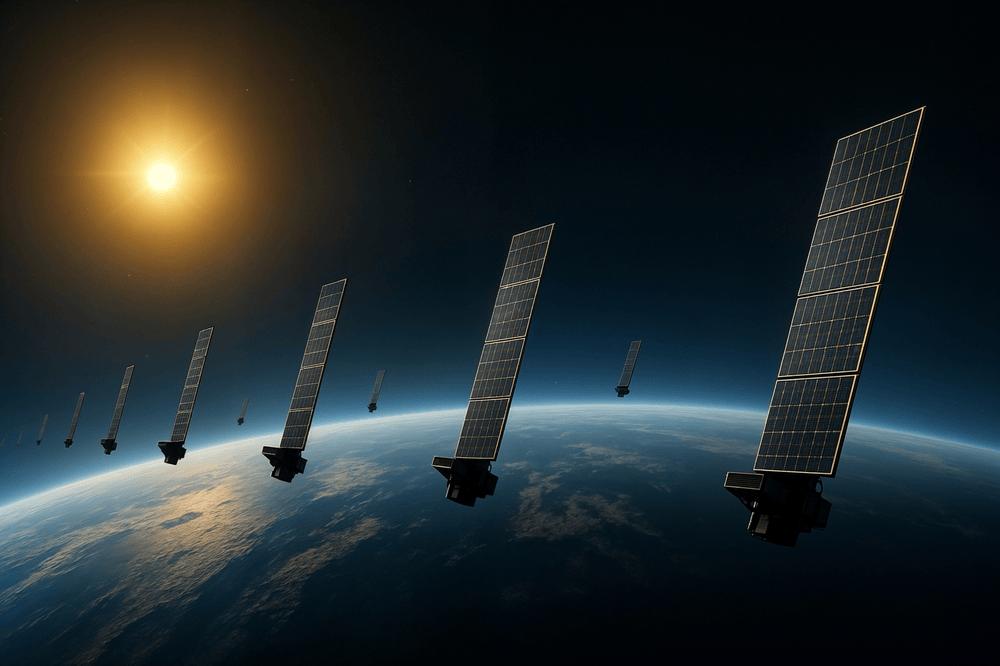
Projects like the Square Kilometre Array (SKA), which will use over 100,000 antennas spread across continents, are built with the goal of detecting these ancient signals with extreme precision. If satellite interference continues at this level, SKA’s core mission—probing the origin of the universe—could be seriously undermined before it even becomes fully operational. This is not hypothetical. It’s already happening in test observations, and the situation is expected to get worse as more satellites are launched.
There are also long-term risks. Once data is compromised by artificial interference, there’s no real way to recover what was lost. Scientists can try to filter out noise, but that adds complexity, reduces accuracy, and can lead to missed discoveries. The fact that these emissions are unintentional doesn’t lessen the impact. Whether accidental or deliberate, strong radio emissions from orbiting satellites directly reduce the quality and quantity of scientific data collected from Earth.
What This Means for Everyday Life—and What Needs to Happen

While satellite interference might seem like a niche concern reserved for scientists and engineers, the reality is that the consequences extend far beyond telescopes and observatories. If left unchecked, the saturation of low-Earth orbit with poorly regulated satellites can disrupt systems that the public relies on every day. That includes weather forecasting, GPS navigation, climate monitoring, and emergency communications—all of which depend on satellite technology that needs a stable and interference-free orbital environment to function accurately and reliably.
There’s also the growing concern about space debris. Increased satellite re-entries, like those accelerated by solar storms, raise the risk that not all fragments will fully burn up in the atmosphere. While the chances of debris hitting people or property are still low, the risk is no longer theoretical. In 2023, a piece of a Starlink satellite weighing over five pounds landed on a Canadian farm. It didn’t cause injuries, but it did serve as a reminder that more satellites mean more opportunities for malfunction and mismanagement—especially as re-entries become more frequent due to space weather or operational failures.
For everyday users, the irony is that the same technology designed to improve life on Earth—faster internet, better connectivity—is now complicating the very infrastructure that supports scientific discovery and long-term sustainability. And unlike terrestrial industries, there’s currently no global system that comprehensively regulates how commercial satellites should limit unintended emissions or manage orbital congestion. This means the burden of responsibility is falling behind the pace of deployment.
To start addressing these issues, experts suggest a few practical steps. First, satellite companies need to design systems that minimize radio leakage, not just optimize performance for internet coverage. That involves shielding onboard electronics, rerouting internal emissions, and participating in voluntary emission testing. Second, international bodies like the International Telecommunication Union (ITU) must move beyond discussion and begin implementing enforceable standards that protect scientific radio bands. And third, spacefaring nations must work together to create and enforce orbital traffic rules that include mandatory deorbiting plans, transparency in operations, and penalties for noncompliance.
The technology already exists to make satellite constellations safer and less disruptive. What’s missing is the will to prioritize public interest—scientific, environmental, and practical—over short-term commercial gain. Without coordination and accountability, the fallout will be shared by all.
The New Space Reality

The constant rush to launch more satellites into low-Earth orbit, especially with projects like Starlink, is really starting to crowd things up there. It turns out, space isn’t as empty as we once thought, and all this activity is bringing some serious risks. We’re facing a bit of a perfect storm: the sun’s getting feisty with its solar cycles, which messes with satellites and actually increases the chance of space junk falling back to Earth. And on the flip side, all those shiny new satellites are leaking radio signals, making it harder for scientists to peek into the universe. Honestly, these aren’t just “what if” scenarios anymore; we’re already seeing debris come down, and vital research is getting messed up.
It’s kind of ironic, isn’t it? The very technology meant to give us super-fast internet and keep us all connected is, without much oversight, actually gumming up the works for things we rely on every day, like weather forecasts, GPS, and even our ability to understand the cosmos. The rules and regulations just haven’t caught up to how quickly things are changing in space. That leaves a big hole when it comes to who’s really responsible for all this radio interference and orbital traffic.
So, what’s the deal? Ultimately, getting a handle on this new space age means more than just building cooler tech. It’s going to take a real commitment from the companies launching these satellites, the international groups making the rules, and governments everywhere. We need everyone to really focus on keeping space healthy for the long run and protecting scientific exploration, not just chasing quick profits. If we don’t start working together and holding each other accountable right now, that bright future in space we’re hoping for could end up being pretty messy and unpredictable, and trust me, that fallout won’t just stay in orbit.
