
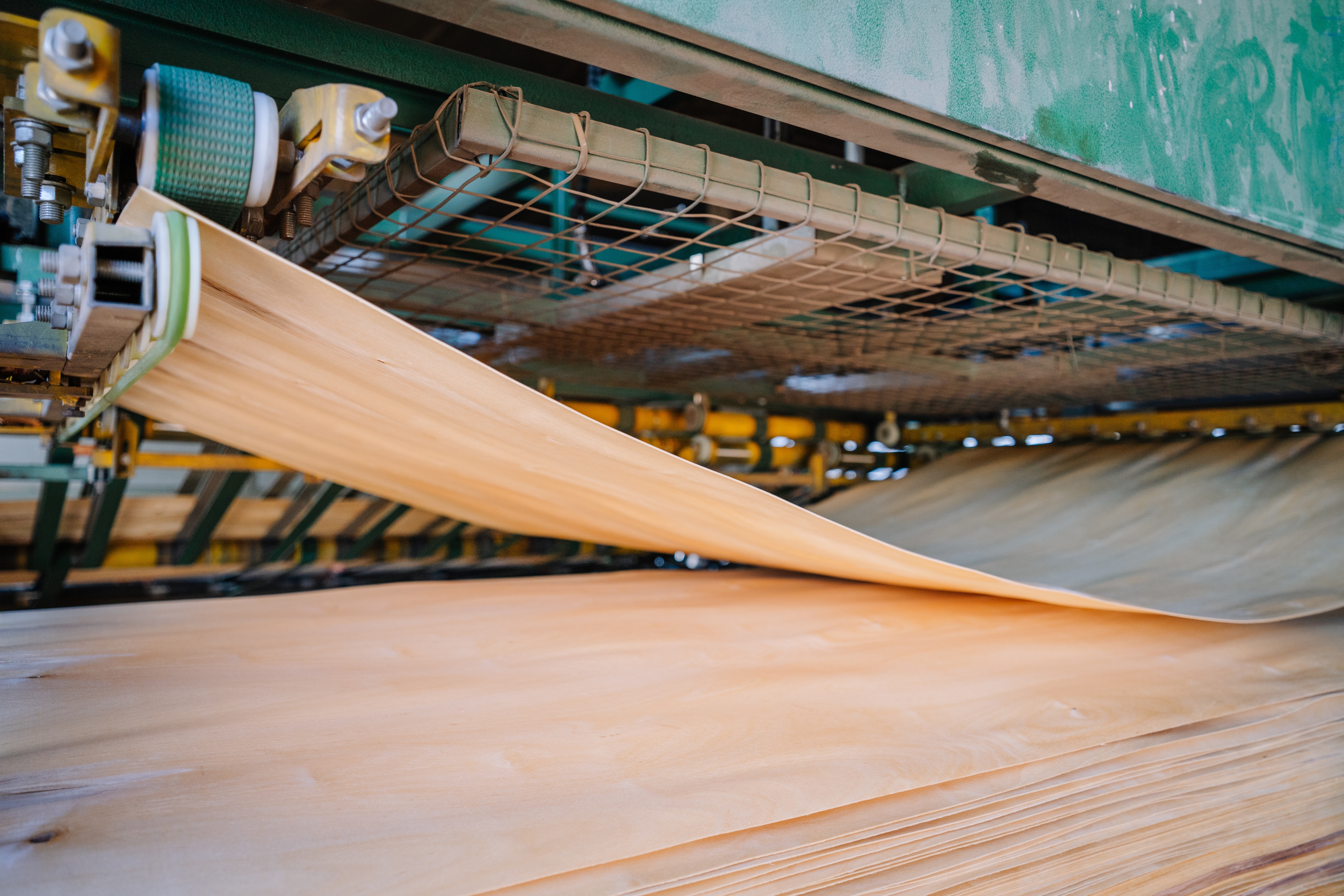
The construction industry has a big carbon problem, largely thanks to its reliance on steel and concrete. Now, a potential solution is coming from an unlikely place: the forest. Researchers at the University of Maryland have transformed ordinary timber into a “superwood” that’s stronger than steel and resistant to fire and water. They did it by changing wood’s internal structure at a molecular level, creating a powerful new building material that could help slash construction-related emissions.
How Ordinary Wood Becomes “Super”

Turning regular wood into SUPERWOOD is a two-step process that re-engineers the material from the inside out. The key is to fix one of wood’s basic properties: it’s full of tiny, hollow channels that trees use to move water. While great for a living tree, this porous structure limits the wood’s overall strength.
The process begins with a chemical bath. The wood is soaked in a solution designed to partially dissolve two natural polymers, lignin and hemicellulose. Think of lignin as the rigid glue holding wood’s cells together.
The real source of wood’s strength, however, comes from its incredibly strong cellulose nanofibers—which, pound for pound, are stronger than most metals. By removing just enough of the lignin “glue,” the wood becomes soft and flexible, but the high-strength cellulose fibers are left untouched, preparing them for the next step.

Next, the softened wood is hot-pressed. Under intense heat and pressure, its flexible cell walls completely collapse, squeezing out every last bit of empty space. The wood becomes up to 80% thinner and incredibly dense, forcing all the strong cellulose fibers to pack together into a tightly woven, perfectly aligned structure. This new internal design is what unlocks the material’s power. According to InventWood CEO Alex Lau, making the wood four times denser doesn’t just make it four times stronger—it makes it about ten times stronger. That huge jump in performance comes from countless new hydrogen bonds that form between the packed cellulose fibers, locking them together into an exceptionally strong composite.
Putting Performance to the Test
One of the biggest claims about SUPERWOOD is that it’s “stronger than steel.” That comparison is based on the material’s strength-to-weight ratio. While a steel beam is still stronger than a superwood beam of the same size, the superwood is about six times lighter. This means it delivers more strength for its weight, which is a huge advantage where reducing mass is important. In the auto industry, for instance, a 10% drop in vehicle weight can boost fuel economy by 6-8%. In construction, using lighter materials could mean smaller foundations and more freedom in architectural design.

But the material’s advantages don’t stop at strength. It’s also incredibly durable in other ways:
- Fire resistance: SUPERWOOD earned a Class A fire rating, the highest possible for building materials, putting it on par with brick and gypsum board. Because its structure is so dense, there’s very little oxygen inside for a fire to use as fuel. When exposed to flames, the surface forms a protective layer of char that insulates the core and helps the material extinguish itself once the heat source is gone. Unlike untreated lumber, it doesn’t just burn through.
- Water and pest resistance: The manufacturing process gets rid of the tiny tunnels and empty cells found in natural wood. Those pores are what allow water to soak in and provide a home for rot, fungi, and termites. By creating a solid, non-porous material, SUPERWOOD blocks off these entry points, stopping decay and pests from getting a foothold. It’s a built-in defense, not a chemical coating that can wear off.
- Hardness and stability: The material is much tougher against dents and scratches than natural wood, making it a great choice for high-traffic floors or durable furniture. It’s even harder than famously tough tropical woods. It also barely expands or contracts with changes in temperature. This stability is essential for outdoor uses like siding and decks, as it resists warping or cracking, meaning it will last longer with less upkeep.
How Superwood Stacks Up: A Quick Comparison

To understand the practical benefits of SUPERWOOD, it helps to see how it measures up against the materials we use every day.
- Versus Steel: We think of steel as the gold standard for strength, but SUPERWOOD presents a smart alternative. Its key advantage is being incredibly strong for its weight. This means you can get the same structural performance with a much lighter material, which can reduce a building’s overall weight and the size of its foundation. The biggest difference, however, is environmental. Steel production is energy-intensive and creates a massive carbon footprint, while SUPERWOOD is made from a resource that absorbs carbon from the atmosphere as it grows.
- Versus Concrete: Concrete is the most common building material on the planet, but it also has a significant environmental downside, mainly due to the high emissions from producing cement. SUPERWOOD offers a powerful, lightweight substitute that stores carbon instead of producing it. For a world trying to build more sustainably, having a strong, renewable option like this is a game-changer.
- Versus Regular Wood: This is where you can see the “super” transformation most clearly. Standard lumber is a fantastic, renewable resource, but it has natural weaknesses—it burns, it can rot when wet, and it can be damaged by termites. The densification process that creates SUPERWOOD effectively engineers out these vulnerabilities. By compressing the wood, the process removes the porous internal structure, leaving no space for fire, water, or pests to take hold. It’s wood, but without its classic Achilles’ heel.
Making Smart Choices for Your Home

SUPERWOOD might be starting out in high-end buildings, but the ideas behind it will eventually shape the way we all build our homes. As materials like this become more common, here are a few things to keep in mind for creating a safer, healthier living space:
- Think About Fire Safety: If you’re building or renovating, especially in an area with wildfire risk, it’s worth asking your contractor about using materials with a Class A fire rating. New options like fire-resistant wood mean you don’t have to choose between the look of wood and the safety of less flammable materials. It’s an extra layer of security that could make a huge difference.
- Know Where Your Materials Come From: Ask about the origin of your building supplies. Choosing products made from fast-growing, responsibly managed local forests (look for certifications like FSC) is a simple way to lower your home’s carbon footprint. It also supports local economies and avoids the environmental and ethical issues that can come with some imported woods.
- Look at the Bigger Picture: A material’s true environmental cost goes beyond just the raw material. It includes how it’s made and what happens when it’s thrown away. It’s fair to ask companies if they recycle the chemicals and water used in their factories. When you support companies that are transparent about their entire process, you’re helping push the industry toward a more circular, less wasteful model.
- Your Interest Matters: Let your architect, designer, or builder know that you’re interested in using sustainable, high-performance materials. When customers ask for these things, it signals to the entire industry that there’s a real demand for safer, greener building options. This helps drive down costs over time and encourages more companies to be open about the environmental impact of their products.
The Future of Building

SUPERWOOD is more than just a new product; it’s a glimpse into the future of construction. It proves we can create building materials that are incredibly strong, come from renewable forests, and actually store carbon. This opens the door to a future where our buildings could become part of the climate solution, instead of being a big part of the problem.
But turning this idea into a common building material won’t happen overnight. For one, it’s expensive right now, which is normal for any new technology before it’s made on a massive scale. Think about how aluminum or plastics were once specialty items before they became everyday materials. The company expects costs to come down as they produce more of it. The other big step is getting it approved for use in a building’s main structure. This involves a long, expensive safety-testing process to get into the official building codes. It’s a non-negotiable step, because engineers and builders need to know for certain that a material is safe and reliable before they can use it for things like beams and columns. The company is already deep into this process, and plans to start selling SUPERWOOD for things like decks and siding in late 2025.
Even with these challenges, the creation of SUPERWOOD is a huge step forward. Its journey from a university lab to the marketplace is a real-world example of how we can build a future where our buildings are better for the planet. It’s a powerful sign that the places we live and work could one day help the environment, not harm it.
Source:
- Song, J., Chen, C., Zhu, S., Zhu, M., Dai, J., Ray, U., Li, Y., Kuang, Y., Li, Y., Quispe, N., Yao, Y., Gong, A., Leiste, U. H., Bruck, H. A., Zhu, J. Y., Vellore, A., Li, H., Minus, M. L., Jia, Z., . . . Hu, L. (2018). Processing bulk natural wood into a high-performance structural material. Nature, 554(7691), 224–228. https://doi.org/10.1038/nature25476
