
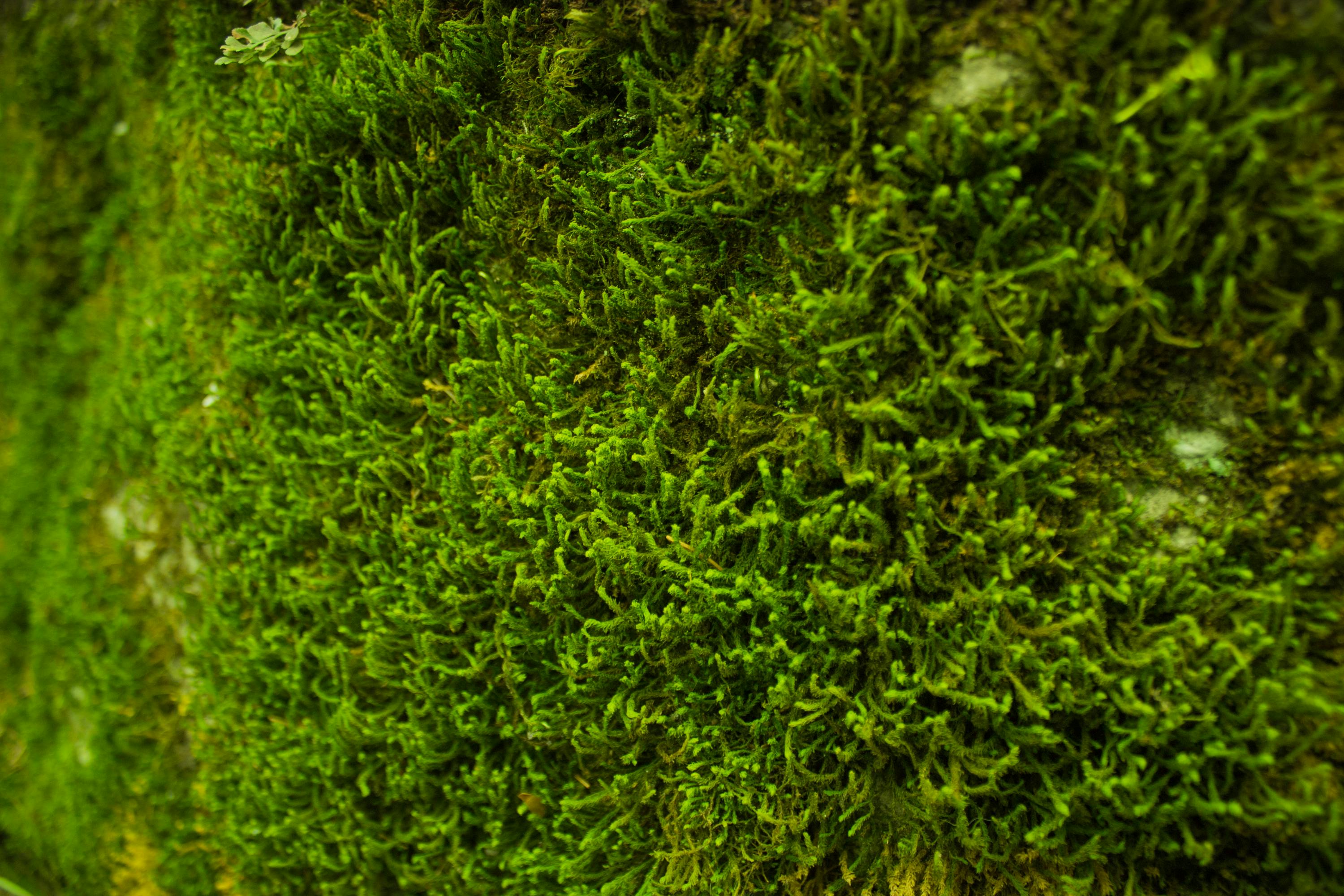
Look around any city and you’ll see it—concrete. It covers our homes, schools, highways, and office towers. It’s the most widely used man-made material on the planet, second only to water in global consumption. But while concrete has shaped our urban environments, it’s also helped strip them of life. What if that same concrete could become part of the solution instead?
Imagine a city where the buildings themselves help clean the air, cool the streets, reduce noise, and support biodiversity—not with high-tech machinery, but with moss. Yes, moss. The quiet, overlooked greenery that thrives in the cracks of sidewalks and forgotten walls is now being harnessed to do what traditional infrastructure never could: breathe.
Thanks to a new innovation from a Dutch startup, concrete walls can now host moss without irrigation, soil, or structural damage. This isn’t about greening cities with expensive rooftop gardens or vertical forests. It’s about rethinking what we already have—and making it work smarter.
What Is Bioreceptive Concrete and Why It Matters
Bioreceptive concrete is a type of concrete engineered to support the natural growth of moss directly on its surface—no soil, no invasive roots, no fancy irrigation systems. The innovation lies in its composition. Developed by Respyre, a spin-off from TU Delft, this concrete is porous, moisture-retaining, and embedded with the right acidity and nutrients to let moss take hold and thrive.
Traditional concrete is a dead surface. It repels life, traps heat, and contributes to urban issues like poor air quality and the heat island effect. Bioreceptive concrete flips that on its head. It creates a surface that can grow moss organically and without harming the structure. That’s possible because moss uses rhizoids instead of roots. Rhizoids don’t penetrate or degrade concrete—they simply anchor moss in place.
But the significance goes beyond biology. Concrete is everywhere—it’s the default material in modern urban development. That ubiquity is what makes this innovation powerful. Instead of adding new structures or redesigning entire buildings, bioreceptive concrete turns existing walls, facades, and even infrastructure bases into self-sustaining green surfaces. It doesn’t ask for more land or energy; it just reimagines what’s already built.
And it’s practical. The technology can be applied to both new and existing buildings. Once installed and given about 12 weeks of temporary watering, the moss layer becomes independent—capable of surviving seasonal changes, drought, and pollution with little to no upkeep. It’s cost-effective, scalable, and designed to blend into construction workflows, not disrupt them.
Why Moss? The Underrated Urban Workhorse

Moss doesn’t get much attention—and that’s exactly what makes it so effective. It grows quietly, without demanding space, sunlight, or elaborate care. In urban environments where greenery is often an afterthought, moss steps in as a low-maintenance, high-impact solution that delivers real environmental benefits without the drawbacks of traditional landscaping.
Unlike climbing plants or rooftop gardens, moss doesn’t need soil or irrigation systems. It thrives on vertical surfaces, shaded corners, and bare infrastructure—places most vegetation can’t survive. Its rhizoids (tiny, root-like hairs) simply cling to the surface without breaking it down, which makes moss ideal for concrete walls and other hardscapes.
But moss isn’t just resilient—it’s functional. Scientifically, it’s a powerhouse for cities struggling with pollution and rising temperatures. Moss captures carbon dioxide, traps particulate matter (like PM10), and absorbs nitrogen oxides—pollutants that directly contribute to respiratory problems in dense urban areas. On top of that, moss absorbs rainwater like a sponge, reducing runoff and easing pressure on drainage systems.
It also helps cool cities naturally. Through evapotranspiration and its insulating properties, moss can lower wall surface temperatures, helping to mitigate the urban heat island effect. And thanks to its dense, cushion-like texture, moss muffles sound, making it a natural tool for noise reduction in loud, crowded neighborhoods.
There’s a human side to all this, too. Numerous studies show that even small doses of greenery can reduce stress, improve focus, and enhance mental well-being. Moss-covered walls don’t just clean the air—they change how a space feels. They soften concrete-heavy environments and reintroduce a sense of calm in places often overwhelmed by steel and stone.
How the Technology Works
The success of moss-growing concrete isn’t based on luck—it’s engineered from the ground up. Respyre’s approach combines material science with ecological design to create a surface that moss not only survives on but actively thrives in. The process is simple, scalable, and built for real-world use—not just lab experiments.
It starts with bioreceptive concrete, a specially formulated mix that includes recycled materials, high porosity, and the right pH and nutrient content. This gives moss spores exactly what they need to take root—without needing soil, fertilizers, or constant moisture. The surface is textured to help moss grip easily, and the concrete itself retains water like a sponge, supporting growth even during dry periods.
Next comes the moss gel—a biological coating embedded with moss spores. This gel acts like a launchpad, holding moisture and nutrients right where the spores need them. It also helps the spores stick to vertical surfaces without being washed away or blown off in early stages.
Once applied, the setup is supported by a temporary irrigation system. For the first 12 weeks, this system provides the consistent moisture needed for the moss to establish itself. During this time, the moss grows from a thin green film (called protonema) into a dense, stable moss layer. After that, the system can be removed—the moss becomes self-sustaining.
This system is already proving itself in places like Amsterdam, where it’s been applied to social housing balconies and the bases of wind turbines. The moss layer holds up in varied conditions, from heat to rain to pollution, without the need for trimming, replanting, or seasonal maintenance. It doesn’t require ground access, and it can be applied to both vertical and horizontal surfaces.
Even the materials themselves are circular. Respyre’s concrete mix is 85% recycled, made from rubble and reactivated cement. Over time, the calcium in the concrete reacts with CO₂ in the air, forming calcium carbonate—a process that actually locks away carbon and helps neutralize emissions. Combined with the carbon-absorbing nature of moss, the entire system becomes carbon-negative within a year of installation.
From Amsterdam Housing to Wind Turbines
The promise of moss-covered concrete isn’t theoretical—it’s already reshaping parts of the built environment. In Amsterdam, Respyre’s bioreceptive concrete is being tested and applied in real-world conditions, not just high-end architectural showpieces. One standout example is its use in social housing balconies in the city’s Rivierenbuurt neighborhood. These aren’t luxury developments—they’re everyday homes. Yet they now feature walls that help clean the air, lower ambient temperatures, and offer residents a more pleasant, green-facing environment without added maintenance or cost.
That detail matters. It shows that sustainability doesn’t have to be exclusive. Technologies like this aren’t just for eco-friendly concept buildings or corporate campuses. They can—and should—be part of standard construction practices in dense, working-class neighborhoods where green space is often lacking. In this way, Respyre’s approach addresses environmental needs while also supporting social equity.
The technology is also being adapted beyond housing. In partnership with renewable energy company Eneco, Respyre is testing moss-covered concrete on the bases of wind turbines. These massive structures are typically underutilized at ground level—just concrete blocks sitting in open fields. Now, those surfaces are being turned into green, air-purifying zones that complement the clean energy generated above. It’s a layered form of sustainability: reducing emissions through wind power while absorbing CO₂ and pollutants at the base.
Both use cases highlight a core strength of bioreceptive concrete: it doesn’t require new land, major retrofits, or significant added infrastructure. It works with what’s already there. From bare walls on housing complexes to industrial foundations, every blank surface becomes an opportunity for regeneration.
How to Add More Green to Your Everyday Environment

You don’t need to be a developer or city planner to be part of this shift toward greener infrastructure. While the application of bioreceptive concrete is currently led by professionals, there are several practical ways individuals, property owners, and local communities can support or adopt this technology.
1. Advocate for Greener Building Materials
If you’re involved in property management, architecture, or local government, bring bioreceptive concrete into the conversation. It’s already being used in public housing projects, which proves it’s not limited to luxury developments. Ask suppliers or contractors about nature-inclusive options, and encourage planners to consider bio-based infrastructure in future projects.
2. Retrofit Existing Surfaces
For building owners or facility managers, Respyre’s system can be applied to existing concrete walls, making it suitable for schools, office buildings, apartment complexes, and even parking garages. Reach out to companies like Respyre or similar local green wall providers to explore retrofitting options, especially in areas prone to heat buildup or poor air quality.
3. Green Small Spaces
On a smaller scale, you can look into planter systems or modular moss walls for patios, balconies, or facades. While these might not use bioreceptive concrete specifically, they follow the same principle: turn vertical surfaces into green, functional assets.
4. Support Policy Change
At the community level, advocate for local green building standards that include support for nature-based solutions like moss facades. These materials align with sustainability goals many municipalities are already aiming to meet, such as reducing urban heat or improving air quality.
5. Stay Informed and Spread the Word
Part of supporting innovation is awareness. Follow updates from projects like Respyre, share them in professional networks or local forums, and push back on the idea that sustainability requires large budgets or radical overhauls. Sometimes it just takes a smarter surface.
This is not a fringe idea. Bioreceptive concrete is already being deployed in practical, real-world settings—and the more people who ask for or support it, the more accessible and affordable it becomes. Whether you’re renovating a property, voting on a city development plan, or simply looking to make your space healthier, supporting this kind of innovation means helping cities evolve from gray to green—one wall at a time.
Rethinking What Cities Can Be
For decades, cities have been built to resist nature—layered in concrete, sealed against the elements, optimized for control. But that mindset has come at a cost: rising temperatures, toxic air, and environments that feel more mechanical than human. The rise of bioreceptive concrete challenges that thinking at its core. It shows that infrastructure doesn’t have to be a barrier to nature. It can be a host.
This isn’t about aesthetics or greenwashing. It’s about making the built environment do more—clean the air, absorb carbon, manage water, cool buildings, and support biodiversity—without demanding more space or energy. It’s about using the most abundant material in our cities, concrete, not as a dead end, but as a starting point for change.
Moss doesn’t need fanfare. It works quietly, persistently, and effectively. That’s what makes this innovation so powerful. It’s not disruptive. It’s additive. It enhances what we already have, turning walls into assets, surfaces into systems, and cities into environments that work with nature instead of against it.
We’re not short on space—we’re short on imagination. The infrastructure is already here. The technology exists. The challenge now is to push for its adoption. To demand smarter materials. To see every gray wall as a missed opportunity.
The cities of the future aren’t built by tearing everything down. They’re shaped by asking better questions about what’s already standing—and how it can give something back.
