

What if one of the greatest dinosaur discoveries was hiding in plain sight—mistaken for a decorative rock and tucked away in a museum for nearly two centuries? That’s exactly what happened at London’s Natural History Museum, where a glossy, pink-and-white sphere labeled as agate sat untouched for 175 years. Attractive, sure—but nothing out of the ordinary. Or so everyone thought.
It wasn’t a cutting-edge lab or a new excavation that cracked the case. It was a chance encounter at a French mineral show, a flash of recognition, and a curator who asked the right question at the right time.
Turns out, the polished “rock” wasn’t just a mineral. It was a fossilized dinosaur egg—specifically, from a titanosaur that roamed ancient India 60 million years ago. A mistake made in the 1800s became a window into prehistoric life, revealing not only how dinosaurs reproduced but how nature, time, and geology can collaborate to disguise one of the most remarkable relics of Earth’s past.
The Discovery That Changed Everything
In 2018, museum curator Robin Hansen was preparing specimens for display at London’s Natural History Museum when she selected a particularly eye-catching agate. It was nearly perfectly spherical, about the size of a grapefruit, with delicate pink and white banding—an ideal example for the Mineralogy Collection’s exhibition.
At the time, there was no reason to question its classification. Catalogued in 1883, the specimen had been collected from central India by Charles Fraser during a period when mineral collecting was at its peak and paleontology was still developing its modern foundations. Identifying it as an agate was a logical conclusion based on the science of the day.
Then came Hansen’s visit to a mineral show in France later that year. While browsing dealer tables, she came across a specimen labeled as an “agatised dinosaur egg.” It shared an uncanny resemblance to the museum’s display: same size, same spherical shape, same agate-filled interior. That was the moment everything shifted. “Hang on a minute,” she recalled thinking, “that looks a lot like the one we’ve just put on display in the Museum.”
Hansen returned to London with a new hypothesis and brought it to the attention of two of the museum’s paleontologists—Professor Paul Barrett and Dr. Susie Maidment. Neither had seen the agate before, so they approached it with fresh eyes. They immediately noticed features inconsistent with a typical mineral specimen: a thin outer layer that resembled fossilized eggshell and surface markings that hinted at contact with other round objects—suggestive of eggs laid in a clutch.
Despite attempts to use CT scans, the dense agate interior blocked efforts to see finer details inside. Still, the external evidence was persuasive. When compared to known titanosaur eggs from China and Argentina, the specimen showed striking similarities in structure, texture, and size.
In a matter of months, a routine display choice turned into a major scientific reclassification. What was once thought to be a geological curiosity is now recognized as one of the earliest complete dinosaur eggs discovered—misidentified, shelved, and waiting 175 years to tell its real story.
What Made Experts Rethink the Rock
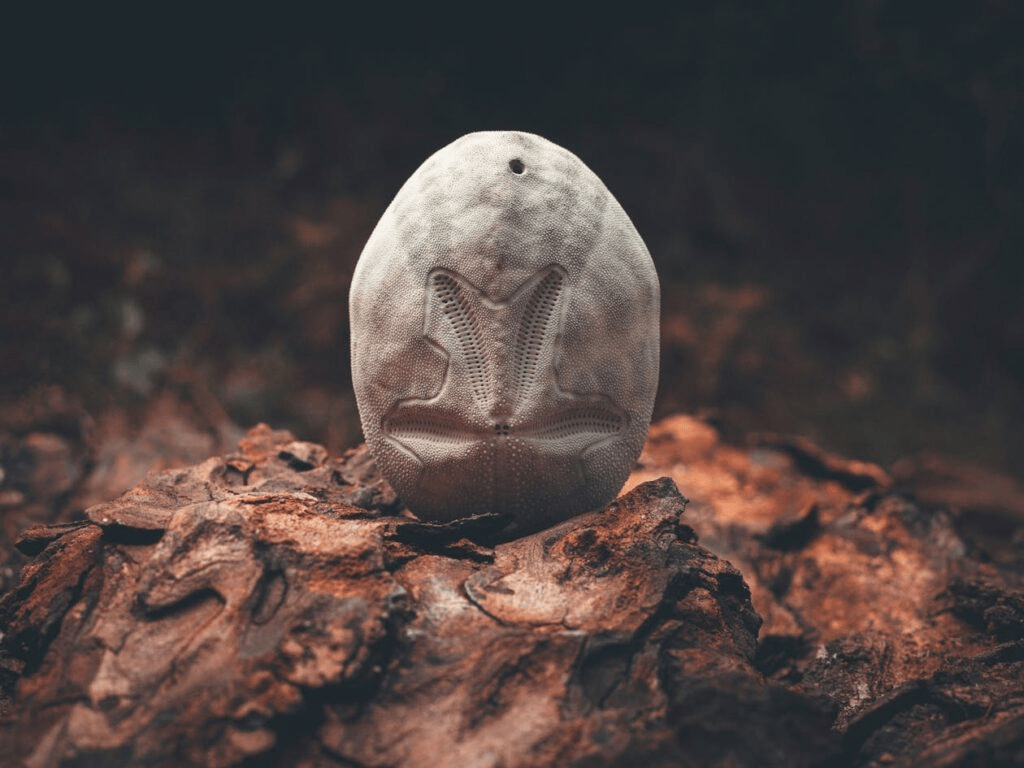
The specimen didn’t give up its secrets easily. From the outside, it looked like a textbook example of agate—spherical, banded, and polished. For over a century, its surface beauty distracted from what was hidden in plain sight. But once Robin Hansen raised the possibility that it might be a dinosaur egg, the museum’s paleontologists took a closer look—and what they saw raised serious questions.
First, there was the outer layer. Unlike the smooth edges found in most mineral nodules, this specimen had a thin, rind-like coating with a texture that closely resembled fossilized eggshell. It wasn’t mineral buildup. It looked biological.
Next were subtle indentations and curvature patterns on the surface. These suggested that the object hadn’t formed in isolation. It appeared to have been nestled against other similar structures—consistent with how dinosaur eggs are often found in clutches, rather than alone. That fit with what paleontologists already knew about titanosaur nesting behavior.
Location also mattered. The rock had been collected in central India, a known hotspot for titanosaur fossils from the Late Cretaceous period. These giant dinosaurs dominated the region at the time, and other egg specimens had already been identified in nearby areas. When compared to confirmed titanosaur eggs from Argentina and China, the similarities in size, shape, and surface structure were difficult to dismiss.
The team attempted to confirm their theory with a CT scan, hoping to reveal internal layering or any surviving embryonic features. But the agate filling proved too dense—no details could be seen. Still, the circumstantial evidence kept stacking up. Every observed detail—from the shell-like outer layer to the geographic origin—lined up with known characteristics of fossilized dinosaur eggs.
Even without internal structures, experts agreed: the odds of this being a simple mineral formation were slim. Everything pointed to a prehistoric origin. In the absence of direct proof, scientific judgment rested on comparison, context, and pattern recognition. This wasn’t just a rock—it was a biological structure transformed by time and geology. The “agate” had been mislabeled not through carelessness, but because the tools to identify it properly didn’t exist until now.
How the Egg Became Agate

Turning from a dinosaur egg into a polished agate wasn’t quick—or intentional. It took a perfect storm of natural forces acting over tens of millions of years. What began as a biological object ended as a mineral showpiece, thanks to volcanic activity, groundwater chemistry, and an unusual degree of geological stability.
Roughly 60 million years ago, during the Late Cretaceous period, a titanosaur laid a clutch of eggs in what is now central India. This area, known as the Deccan Traps, was undergoing intense volcanic activity at the time. Lava flows frequently blanketed the landscape, and instead of destroying the eggs outright, the molten material often buried them. That sudden entombment created the conditions for fossilization—sealing the eggs off from weather, scavengers, and oxygen.
Over time, the organic material inside the egg—including the embryo, yolk, and membranes—decomposed completely. What remained was a hollow shell. That cavity eventually became a mineral chamber.
Silica-rich groundwater, moving through tiny cracks and pores in the surrounding rock, gradually seeped into the egg’s hollow interior. As this mineral-laden water evaporated, it left behind microscopic layers of quartz, primarily in the form of agate. With each new infiltration, more minerals accumulated. Slight changes in pressure, chemistry, or flow rate created the distinctive banding—those pink and white rings that once made the specimen stand out in the museum’s display case.
This process didn’t just preserve the egg’s shape; it also erased its biological contents. That’s why no embryonic structures remain today. The final result is what geologists call an agatised fossil: a once-living object whose internal spaces have been entirely replaced with crystalline minerals.
The egg’s transformation wasn’t guaranteed. Without volcanic burial, it likely would have eroded or broken down before any preservation occurred. Without the right type of mineral-rich groundwater, no agate would have formed. And without the slow, undisturbed conditions needed to allow the silica to settle layer by layer, the specimen would never have developed its distinctive appearance.
What we see now is the result of an extremely rare chain of events. One that turned a biological moment—an egg laid by a dinosaur—into a geological artifact that could be mistaken for just another rock.
What This Teaches Us About Dinosaurs

At first glance, the egg’s small size—just 15 centimeters across—seems at odds with the titanic creatures that laid it. Titanosaurs were among the largest land animals to ever walk the Earth, some stretching over 30 meters in length. But their reproductive strategy didn’t mirror their size. Instead of producing a few massive, high-investment offspring, they laid large clutches of relatively small eggs—often 30 to 40 at a time.
This quantity-over-size approach is common in reptiles today. Sea turtles and crocodiles use similar tactics: lay many eggs, invest little in post-laying care, and let sheer numbers give their genes a better chance at survival. Titanosaurs likely followed the same path. Once the eggs were laid, the adults left them behind. There was no guarding, no feeding, no parenting. Survival depended entirely on location, temperature, and luck.
The geology of India at the time made it an ideal nesting ground. Central India’s Deccan Traps, with their frequent volcanic eruptions, created warm soil conditions perfect for egg incubation. Unlike modern birds that rely on body heat to warm their nests, titanosaurs used the Earth itself. The heat from freshly laid lava or sun-warmed volcanic ash acted like a natural incubator. It was a hands-off approach—but it worked, at least long enough to sustain generations of the species.
Fossil evidence suggests that these nesting sites were reused repeatedly, even after eruptions buried earlier clutches. Titanosaurs would return once the ground cooled, lay new eggs, and continue the cycle. That’s why so many fossilized eggs from this group are found clustered in the same areas across India, Argentina, and China. The behavior was consistent—and widespread.
Why Museum Collections Still Matter

It’s easy to think of museums as places that hold finished knowledge—objects with labels, stories, and settled identities. But the truth is, many of the most important scientific breakthroughs come not from new digs, but from old drawers. This fossilized egg—misidentified as an agate for 175 years—is a case in point.
The specimen was correctly classified based on the tools and understanding available in 1883. Charles Fraser, who collected it in India in the early 19th century, didn’t have the benefit of modern paleontology or high-resolution imaging. In fact, the very concept of dinosaur eggs wasn’t scientifically established until decades later. The mistake wasn’t negligence—it was limitation.
That’s why museum collections remain critical to science. They serve as time capsules, holding onto evidence until someone has the technology—or the curiosity—to ask better questions. Every catalogued object is a potential future discovery. This agatised egg sat in plain sight for nearly two centuries. No excavation was needed. No grant funding. Just someone trained to notice what others overlooked.
Modern museums aren’t just public displays; they’re active research hubs. Their back rooms house millions of specimens—many of which haven’t yet been examined with today’s tools. CT scanners, isotope analysis, electron microscopes, and future technologies not yet invented will continue to unlock secrets from collections gathered generations ago.
This discovery also shows the value of interdisciplinary collaboration. A mineral curator spotted the clue, but it took paleontologists, comparative studies, and geologists to confirm what they were looking at. In that sense, museums are more than archives—they’re spaces where different scientific worlds collide and occasionally rewrite history.
The Value of Looking Closer
This wasn’t a story about a groundbreaking dig or a brand-new fossil. It was a reminder that even the most astonishing discoveries can come from something already in our hands—if we’re willing to look at it differently.
The agatised egg sat in a museum collection for nearly two centuries, admired for its appearance but misunderstood in every other way. It took one moment of insight and a willingness to question the obvious to reveal what it truly was: not just a mineral, but a preserved fragment of prehistoric life. The egg hadn’t changed—our understanding had.
Science often advances not just through new information, but through reexamination of old evidence. This case proves that asking better questions, challenging old assumptions, and staying open to possibility can be just as important as any field expedition or lab result.
For anyone interested in science, history, or simply paying attention: let this be your cue. Look again. Think twice. The most remarkable truths are often the ones hiding in plain sight.
