
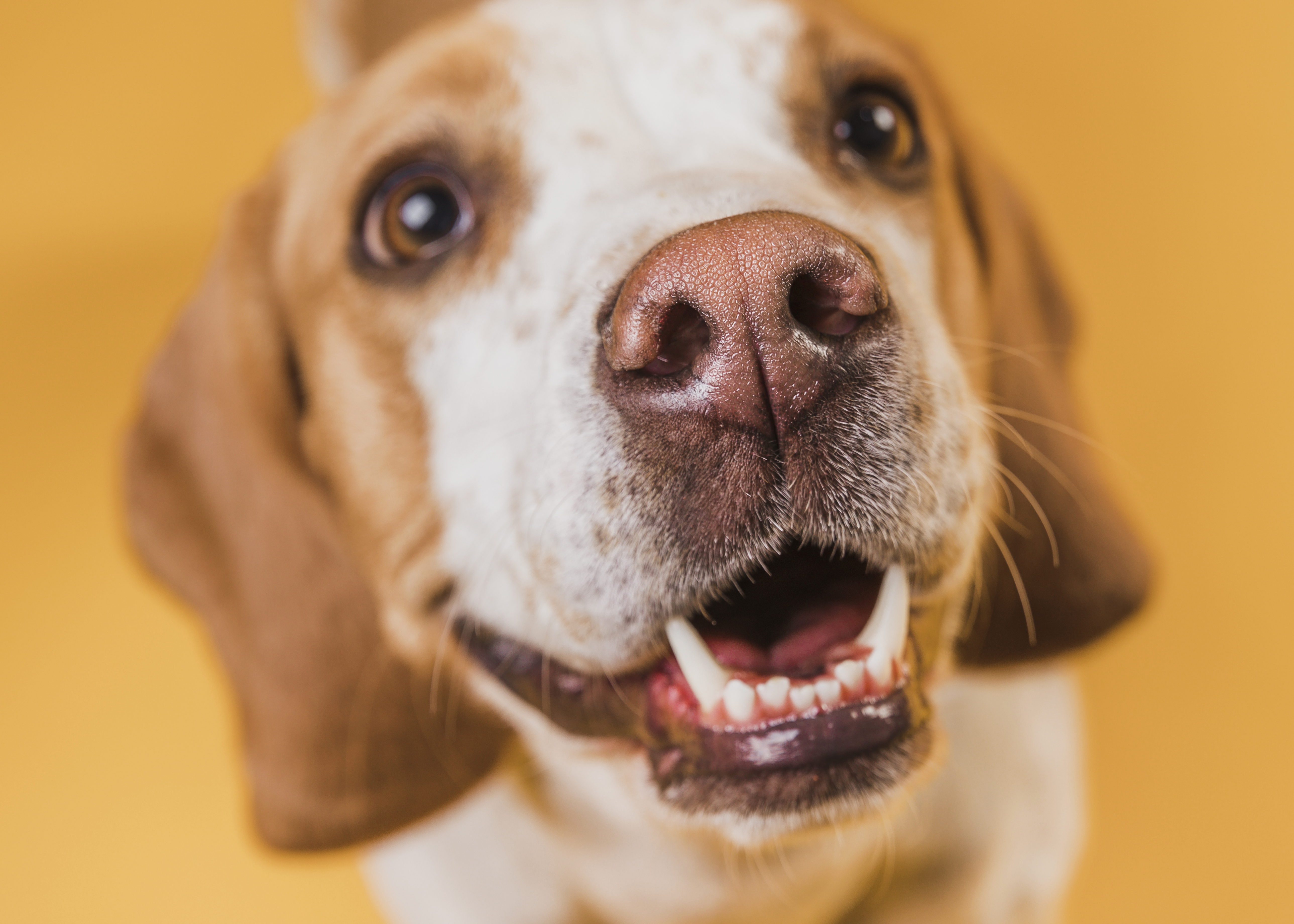
What if your dog could detect a disease before any doctor could? Not by barking or acting strangely but by simply smelling you. As strange as it sounds, that’s exactly what new research is proving: trained dogs can sniff out Parkinson’s disease years before symptoms appear, with up to 98% accuracy.
Parkinson’s is notoriously hard to catch early. Most people don’t realize something’s wrong until tremors, stiffness, or slowed movement disrupt their daily life by then, the brain has already suffered significant damage. But for dogs, the disease carries a scent. A subtle shift in body chemistry specifically in the skin’s natural oils creates a unique odor that the human nose can’t detect. Dogs, however, are wired for it. Their sense of smell is so precise, they can detect a single drop of a substance diluted in the equivalent of 20 Olympic-sized swimming pools.
This breakthrough didn’t come from a lab experiment or an algorithm. It began with one woman noticing something different about her husband and ended with dogs confirming what machines couldn’t yet detect. Now, scientists are working to turn this discovery into real-world diagnostic tools. Here’s how a dog’s nose may help us catch one of the most elusive brain diseases before it even begins to show.
Why Early Detection Is So Difficult and So Important
Parkinson’s disease doesn’t start with a tremor. It starts quietly, deep inside the brain, as dopamine-producing neurons begin to die off often years before any physical signs appear. That’s the core challenge: by the time the disease becomes visible, it’s already well underway.
Unlike many other medical conditions, Parkinson’s doesn’t have a definitive early diagnostic test. There’s no blood marker, no screening protocol, and no standard imaging technique that can catch it in its early stages. Most diagnoses rely on a neurologist piecing together symptoms like slow movement, stiffness, and balance problems symptoms that usually don’t show up until 50% or more of the brain’s dopamine cells are already gone.
That delay in diagnosis matters. Without early detection, patients miss the critical window where lifestyle interventions, medication, or experimental therapies might help slow the disease’s progression. According to research, motor symptoms tend to surface only after years of silent damage, which is why many people are diagnosed later in life when options are more limited.

Another issue is overlap: the early symptoms of Parkinson’s like fatigue, sleep issues, or subtle mood changes can easily be mistaken for stress, aging, or other conditions. This diagnostic gray zone often results in misdiagnosis or delayed diagnosis, leaving patients and their families in limbo for years.
If Parkinson’s could be reliably identified before these outward signs while the disease is still in its preclinical phase doctors and patients would be in a much stronger position. They could start treatments earlier. Patients could enroll in clinical trials for neuroprotective drugs, plan for their future, and adopt proven strategies like regular aerobic exercise, which studies show may help preserve brain function.
This is why the idea of detecting Parkinson’s through scent long before symptoms appear isn’t just interesting. It’s potentially transformative. A simple, accurate, and non-invasive test could shift the entire approach to Parkinson’s from reactive to proactive.
As Claire Guest of Medical Detection Dogs puts it, “Timely diagnosis is key, as subsequent treatment could slow down the progression of the disease and reduce the intensity of symptoms.” That’s not just a clinical benefit it’s a quality-of-life one.
From Anecdote to Evidence
Joy Milne, a retired nurse from Scotland, noticed something subtle but persistent about her husband Les long before he was diagnosed with Parkinson’s disease: he smelled different. It wasn’t hygiene-related or environmental it was a musky, unfamiliar odor that clung to his skin and clothes. At first, she dismissed it. But years later, when Les was diagnosed at age 45, Joy realized the scent had arrived long before the tremors.
Most people would have ignored the hunch. But Joy has a rare condition called hyperosmia, which gives her an unusually acute sense of smell. Her observation that Parkinson’s might produce a distinct body odor was too specific to ignore. She shared her story at a Parkinson’s support event, where it caught the attention of researchers from the University of Manchester.
This wasn’t just an odd curiosity. It pointed to a biological clue hiding in plain sight.
Researchers began looking into the oily substance our skin naturally produces sebum. In people with Parkinson’s, sebum production often changes, sometimes years before symptoms set in. These changes result in the release of volatile organic compounds (VOCs), tiny molecules that alter a person’s scent in a way that’s undetectable to us, but not to dogs or people like Joy.
Her insight inspired a new line of scientific inquiry: could these scent changes serve as biomarkers for early detection? Could they be identified not just by a person with a rare sensory gift, but by trained animals or even machines?
The answer came in stages. First, researchers confirmed that sebum from Parkinson’s patients has a distinct chemical profile. Then, in collaboration with Medical Detection Dogs, they trained dogs to recognize it. The results from those trials dogs detecting Parkinson’s with high accuracy using only skin swabs validated what Joy had noticed years before.
Her story turned out to be more than anecdotal. It was the spark that launched a new diagnostic frontier. Now, researchers are narrowing down the specific VOCs responsible for Parkinson’s scent signature, with the aim of building scent-based diagnostic tools that could one day be used in clinics, pharmacies, or even at home.
Dogs Detecting Parkinson’s with Up to 98% Accuracy

In a controlled, double-blind study conducted by the University of Bristol, University of Manchester, and the charity Medical Detection Dogs, two dogs Bumper, a golden retriever, and Peanut, a black Labrador were trained to detect Parkinson’s from skin swabs taken from the upper backs of volunteers. These swabs, rich in sebum, carried the very scent signature scientists believed was tied to the disease.
The training wasn’t rushed. Bumper trained for 38 weeks, Peanut for 53. The dogs were exposed to more than 200 swabs some from individuals with Parkinson’s, some from healthy controls, and others from people with different medical conditions. Only when they could consistently signal Parkinson’s samples and ignore others were they moved into testing.
During the final trials, the dogs were presented with 100 brand-new, never-before-smelled samples. These included 40 from individuals with confirmed Parkinson’s (not yet on medication) and 60 from healthy volunteers. Importantly, the dogs and their handlers had no way of knowing which swabs were which every test was double-blind and computer-randomized to eliminate bias.
The outcome:
- One dog achieved 80% sensitivity (correctly identifying positive Parkinson’s samples) and 98% specificity (correctly rejecting healthy samples).
- The other reached 70% sensitivity and 90% specificity.
Those numbers aren’t just good they rival the performance of many existing lab-based diagnostic tools. And unlike blood tests or brain imaging, this method was completely non-invasive, painless, and low-cost.
Even more impressive: the dogs remained accurate even when samples came from people with other health conditions. That suggests Parkinson’s has a unique olfactory signature, one that dogs can reliably isolate. According to Dr. Nicola Rooney, lead author of the study, “These dogs achieved high sensitivity and specificity, showing there’s an olfactory signature distinct to Parkinson’s.”
Turning Scent into Technology

Researchers are now working to isolate the exact volatile organic compounds (VOCs) responsible for the distinct scent of Parkinson’s. These VOCs are microscopic molecules released through the skin specifically in sebum that shift as the disease develops. Once scientists can identify a consistent combination of these compounds across different patients, they can design sensors that detect them.
These tools, sometimes called electronic noses or e-noses, use chemical sensors and pattern recognition software to “sniff” biological samples and match them to known disease profiles. Similar technology is already used in industries like food safety and airport security. But detecting disease through scent especially something as subtle as early-stage Parkinson’s requires an entirely new level of sensitivity and precision.
Labs like Professor Perdita Barran’s at the University of Manchester are using mass spectrometry to break down the chemical composition of Parkinson’s sebum and compare it to healthy controls. The goal is to identify a shortlist of reliable biomarkers that electronic noses can target. These devices could then be developed into portable screening tools used in clinics, pharmacies, or potentially even at home.
And while this may sound futuristic, it’s not as far off as it once was. Similar VOC-sensing technology has already been piloted for detecting lung cancer, COVID-19, and even tuberculosis. What’s different with Parkinson’s is that the scent shows up years before symptoms do making early detection not just possible, but potentially transformative.
But there are challenges. Human scent is biologically complex, and VOC patterns can vary slightly between individuals due to genetics, environment, diet, or co-existing health conditions. Any diagnostic device will need to be rigorously tested across large, diverse populations to avoid false positives or missed cases.
What This Means for You

Imagine going to your local pharmacy or clinic and providing a simple skin swab no needles, no imaging, no expensive lab work. That swab could then be analyzed by a compact sensor trained to recognize the chemical signature of Parkinson’s. If flagged early, you could take steps that might help delay or manage the disease more effectively. So, what can you do right now while this technology is still in development?
1. Know the Early, Often Overlooked Signs
Parkinson’s is more than tremors. Symptoms like subtle changes in handwriting, sleep disturbances, reduced sense of smell, mood shifts, or stiffness can appear long before movement issues. If something feels “off,” talk to a doctor even if it seems minor.
2. Take Preventive Brain Health Seriously
While we can’t currently prevent Parkinson’s, evidence shows that regular exercise, quality sleep, a balanced diet rich in antioxidants, and stress management can support long-term brain health. These are smart habits regardless of your risk.
3. Stay Informed About Screening Developments
Research into scent-based diagnostics is progressing quickly. Follow updates from trusted organizations like Parkinson’s UK, the Michael J. Fox Foundation, or the University of Manchester’s research team. Early trials may soon open for public participation.
4. Ask About Clinical Trials
If you have a family history of Parkinson’s or are at higher risk, consider looking into clinical trials focused on early detection or neuroprotective therapies. Many trials are recruiting participants who don’t yet show symptoms.
5. Talk to Your Healthcare Provider
Bring up any concerns or family history during regular check-ups. While there’s no skin-swab test available yet, neurologists can monitor early warning signs more closely when they know you’re at risk.
Dogs, Human Health, and the Future of Diagnosis

What Bumper and Peanut demonstrated in the Parkinson’s study isn’t an isolated event. Dogs have been successfully trained to detect cancer, malaria, low blood sugar, and even COVID-19. They’re not performing miracles; they’re reading chemical signals our bodies release signals we can’t see or smell, but that carry critical health information. These animals are natural biosensors, tuned into a language we’re only beginning to understand.
This partnership between humans and dogs is pushing medicine into new territory. The fact that dogs can detect a neurodegenerative disease one that develops slowly, invisibly, and without a clear early marker shows just how much diagnostic potential still lies outside conventional testing methods.
Scientists aren’t just relying on dogs to do the work; they’re learning from them. Each successful trial helps researchers narrow down which compounds matter most in early detection. That’s how we move from a trained dog’s nose to scalable, scent-based diagnostic technology. As Professor Perdita Barran explains, dogs provide a “biological benchmark” a standard of accuracy that researchers use to develop chemical sensors that can one day replicate what dogs do naturally.
And this approach may extend beyond Parkinson’s. Researchers are beginning to investigate whether scent cues can help detect other neurological disorders like Alzheimer’s, multiple sclerosis, or even early-stage autism spectrum conditions. In some cases, dogs have already shown behavioral changes becoming alert or anxious before a migraine hits or an MS flare-up begins. These clues could eventually translate into early-warning tools for a wide range of chronic conditions.
Smelling the Future of Early Detection
The idea that dogs can detect Parkinson’s disease years before doctors can may sound like a clever novelty but it’s much more than that. It’s a proof of concept that could change how we think about disease detection entirely.
Parkinson’s is just one example of a condition that unfolds quietly, often for years, before it becomes obvious. By the time a diagnosis is made, much of the damage is already done. What this research shows is that the body starts signaling trouble long before we notice and that those signals are hiding in plain scent.
Thanks to the keen noses of dogs like Bumper and Peanut, we now know there’s a unique olfactory signature tied to Parkinson’s. That’s not just fascinating it’s actionable. It opens the door to developing early detection tools that are fast, non-invasive, and potentially as simple as a skin swab.
This shift from late-stage detection to early scent-based screening could redefine how we handle chronic neurological diseases. It could mean earlier intervention, better long-term outcomes, and even give researchers the ability to track how diseases develop at the molecular level. Most importantly, it could give patients and families time: time to act, plan, and make decisions when it matters most.
The science is still evolving, but the signal is clear. We’re learning to listen to the body in new ways starting with one of the oldest relationships we have: between humans and dogs. Sometimes the biggest breakthroughs come from the simplest instincts. And sometimes, the nose really does know.
Source:
- Padkins, M., Kashani, K., Tabi, M., Gajic, O., & Jentzer, J. C. (2024). Association between the shock index on admission and in-hospital mortality in the cardiac intensive care unit. PLoS ONE, 19(4), e0298327. https://doi.org/10.1371/journal.pone.0298327
