
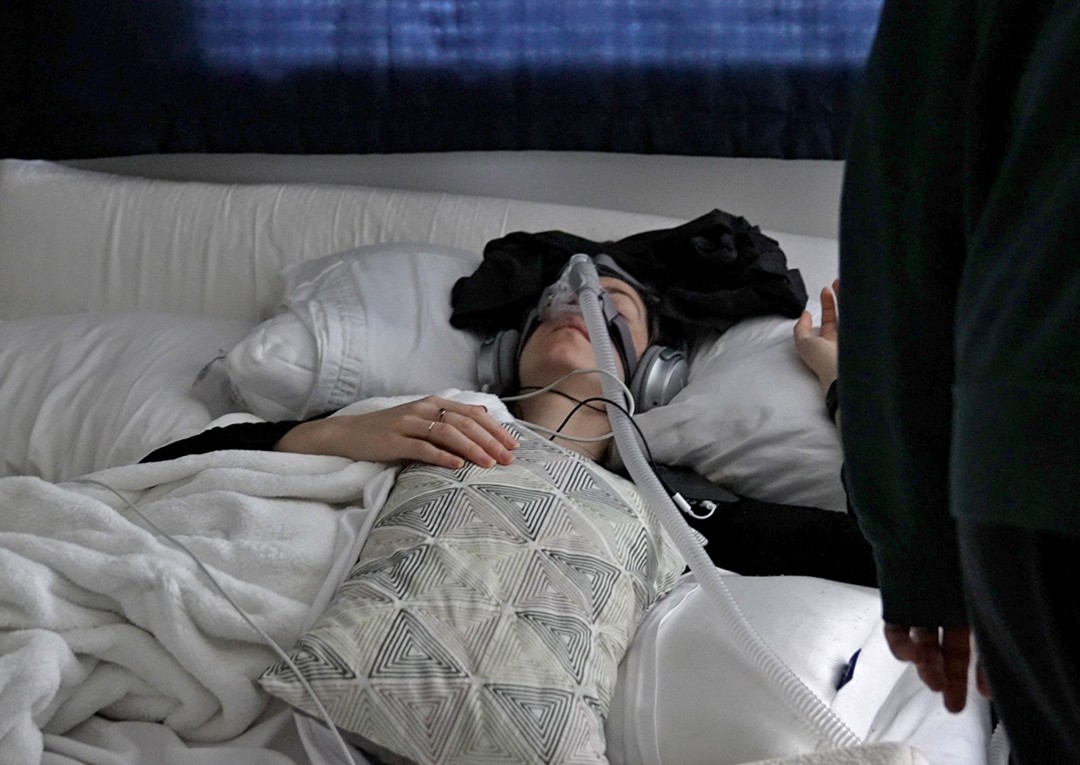
Dianna Cowern, known to millions of subscribers as the “Physics Girl,” built her career on making complex science accessible and exciting. Her on-screen energy was matched by an active lifestyle of surfing, snowboarding, and hiking. She was the picture of health and intellectual curiosity.
Then, in 2022, she disappeared from public view. For two years, her popular YouTube channel was silent, leaving millions of subscribers without an explanation.
When she finally returned to YouTube in a recent video, it wasn’t with a new physics experiment. It was with a raw, difficult account of her two-year battle with Myalgic Encephalomyelitis/Chronic Fatigue Syndrome (ME/CFS), a debilitating condition triggered by a COVID-19 infection. Her story is not just about a personal health crisis; it’s a critical look at a poorly understood condition affecting millions.
How Pushing Through Sickness Led to a Two-Year Shutdown
Dianna’s illness began after a COVID-19 infection, but a single decision made it dramatically worse. Despite feeling increasingly sick, she pushed her body to its limit to finish producing one last video. This act of overexertion is what she says triggered a total system crash, landing her in bed for weeks and ultimately leading to a two-year period of severe illness.
This severe worsening of symptoms after even minimal physical or mental effort is the defining characteristic of ME/CFS, known as Post-Exertional Malaise (PEM). For Dianna, the consequences of pushing through were immediate and life-altering. Her condition deteriorated from feeling unwell to being completely incapacitated.
In her own words, she described a wall of symptoms that took over her life:
- Post-exertional malaise: The primary symptom was being “unable to get out of bed for a few weeks after I pushed to finish my last YouTube video.”
- Severe exercise intolerance: Her body could no longer handle basic activity. She became “dizzy and nauseous if I walk more than 10 mins a day.”
- Cognitive dysfunction (brain fog): Her sharp, scientific mind was severely impaired. She described the inability “to process any scientific papers,” simple mistakes like “spelling cancel ‘cansul’ in an email,” and losing her place in the middle of a sentence.
- System-wide issues: The illness affected her entire body, causing “extreme fatigue, sleeping like a teenager, breathlessness, digestive issues, [and] chest pain.”
The result was two years of near-total incapacitation. Dianna was confined to her bedroom, often unable to do more than lie in the dark. At her worst, her brain couldn’t handle basic stimulation. She recalls months where she was unable to process the sight of birds outside her window—not because she couldn’t see them, but because her brain was too exhausted to interpret what she was seeing.
ME/CFS and Long Covid: Understanding the Medical Reality
Dianna’s story puts a spotlight on a condition that, while not new, has become a growing public health crisis since the COVID-19 pandemic. Myalgic Encephalomyelitis/Chronic Fatigue Syndrome (ME/CFS) is a complex, multi-system disease that has long been known to follow viral infections. Now, a significant number of Long Covid patients are developing symptoms that meet the criteria for an ME/CFS diagnosis.
Dr. David Kaufman, an ME/CFS specialist featured in Dianna’s video, confirms this trend. “It’s no surprise to those of us who do this work that Covid has led to a tsunami of post-infectious fatiguing syndrome which is Long Covid,” he stated.
The numbers highlight the scale of the issue. According to Dr. Kaufman, while there are an estimated three million people in the U.S. diagnosed with ME/CFS, the pandemic has created a much larger wave of illness. He projects that the number of people with Long Covid could be ten times that figure.
This is not simply a matter of lingering tiredness. ME/CFS is a debilitating illness characterized by the body’s inability to produce energy correctly at a cellular level. It affects multiple organ systems, including the nervous and immune systems. For patients, this means that rest does not always restore energy, and exertion—both physical and mental—can make them much sicker, as seen in Dianna’s case. Currently, there is no single approved cure, and treatment focuses on managing symptoms and, most importantly, avoiding the “push-crash” cycle of Post-Exertional Malaise.
Grieving a Lost Identity on the Slow Path to Recovery
Beyond the physical symptoms, a profound part of Dianna’s struggle has been the loss of her identity. The illness didn’t just take her health; it took away the activities that defined her life outside of her work.
“My favorite activities outside of making videos were surfing, snowboarding, hiking, running, everything active, and I can’t do that now,” she reflected in her video, adding that seeing other people out walking or running could make her feel depressed. This is a common experience for those with ME/CFS—a grieving process for the person they used to be and the life they used to lead.
Her recovery, while hopeful, is not a simple return to her old life. It is a slow, precarious, and ongoing process. After two years of being almost entirely bedbound, recent progress—like being able to walk outside her home again or process the visual information of birds outside her window—feels monumental. These are not miracles, but hard-won milestones achieved through disciplined, radical rest.
This new phase brings its own challenges, not just for Dianna but for her husband, Kyle Kitzmiller. After years as her full-time caregiver, her newfound mobility is a significant adjustment. He admits that seeing her active again can be unsettling, sharing, “You still scare me around the house sometimes ‘cause I’m not used to you being up.” Reflecting on the toll of the past two years, he added, “I’m coming back out of something that was really awful and prolonged.” Their experience shows that recovery isn’t a finish line, but a constant process of managing a new, fragile normal.
What You Can Do: Support for Loved Ones and Tips for Your Health
Dianna’s experience is a powerful reminder of how quickly a life can be altered by post-viral illness. For many watching her story, the immediate questions are: “How can I help someone going through this?” and “How can I protect my own health?” Here are some practical steps.
The role of Dianna’s husband, Kyle, shifted from partner to full-time caregiver, highlighting how essential a strong support system is. If someone in your life is struggling with ME/CFS, Long Covid, or another chronic condition, your help can make a significant difference.
- Listen and believe them: Many patients with invisible illnesses are not taken seriously. The most important first step is to validate their experience. Understand that their symptoms are real, even if they look “fine” on the outside.
- Understand rest is non-negotiable: For a person with ME/CFS, “rest” is not about relaxation; it is a vital medical treatment to avoid Post-Exertional Malaise (PEM). Pushing them to be more active can make them severely worse. Respect their energy limits, which can change from day to day.
- Offer specific, practical help: The question “How can I help?” can be overwhelming for someone who is sick. Instead, offer concrete assistance. Try saying, “I’m going to the grocery store, send me your list,” or “I’ve made extra soup, can I drop some off?” This removes the burden of coordinating from them.
- Help reduce their isolation: Being housebound or bedbound is incredibly lonely. Send a text that doesn’t require a long response. Offer to come over and just sit with them quietly. A small connection can break up a long, difficult day.
Protecting Your Own Health
Dianna’s story provides a crucial lesson about the dangers of “pushing through” sickness.
- Take viral infections seriously: The most effective way to prevent a post-viral illness is to avoid getting sick in the first place. When viruses like COVID-19 or influenza are circulating, take sensible precautions.
- Prioritize aggressive rest when sick: Our culture often praises “powering through” an illness. Dianna’s experience shows the potential cost of this mindset. If you get a viral infection, the most important thing you can do for your long-term health is to rest as much as possible. This allows your immune system to do its job effectively.
- Pace your return to activity: After you recover from the main symptoms of a virus, ease back into your normal routine slowly. Do not jump straight back into intense workouts or a heavy work schedule. Listen to your body—if you feel exhausted after light activity, it’s a sign you need more rest.
The Urgent Message Beyond the Screen
When Dianna Cowern returned to her YouTube channel, viewers saw a different person from the one they remembered. The energetic science presenter was gone, replaced by a woman speaking carefully from her couch, managing her limited energy to deliver a message she felt was more critical than any physics lesson.
She has made her new purpose clear. “I want people to know about this disease,” she stated in her video. “I want them to know how bad it can get and why it’s so urgent for people to know about the disease and for research to happen.”
Her story is a clear and powerful case study for a health crisis that continues to unfold in the wake of the pandemic. It demonstrates that severe, disabling post-viral illness can happen to anyone, regardless of their previous health or activity level. For the millions of people who have had their lives put on hold by ME/CFS and Long Covid, a lack of awareness in the public and medical community makes a difficult situation much harder.
Dianna Cowern once used her platform to explain the fundamental forces of the universe. Now, she is using it to illuminate the reality of a disease that has disabled millions. Her message is a direct call for greater awareness from the public, better education within the medical community, and an urgent increase in research funding. The suffering is real, the number of patients is growing, and the time for action is now.
Featured Image Source: Dianna Cowern, The Physics Girl on Instagram
