
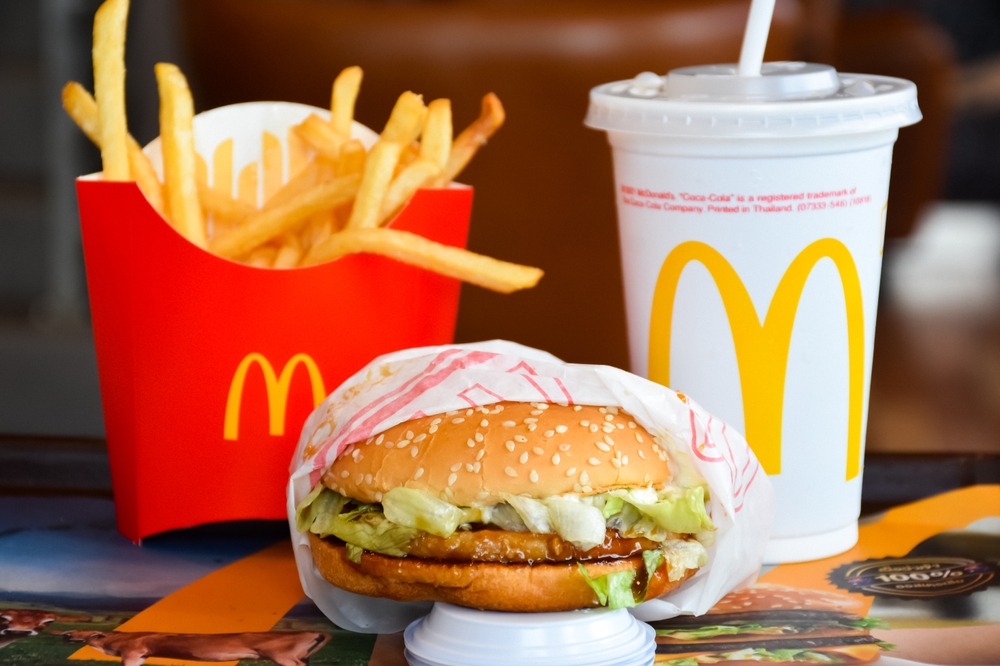
It’s the taste that has fueled arguments in car rides, cravings in lunch breaks, and even TikTok fan theories: McDonald’s Coke just hits different. You could pour Coke from a bottle into a cup, add some ice, and it still wouldn’t come close. There’s something almost alchemical about that first sip through the striped straw cold, bubbly, sharp, and borderline addictive. Fans swear it’s not just nostalgia or the thrill of the golden arches, but actual science that makes it so perfect. And, for once, science agrees.
Researchers, engineers, and soda scientists have cracked the fizzy mystery. The explanation lies in physics, chemistry, and some serious beverage dedication from McDonald’s. Turns out, the fast-food giant doesn’t just follow Coca-Cola’s playbook it rewrote it, perfecting every step from water quality to straw width. This isn’t an accident. It’s a carbonated symphony engineered to perfection, proving that sometimes, the world’s simplest pleasures come from the most sophisticated science.
The Sparkling Science of Perfection
At the core of McDonald’s superior soda experience is something called Henry’s Law, a cornerstone of chemistry that governs how gases dissolve in liquids. In simple terms, it explains why colder water holds carbonation better than warm water. Brown University professor Roberto Zenit, one of the world’s leading experts on carbonation, told The Huffington Post that the secret lies in McDonald’s use of filtered, pre-chilled water. This is no small thing most restaurants just use tap water straight from the main line. McDonald’s, though, chills its water to a precise temperature before it even hits the dispenser.
That temperature control matters more than you might think. According to Henry’s Law, the solubility of carbon dioxide (the fizz in your Coke) is directly proportional to pressure and inversely proportional to temperature.

The colder the water, the more CO2 can dissolve which means a bubblier, crisper, more refreshing drink. The result is a Coke that fizzes like a firework and stays that way longer, even when your fries have gone cold.
Beyond physics, there’s psychology. Cold temperatures also numb bitterness and amplify the perception of sweetness. So, while you’re technically sipping the same formula of Coke as you would anywhere else, the icy perfection of McDonald’s mix tricks your brain into tasting something smoother and more balanced. It’s not magic. It’s thermodynamics with a cherry on top.
Filtered, Chilled, and Perfected: The Water That Makes It Work

Water makes up nearly 90 percent of a fountain drink, which means that any imperfections from minerals to chlorine can wreck the flavor. Most restaurants rely on municipal tap water, but McDonald’s takes no such chances. As food scientist Abby Thiel explained to Parade, McDonald’s filters its water multiple times to remove chlorine, iron, and other compounds that cause off-flavors. They’ve essentially engineered their own neutral canvas pure H₂O, devoid of any interference so that the Coke syrup can shine exactly as Coca-Cola intended.
Even more impressive, the filtered water is not just pure but cold. It’s pre-chilled before entering the soda fountain, keeping the entire system cool and consistent. Think of it as the beverage equivalent of a climate-controlled art gallery. The Coke syrup and the carbonated water meet under perfect, frosty conditions, locking in that crisp sparkle right before it hits your cup.
This precision goes beyond science it’s company philosophy. McDonald’s adheres to Coca-Cola’s strict fountain guidelines but adds its own obsessive twist. Every machine is calibrated to deliver a consistent ratio of syrup to water across every location, from Times Square to Tulsa. In short, you’re not drinking luck you’re drinking precision engineering, filtered through a golden arch.
The Stainless Steel Secret: Freshness by Design

Here’s where McDonald’s truly separates itself from the rest. Most fast-food restaurants receive their Coke syrup in plastic bags functional but far from ideal. McDonald’s, however, insists on stainless steel tanks. This might sound like overkill, but those tanks are the unsung heroes of freshness. They protect the syrup from air, light, and temperature fluctuations, which can degrade flavor over time.
As a result, McDonald’s syrup tastes exactly as Coca-Cola’s chemists designed it to: sweet, balanced, and just the right amount of tangy. The stainless steel also helps regulate temperature, keeping the syrup cool and preventing microbial growth. Combine that with pre-chilled water, and you get a flavor that’s fresher, sharper, and truer than anything stored in plastic.
There’s also a sensory advantage. Cold liquids hold carbonation longer and taste smoother, which means the moment you take that first sip, you’re getting a drink that’s been protected, chilled, and balanced for optimal refreshment. It’s like the difference between drinking wine from a plastic cup versus a crystal glass same liquid, wildly different experience.
The irony? Most people think McDonald’s just happens to pour Coke well. In reality, the company has quietly built a beverage ecosystem designed to deliver that exact illusion a casual perfection that feels effortless but is anything but.
The Golden Ratio: Syrup, Ice, and the Flavor Formula

Of course, water and syrup alone don’t explain the magic. The real key lies in the ratio. McDonald’s uses a slightly higher syrup-to-water mix than most places. The reason is simple: ice melts. When you pour a drink over ice, that frozen water inevitably dilutes your beverage. McDonald’s scientists (yes, they exist) compensate for that dilution ahead of time, ensuring that your first sip and your last taste equally satisfying.
This means the Coke you get straight from the tap at McDonald’s is slightly more concentrated than standard fountain soda. That’s why it seems so full-bodied and flavorful, even after sitting for a while. You could call it overengineering. McDonald’s would call it customer satisfaction science.
Even the way the drink is mixed contributes to the sensory appeal. The syrup and carbonated water combine at the moment of pouring, not beforehand. That instant mix ensures the freshest possible carbonation you’re basically drinking a brand-new Coke every single time. For comparison, bottled sodas are mixed, sealed, shipped, and stored for weeks before you open them. By the time you take a sip, much of that initial zing has faded. McDonald’s fountain system resets that clock to zero every pour.
So when you feel like that Coke hits harder, you’re right. You’re tasting a perfectly engineered concentration of sweetness, fizz, and cold a formula designed to defy the laws of soda entropy.
The Straw That Rules Them All

Now to the most surprising part of all: the straw. It sounds ridiculous, but it’s true. McDonald’s straws are slightly wider than normal by about 0.02 inches. That tiny difference changes everything about the experience of drinking Coke. The wider opening allows more liquid and carbonation to hit your tongue at once, amplifying both the flavor and the fizz. McDonald’s once cheekily said that the design was intentional, so “all that Coke taste can hit your taste buds.” And they weren’t joking.
From a sensory standpoint, the straw changes how you perceive temperature and texture. The burst of cold soda rushing across a wider surface area creates a more intense, satisfying sensation. It’s not just about drinking it’s about feeling the drink. That fizzy tickle on your tongue? That’s carbonation doing its job, triggering the same pain receptors in your brain that respond to spicy food. Professor Zenit calls it a “mildly irritating effect,” one that our strange species happens to love. Dogs and horses won’t touch carbonated water. Humans can’t get enough of it.
That wider straw also helps sustain the illusion of freshness. Because you get more carbonation with each sip, your brain registers it as fizzier, even when the actual bubbles are beginning to fade. In other words, McDonald’s found a way to hack human perception using nothing more than physics and a piece of plastic tubing.
Why McDonald’s Coke Feeds Our Obsession

There’s a cultural angle to all of this, too. For many, grabbing a Coke from McDonald’s isn’t just about thirst it’s ritual. It’s the daily dose of comfort, the familiar chill of something that hasn’t changed in decades. Fans online call it their “liquid peace,” a small moment of control in chaotic lives. TikTok is flooded with users documenting their “Diet Coke self-care” routines, with some admitting to near-daily visits for their fizzy fix.
One fan compared the experience to fireworks: “Bottled Diet Coke is like watching fireworks on TV. McDonald’s Diet Coke is the live show.” That’s more than hyperbole. There’s a genuine emotional connection at play a link between the sensory perfection engineered by McDonald’s and the nostalgic comfort of a global icon.
Even former employees confirm that when the fountain machine breaks and customers are handed canned soda instead, the disappointment is immediate. It’s not just about caffeine or sugar. It’s about that signature first sip, that rush of bubbles that tells your brain: everything’s right with the world for at least the next 10 seconds.
But that obsession is now under mild threat. In 2023, McDonald’s announced it will phase out self-serve soda stations by 2032. That means fewer chances to pour your own “perfect” mix, fewer opportunities to refill that oversized tumbler with the elixir of comfort. Fans, predictably, are already mourning the end of an era. Still, as long as McDonald’s keeps their stainless tanks, icy water, and wide straws, there’s no reason the magic should fade.
A Final Sip of Science and Sentiment
So, why does Coke from McDonald’s taste better? Because it is better not in brand, but in process. From filtered water and stainless steel tanks to temperature control, syrup ratios, and the scientifically superior straw, every variable has been fine-tuned to create what might just be the world’s most consistent sensory experience. It’s chemistry at the service of comfort, a small miracle of engineering disguised as fast food.
And maybe that’s why we love it so much. It’s not just the taste vit’s the idea that something so ordinary can be made extraordinary through obsessive attention to detail. McDonald’s Coke isn’t just a beverage; it’s a reminder that perfection can hide in plain sight, humming quietly in a soda fountain behind the counter. Every bubble, every burst of fizz, every icy gulp is the result of human ingenuity meeting everyday joy.
Next time you take that first sip, you can thank Henry’s Law, stainless steel, and a fraction-of-an-inch straw for your happiness. Science didn’t just explain why McDonald’s Coke tastes better—it made sure it always will.
