
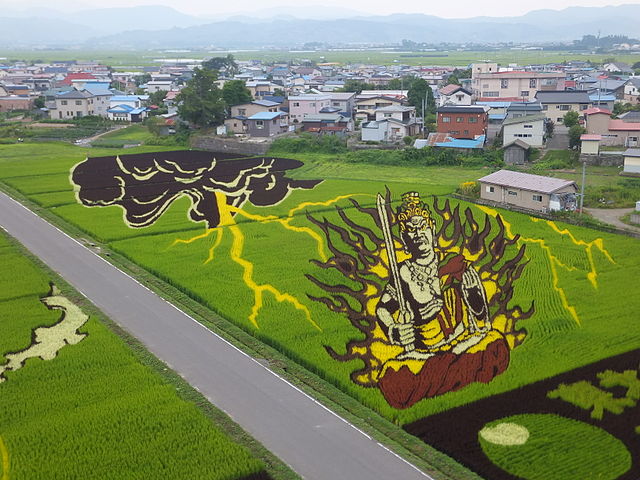
At first glance, the countryside of northern Japan seems peaceful, with endless rows of rice paddies swaying in the summer breeze. But from a single elevated point, an unexpected transformation appears. Shapes emerge, colors align, and what seemed like simple farmland turns into a living canvas. For a few short months, the land itself becomes a gallery of breathtaking seasonal art.
From Quiet Village to International Curiosity
In the northern part of Aomori Prefecture lies the small farming village of Inakadate, home to around 8,000 residents. For most of its history, the community quietly cultivated rice fields, much like any other rural village in Japan. But in the early 1990s, the residents decided to breathe new life into their farmlands.
It all began in 1993, when a local town hall employee, Koichi Hanada, and a small team of volunteers planted rice seedlings of different colors to create a simple design of Mount Iwaki. This first experiment was part of an effort to spark interest in agriculture as the local population began to decline.
Over time, the small project grew into a spectacular annual tradition. By using computer-aided design (CAD), the community perfected the perspective of its living murals, allowing them to create images like the Mona Lisa, Godzilla, and iconic samurai scenes that appear perfectly from above. By the mid-2000s, the village attracted hundreds of thousands of visitors each summer, turning humble rice fields into a global curiosity.
The popularity of these seasonal displays grew quickly. By the mid-2000s, summer exhibitions began drawing well over 200,000 visitors, and in 2006, the famous Godzilla-themed mural alone attracted an estimated 340,000 spectators. What was once a quiet farming village became a seasonal hub of tourism, turning humble rice fields into a global curiosity.
Bringing Japan’s Living Canvases to Life
Creating rice paddy art is a process that blends careful planning, seasonal timing, and community involvement. Preparation begins with smoothing and measuring the fields so that every angle will align with the intended design. This groundwork ensures that the final mural can be appreciated in full from high vantage points.
Once the paddies are ready, early June marks the start of planting. Volunteers, farmers, and children work together, placing seedlings in carefully mapped rows. The fields use seven to ten varieties of rice with leaves in greens, purples, and yellows to form the living palette. On the ground, the paddies appear like irregular color blocks; from the observation towers, they resolve into vivid images of heroes, mythical creatures, or beloved symbols of Japanese culture.
One of the essential parts of the rice paddy art is the timing. Mid-July brings the brightest colors, and by late August, the mural reaches its peak before the harvest clears the fields. As the rice is gathered for food, the artwork vanishes, leaving only memories and photographs behind.
While computer mapping ensures precision, the project thrives on community effort. Each year, neighbors and volunteers collaborate to transform routine farm work into a seasonal celebration that honors both nature and creativity.
Rice Field Art Across Japan
The magic of rice paddy art has spread far beyond Inakadate, inspiring villages across Japan to transform their fields into seasonal galleries. Each region puts its own cultural stamp on the tradition, turning agriculture into an expression of local pride.
In Yuasa, Kyoto Prefecture, the fields feature intricate stencil-inspired patterns that celebrate the region’s natural beauty. These layouts often highlight seasonal flowers, wildlife, and delicate motifs that mirror the rhythm of the countryside. Shingu, in Wakayama Prefecture, embraces its deep spiritual roots. Its murals frequently depict Shinto-inspired imagerysacred symbols, mythological characters, and scenes connected to the ancient Kumano Kodo pilgrimage route. Kagawa Prefecture adds a celebratory energy, using its paddies to showcase colorful depictions of festivals, local landmarks, and community events that bring rural tourism to life.

This expansion has turned rice paddy art into a quiet but powerful cultural movement. It helps preserve agricultural traditions while sparking curiosity in visitors who might otherwise overlook Japan’s countryside. Each mural is also an exercise in sustainability. Made entirely of living rice plants, the artwork leaves no permanent mark on the land. Once the season ends and the harvest begins, the art disappears naturally, and the rice is served at local tables.
In this way, rice field art connects community, tourism, and the environment. It draws travelers to small villages, encourages support for local farmers, and gives residents a sense of pride in their heritage, all while maintaining harmony with the land.
Mindfulness in the Fields: The Wellness of Seasonal Art
Rice paddy art is not just a visual delight; it is also an invitation to embrace a slower, more mindful way of living. Standing on an observation tower and watching the murals ripple in the summer breeze encourages visitors to pause and be present. The fleeting nature of the artwork mirrors the rhythms of life in rural Japan, where each season has its own pace and purpose.
This experience evokes the same sense of calm that comes from meditation in nature. Observing the paddies shift with the wind or glisten under the sun reminds us that beauty does not have to be permanent to be meaningful. The short lifespan of each mural teaches patience and acceptance of change, allowing visitors to fully appreciate the moment before it passes.
The communal aspect of rice paddy art also deepens this sense of connection. Local farmers, volunteers, and schoolchildren come together to create the murals, demonstrating that meaningful work is often shared. Visitors who join planting or harvest events gain firsthand insight into the care and intention that go into each design, reinforcing a bond with the land and the people who cultivate it.
Engaging with rice paddy art in this way nurtures mindfulness, fosters gratitude for seasonal cycles, and offers a rare opportunity to step away from the fast pace of modern life. It is a form of wellness rooted in simplicity, community, and the gentle lessons of nature.
Your Guide to Visiting Japan’s Living Rice CanvasesTips for Experiencing Inakadate’s Rice Paddy Art
Experiencing Inakadate’s rice paddy art is more rewarding when you plan your visit carefully. Follow these tips to enjoy the seasonal murals fully and connect with the local community:

- Visit During Peak Season The murals are most vibrant from mid July to mid August. Visiting during this period ensures the colors are at their brightest. Early June visits let you see the art gradually emerging, while late August risks missing the display as the harvest begins.
- Use the Observation Towers The murals are designed to be seen from above. Inakadate has two primary viewing spots: the Village Office Tower and the Yayoi no Sato Roadside Station Tower. Each tower provides a unique perspective and typically features different annual designs.
- Join Planting or Harvest Events Participate in late May or early June planting activities to gain hands on experience and a deeper appreciation for the art’s creation. In autumn, some programs also allow visitors to join the harvest, completing the full seasonal cycle.
- Plan Your Travel in Advance The village is accessible via Hirosaki Station with connecting local trains or buses, but schedules can be limited. Driving provides flexibility, though parking is scarce during peak weekends. Arriving early is recommended.
- Respect the Fields and Support the Community The rice paddies are functional farmland, not just tourist attractions. Stay on designated paths and platforms to avoid damaging the crops. Consider supporting local farmers by purchasing rice, souvenirs, or handmade goods from nearby markets.
By following these tips, you can enjoy Inakadate’s rice paddy art at its best and leave with lasting memories of rural Japan.
Art That Lives, Breathes, and Disappears
Inakadate’s rice paddy art is the grand finale of Japan’s summer countryside, a fleeting performance where the land itself takes center stage. For a few vibrant months, the rice fields become living murals, capturing the imagination of visitors with colors and patterns that move with the wind. And then, as autumn arrives, the art is gone—harvested into bowls of rice that sustain local families. This cycle of creation and return to purpose is a quiet reminder that true beauty often lives in moments, not permanence.
This conclusion to the journey leaves a lasting impression because it invites both reflection and mindfulness. Watching the designs shimmer under the sun or bend with the breeze slows the mind, offering a break from the constant rush of daily life. It feels like a meditation in motion, encouraging visitors to breathe, absorb the scene, and accept the gentle truth that everything in nature has its season.
Beyond the visual delight, the experience carries a sense of wellness. Immersing yourself in the open countryside, breathing fresh air, and walking through these seasonal landscapes reduces stress and rekindles a connection to the earth. Those who take part in planting or harvesting often describe a feeling of renewal, as if they are leaving a small part of themselves in the fields and carrying home a sense of gratitude and calm.
Inakadate’s rice paddy art ends as quietly as it begins, leaving behind memories instead of monuments. It is more than a seasonal attraction; it is an invitation to live more fully in the present, to honor the work of human hands and the patience of the land, and to carry home the lesson that life’s most powerful moments are often the ones that cannot last forever.
Featured Image from 掬茶 under CC BY-SA 3.0
