
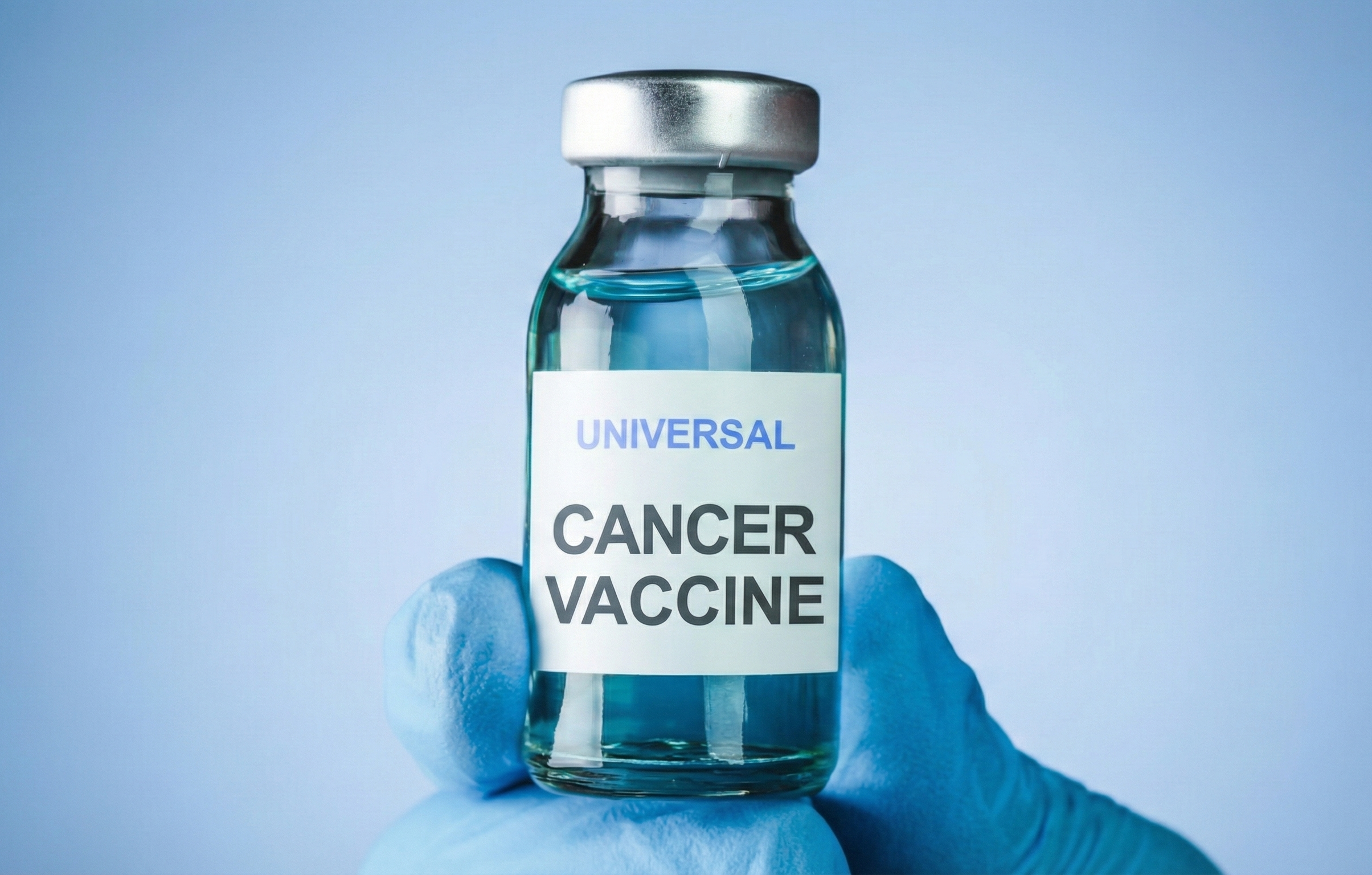
A new kind of cancer vaccine is moving into early human testing, and it is different from what most people picture when they hear the word “vaccine.” Instead of aiming at one specific cancer target, it uses mRNA technology to push the immune system into a more alert, attack-ready state, with the goal of making stubborn tumors easier to treat. The early evidence comes from animal studies, and the next phase will show whether that immune boost can translate into real-world results for patients.
A Third Path for Cancer Vaccines: Broad Immune Activation

Most cancer vaccines in development take one of two approaches. Some target a protein that shows up in many people’s tumors. Others are personalized, built around markers found in one patient’s cancer. Personalized vaccines can be promising, but they can take a long time to make. As Dr. Elias Sayour, a pediatric oncologist at University of Florida Health, said: “It can be months from the time you get a patient’s specimen to when they actually have a personalized therapy.” During that time, a cancer can change, which may make a custom vaccine less effective.
The University of Florida team is testing a different approach: an “off-the-shelf” mRNA vaccine that is not designed to target a specific cancer protein. Instead, it aims to trigger a strong, broad immune response, similar to how the body reacts when it detects a virus. In mouse studies published July 18 in Nature Biomedical Engineering, the vaccine boosted early immune signaling, including type I interferons. These interferons are messengers that help the immune system ramp up quickly and can support the body’s ability to spot and attack abnormal cells.

One reason this matters is that many tumors do not respond well to immunotherapy drugs on their own. In a mouse model of melanoma, the researchers found that pairing the vaccine with a checkpoint inhibitor (specifically a PD-1 inhibitor) produced a stronger anti-tumor effect than the drug alone in treatment-resistant tumors. The team also reported that the vaccine increased PD-L1 activity inside tumors, which may help make some cancers more responsive to checkpoint inhibitors.
Co-author Dr. Duane Mitchell described this as a potential “third” path for cancer vaccines: instead of training the immune system to recognize a specific tumor target, the goal is to broadly activate immune defenses so existing treatments, and sometimes the immune system itself, can attack the tumor more effectively.
Turning “Cold” Tumors “Hot”

In the University of Florida experiments, the “universal” mRNA vaccine was tested in several mouse models, including melanoma (skin cancer), glioma (brain cancer), and pulmonary osteosarcoma (bone cancer that spread to the lungs). The most attention-grabbing result was how well it paired with checkpoint inhibitor drugs, a common type of immunotherapy.
Checkpoint inhibitors, such as PD-1 inhibitors, work by taking the brakes off certain immune cells so they can attack cancer more aggressively. The problem is that many solid tumors are “cold,” meaning they do not naturally draw in many immune cells and often resist immunotherapy. In a melanoma model with treatment-resistant tumors, the vaccine plus a PD-1 inhibitor produced stronger anti-tumor effects than the checkpoint inhibitor alone.
The team also reported encouraging results when the vaccine was used by itself in other solid-tumor models. In some experiments described in the UF report, tumors were eliminated entirely in certain models. Across the work, the vaccine appeared to boost early immune alarm signals, including type I interferons, which help mobilize the immune system quickly. The researchers also observed that this strong immune activation could help previously ineffective T cells multiply and kill cancer cells.
Outside experts see a practical upside if these findings translate to people. Diana Azzam, associate professor and scientific director at the Center for Advancing Personalized Cancer Treatments at Florida International University, told Live Science: “This exciting and novel paper shows promising evidence that giving the immune system a short, targeted boost at just the right time can help previously unresponsive tumors respond to immunotherapy.” She added that it “could be especially helpful for ‘cold’ tumors,” including pancreatic, ovarian, and some types of breast cancer, while stressing that safety and consistency still need to be proven in human studies.
Rebooting the Immune System Response

This vaccine strategy is unusual because it is not trying to “teach” the immune system to recognize one specific cancer marker. Instead, it aims to switch on the body’s early warning system.
The immune system has a fast first layer of defense, often called the innate immune response. It reacts quickly to danger signals, like those seen during viral infections. In the mouse study, the mRNA vaccine was designed to trigger that early response and increase type I interferons. These are immune messenger signals that help rally immune cells and shape a stronger anti-tumor attack.
Why does that matter for cancer treatment? Many tumors avoid immune detection or create a local environment that keeps immune cells inactive. The researchers describe the vaccine’s effect as a way to restart or “reset” that stalled response. In Live Science, study senior author Dr. Elias Sayour described the approach as an immune “reset,” because cancers can disrupt interferon signaling and blunt the immune reaction that should follow.
This immune boost may also make standard immunotherapy work better. Checkpoint inhibitors (like PD-1 inhibitors) help immune cells stay active by blocking signals that normally dampen an immune attack. In the UF work, the vaccine increased PD-L1 activity inside tumors, which may help explain why some tumors became more responsive to checkpoint drugs in mice.
Important nuance: the team tested multiple mRNA formulations that successfully triggered this early immune signaling. They noted more research is needed to pin down what matters most, whether it is the mRNA itself, the protein it instructs cells to make, or both.
Tempering Excitement with Reality

The strongest results so far are from animal studies, not from large human studies. That matters because many cancer treatments that look promising in mice do not work the same way in people, or they come with side effects that only show up in larger trials.
That said, this research program is moving into humans. According to Live Science, Dr. Elias Sayour and colleagues have launched an early human trial that uses a two-step approach: an off-the-shelf mRNA vaccine first, followed by a personalized vaccine. The goal is to buy time and generate a fast immune response while the patient-specific vaccine is being made. The trial is working with patients who have recurrent pediatric high-grade glioma or osteosarcoma.
It is also important not to confuse this “universal” idea with a single shot that prevents every cancer. The concept here is a treatment vaccine, aimed at helping the immune system attack cancers that already exist and potentially helping reduce the risk of a treated cancer coming back. The current research focus is solid tumors, which tend to be more resistant to immunotherapy than many blood cancers.
Safety is a central question as the work moves into people. An immune-activating vaccine must produce a helpful response without causing harmful inflammation over time. Diana Azzam of Florida International University told Live Science that while the mouse results are encouraging, future studies need to answer “key questions around safety, consistency, and long-term effectiveness in real-world cancer patients.”
Bottom line: “entering human trials” signals a meaningful next step, but it does not mean the vaccine is proven, available, or ready to replace standard cancer treatments yet.
A Realistic Outlook Between Breakthrough and Treatment

This “universal” mRNA cancer vaccine idea is getting attention because it may help the immune system notice and fight tumors more effectively, especially when used with today’s immunotherapy drugs. The early results in mice are encouraging, which is why researchers have started testing the approach in people.
For readers, the key is to keep expectations realistic. “Human trials” means the research is still being tested for safety and whether it works reliably, not that it’s ready at hospitals yet. If cancer is part of someone’s life right now, the most helpful step is to bring any vaccine headlines to the oncology team and ask what is relevant to that specific cancer and whether a clinical trial is an option.
Source:
- Qdaisat, S., Wummer, B., Stover, B. D., Zhang, D., McGuiness, J., Weidert, F., Chardon-Robles, J., Grippin, A., DeVries, A., Zhao, C., Marconi, C., Karachi, A., Xie, C., Jobin, G., Liu, R., Michel, S., Ma, X., Moor, R. S. F., Von Roemeling, C., . . . Sayour, E. J. (2025b). Sensitization of tumours to immunotherapy by boosting early type-I interferon responses enables epitope spreading. Nature Biomedical Engineering, 9(9), 1437–1452. https://doi.org/10.1038/s41551-025-01380-1
