
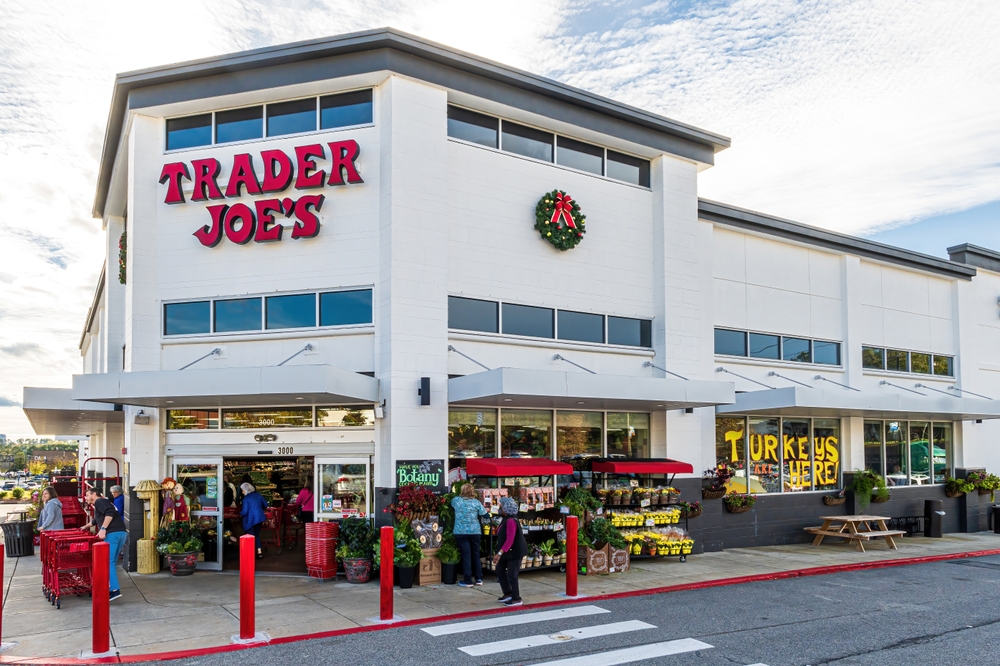
Most of us step into a grocery store without thinking twice about what happens to the food that doesn’t sell. Shelves get restocked, fresh produce rotates in, and we assume the rest simply vanishes into the background. But behind the scenes, massive amounts of food often end up in the trash. In fact, the United States wastes an estimated 30 to 40 percent of its food supply each year, a staggering amount considering millions of families face hunger daily. This paradox of abundance and scarcity has long been a challenge for communities and policymakers alike, raising urgent questions about how we value food and distribute resources. What Trader Joe’s is doing is rewriting this story, showing that even a large grocery chain can turn potential waste into a force for good.
Through its Neighborhood Shares Program, Trader Joe’s ensures that unsold yet perfectly edible food never goes to waste. Instead of ending up in landfills, it’s redirected into the hands of nonprofit organizations that serve communities in need. In 2024, this program resulted in 98 million pounds of food donations, spread across more than 2,000 partners nationwide. The initiative transforms the way we think about food waste, not just as an environmental issue but as a solvable community challenge. By bridging the gap between excess and need, Trader Joe’s is feeding people, supporting nonprofits, and showing what corporate responsibility can look like in action. For families who rely on food banks and meal programs, these donations aren’t abstract statistics — they’re meals on the table, healthier diets for children, and moments of relief in the face of economic hardship.

How the Neighborhood Shares Program Works
Trader Joe’s operates over 590 stores across the United States, and every one of them participates in daily food donations. This consistency makes the program remarkable — it isn’t limited to a pilot project or select cities, but part of the company’s operational DNA. Local nonprofits such as City Harvest, Feeding San Diego, and Table to Table receive everything from fresh vegetables and fruit to bread, dairy, and packaged goods. These organizations then distribute the food to families and individuals who might otherwise go hungry. Because the donations happen daily, the food reaches people quickly, reducing spoilage and ensuring its nutritional value is preserved. Trader Joe’s describes the program as “ever-evolving,” fine-tuned to get food into kitchens as swiftly as possible. In a world where food insecurity is often unpredictable, this reliability provides both consistency and dignity for those who depend on assistance.
Beyond logistics, there’s also a human story that adds weight to the numbers. Workers at both Trader Joe’s and the nonprofits describe the process as a partnership, where store staff feel proud to see unsold products fueling community meals rather than being discarded. For the receiving organizations, this reliable stream of donations strengthens their ability to serve communities consistently, rather than scrambling for intermittent food drives or emergency collections. Families who walk through food pantry doors aren’t just receiving groceries; they’re receiving reassurance that their community values them enough to ensure they don’t go hungry. In this way, the program has become more than a business initiative — it’s a daily practice of care that resonates through neighborhoods and builds trust between institutions and the people they serve.

Why Food Donation Matters
Food waste is more than just a matter of tossing spoiled produce. It represents wasted resources — from the water and energy used to grow, transport, and store food, to the labor invested at every stage of production. When that food ends up in landfills, it decomposes and releases methane, a greenhouse gas far more potent than carbon dioxide. By redirecting its unsold food, Trader Joe’s is actively shrinking its environmental footprint, contributing to climate action in a way that feels tangible and immediate. Each donation made is a dual solution: it puts food on plates while also keeping harmful emissions out of the atmosphere, proving that small adjustments in business models can yield far-reaching environmental benefits.
At the same time, the social need is undeniable. More than 44 million Americans live with food insecurity, meaning they lack reliable access to enough nutritious food to live healthy lives. Programs like Neighborhood Shares not only supply meals but also relieve financial strain for families who can then direct their limited resources toward housing, healthcare, and education. Each bag of apples, loaf of bread, or carton of milk donated becomes more than food — it becomes an act of stability for households under pressure. The impact of this kind of support goes beyond nutrition; it reduces stress, supports children’s growth, and reinforces the sense that communities can care for one another even in difficult times.
Food donation also reinforces the value of dignity. Rather than casting unsold items as “waste,” it reframes them as resources deserving of redistribution. This perspective shift challenges both businesses and individuals to rethink what we consider disposable, and to recognize the inherent worth of food as a shared necessity. For those who receive these donations, there is comfort in knowing that they are not simply getting castoffs, but being included in a cycle of thoughtful distribution that values their place in society. In reframing food waste as opportunity, programs like this one begin to reshape the culture of consumption itself.

The Ripple Effect of Generosity
The ripple effects of Trader Joe’s donations extend far beyond the immediate recipients. When food banks and community kitchens receive steady supplies, they can plan menus, provide more balanced meals, and stretch their budgets further. This stability strengthens entire community support systems, reducing stress on nonprofits that are often underfunded and overextended. In many cases, these donations spark collaborations between organizations, allowing them to pool resources and serve wider networks of people. These ripple effects make the donations far more than temporary relief — they become building blocks of resilience and long-term support structures.
Environmental gains are another ripple. By keeping millions of pounds of food out of landfills, Trader Joe’s helps cut methane emissions that accelerate climate change. This connection between hunger relief and environmental protection reveals how a single action can tackle multiple challenges at once. Generosity, in this case, isn’t just charity — it’s practical, measurable impact that reshapes systems. Every truckload of donated goods reduces pressure on waste facilities, saves municipal resources, and lessens the demand for additional landfill space. These outcomes demonstrate that what is good for people can also be profoundly good for the planet.
There’s also an intangible ripple: inspiration. When people see a company of Trader Joe’s size committing to daily food donations, it sparks conversations about accountability and possibility. It invites other retailers, restaurants, and even households to reconsider their role in fighting food waste and hunger. In this sense, the program plants seeds of change that grow in directions far beyond the stores themselves. It reminds us that generosity is contagious — when one business makes a bold move, others often follow, raising the standard for corporate responsibility across industries. This cultural shift may ultimately prove as important as the immediate impact of the donations themselves.

What We Can Learn from Trader Joe’s
The brilliance of Trader Joe’s model is that it scales down to the household level. While most of us don’t manage supermarket inventories, we do manage kitchens where food often goes uneaten. The same principles that drive the Neighborhood Shares Program — mindful management, redistribution, and valuing food as a resource — can help us rethink our daily habits. Each person has the ability to make choices that reduce waste and support community well-being. By mirroring these practices at home, we not only save money but also contribute to a culture that prizes sustainability and compassion.
Meal planning is one of the simplest but most effective strategies. By knowing what you’ll cook and shop for, you avoid impulse buys that sit unused until they spoil. Storing food properly — in airtight containers, glass jars, or freezer bags — extends its shelf life and gives you flexibility when plans change. And when leftovers pile up, creativity in the kitchen turns them into soups, stir-fries, or baked dishes rather than trash. These actions may seem small, but collectively they echo the very same philosophy behind Trader Joe’s large-scale program: treat food as a resource, not a disposable commodity.
Even unopened pantry items can be redirected by donating them to local food banks before they expire. This practice not only supports neighbors in need but also fosters awareness of how interconnected our lives really are. It challenges us to think about food as more than personal property — as part of a larger community system that thrives when everyone contributes. The key takeaway is that responsibility doesn’t rest solely with businesses. Households are powerful agents of change. Just as Trader Joe’s proves that operational choices can benefit entire communities, our individual practices can create micro-ripples that collectively shift the culture around food waste.
Food Waste Solutions Start with Us
Trader Joe’s commitment to food donations is a striking example of how generosity can be woven into everyday systems. It proves that feeding people and caring for the planet don’t have to be separate goals — they can be achieved simultaneously with practical, consistent action. Their program demonstrates that what once seemed like an unavoidable loss in the grocery business can instead become a source of nourishment, stability, and environmental care. This model not only challenges other businesses to follow suit but also provides a roadmap for individuals who want to live more sustainably.
For the rest of us, the lesson is clear: solutions to food waste begin at home. By valuing food more consciously, sharing what we have, and repurposing what’s left, we contribute to a healthier food system. While one person’s choice may seem small, multiplied across households, communities, and businesses, the impact is enormous. Every portion saved from the trash reduces pressure on the environment, lightens the load on municipal waste systems, and provides opportunities for redistribution to those in need. Trader Joe’s shows us what’s possible on a national scale — the rest of us can carry that spirit into our kitchens, neighborhoods, and everyday lives.
