
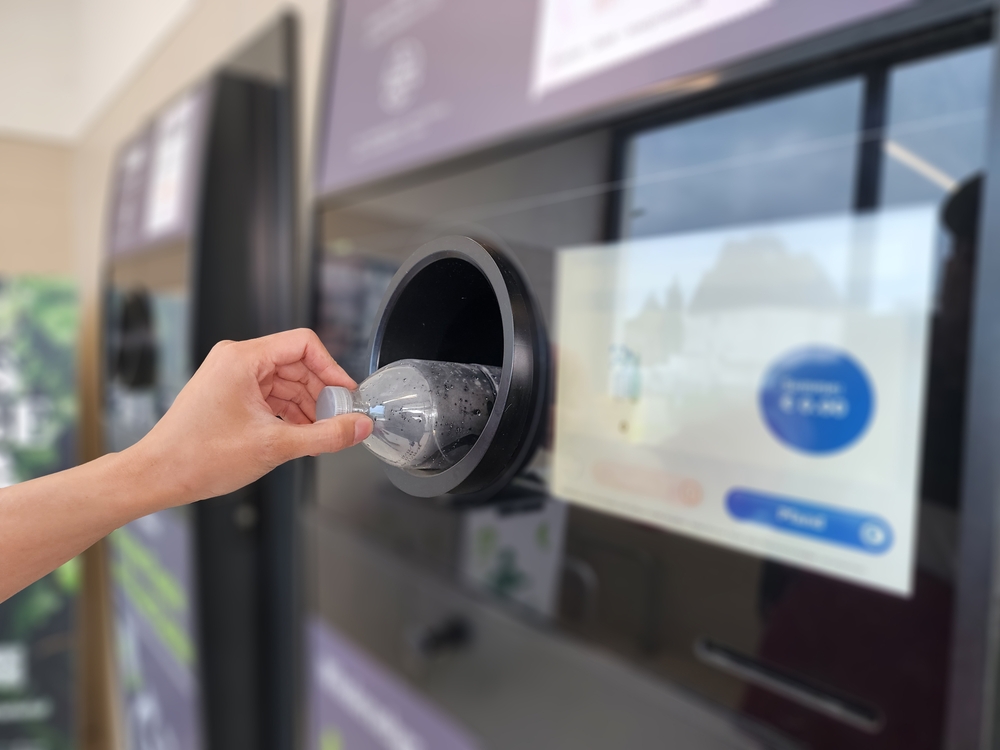
In cities around the world, two problems continue to grow: mounting plastic waste and the rising number of stray animals. Istanbul, where more than 150,000 stray dogs and cats share the streets with residents, faces both issues daily. While governments often respond with costly cleanup efforts or controversial animal control tactics, one Turkish company has taken a different approach—one that’s simple, scalable, and rooted in everyday behavior. By turning plastic recycling into a direct act of compassion, this initiative shows that practical design—not policy alone—can shift how people engage with urban challenges.
This woman selling mini umbrellas shows love to stray cats & dogs & introduces them. She may not have money but is richer than many.pic.twitter.com/kC9FKkkJjU
— Hakan Kapucu (@1hakankapucu) June 19, 2025
A Practical Solution to Two Urban Problems
In Istanbul, a city where an estimated 150,000 stray dogs and cats navigate crowded streets, busy markets, and public parks, a local company has found a simple yet effective way to address two persistent urban challenges: plastic waste and animal welfare. The initiative comes from a Turkish enterprise called Pugedon, which developed “Smart Recycling Boxes”—vending machines that release food and water for stray animals every time someone deposits a recyclable plastic bottle. It’s a low-tech, high-impact idea that links human behavior to community well-being, creating a tangible incentive for people to engage in environmentally responsible habits while also helping some of the city’s most vulnerable creatures.
The machine works in a straightforward but thoughtful way. When a person inserts a plastic bottle into the top of the vending unit, the machine automatically dispenses a portion of dry pet food into a tray at the bottom—right at street level where dogs or cats can easily reach it. There’s also a side compartment with a built-in water bowl, where people can pour out any remaining liquid from their bottle before recycling. This added feature ensures that water doesn’t go to waste and also provides hydration, which is especially critical during Turkey’s hot summers. The cost of the food is covered by the collected plastic bottles, making the system financially self-sustaining. It doesn’t require ongoing charitable funding or public subsidies to function, which means it’s scalable and resilient over time.
This model presents a sharp contrast to how other cities have approached the issue of stray animals. For example, in 2014, Sochi, Russia made international headlines during the Winter Olympics when reports surfaced that stray dogs were being culled to clean up the city’s image for the Games. The backlash was swift and global, with animal rights organizations stepping in and several athletes choosing to adopt dogs and bring them home. That reactive approach focused on removal rather than resolution. Istanbul’s system, on the other hand, integrates strays into the fabric of city life through care and cooperation. It encourages locals to see value not just in discarded plastic, but in the lives of the animals that live among them.
This vending machine in Istanbul dispenses dog food for homeless dogs when people put bottles in for recycling pic.twitter.com/KD7qzVupMf
— know (@Know) September 15, 2014
Why Istanbul Needed an Innovative Approach
Istanbul’s stray animal population isn’t a recent development—it’s the result of decades of urbanization, limited enforcement of pet ownership laws, and cultural dynamics that make the city unique. Unlike many cities that have criminalized feeding or housing stray animals, Istanbul has a long-standing tradition of coexisting with them. Street dogs and cats are a normal part of daily life, often cared for informally by shopkeepers, residents, and even local government agencies. But despite this cultural tolerance, the sheer number of animals living without consistent access to food, water, or veterinary care creates ongoing public health concerns, ethical questions, and logistical challenges for city planners.
Traditional responses to the issue—such as sporadic feeding drives or local neutering campaigns—have proven insufficient to manage such a large and mobile population. While trap-neuter-return (TNR) programs are in place, they require ongoing coordination and funding, and they don’t immediately address the daily survival needs of animals still living on the streets. Moreover, waste management remains a separate but equally pressing concern in Istanbul. Plastic pollution is widespread, and the city’s infrastructure has struggled to keep up with rising consumption and insufficient recycling compliance.
Pugedon’s vending machines offer a rare example of a solution that intersects two seemingly unrelated issues and makes participation easy and visible. Unlike campaigns that rely on posters, education, or enforcement, these machines give people an immediate way to contribute to the well-being of their city—both by reducing litter and helping animals. The visibility of the machines in public spaces also serves as a constant, quiet reminder that small actions—like choosing where to toss a plastic bottle—can have ripple effects that go beyond personal convenience.
What makes this approach particularly effective is that it removes the friction that often comes with civic engagement. There’s no need to sign up, donate, or commit time—just recycle. For a city as busy and densely populated as Istanbul, that kind of seamless integration into daily life is critical. It’s not just about feeding animals or promoting recycling; it’s about building a civic habit that feels natural, not forced.
These recycling machines in Istanbul leave food for homeless animals when one drops a plastic bottle in to recycle pic.twitter.com/jaikQeQyR4
— 9GAG ❤️ Memeland (@9GAG) July 29, 2015
The Role of Design in Driving Behavior Change
The success of Pugedon’s Smart Recycling Boxes isn’t just about what they do—it’s about how they do it. These machines tap into a basic principle of behavioral science: people are more likely to take positive action when the process is easy, immediate, and rewarding. In this case, the act of recycling a bottle is instantly met with a visible outcome—food dropping into a tray for a stray animal. It creates a clear, satisfying connection between personal behavior and community benefit. That’s a powerful motivator, especially in busy public environments where attention is limited and decisions are made quickly.
This type of design is often called a “nudge”—a subtle change to the environment that influences behavior without requiring mandates or restrictions. In contrast to policies that rely on enforcement or guilt to encourage environmental responsibility, these machines invite participation through convenience and direct impact. There’s no complicated interface, no learning curve, and no need to interact with the machine beyond dropping in a bottle. It takes less time than throwing the same bottle into a regular trash bin, yet the result feels meaningful.
Moreover, the design appeals to emotional as well as practical instincts. Watching a stray animal eat or drink immediately after you’ve deposited a bottle makes the effect tangible and personal. This is different from traditional recycling programs, where the benefit—like less landfill waste or lower emissions—feels abstract and distant. By localizing the outcome, these machines make environmental responsibility feel urgent and visible. That matters, especially in urban settings where people often feel disconnected from the results of their actions.
Importantly, this behavioral model is replicable. Cities around the world are looking for low-cost, scalable ways to engage citizens in environmental and social good. By combining good design with local needs, Pugedon’s vending machines show that it’s possible to influence public behavior without expensive campaigns or high-tech solutions. It’s a reminder that sometimes, solving big problems starts with rethinking something as small as where a plastic bottle goes.
WATCH: A vending machine in Ukraine's Kyiv has been reinvented to provide stray animals in the city with food. Locals drop off plastic for recycling and receive food for animals pic.twitter.com/ywFcZWJv73
— Reuters (@Reuters) November 29, 2020
Practical Tips for Everyday Action
You don’t need to live in Istanbul—or have access to a specialized vending machine—to apply the same principles in your own community. The underlying idea behind the Smart Recycling Box is simple: small, consistent actions can contribute to bigger systemic change when they’re made easier and more meaningful. Here are a few concrete ways to adopt that mindset in your daily life:
1. Make recycling frictionless. Keep a recycling bin in a spot that’s more convenient than your trash can—by the front door, near your desk, or in your car. The easier it is to do, the more likely you’ll do it consistently. Don’t underestimate the power of physical setup to drive habits.
2. Pair tasks with visible outcomes. Whether it’s donating used clothes to a local shelter or dropping food at a community fridge, choose actions where you can clearly see who or what benefits. That sense of visible impact reinforces motivation and helps turn good intentions into regular behavior.
3. Support local humane efforts. Many cities have underfunded animal welfare programs that rely on volunteer help or donations. If you can’t adopt or foster a pet, consider supporting a local spay/neuter clinic or food drive. You’re helping reduce stray populations at the source.
4. Talk about small wins. People are more likely to follow behavior they see modeled. Share when you do something helpful—without overplaying it. Mentioning that you dropped off recyclables or gave water to a street animal helps normalize those choices in your social circles.
5. Rethink your own “waste.” The Pugedon machines prove that what’s discarded by one person can become valuable to another—in this case, plastic for food. Apply that logic elsewhere. Extra leftovers, used containers, even old towels can be repurposed for shelters or mutual aid groups. It’s not about doing everything—it’s about doing something consistently.
Small actions may seem insignificant, but when they’re made visible, easy, and habitual, they create lasting change. The key is to integrate them into your routine so they don’t feel like a chore—and that’s exactly what makes initiatives like Istanbul’s vending machines so effective.
What This Teaches Us About Community-Driven Change
The Smart Recycling Boxes in Istanbul do more than feed stray animals and reduce plastic waste—they offer a model for how urban communities can take part in solving complex problems without relying on top-down interventions. What makes this initiative stand out is that it doesn’t ask people to change their lifestyle; it simply redirects a routine action (tossing a bottle) toward a better outcome. That kind of small but strategic shift is often what makes public programs succeed or fail.
This approach sidesteps the usual bottlenecks that slow down social impact—bureaucracy, lack of funding, and poor public engagement. Instead, it relies on decentralized action and visible rewards. No one has to enforce compliance, monitor participation, or run outreach campaigns. People engage because the value is immediate, both emotionally and practically. And that creates a feedback loop: more engagement leads to better outcomes, which in turn encourages more people to participate.
At its core, this is a reminder that change doesn’t always require grand infrastructure or complex policy. Sometimes, it starts with meeting people where they already are—on the street, bottle in hand—and offering them a better alternative. The fact that one plastic bottle can provide a stray animal with a meal reframes how we think about responsibility and impact.
For cities, planners, and individuals alike, the takeaway is clear: don’t underestimate the power of design that aligns social good with everyday behavior. When systems are built to reward small acts of care, communities don’t need to be pushed—they step up naturally. This isn’t just a story about a clever machine in Istanbul. It’s a blueprint for how we can make compassion and sustainability part of daily life—one small action at a time.
