
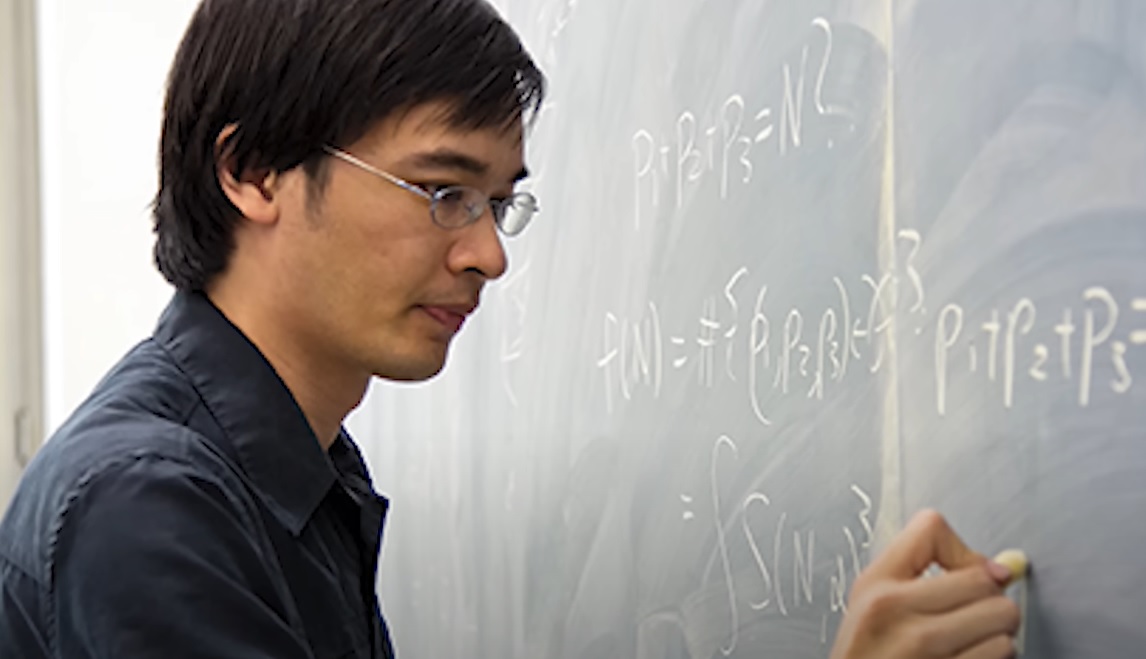
Imagine a mind so powerful it could unravel the mysteries of the universe, devise groundbreaking theories, or pioneer innovations that reshape human understanding. Intelligence, that elusive quality behind such feats, has captivated human curiosity for centuries. But how do we measure something so profound? Enter the IQ test—a tool designed to quantify mental ability, sparking both intrigue and debate.
Throughout history, individuals with extraordinary IQs have fascinated society, earning titles as record-breakers and becoming symbols of human cognitive potential. From Marilyn vos Savant, known for her Guinness World Record IQ of 228, to prodigies like William James Sidis, humanity has always sought to define and celebrate intellectual greatness. In 2025, this conversation revolves around one name: Terence Tao. Often referred to as the “Mozart of Math,” Tao is recognized as the individual with the highest IQ in the world, estimated at a staggering 230.
The History of IQ Records
Humanity has long celebrated intellectual brilliance, associating it with innovation, progress, and groundbreaking achievements. Figures like Albert Einstein and Leonardo da Vinci have inspired generations, even though their intellects were never quantified through modern IQ tests. As our understanding of intelligence evolved, so did the methods for measuring it, leading to the development of IQ tests in the early 20th century by pioneers such as Alfred Binet and Theodore Simon.
The concept of the “highest IQ” gained traction as individuals began achieving scores that defied expectations. Marilyn vos Savant, for example, became a household name when her IQ of 228 earned her a Guinness World Record. William James Sidis, often speculated to have an IQ between 250 and 300, remains an enigma in the world of intellectual legends. These stories captivated the public, showcasing the extremes of human potential and sparking debates about the nature of intelligence itself.
Organizations like Mensa and the Giga Society emerged to provide platforms for those with exceptional IQs. The Giga Society, in particular, set a nearly insurmountable bar for entry, accepting only those whose IQs fall in the top 0.0000001% of the population. These organizations have helped to validate and celebrate intellectual achievements, paving the way for discussions about figures like Terence Tao and their extraordinary cognitive abilities.
While IQ records continue to amaze, they also prompt deeper reflection. Can intelligence truly be measured by a single number? And how do we differentiate between intellectual potential and the practical application of genius? As we move forward, these questions remain central to our understanding of intelligence and its significance.
Terence Tao, the “Mozart of Math”

In the realm of extraordinary intelligence, one name consistently shines above the rest: Terence Tao. Widely recognized as the individual with the highest IQ in the world, Tao’s intellect has earned him the nickname “Mozart of Math.” His IQ, estimated at 230, places him in a cognitive stratosphere shared by only a handful of individuals in human history.
Born in Adelaide, Australia, in 1975, Tao displayed remarkable intellectual abilities from a very young age. By the age of two, he was solving advanced mathematical problems, and by the time he was nine, he was taking college-level courses. His precocious talents earned him a Ph.D. in mathematics at just 20 years old, and he quickly rose to prominence as one of the most influential mathematicians of his generation.
Tao’s work spans a vast array of mathematical disciplines, including number theory, algebraic geometry, and harmonic analysis. His groundbreaking research has led to significant advancements in fields that many find nearly incomprehensible. However, what sets Tao apart is not just his raw intelligence but also his ability to communicate complex ideas with clarity and humility. His approachable demeanor and dedication to teaching have inspired countless students and professionals worldwide.
Despite his unparalleled intellect, Tao remains grounded, often emphasizing the importance of hard work and collaboration in achieving success. His recognition as the 2025 IQ record-holder is a testament not only to his cognitive abilities but also to the profound impact he has made on the mathematical community and beyond. Terence Tao’s story is a reminder that intelligence, when paired with purpose and passion, can lead to extraordinary achievements that benefit the world.
How IQ is Measured: The Rigorous Process Behind the Record
Determining who holds the title of the highest IQ in the world is no small feat. Intelligence quotient (IQ) tests are designed to assess cognitive abilities, including problem-solving, reasoning, and abstract thinking. However, for individuals like Terence Tao, whose abilities far surpass the average population, traditional IQ tests are often insufficient. Instead, specialized tests tailored to measure ultra-high levels of intelligence are used.
Organizations like the Giga Society play a key role in this process. Known for its stringent entry requirements, the Giga Society only admits individuals whose IQ falls in the top 0.0000001% of the population—an intellectual elite so rare that only a handful of people qualify worldwide. Tests administered by the society focus on advanced problem-solving skills, pattern recognition, and abstract reasoning that challenge even the brightest minds. These tests are peer-reviewed and independently verified to ensure accuracy and reliability.
For Terence Tao, his estimated IQ of 230 reflects not just his exceptional problem-solving ability but also his capacity to think abstractly across multiple disciplines. Such a score is rare and almost impossible to achieve without extraordinary mental agility. It’s important to note, however, that IQ tests measure only a specific subset of intellectual abilities. They cannot fully capture qualities like creativity, emotional intelligence, or practical problem-solving, all of which contribute to the broader understanding of intelligence.
The process of testing and validation is rigorous to prevent any margin of error. Candidates often undergo multiple assessments to confirm the consistency of their scores. In Tao’s case, his IQ score is not just a number but a reflection of his lifelong dedication to intellectual growth and his ability to apply his intelligence in groundbreaking ways. This rigorous measurement process ensures that the title of the highest IQ is both meaningful and accurate, celebrating the true extent of human cognitive potential.
Intelligence Beyond the Numbers

The recognition of Terence Tao as the highest IQ record-holder in 2025 serves as a powerful reminder of the extraordinary capabilities of the human mind. His unparalleled intellect and groundbreaking contributions to mathematics showcase how high intelligence, when paired with purpose and dedication, can have a profound impact on the world. Yet, Tao’s story is more than a celebration of cognitive ability—it prompts us to reconsider what intelligence truly means and how it is applied.
While IQ tests provide a fascinating glimpse into cognitive potential, they represent only one dimension of human intelligence. Creativity, emotional understanding, resilience, and the ability to collaborate are equally vital in shaping progress and innovation. Tao’s humility and commitment to teaching exemplify the idea that intelligence is not just about what one can achieve individually but also about the knowledge and inspiration shared with others.
As we continue to explore the complexities of intelligence, one thing is clear: it is not just a number that defines greatness but the actions and contributions that follow. Tao’s legacy stands as a testament to the potential within each of us to use our unique abilities to make a meaningful difference in the world. His story encourages us to celebrate not only those with extraordinary IQs but also the diverse talents that drive humanity forward.
Featured Image Source: Simons Foundation on YouTube
