
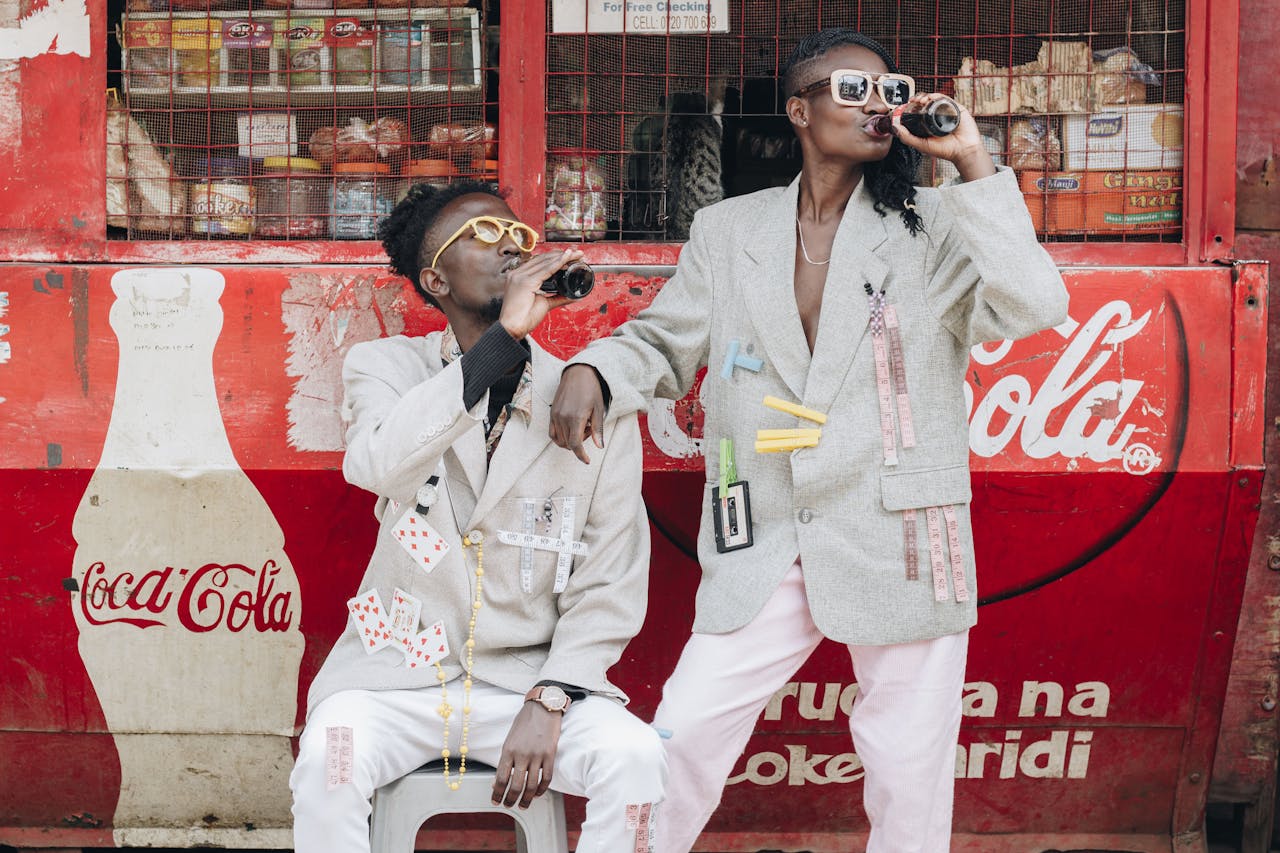
Coca-Cola’s red and white script is one of the most recognizable logos in the world. Beyond its familiar look, branding experts point out that the design may include a subtle feature many people overlook. The second “C” in the word Coca-Cola is shaped in a way that resembles a faint smile. According to experts, this curve is thought to reflect the company’s long association with joy and positivity.

In this article, we examine that claim, explore why some remain skeptical, and highlight how other global brands have built hidden messages into their logos to strengthen consumer connections.
Expert Insights on the “Smile” in Coca-Cola’s Logo
Logos are more than design choices. They often influence how people perceive a brand, even on a subconscious level. Richard Lau, president of LOGO.com, explains that logos play a central role in connecting companies with their audiences. As he puts it, “Businesses cannot overlook the value a great logo holds; they are the connection between a company and potential customers, and what customers will remember most.”
In the case of Coca-Cola, Lau draws attention to the second “C” in the script. Its elongated curve is believed to resemble a smile, a detail he says “subconsciously reflects Coca-Cola’s emphasis on happiness and joy.” He adds, “This subtle message may go unnoticed, but it subconsciously creates a positive association with the brand in the minds of consumers.”

This interpretation fits into Coca-Cola’s long-running emphasis on joy and refreshment. Campaigns such as “Open Happiness” and its widely recognized holiday ads featuring Santa Claus explicitly associate the drink with positive emotions. The supposed smile in the logo works more quietly, providing reinforcement without drawing direct attention. Reader’s Digest also notes that “many people believe the ribbon-like extension on the first ‘C’ acts as a smiling flourish,” which further strengthens the connection between the logo and the brand’s cheerful identity.
It is important to acknowledge, however, that Coca-Cola has never confirmed this design choice. Neither Lau’s observation nor public commentary appears in the company’s official logo history. For that reason, the interpretation remains speculative. What it does highlight is that the Coca-Cola logo continues to be seen as more than text. It is a cultural symbol that many people associate with positivity, familiarity, and emotional connection.
Questioning the “Smile” in the Logo
Not everyone agrees that Coca-Cola’s logo intentionally includes a hidden smile. One of the main points raised by critics is the absence of any reference to this design feature in the company’s own historical records. As Creative Bloq explains, “since Coca-Cola’s own history of its logo through the years contains no mention of a smile … it’s looking unlikely to be a conscious design choice.” The company has documented over a century of refinements to its typography, yet there is no indication that the curve of the second “C” was ever meant to represent a facial expression.

This skepticism is further supported by Coca-Cola’s 2013 “Open Happiness” campaign. At that time, designers deliberately modified the logo to make the curve of the “C” appear more like a grin. According to Creative Bloq, “that version had to be edited manually, suggesting it wasn’t inherent to the original design.” The fact that the adjustment was necessary reinforces the view that the smile was not part of the original logo and instead was introduced for a specific marketing message.
From this perspective, the idea of a smile in the Coca-Cola script appears less like a deliberate design element and more like an interpretation applied after the fact. While consumers often enjoy discovering hidden details in branding, the available evidence suggests that in this case, the “smile” may be coincidental. The ongoing discussion shows how easily people can project meaning onto familiar symbols, even when there is no confirmation from the company itself.
How Coca-Cola Built a Brand That Goes Beyond Its Logo
Coca-Cola’s branding success has relied on more than its script logo. The company has consistently connected design with broader cultural symbols to strengthen its identity. According to the company’s historical records, “the famous Coca-Cola contour bottle was introduced in 1915, and the first advertising featuring Santa Claus carrying a Coke appeared in 1931.” These decisions linked the brand not only to a beverage but also to recognizable forms and cultural traditions.
The contour bottle was a deliberate innovation. As Coca-Cola notes, it was so distinctive that people could identify it “even in the dark or when broken.” By focusing on shape, the company made its product identifiable without a label, giving it an advantage over competitors who relied solely on text or packaging.

The use of Santa Claus in Coca-Cola’s advertising further embedded the brand into everyday culture. In holiday campaigns, Santa was shown in a red suit, smiling and holding a Coke. Advertising historian Mark Pendergrast has explained that these campaigns “helped define the modern image of Santa Claus” while also presenting Coca-Cola as a drink associated with happiness and togetherness.
By pairing its logo with product design and seasonal storytelling, Coca-Cola created more than recognition. It built an identity that connected with consumers in multiple ways. Scholars describe this strategy as “one of the most enduring identities in modern marketing.” The logo itself played a part, but its lasting influence came from being reinforced through packaging innovations and cultural associations that kept the brand relevant over generations.
Hidden Messages in Logos: More Than Meets the Eye
Logos often carry details that go beyond visual appeal. Many companies incorporate subtle design choices that reinforce their values or highlight what they offer. These hidden messages may not always be obvious, but once discovered, they add meaning and create stronger connections with consumers. Here are some well-known examples:
- Apple: The Apple logo is one of the most recognized symbols in the world. According to branding experts, the “bite” in the apple was added to distinguish it from a cherry and to symbolize knowledge, a reference to the biblical story of Adam and Eve. This choice reflects the company’s association with innovation and discovery.
- Nike: The Nike Swoosh is more than a simple check mark. It was designed to represent motion and speed, inspired by the wing of the Greek goddess Nike, who symbolized victory. The design captures the brand’s emphasis on performance and athletic achievement.
- Beats by Dre: The Beats logo appears to be just a simple “b” inside a circle. However, when viewed differently, the circle represents a human head, and the “b” resembles a pair of headphones resting on it. This reinforces the product’s purpose without relying on words.
- LG: The LG logo shows the letters “L” and “G” inside a circle. On closer inspection, the arrangement forms a smiling face with the “L” as the nose and the “G” as the outline of the head. This subtle design highlights the brand’s focus on friendliness and approachability.
- Cisco: Cisco’s logo features vertical lines that represent both a digital signal and the Golden Gate Bridge in San Francisco, where the company was founded. This design links the brand to its roots while also symbolizing communication and connection.
These examples show how logos can work on more than one level. They are not only identifiers but also tools that communicate deeper messages about what a brand stands for and how it wants to be perceived.
Why Positive Associations Matter for Wellbeing
The idea of a smile hidden in Coca-Cola’s logo highlights how subtle design cues can shape the way people feel. Psychologists have long studied how symbols and positive associations influence the brain. Research in cognitive science shows that visual cues such as smiles or uplifting imagery can trigger dopamine release, which is linked to improved mood and motivation. Even when we do not consciously register these cues, the brain often responds in ways that can affect how we think and behave.

While brands may use these strategies to build stronger connections with consumers, positive associations extend far beyond advertising. Choosing to focus on joyful experiences in daily life has been linked to better health outcomes. Studies have found that people who report higher levels of happiness often have lower stress hormones, stronger immune responses, and a reduced risk of chronic illness. In this sense, cultivating happiness is not just about emotion but also about long-term wellbeing.
For readers, this means it is worth looking beyond the marketing and asking how you can create more of these positive triggers yourself. Small practices such as keeping a gratitude journal, taking regular walks in nature, or setting aside time to connect with friends can all strengthen feelings of joy. Mindfulness and meditation have also been shown to help people notice positive moments more fully, creating a cycle where the brain learns to recognize and repeat those associations.
The smile in a logo may spark curiosity, but the smiles we actively cultivate in daily life are the ones that matter most. By paying attention to how we create and respond to positive cues, we can take deliberate steps toward improving both emotional and physical health.
Seeing Beyond the Logo
The debate about Coca-Cola’s logo reminds us that symbols influence how we think and feel. Even if the “smile” was not intentional, experts note that logos can create subconscious associations that shape behavior and memory.
For health and wellness, the takeaway is clear. Positive cues matter. Studies link happiness to lower stress, stronger immunity, and better long-term health. Recognizing how associations affect us allows us to be more deliberate in creating our own sources of joy.

Coca-Cola has tied its brand to happiness for decades, but real wellbeing comes from everyday practices. Making time for gratitude, connection, and mindfulness creates benefits no logo can deliver. The most important smile is the one we choose to cultivate in our own lives.
