
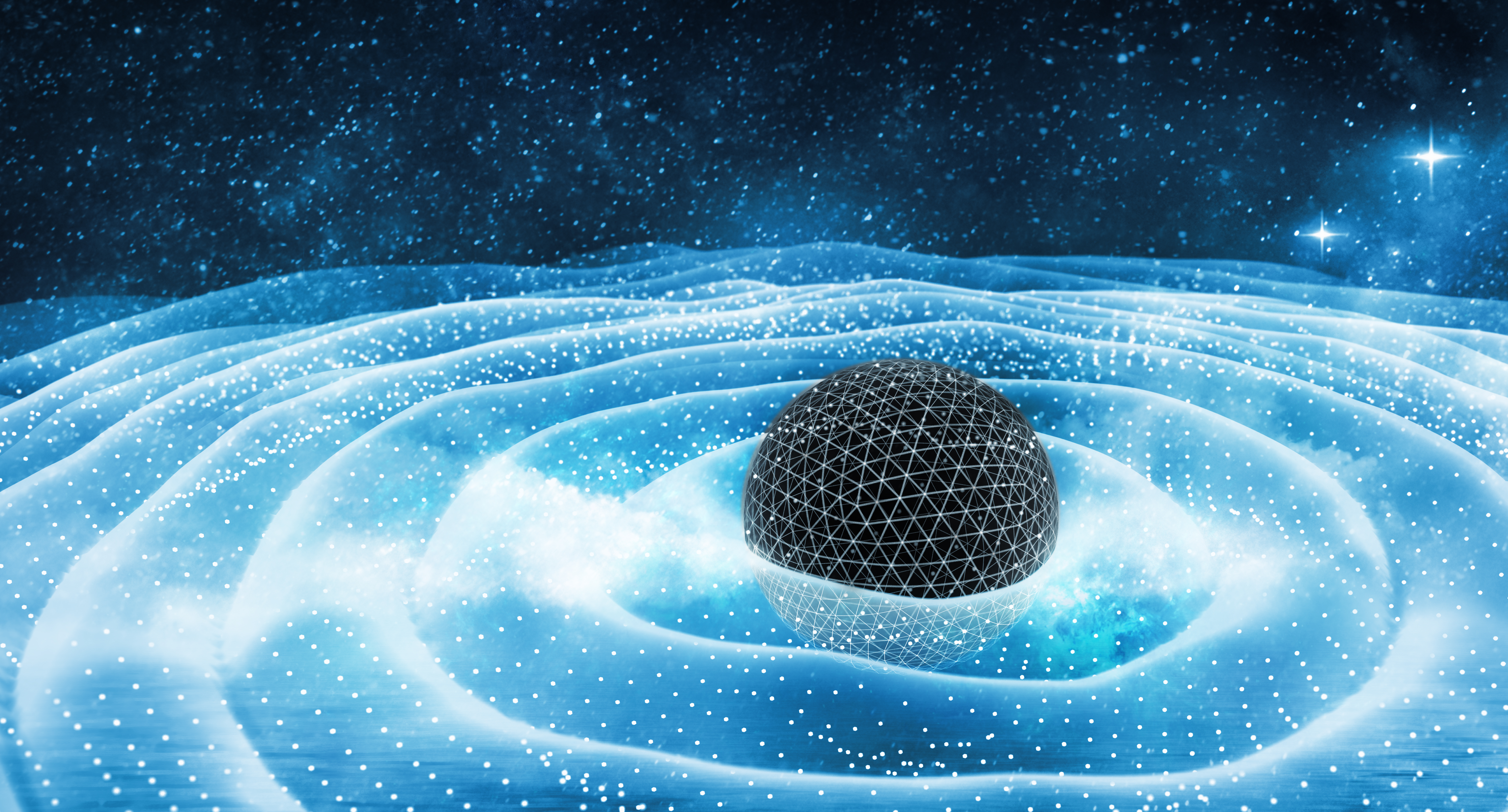
When a powerful earthquake strikes, it doesn’t just shake the ground beneath our feet—it sends seismic waves rippling through the Earth’s layers, causing the entire planet to vibrate. Picture this: the Earth “rings like a bell,” vibrating in steady pulses, sometimes lasting for hours or even days after the initial shock. This may sound like something out of science fiction, but it’s a real, observable phenomenon.
These seismic waves, triggered by major quakes, travel deep through the planet’s crust, mantle, and core, creating oscillations that are detectable by advanced instruments all over the world. What’s even more fascinating is that these vibrations can tell scientists a lot about the Earth’s internal structure, offering a rare glimpse into the layers beneath our feet—layers we can’t reach with drills or shovels. In this article, we’ll explore how these vibrations work, why they happen, and what they can reveal about our planet’s hidden secrets.
A Single Earthquake Can Shake the Planet for Days

When a massive earthquake strikes, it releases an immense amount of energy. Imagine a stone tossed into a pond, sending ripples across the water’s surface. But instead of disappearing after a few moments, these ripples—known as seismic waves—travel deep into the Earth’s crust, mantle, and even its core. After a large earthquake, especially those with a magnitude of 9.0 or higher, the ground doesn’t just shake briefly—it begins to resonate in a way that can last for days, or even weeks.
As Jonathan Snively from Embry-Riddle Aeronautical University explains, “These waves start as brief packets, but they form into narrow, focused bands, indicating a natural resonance or ringing that persists. This ringing can last for hours, and it’s easily detectable.” This natural “ringing” is the planet’s way of slowly relaxing after the violent shift caused by the earthquake. It’s not a sound you’d hum along to, but it’s a noticeable, almost rhythmic pulse that echoes through the Earth, almost like the ringing of a bell. These vibrations are strong enough that they’re easily picked up by seismometers—devices designed to measure ground movements—and are often felt across vast distances from the quake’s epicenter.
While we don’t typically notice these aftershocks in our daily lives, the vibrations are there, steadily reverberating through the Earth’s layers. The powerful energy released during a quake causes the planet to stretch and compress before it gradually settles back into equilibrium. In essence, the Earth is still “shaking” long after the earthquake has passed, though on a much subtler level.
These vibrations aren’t just a curiosity; they offer valuable clues about the Earth’s interior, something that would be impossible to study otherwise. From deep below the surface to the farthest reaches of the planet, every seismic wave tells a story about how our planet is structured and how it’s constantly evolving beneath our feet.
How Do We Detect These Vibrations?

Detecting Earth’s vibrations after a big earthquake relies on specialized tools like seismometers and gravity meters. Seismometers are sensitive instruments that measure ground movement, picking up even the tiniest seismic waves as they ripple through the Earth. These waves travel in different ways: body waves pass through the Earth’s interior, while surface waves move along the planet’s outer layer. Each wave type behaves uniquely, helping scientists map out the planet’s inner structure.
Gravity meters add another layer of detection, measuring slight changes in Earth’s gravitational pull as seismic waves move through different layers. This data helps track shifts in mass and offers a deeper understanding of the Earth’s composition. In addition to these ground-based tools, satellite technology and GPS systems track disturbances in the ionosphere—an atmospheric layer impacted by seismic activity. These disturbances can interfere with communication systems but also provide clues about the Earth’s inner workings.
The global network of these tools enables real-time monitoring of seismic events, allowing researchers to study vibrations from major earthquakes as they travel through the planet. By analyzing how waves move through different layers, scientists can gain invaluable insights into Earth’s structure, which would be impossible to observe otherwise. In essence, these vibrations act as a natural form of sonar, providing a glimpse into the planet’s depths.
Understanding these seismic signals is crucial for both advancing scientific knowledge and improving disaster prediction. As technology continues to evolve, it will give us an even clearer picture of how our planet responds to large-scale earthquakes and how we can better prepare for future events.
How Seismic Ringing Reveals Planetary Secrets

Studying the Earth’s “ringing” after an earthquake provides scientists with crucial information about the planet’s interior. These vibrations reveal details about the Earth’s layers—its crust, mantle, and core—that we can’t access through traditional means like drilling. By analyzing how seismic waves behave as they travel through different layers, researchers can map the Earth’s internal structure with remarkable accuracy.
This process is similar to how doctors use an ultrasound to look inside the human body without making an incision. As seismic waves pass through areas with different densities or compositions, they create unique patterns of vibration. These patterns give scientists a detailed picture of the Earth’s hidden features, such as its temperature, pressure, and the materials that make up its inner layers. It’s this kind of data that shapes our understanding of Earth’s geological processes, from plate tectonics to the movement of molten rock beneath the surface.
Beyond just curiosity, these findings have real-world applications. For instance, understanding seismic activity helps scientists predict the likelihood of natural disasters like earthquakes and tsunamis. By tracking the vibrations of previous seismic events, researchers can develop better early-warning systems and improve disaster preparedness, potentially saving lives and minimizing damage in vulnerable areas.
In short, Earth’s “ringing” is more than just an interesting aftershock of major quakes. It’s a window into the heart of our planet, revealing secrets that help us better understand the Earth’s dynamics and make informed decisions about safety and preparedness.
Real-Life Earthquakes That Made the Earth “Ring”

Several significant earthquakes have demonstrated just how far and wide Earth’s “ringing” can reach. Take the 1964 Alaska earthquake, for example. With a magnitude of 9.2, it remains the strongest earthquake ever recorded in North America. The seismic waves from this quake reverberated so powerfully that they traveled all the way to Seattle, over 1,200 miles away. In addition to the shaking, the Earth’s vibrations persisted for hours, causing the planet to “ring like a bell,” with aftershocks rippling through the crust and even disturbing the ionosphere.
Another striking example is the 2004 Sumatra earthquake. This powerful undersea quake generated a tsunami that devastated coastal regions and caused the Earth to vibrate for weeks. The seismic waves were so strong that they slightly shifted Earth’s axis and shortened the day by a fraction of a second. In fact, scientists could still detect the lingering vibrations from the quake even two weeks later, as the planet continued to resonate from the impact.
More recently, in 2023, a landslide in Greenland generated seismic waves that created a unique “ringing” effect. This event, though not caused by an earthquake, still showcased the planet’s ability to vibrate after significant disturbances. A massive rockslide created 200-meter-high tsunami waves that reverberated through the fjord, causing the Earth to ring for several days. This event further emphasized how Earth’s vibrations are sensitive to even non-seismic disturbances.
These real-life examples show that Earth’s “ringing” isn’t just a rare event. Whether from a massive earthquake or a landslide, the planet responds in measurable ways, allowing scientists to track and analyze the vibrations that tell us more about the forces shaping our world.
Can Earth’s “Ringing” Help Us Predict Natural Disasters?

Understanding Earth’s “ringing” after earthquakes could potentially play a key role in predicting future natural disasters. The vibrations that follow a major seismic event offer a wealth of data about the Earth’s internal structure, which could help forecast other hazards like tsunamis, volcanic eruptions, and even future earthquakes. By closely monitoring the patterns of seismic waves and the way they interact with different layers of the Earth, scientists can track signs that may precede catastrophic events.
For instance, after a significant earthquake, the way seismic waves propagate can provide clues about the stress accumulating in tectonic plates or other geological features. These insights can help researchers predict areas where future earthquakes are likely to occur, giving people in those regions valuable time to prepare. Advanced technologies, such as machine learning algorithms, are already being used to analyze these vibrations and identify patterns that might have been overlooked before.
In addition to predicting earthquakes, Earth’s vibrations also have applications for tsunami warning systems. By analyzing the seismic waves from an earthquake, scientists can determine whether a tsunami is likely to follow, which allows for faster and more accurate warnings to coastal communities. This kind of early detection could help save lives, providing critical minutes or even hours to evacuate.
While predicting natural disasters is still an ongoing challenge, Earth’s “ringing” provides a promising tool for better understanding and forecasting these events. As research continues and technology improves, these seismic signals could become an essential part of our ability to respond to natural disasters, helping mitigate their impact on vulnerable populations.
Turning Tremors into Knowledge

The Earth’s “ringing” after major earthquakes offers us a unique and valuable way to understand the planet’s inner workings. These post-quake vibrations, though subtle, reveal crucial information about Earth’s structure, from its crust to its core. By studying seismic waves and their behavior, scientists can unlock secrets that help us map the planet’s layers and better understand the forces shaping our world.
Beyond scientific curiosity, these vibrations have real-world applications, such as improving disaster prediction and enhancing tsunami warning systems. The more we learn about how the Earth responds to seismic events, the better equipped we’ll be to prepare for future natural disasters. In a sense, Earth’s “ringing” provides a reminder that our planet is alive with constant movement—its vibrations acting as signals that connect us to the deep, dynamic processes beneath our feet.
While we can’t stop earthquakes from occurring, the knowledge we gain from their aftermath allows us to be more informed, proactive, and resilient in the face of nature’s most powerful forces.
Source:
- Inchin, P., Snively, J., Zettergren, M. D., Kaneko, Y., & Komjathy, A. (2021). Modeling of Upper Atmospheric Responses to Acoustic-Gravity Waves Generated by Earthquakes and Tsunamis. , (). https://doi.org/10.5194/egusphere-egu21-5769
- Kristian Svennevig et al., A rockslide-generated tsunami in a Greenland fjord rang Earth for 9 days.Science385,1196-1205(2024).DOI:10.1126/science.adm9247
