
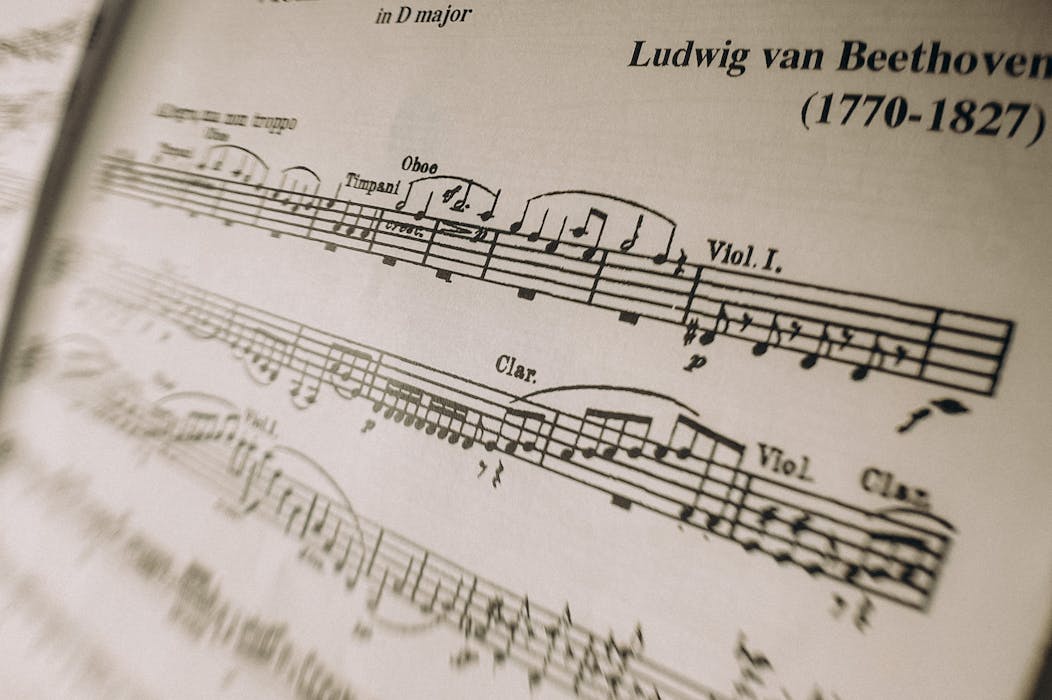
A bold claim went viral in late 2024: Beethoven’s 5th Symphony could destroy cancer cells. Social media posts, including a Facebook share with 66,000 reactions, declared that lab tests showed the iconic symphony killed 20% of cancer cells while leaving healthy cells unharmed. The story spread like wildfire, reigniting hopes for music as a revolutionary cancer treatment. But here’s the catch—the truth is far less sensational.
The rumor traces back to a 2011 experiment in Brazil. Researchers at the Federal University of Rio de Janeiro exposed breast cancer cells in petri dishes to classical music, including Beethoven’s 5th Symphony and György Ligeti’s Atmosphères. Initial reports claimed one in five cancer cells died after exposure, sparking headlines about music’s “cancer-killing power.” However, the study’s lead scientist, Dr. Márcia Capella, later clarified that these results were wildly misinterpreted.
The experiments never measured a precise 20% cell death rate—Dr. Capella admitted her team couldn’t even quantify cell death with their methods. The tests were limited to isolated cancer cells in a lab, not living humans or animals, and healthy cells weren’t even part of the study. Despite this, the myth took on a life of its own, with news outlets and social media users framing it as a breakthrough in cancer therapy. So, what’s the truth behind the hype?
Origins of the Cancer Cell and Music Study in Brazilian Media

The story began in 2011 with an article in O Globo, one of Brazil’s most prominent newspapers. Journalist Renato Grandelle reported on a lab experiment at the Federal University of Rio de Janeiro, in which researchers exposed a common type of breast cancer cell, MCF-7, to three pieces of classical music. These included Beethoven’s 5th Symphony, György Ligeti’s avant-garde orchestral work Atmosphères, and Mozart’s Sonata for Two Pianos in D.
The O Globo article claimed that after 30 minutes of exposure to Beethoven and Ligeti, roughly 20% of the cancer cells died. Surviving cells shrank or lost “granularity,” describing their internal complexity. Mozart’s piece, however, showed little effect. The dramatic results led to headlines suggesting music could “kill cancer” and hinted at future experiments with Brazilian samba and funk music.
But critical details were overlooked. The study focused solely on cancer cells isolated in Petri dishes—not living organisms or healthy cells. The 20% death rate, later revealed to be unverified, became a focal point of media hype. Years later, Dr. Márcia Capella, the lead researcher, clarified that her team never quantified exact cell death numbers. Their methods simply couldn’t measure them.
The article also falsely claimed the team planned to test Brazilian musical genres next. Capella told Snopes this was never part of their agenda. Despite her corrections, the O Globo story spread globally, amplified by outlets like Improbable Research and social media. The result was that a small lab experiment morphed into a viral myth about music’s cancer-fighting potential—one that still resurfaces today.
What the Brazilian Research Team Actually Discovered
The Brazilian team’s findings, published in peer-reviewed journals in 2013 and 2016, were far more cautious than media headlines suggested. Their 2013 study in Noise and Health and a follow-up in 2016 in Evidence-Based Complementary and Alternative Medicine (a journal later delisted for quality concerns) focused on how sound vibrations—not music as therapy—affected cancer cells in lab dishes.
The experiments exposed two types of breast cancer cells (MCF-7 and MDA-MB-231) to Beethoven’s 5th Symphony, Ligeti’s Atmosphères, and Mozart’s Sonata for Two Pianos. Using speakers, researchers played the pieces to cells in petri dishes, comparing results to silence. Crucially, the tests did not involve animals, humans, or healthy cells—a fact often omitted in viral claims.
Key findings revealed that Beethoven and Ligeti’s pieces caused physical changes in cancer cells. Exposed cells shrank, lost internal complexity (“granularity”), and showed higher death rates than those left in silence or exposed to Mozart. However, the team never claimed these effects could treat cancer. Instead, they suggested sound vibrations might interfere with cell hormone-binding processes—a novel but unproven idea.
Most importantly, the widely cited “20% cancer cell death” figure was not part of either study. Dr. Capella stressed that their methods couldn’t measure exact death rates. The number likely originated from the 2011 O Globo article, which misrepresented preliminary observations.
In short, the research explored how intense sound might physically stress isolated cancer cells—not whether Beethoven’s symphony could cure disease. Without testing on living systems or healthy tissue, the findings remain a curious lab curiosity, not a medical breakthrough.
How Media Distortion Amplified Misleading Claims
The claim that Beethoven’s 5th Symphony could destroy cancer cells quickly went viral, thanks to a mix of quirky media coverage and social media hype. The story originally gained attention when Improbable Research highlighted the study. Although the platform is known for featuring unusual science, it often frames such findings in a playful tone, turning speculative results into “breakthroughs.” This playful framing caught the interest of U.S. outlets, who repackaged the story without verifying the original research. Many relied on a 2011 O Globo article or press releases, not the peer-reviewed studies that followed.
Key details were lost in translation. The study, published in Portuguese, was covered in English before the full peer-reviewed articles became available. Journalists had no access to the studies and instead relied on news releases from EurekAlert, which doesn’t verify the accuracy of submissions. This led to a game of “telephone,” where each retelling diluted the scope of the research and inflated the findings.
By 2024, the claim resurfaced on social media, where it was oversimplified even further. A Facebook post shared 26,000 times falsely claimed Beethoven’s symphony “destroyed 20% of cancer cells,” omitting crucial context that the study only involved isolated cancer cells in lab dishes. The “20%” figure, already debunked by the lead researcher, was re-circulated as fact, gaining traction because social media algorithms prioritize punchy, sensational headlines. Despite Dr. Capella’s efforts to correct the record, including an interview on CNN Radio, the original myth had already spread far beyond the researcher’s reach.
Lead Researcher’s Clarifications and Challenges
Dr. Márcia Capella, the study’s lead scientist, repeatedly tried to set the record straight after her research was misrepresented. In emails to Snopes, she stressed that the experiments were preliminary and narrowly focused on cancer cells in lab dishes—not living organisms or human patients. “There is no evidence that music can treat cancer,” she emphasized, directly refuting claims that Beethoven’s symphony held medical promise.
Capella also dismissed early media reports suggesting that her team had planned to study Brazilian samba and funk music. “That was never part of our agenda,” she told Snopes. She added that the viral “20% cancer cell death” statistic was invented—their methods couldn’t quantify cell death, let alone support such a precise figure.
Despite her efforts, misinformation outpaced corrections. Capella cited a CNN Radio interview she gave in Brazil to clarify the study’s limits, but Snopes could not locate the segment, suggesting it had little reach. To make matters worse, she ultimately halted the research, citing a lack of funding to continue exploring music’s physical effects on cells. Her experience underscores a harsh reality: sensationalized claims often drown out nuanced truths even when scientists speak up.
Current Status of Music-Based Cancer Research

More than a decade after the initial experiments, the Brazilian team’s work remains an isolated curiosity. The study was never replicated by other researchers nor expanded beyond its original lab tests on isolated cancer cells. Without follow-up trials—or funding to explore how sound interacts with healthy cells or living organisms—the findings hold no practical relevance to cancer treatment.
Adding to skepticism, the journal that published the 2016 Evidence-Based Complementary and Alternative Medicine study was delisted from major academic databases in 2024 over concerns about research quality. While this doesn’t invalidate the original findings, it underscores the need for rigorous peer review in unconventional studies.
Public interest in music’s therapeutic potential persists, with many hoping for noninvasive, drug-free cancer therapies. Music is already used clinically to reduce stress or pain, but no credible evidence links it to killing cancer cells in humans. Dr. Capella noted that her work explored sound’s physical effects on cells—not music as medicine.
Until researchers revisit these experiments with more substantial funding and clinical trials, the idea of Beethoven’s symphonies fighting cancer remains a fascinating “what if”—not a reality.
Why Accurate Science Communication Matters
The Beethoven cancer cell saga isn’t just a quirky story—it’s a stark reminder of how easily science can be twisted in the race for clicks. When complex studies are reduced to phrases like “music kills cancer,” the public gets a distorted view of how research works. Oversimplified headlines ignore critical caveats, such as that lab dish results rarely translate to human treatments. This creates false hope, fuels conspiracy theories, and erodes trust in science when promised “miracle cures” inevitably fail.
Misreporting also undermines scientists’ credibility. Dr. Capella’s team never claimed their work could treat cancer, yet their findings were hijacked to fit a narrative of “natural cures” triumphing over medicine. When researchers are forced to backtrack, it fuels public skepticism—even toward legitimate studies. Worse, bad actors exploit these errors to push agendas, such as promoting unproven therapies over evidence-based care.
To combat this, readers must become critical consumers of science news:
- Scrutinize sources: Look for links to peer-reviewed studies, not just press releases or social posts.
- Check for replication: Single studies, especially small lab experiments, rarely prove anything.
- Question bold claims: If a headline sounds too good (or strange) to be true, it probably is.
Separate Science from Sensation
The story of Beethoven’s 5th Symphony and cancer cells is a fascinating example of how science can spark imagination—and how easily it can be misunderstood. While the Brazilian study offered intriguing insights into how sound vibrations might physically affect cells in a lab, it does not support music as a cancer treatment. The experiments were limited to isolated cancer cells in petri dishes, and the lead researcher herself debunked the widely cited “20% cell death” claim.
This case underscores the importance of approaching sensationalized health claims with healthy skepticism. Not every lab discovery translates to real-world cures, and not every headline reflects the whole story. Rigorous scientific validation—through replication, peer review, and clinical trials—is essential before any treatment can be deemed safe or effective.
As readers, we play a role in ensuring accurate science communication. By scrutinizing sources, seeking peer-reviewed evidence, and resisting the urge to share unverified claims, we can help prevent myths from overshadowing facts. After all, science is a journey of discovery, not a shortcut to miracles—and understanding that distinction is key to building trust in the process.
Sources:
- Lestard, N. R., & Capella, M. a. M. (2016). Exposure to music alters cell viability and cell motility of human nonauditory cells in culture. Evidence-based Complementary and Alternative Medicine, 2016, 1–7. https://doi.org/10.1155/2016/6849473
- Grandelle, Renato. ‘Células tumorais expostas à “Quinta Sinfonia”, de Beethoven, perderam tamanho ou morreram’. O Globo, https://archive.is/lcAkY, 29 Mar. 2011, https://oglobo.globo.com/saude/ciencia/celulas-tumorais-expostas-quinta-sinfonia-de-beethoven-perderam-tamanho-ou-morreram-2804700.
- Lestard, N. R., & Capella, M. a. M. (2016b). Exposure to music alters cell viability and cell motility of human nonauditory cells in culture. Evidence-based Complementary and Alternative Medicine, 2016, 1–7. https://doi.org/10.1155/2016/6849473
