
South Carolina has officially confirmed a full-blown measles outbreak, reigniting national concern about the return of one of the world’s most contagious viruses. Health authorities have verified at least eight active cases across the Upstate region, most of which are linked to a recent cluster that has spread beyond its initial point of exposure. Every infected individual so far has been unvaccinated or lacking prior immunity, a trend that has alarmed infectious disease experts. The Department of Health and Environmental Control (DHEC) has urged residents to review their vaccination history, particularly parents of school-aged children, warning that even small clusters of measles can spiral into regional epidemics if unchecked.
The outbreak could not come at a more delicate time. After two decades of relative quiet, the United States has seen a resurgence of vaccine-preventable diseases as misinformation and vaccine hesitancy erode herd immunity. According to the CDC, 2025 has already witnessed a fivefold increase in measles cases compared to the previous year, with most linked to undervaccinated communities. What makes measles especially dangerous is its invisibility in the early stages. An infected person can spread the virus four days before showing the telltale rash and remain contagious for several days after it appears. In crowded environments like schools, public transit, or hospitals, a single case can trigger dozens of secondary infections.
Despite modern medicine’s advances, measles continues to challenge global health systems because of how effectively it exploits immunity gaps. South Carolina’s outbreak is not an isolated event—it’s part of a wider American and international resurgence. This pattern reveals how global travel and localized declines in vaccination intersect, creating a perfect storm for viral spread. Officials have traced some of South Carolina’s recent cases to international exposure, while others have no clear source, signaling that undetected community transmission is already underway. This makes it even more important for residents to stay vigilant, informed, and proactive about protection.

Understanding Measles: What Makes This Virus So Contagious
Measles, or rubeola, is a viral infection so contagious that nearly everyone exposed to it without immunity becomes infected. The virus spreads primarily through respiratory droplets expelled when an infected person coughs or sneezes, but it doesn’t need direct contact to move between hosts. It can linger in the air for up to two hours, floating invisibly in shared spaces like classrooms, grocery stores, and waiting rooms. The contagious period begins several days before symptoms are visible, allowing the disease to spread silently among unsuspecting contacts. This combination of stealth and endurance makes measles one of the most efficient pathogens known to humankind.
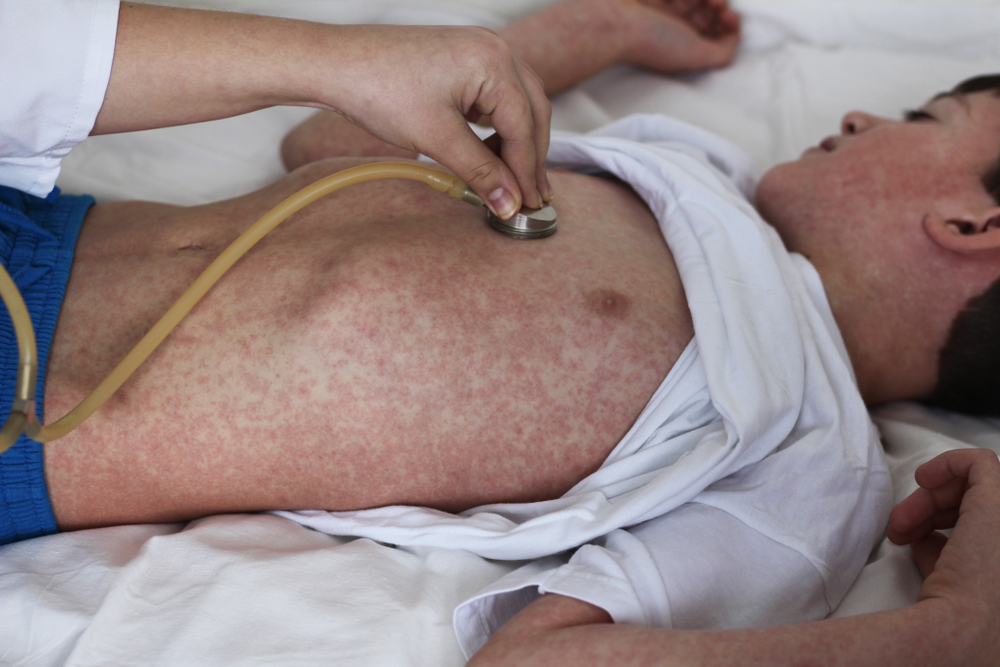
Early signs of infection can easily be mistaken for a severe cold or seasonal flu. The first phase typically involves high fever, fatigue, runny nose, red eyes, and a persistent cough. Within a few days, tiny white spots—known as Koplik spots—may appear inside the mouth. This is followed by a distinctive red rash that begins at the hairline and gradually spreads downward across the body. While these symptoms can look mild in some individuals, complications are frequent and sometimes severe. Pneumonia, ear infections, and diarrhea are common, while encephalitis—a swelling of the brain—occurs in a small but significant number of cases, sometimes leading to lasting neurological damage or death.
Another underappreciated danger of measles is its ability to impair the immune system long after recovery. Research published in Science and Nature Immunology has shown that measles infection can erase existing immune memory, leaving individuals vulnerable to other pathogens they were previously protected against. This effect, called “immune amnesia,” can last for months or even years. In essence, a person who survives measles may lose immunity to other diseases, making them susceptible to infections like pneumonia or influenza later on. This long-term weakening of immunity underscores why even a single outbreak can have wide-reaching consequences for public health.
The good news is that this virus is preventable. The measles, mumps, and rubella (MMR) vaccine remains one of the most effective vaccines ever developed, offering about 97% protection after two doses. The problem is not that measles is unbeatable—it’s that communities have let their defenses down. South Carolina’s current outbreak is not a scientific failure but a social one, reflecting how misinformation, complacency, and barriers to healthcare can undo decades of progress in disease control.

The South Carolina Outbreak: What We Know So Far
The 2025 measles outbreak in South Carolina began quietly, with a handful of suspected cases in the Upstate region. Within days, the number rose to eight confirmed infections, prompting an official declaration from the DHEC. Investigations revealed that most of those infected had either skipped vaccination entirely or received only a single dose. Two of the confirmed cases could not be linked to any known source, suggesting that the virus had already spread beyond traceable contacts. This type of “community transmission” is especially concerning because it indicates that measles is circulating freely in the environment.
Local health officials have traced several infections back to schools, where unvaccinated students likely came into contact with contagious peers. Once introduced into such environments, the virus can spread rapidly, as children are often in close quarters and share air for long periods. The DHEC quickly began notifying families of potential exposures, offering free MMR vaccines to unprotected children and encouraging adults to confirm their immunity status. Local hospitals have also increased surveillance and isolation procedures for any patient presenting with fever and rash.
What makes this outbreak particularly dangerous is its timing and geography. The Upstate region includes several densely populated towns and a strong network of regional travel routes. Interstate highways and daily commuter movement make it easy for infections to cross county lines undetected. Because measles can incubate for up to 21 days before symptoms appear, new cases could emerge weeks after the initial infections were identified. Public health experts expect the case count to rise before it falls, which is why vaccination drives, awareness campaigns, and contact tracing are all being ramped up simultaneously.
The situation also sheds light on a broader societal challenge: vaccine misinformation. Health authorities in South Carolina have noted that some of the affected families were influenced by online sources promoting vaccine skepticism. These narratives often downplay measles’ severity or exaggerate vaccine risks—claims that have been repeatedly disproven by decades of medical research. In times like these, accurate information is as critical as the vaccine itself. Public trust and community cooperation remain the strongest shields against further spread.

How to Protect Yourself and Your Family
Vaccination remains the most reliable line of defense against measles. The MMR vaccine has a long safety record and provides durable protection in nearly all recipients. It is typically given in two doses during childhood, but adults who missed these doses can still receive them later. For those unsure about their vaccination history, a simple blood test can check for immunity. Medical experts emphasize that it’s never too late to get vaccinated—protection after exposure can still be effective if administered within 72 hours.
However, prevention doesn’t stop with vaccines. Strengthening your body’s immune resilience through lifestyle habits makes a meaningful difference in both resistance and recovery. A diet rich in antioxidants and phytonutrients—such as those found in colorful fruits, green leafy vegetables, and citrus—supports immune cell activity and tissue repair. Vitamin A, in particular, has been shown to reduce measles complications and is essential for the health of mucous membranes, which act as the body’s first line of defense against infections. Whole foods like carrots, sweet potatoes, and spinach are excellent natural sources.
Equally vital are sleep, hydration, and stress management. Chronic stress elevates cortisol, a hormone that can suppress immune function. Techniques like deep breathing, yoga, or mindful meditation can help regulate stress responses and keep your immune system alert. Adequate hydration keeps your respiratory and lymphatic systems functioning efficiently, while regular moderate exercise enhances circulation, enabling immune cells to reach tissues more effectively. Together, these simple habits create an internal environment less hospitable to viral invaders.
If you suspect you’ve been exposed to measles or are showing symptoms such as fever, cough, or rash, isolate immediately and contact your healthcare provider before going to a clinic. This helps protect others and allows medical staff to prepare safe isolation protocols. Measles spreads long before visible symptoms, so precaution is not just about your safety—it’s an act of community responsibility.

Myths and Misconceptions About Measles
Misinformation thrives during health crises, and measles is no exception. One of the most persistent myths is that it’s a harmless childhood illness. In reality, measles can be severe and unpredictable, even in healthy individuals. Another common misconception is that natural infection offers better immunity than vaccination. While it’s true that infection can confer immunity, it also carries risks of hospitalization, brain damage, or death—outcomes the vaccine prevents. Scientific consensus remains clear: vaccination provides robust protection without the life-threatening consequences of natural infection.
Some individuals believe that one vaccine dose provides lifelong immunity, but evidence consistently shows that two doses are necessary to ensure full protection. Communities with lower vaccination rates quickly become breeding grounds for outbreaks, as seen in South Carolina. The virus exploits every gap in immunity, spreading easily among the unvaccinated. Another myth is that only children need to worry about measles. Adults who were never vaccinated or who received vaccines before certain formulations became available in the 1970s are also at risk and should confirm their protection status.
Dispelling myths requires both empathy and clarity. People who avoid vaccination are often not opposed to science but overwhelmed by conflicting information. Effective communication—grounded in compassion, transparency, and education—helps rebuild trust. This is not simply a public health issue but a cultural one, touching on how we share knowledge, assess risk, and care for one another as a community.
A Wake-Up Call for Public Health
The South Carolina outbreak is a warning sign for the rest of the country. After being declared eliminated in 2000, measles is resurging in the United States, fueled by misinformation, complacency, and global interconnectedness. Public health experts have long warned that vaccination rates must remain above 95% to maintain herd immunity. Anything less creates vulnerabilities where the virus can thrive. In 2025, the CDC recorded 42 separate outbreaks across the country, the majority traced to undervaccinated populations. South Carolina’s situation demonstrates how quickly a local issue can become a national concern.
This crisis also exposes deeper systemic issues—unequal access to healthcare, social media misinformation, and the erosion of institutional trust. For many families, vaccine hesitancy isn’t rooted in ideology but confusion or lack of access to credible information. Addressing these barriers requires community-level engagement: local clinics, faith groups, and schools working together to educate, reassure, and empower.
Ultimately, the lesson is clear. Infectious diseases do not respect state lines, political opinions, or belief systems. They move through the spaces we share—classrooms, buses, offices—and exploit the gaps in our collective immunity. The solution, therefore, lies in collective responsibility. Vaccination protects not just individuals but the elderly, the immunocompromised, and the very young who cannot yet receive vaccines. When communities act together, outbreaks lose their power.
A Healthier Tomorrow: What We Can Learn from This Outbreak
This outbreak serves as both a cautionary tale and an opportunity for reflection. Public health is not only about medicine—it’s about awareness, empathy, and the recognition that personal choices ripple outward to affect everyone. By staying informed, verifying our sources of information, and supporting evidence-based practices, we contribute to the well-being of our families and our neighbors.
Strengthening immunity through natural lifestyle practices complements modern medicine beautifully. Eating whole foods, managing stress, and prioritizing rest fortify the body’s natural defenses. Ayurvedic traditions also offer gentle yet effective support for immune balance. Herbs like tulsi (holy basil), turmeric, and amla have been revered for centuries for their antiviral and adaptogenic properties. Integrating these into daily life—whether through teas, supplements, or cooking—can support resilience in a holistic way.
Ultimately, the story of South Carolina’s measles outbreak is not just about disease; it’s about responsibility. It reminds us that science and nature work best when we listen to both. Prevention, awareness, and community care form the foundation of true wellness. If we act wisely now—through vaccination, education, and compassion—we can ensure that future generations inherit not fear, but health.
