
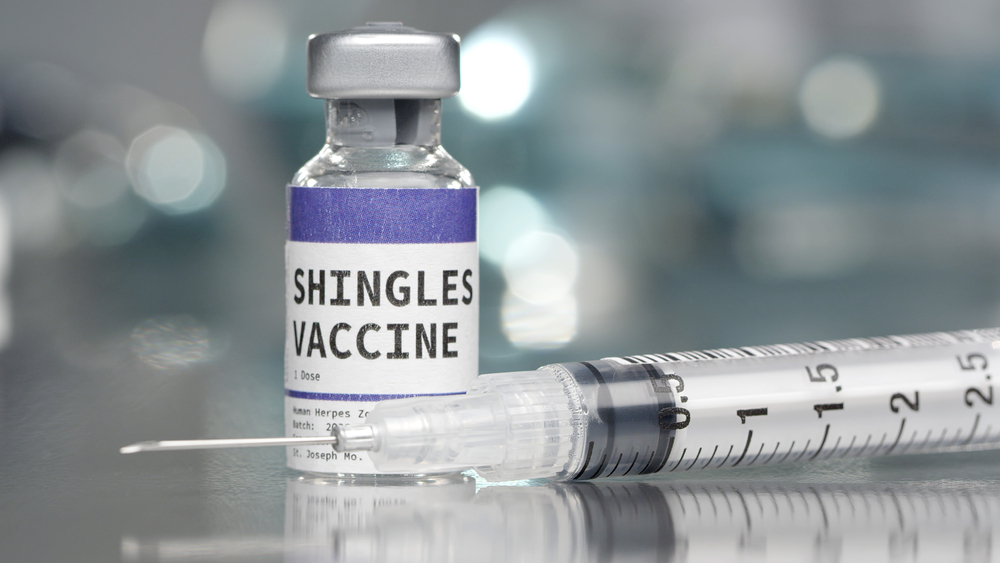
Dementia is a growing concern worldwide, affecting more than 55 million people, with millions more diagnoses made every year. While research into dementia has focused primarily on brain plaques and other neurological factors, a groundbreaking new study is shifting the focus toward a surprising factor: the shingles vaccine. Recent research has shown that receiving the shingles vaccine can reduce the risk of developing dementia by 20% in older adults.
This discovery, published in Nature by researchers from Stanford Medicine, offers a hopeful glimpse into preventing dementia through a simple vaccine. If confirmed by further research, it could lead to a major shift in how we approach dementia prevention and highlight the unexpected benefits of vaccines.
What is Shingles and How Does It Relate to Dementia?

Shingles is a viral infection that causes a painful rash, typically on one side of the body. It’s caused by the varicella-zoster virus, the same virus responsible for chickenpox. Once someone recovers from chickenpox, the virus doesn’t leave their body — it goes dormant in the nerve cells. However, as people age or their immune systems weaken, the virus can reactivate, leading to shingles. The pain associated with shingles can be severe, and in some cases, it can lead to long-lasting nerve pain even after the rash has healed.
Recent studies are beginning to connect the dots between viral infections, such as shingles, and cognitive decline, including dementia. This link is especially concerning for older adults. Shingles, like other infections that affect the nervous system, may have a lasting impact on the brain, potentially increasing the risk of developing dementia.
Dementia is an umbrella term for a group of cognitive impairments, including Alzheimer’s disease, which impair memory, thinking, and the ability to perform everyday tasks. In fact, over 55 million people are currently living with dementia worldwide. For decades, research has concentrated on the buildup of harmful proteins in the brain, like amyloid plaques, as a key factor in dementia development. However, the new research into shingles presents an intriguing possibility: certain viral infections could play a role in triggering or accelerating dementia.
Understanding how shingles might influence dementia could open up new pathways for preventing cognitive decline. The idea is that by targeting viral infections early, we could protect the brain from long-term damage. And one of the most surprising findings from recent studies is that getting vaccinated against shingles might reduce the chances of dementia altogether.
A Fluke of Timing Reveals a Dementia Defense

The study that revealed the potential link between the shingles vaccine and a reduced risk of dementia was led by researchers from Stanford Medicine and took place in Wales. What makes this research stand out is the unique way in which it was conducted. Researchers took advantage of a “natural experiment” created by the specific rules governing vaccine eligibility in the country.
In Wales, the shingles vaccine was made available to people who turned 79 years old in September 2013. However, people who were 80 or older on that date were not eligible for the vaccine. This slight age difference meant that researchers could compare two groups of people—those who were eligible for the vaccine and those who were not—who were otherwise very similar in terms of health and demographics. By focusing on this small but significant difference in age, the study minimized potential biases that usually occur when comparing vaccinated and unvaccinated individuals.
The researchers tracked the health of more than 280,000 adults aged 71 to 88 over the following seven years. Their findings were striking. The adults who received the shingles vaccine were 20% less likely to develop dementia compared to those who did not receive the vaccine. This suggests that something in the shingles vaccine may be helping to protect brain health.
What makes these results particularly compelling is the clarity of the findings. By comparing people who were almost identical in every way except for their vaccination status, the researchers were able to isolate the effect of the vaccine itself. This approach significantly reduces the chance of other factors influencing the results, giving the study more weight and credibility.
Shingles Vaccine May Reduce Dementia Risk by 20%

The study’s findings are significant: a 20% reduction in dementia risk over a seven-year period for individuals who received the shingles vaccine. To put this into perspective, if you consider a group of 100 people who receive the vaccine, about 20 fewer of them would develop dementia compared to a similar group that didn’t get vaccinated. This kind of result isn’t just statistically interesting—it could have real-world implications for public health.
The researchers were careful to account for various other factors that could have influenced the results, such as other health behaviors or conditions like diabetes or heart disease. In this case, the only notable difference between the two groups was the shingles vaccine. This strengthens the argument that the vaccine itself might be playing a role in protecting against dementia.
A striking aspect of the study is how clear the protective effect was. The “protective signal” was evident across multiple ways of analyzing the data, and no other variables seemed to explain the reduction in dementia diagnoses. This suggests that the shingles vaccine could be offering a level of protection beyond just preventing shingles itself.
However, the study’s authors are careful to note that these findings are promising but not yet definitive. More research is needed to fully understand why the shingles vaccine appears to help protect brain health and to confirm these results in other populations and settings. But the evidence so far is strong enough to warrant further investigation into whether this relatively simple vaccine could become a key tool in dementia prevention.
The Role of Gender: Why Women May Benefit More

One of the more intriguing aspects of the study’s findings is the gender difference in the protective effects of the shingles vaccine. Researchers discovered that women showed a stronger reduction in dementia risk compared to men. While this might seem surprising at first, there are a few possible explanations for why women may benefit more from the vaccine.
One factor could be the difference in immune responses between men and women. Studies have shown that women, on average, tend to have stronger immune responses to vaccines compared to men. This heightened immune reaction might offer additional protection against neurological conditions like dementia. Moreover, shingles itself is more common in women, and the severity of the disease can vary between genders. This could potentially make the vaccine even more beneficial for women in preventing the long-term consequences of shingles, including dementia.
Another reason for this disparity could be the different ways in which dementia develops in men and women. The underlying biological mechanisms might play out differently depending on gender, which could influence how effective the vaccine is in reducing dementia risk. While the exact cause of these differences is still unclear, the study’s authors believe that these gender-specific findings could provide valuable insights into how the immune system interacts with viruses like varicella-zoster and the brain’s response to them.
While the gender differences in the study’s results are interesting, researchers caution that more investigation is needed to understand why this occurs. However, this finding opens the door for more tailored approaches in dementia prevention, where gender-specific factors might be considered when recommending the shingles vaccine.
What the Experts Are Saying

Medical authorities worldwide have responded with measured enthusiasm tempered by appropriate scientific caution. Julia Dudley, representing Alzheimer’s Research UK, acknowledged historical context while emphasizing current findings’ strength: “While previous studies suggested an association, this research offers stronger evidence of a direct link, with greater benefit observed in women.” Her assessment balances excitement with recognition that mechanistic understanding—particularly regarding sex-based protection differences—remains incomplete.
Australian clinical practitioners approach findings through pragmatic patient-care lenses. Dr. Marita Long, describing shingles as a “miserable illness,” emphasized practical vaccination discussion importance: “If a side benefit is dementia risk reduction—and studies look promising—then of course we should raise this as it may help encourage uptake.” Her perspective bridges academic findings with frontline healthcare delivery considerations.
Infectious disease experts urge appropriate interpretive restraint. Dr. Joseph Doyle, heading Australasian Society for Infectious Diseases, cautioned against premature causal attribution: “It is plausible that episodes of infection, immune system changes, or healthcare engagement are among factors behind this association, but further research is needed to help determine whether there is a causal link.” His measured assessment reminds healthcare communities that correlation, however strong, doesn’t automatically establish causation.
Harvard’s Anupam Jena cut straight to public health implications: “Although it is still unclear precisely how herpes zoster vaccination lowers risk of dementia, implications of study are profound. Vaccine could represent a cost-effective intervention that has public-health benefits strongly exceeding its intended purpose.” His assessment highlights the potential population-level impact should findings receive confirmation through additional research methodologies.
Getting Vaccinated: Practical Matters

Practical vaccination considerations span eligibility, accessibility, timing, and financial domains for individuals contemplating shingles protection. Most national guidelines recommend vaccination for adults 50+ regardless of prior shingles history, though government subsidy programs typically activate at 65 or with specific risk-enhancing conditions. Complete Shingrix protection demands a two-dose regimen administered 2-6 months apart, while older Zostavax formulation required a single administration.
Financial barriers create access inequities across populations. Without insurance coverage or government assistance, complete Shingrix protection costs approximately $300 in Australia and similarly across other nations—prohibitively expensive for fixed-income seniors already juggling multiple healthcare expenses.
The Australian Immunisation Handbook recommends vaccination for everyone 50+ for optimal dual protection against shingles and potential dementia risk, though governmental financial support currently begins at 65 for most citizens.
Should dementia protection receive definitive confirmation through forthcoming clinical trials, vaccination policies may require comprehensive revision to maximize population-level benefits. Earlier intervention might prove more neuroprotective, potentially justifying expanded government subsidy programs for younger age cohorts based on dementia prevention’s substantial healthcare cost implications.
A Shot at Prevention
The idea that a common vaccine might help lower the risk of dementia is no longer just a theory—it’s backed by compelling evidence. Researchers found a 20% reduction in dementia diagnoses among older adults who received the shingles vaccine, and that signal remained strong across multiple analyses. While more work is needed to confirm exactly how this protection works, the results already suggest that a simple, one-time vaccine could offer benefits that go beyond shingles prevention.
For individuals and families concerned about brain health, especially as they age, this study offers a new reason to talk with healthcare providers about shingles vaccination. It also adds to a growing body of research showing that the immune system plays a larger role in brain health than previously thought.
More research, especially randomized clinical trials, will be needed before the shingles vaccine can be formally recommended as a tool for dementia prevention. But this study is a solid step in that direction—and it brings much-needed momentum to a field that has long struggled to find effective ways to lower dementia risk.
Source:
- Eyting, M., Xie, M., Michalik, F. et al. A natural experiment on the effect of herpes zoster vaccination on dementia. Nature (2025). https://doi.org/10.1038/s41586-025-08800-x
