
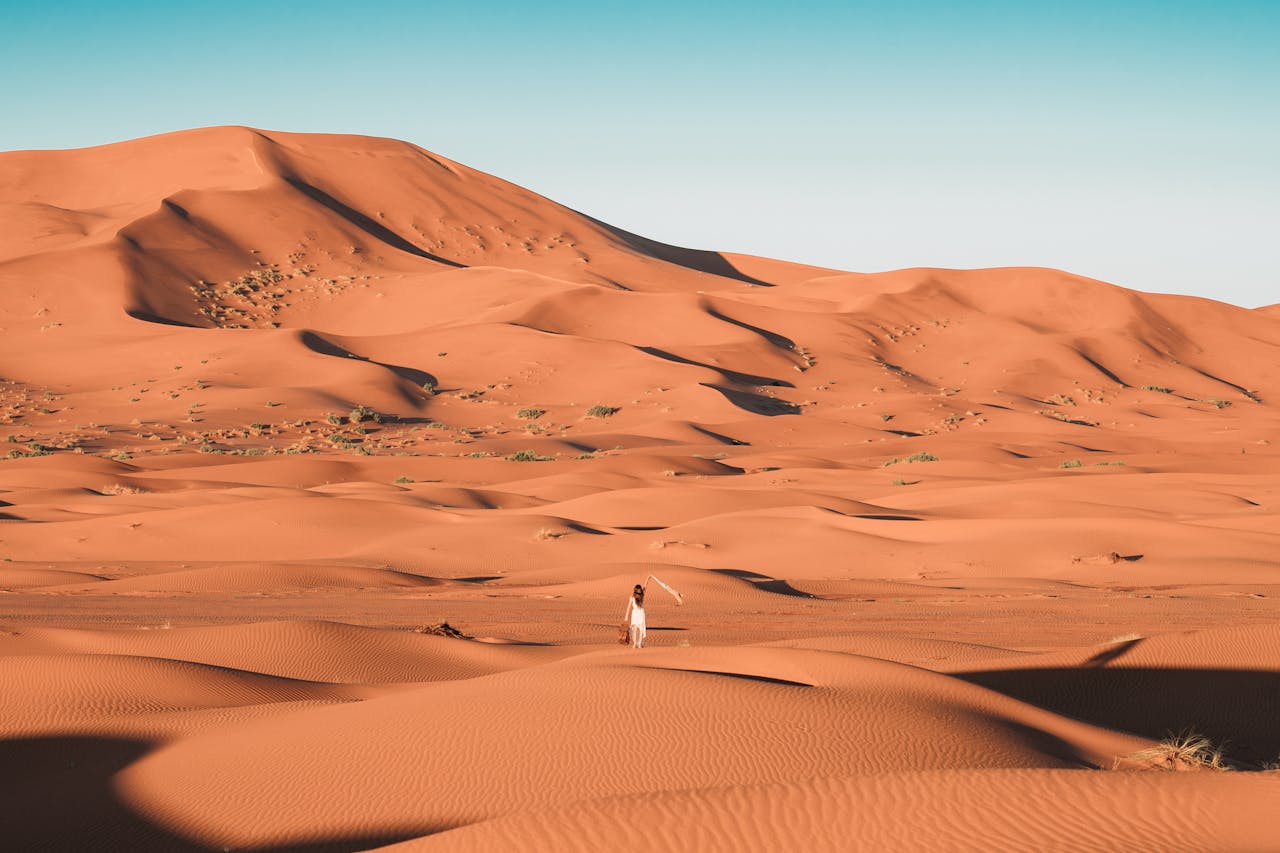
The sands of the Sahara have always hidden secrets, but recent discoveries have stirred both scientists and the public. Archaeologists working in the Tadrart Acacus mountains of Libya uncovered remarkably well-preserved mummies dating back more than 5,000 years. These mummies, older than the famous Egyptian ones, stunned researchers—not just because of their condition, but because DNA tests revealed something entirely unexpected. The genetic material of these mummies does not align with that of modern humans. This finding has added a mysterious twist to our understanding of human evolution, suggesting that ancient populations may have carried genetic blueprints that disappeared from the modern gene pool. It opens a new chapter in anthropology, where the missing links are not just evolutionary puzzles but also potential insights into human health and adaptation.
The revelation forces us to question the simplicity of our origins. For years, geneticists have pieced together the human story by tracing DNA back through time, finding patterns of migration, mixing, and survival. Yet these mummies seem to break the narrative, hinting at lineages lost to history. Beyond the intrigue of ancestry, discoveries like this invite us to reflect on human health, resilience, and the impact of environment and isolation on genetic survival. They remind us that who we are today is only one version of many possible human paths, and that evolution is not a straight line but a branching tree, filled with stories of survival, extinction, and adaptation.

The Mystery of the Sahara Mummies
The mummies were discovered in the desert mountains of southern Libya, an area once lush with rivers, lakes, and grasslands. Unlike the natural desiccation that preserved Egyptian mummies, these bodies were intentionally mummified—wrapped and treated, suggesting sophisticated cultural practices. What startled scientists even more was the genetic analysis. Instead of aligning with known human groups, the DNA appeared to belong to a population distinct from modern humans.
This revelation suggests that there were once isolated populations in North Africa with unique genetic signatures. Over thousands of years, those lineages may have disappeared through climate shifts, migrations, or population replacement. The loss of such genetic diversity carries implications not just for anthropology, but also for how we think about human survival in challenging environments. It points to the reality that survival in prehistory was fragile and that entire groups could vanish without leaving a genetic legacy in modern populations.
Equally intriguing is how these mummies push us to reconsider human adaptability. Ancient North Africans lived through dramatic environmental transitions—lush savannas drying into desert, shifting food sources, and harsh survival conditions. Their distinct DNA could reflect specialized adaptations that helped them thrive in ecosystems we can barely imagine today. This raises the question: what survival traits have we lost along the way, and how might they have shaped resilience against disease or stress? By studying these vanished lineages, science may uncover not just lost ancestry but clues for modern medicine.

Ancient DNA and the Puzzle of Human Ancestry
The genetic tests performed on the Saharan mummies showed that they did not share markers with present-day populations. This discovery unsettles the conventional “Out of Africa” migration narrative, which emphasizes a continuous genetic link between ancient and modern humans. Instead, it hints at “ghost lineages”—branches of humanity that once thrived but later vanished without leaving a trace in today’s genomes. These ghost lineages remind us that the story of humanity is far from complete and that every archaeological find could rewrite what we think we know.
For modern science, this kind of discovery matters because it expands our understanding of genetic diversity. Just as biodiversity strengthens ecosystems, genetic variation within humanity contributes to resilience. By losing certain ancestral lineages, we may also have lost genetic tools for adaptation. This is especially relevant in an age when global health faces rising threats, from climate change to emerging diseases. Ancient DNA may help us rediscover forgotten genetic defenses or understand vulnerabilities that have followed us through millennia.

The mummies also underscore the limits of genetic storytelling. While DNA provides powerful clues, it cannot explain everything about culture, health, and lived experience. Archaeological evidence shows these people were skilled at food preparation, burial rituals, and likely herbal medicine. Together, these insights remind us that wellness is always a balance of biology, environment, and tradition—a lesson that still applies today. Genetics may explain part of the story, but the lived practices of these people shaped their survival just as much.
Lessons for Modern Health and Wellness
Although separated by millennia, the Saharan mummies carry lessons for our present lives. Their unique DNA may be gone, but their survival in harsh conditions speaks volumes. They lived in environments where food sources shifted dramatically and where adaptation was essential. This reminds us of the importance of dietary diversity in supporting resilience. Today, nutrition science echoes this truth: a diverse diet rich in plants, herbs, and natural foods strengthens immunity and improves long-term health, much like diverse ecosystems withstand environmental changes.
Another reflection comes from their environment. These ancient people endured climate extremes, depending on seasonal rhythms for survival. Modern lifestyles, however, often disconnect us from nature’s cycles. Research shows that re-establishing even small connections—through natural light exposure, seasonal eating, and outdoor movement—can improve sleep, reduce stress, and enhance mental clarity. In this sense, the ancient Saharans remind us that health is not only genetic but also ecological. The closer we align with natural rhythms, the more balanced our bodies and minds become.
Their story also challenges us to value forgotten wisdom. Just as their genetic lineage has disappeared, many traditional practices of health and healing have been lost in modern times. Rediscovering herbal remedies, community-based living, and respect for natural cycles may be just as valuable to our wellness as genetic inheritance. The past doesn’t only tell us who we were—it guides us toward who we might become if we choose balance with nature. By studying their resilience, we are reminded that wellness is not about perfection but about harmony.

What Ancient Mummies Teach Us About Longevity
Longevity in ancient times wasn’t about living long lives by today’s standards, but about surviving in environments with limited resources and high risks. These mummies show evidence of deliberate care in burial and preservation, suggesting that health and the afterlife were valued deeply. This care for the dead reflects a culture that likely cared for the living in holistic ways, combining nutrition, ritual, and community support. It highlights the human tendency to create meaning even in difficult conditions.
Modern science often focuses narrowly on genes, diet, or medicine. Yet the mummies remind us of a more integrated approach to health. Longevity is not just about the absence of disease, but about resilience—adapting to challenges while maintaining physical and emotional balance. Their DNA may not have passed into modern lineages, but their cultural practices hint at knowledge that can inspire us to rethink longevity in broader, more holistic terms. Living long was not just about biology, but about cultural strength and adaptability.
In this sense, their legacy is less about genetic inheritance and more about human creativity. They developed rituals, dietary practices, and healing traditions that enabled survival in a challenging environment. While we may never know all the details, their example invites us to reframe longevity as more than lifespan—it is about the quality of life, the ability to adapt, and the cultivation of practices that support both body and spirit.
Rediscovering Lost Wisdom in the Age of Science
As scientists continue to analyze these mummies, the fascination lies not only in their genetic mystery but also in what they symbolize. They stand as evidence of human diversity—of paths taken and then lost. For us, they are reminders that health is not guaranteed by progress alone. Sometimes, survival depends on humility, adaptability, and remembering the rhythms of the natural world. Ancient DNA challenges us to question what survival means and what traits we may have lost through time.
Modern wellness movements, from Ayurveda to plant-based diets, echo this same wisdom: the body thrives when aligned with nature. While science explores the boundaries of genetic engineering and biotechnology, there is equal value in rediscovering ancient practices rooted in natural healing. The Sahara mummies, with their vanished DNA, challenge us to consider what knowledge may still be buried in forgotten traditions. Their genetic silence speaks loudly to the importance of preserving cultural memory alongside scientific discovery.
By bridging science and ancient wisdom, we can approach health from a perspective that honors both evidence and tradition. The mummies remind us that human strength comes not only from genes but from adaptability, community, and our relationship with nature. In reconnecting with these timeless principles, we can build resilience for future generations.
Echoes from the Past for a Healthier Future
The discovery of Saharan mummies whose DNA doesn’t match modern humans is more than an archaeological curiosity—it is a mirror reflecting how fragile and fleeting human lineages can be. Their disappearance invites us to think about what we might be losing today, whether in genetic diversity, cultural practices, or natural health traditions. By learning from both their science and their silence, we can shape a healthier path forward. The Sahara may have taken their genes, but it leaves us with wisdom about resilience, connection, and survival.
