
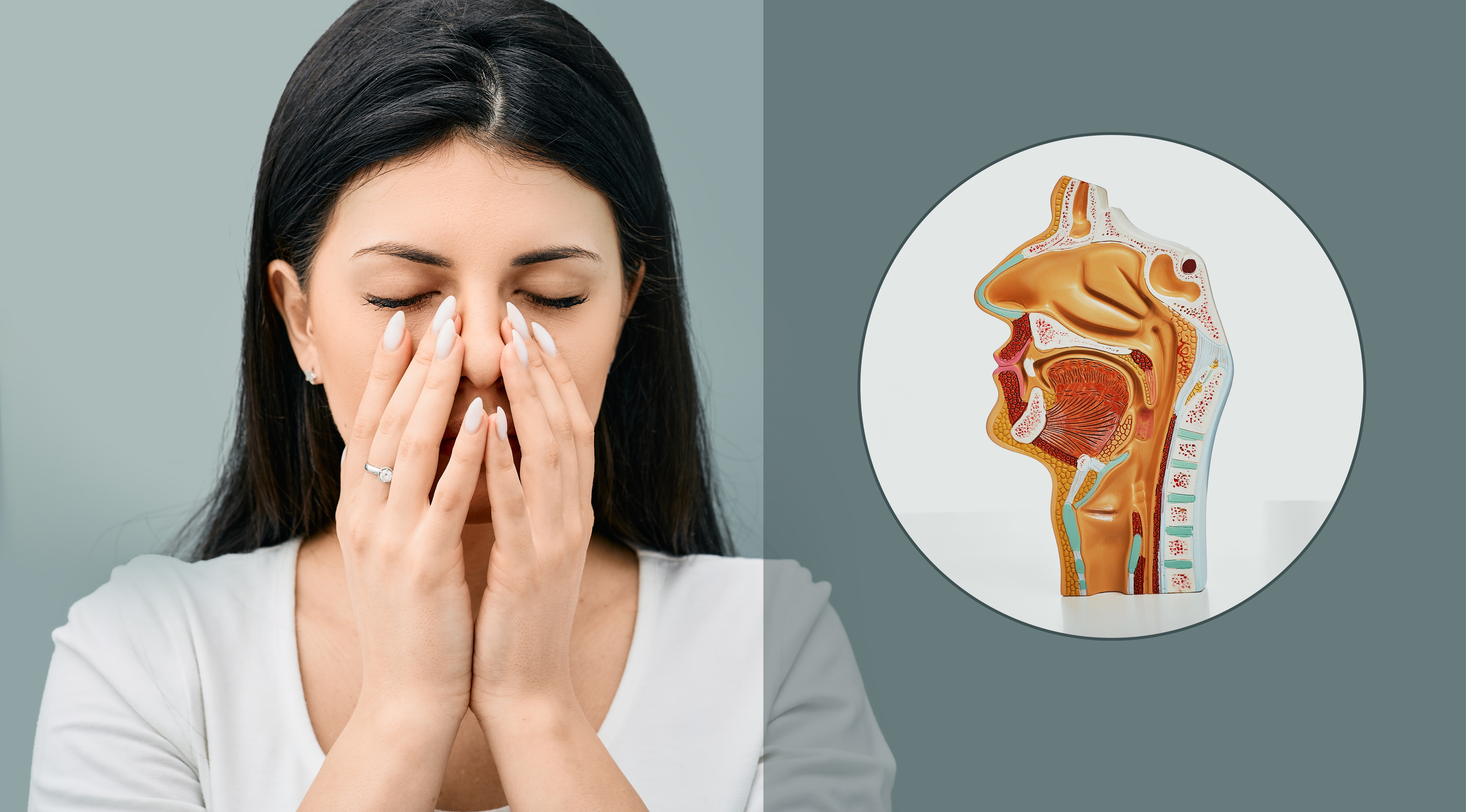
Modern medicine often presents the human body as a solved puzzle. Students memorize charts that appear definitive. Organs are numbered, classified, and labeled with the confidence that nothing major remains hidden. After centuries of dissection, microscopy, and imaging, it feels intuitive to believe that anatomy is complete and that future discoveries will exist only at the molecular or genetic level.
And yet, science has a long history of being humbled by reality.
In recent years, researchers studying cancer patients made a discovery that quietly challenged this assumption. While analyzing advanced medical scans, they identified a pair of large, consistent structures deep in the head, positioned behind the nose in an area long thought to contain nothing more than scattered microscopic glands. These structures behaved like salivary glands, appeared in every subject examined, and were confirmed through physical dissection.
If validated fully, this would represent the first identification of a new major salivary gland system in hundreds of years.
This article explores how these structures were discovered, what they do, why they were overlooked for so long, and what their existence may mean for medicine, for scientific humility, and for our evolving understanding of the human body.
A Discovery Born From Cancer Research, Not Curiosity
The discovery of the tubarial salivary glands did not arise from an anatomical expedition or a targeted search for unknown organs. Instead, it emerged incidentally during oncology research at the Netherlands Cancer Institute.
Researchers there were using a sophisticated imaging technique known as PSMA PET-CT scanning. This method combines positron emission tomography with computed tomography and uses a radioactive tracer that binds to a protein highly expressed in prostate cancer cells. The primary goal of the scan is to locate tumors and metastases with extreme precision.
What makes this technique especially relevant is that salivary gland tissue also expresses high levels of the same protein. As a result, salivary glands tend to light up clearly on these scans.
While reviewing images from prostate cancer patients, clinicians noticed something unusual. In addition to the known salivary glands near the jaw, beneath the tongue, and near the ears, two unexpected symmetrical regions consistently appeared in the nasopharynx. This area sits at the junction of the nasal cavity and the upper throat.
At first, the anomaly was easy to dismiss. Imaging artifacts are common, and rare anatomical variations do occur. But the pattern repeated itself across dozens of patients. Eventually, nearly one hundred individuals showed the same structures in the same location.
At that point, the researchers began to suspect they were looking at something fundamentally new.
Confirming the Unexpected Through Anatomy

Seeing something on a scan is one thing. Confirming its physical reality is another.
To verify what they were observing, the research team conducted dissections of donated human cadavers. In the same region highlighted on the scans, they identified glandular tissue with features characteristic of salivary glands. These structures were not isolated clusters. They had defined shapes, organized tissue, and ducts that drained fluid into the nasopharynx.
Each gland measured approximately four centimeters in length, making them far larger than the scattered minor salivary glands previously known to exist in this area. Their size, consistency, and presence across individuals strongly suggested that these were not random variations but a standard anatomical feature.
Because of their location near a cartilage structure called the torus tubarius, the glands were named the tubarial salivary glands.
The findings were published in the journal Radiotherapy and Oncology, immediately drawing international attention.
Why These Glands Remained Hidden for Centuries

The natural question that followed was simple. How could such structures go unnoticed for so long?
The answer reveals important limitations in how anatomical knowledge develops.
The tubarial glands are located deep within the skull base, in a narrow, protected region that is difficult to access during traditional dissections. Unlike the parotid or submandibular glands, they cannot be easily palpated or observed from the surface. Their position makes them largely invisible unless one is specifically examining that precise region with the right tools.
Historically, most anatomical studies relied on gross dissection and surface observation. Later, imaging technologies such as X rays and standard CT scans lacked the sensitivity to differentiate these glands from surrounding tissue. Even MRI scans often struggle to resolve fine glandular structures in the nasopharynx.
There was also an assumption barrier. Anatomy textbooks described the region as containing only diffuse microscopic salivary glands. Once a region is labeled as understood, fewer researchers question its contents. Scientific blind spots often persist not because something is invisible, but because no one expects it to be there.
The emergence of PSMA PET-CT imaging changed this. For the first time, researchers had a method that selectively illuminated salivary tissue with extraordinary clarity. Suddenly, the unseen became obvious.
What Salivary Glands Really Do and Why They Matter

Salivary glands are often underestimated in their importance. Saliva is commonly thought of as a minor digestive fluid, but its role in human health is extensive.
Saliva lubricates the tissues of the mouth and throat, reducing friction during speaking and swallowing. It carries taste molecules to sensory receptors, enabling flavor perception. It contains enzymes that initiate digestion and antimicrobial compounds that help control bacterial populations. It also plays a role in wound healing and tissue maintenance.
When salivary function is impaired, the consequences can be severe. Chronic dry mouth can lead to difficulty eating, swallowing, and speaking. It increases the risk of infection, tooth decay, and tissue damage. Quality of life can decline dramatically.
The newly identified tubarial glands appear to specialize in lubricating the upper throat, particularly the nasopharynx. This region is critical for airflow, vocal resonance, and coordinated swallowing. Even small changes in moisture can significantly affect comfort and function.
This specialization helps explain why damage in this area can produce symptoms that were previously poorly understood.
Implications for Radiation Therapy and Cancer Care

One of the most immediate and impactful implications of this discovery lies in oncology.
Patients receiving radiation therapy for head and neck cancers often experience long term side effects related to salivary gland damage. Clinicians are trained to avoid irradiating known salivary glands whenever possible, but until recently, the tubarial glands were not recognized as targets to protect.
Because of this, radiation beams frequently passed through the nasopharynx without consideration for glandular tissue. For many patients, this resulted in persistent dryness, difficulty swallowing, and changes in speech.
When researchers reviewed records from more than seven hundred cancer patients, they found a clear correlation. Higher radiation doses to the region of the tubarial glands were associated with worse long term side effects.
The significance of this finding cannot be overstated. It suggests that simply adjusting radiation planning protocols to spare this newly recognized area could substantially improve patient outcomes. No new drugs are required. No invasive procedures are needed. Only better anatomical awareness.
This is a rare example of a discovery that translates almost immediately into improved quality of life.
Is It Truly a New Organ or a Reclassification

Not everyone agrees on how to classify the tubarial glands. Some anatomists caution against labeling them as an entirely new organ system.
They point out that the human body already contains hundreds, possibly thousands, of minor salivary glands scattered throughout the mouth and throat. From this perspective, the tubarial glands may represent a particularly organized and enlarged cluster of these glands rather than a fundamentally new organ.
Others emphasize that the original study population was limited and predominantly male, due to its focus on prostate cancer patients. Broader studies involving diverse populations and alternative imaging techniques are still needed.
These critiques are not dismissive. They reflect the careful skepticism that science requires.
However, even critics generally acknowledge that these glands are clinically important. Whether they are classified as a new organ or a newly recognized glandular system, their existence changes how medicine approaches the nasopharynx.
In practice, the label matters less than the impact.
The Illusion of Completion in Modern Science

This discovery highlights a deeper theme that extends beyond anatomy.
There is a tendency in modern science to assume that foundational knowledge is complete. Physics believed itself finished at the end of the nineteenth century, shortly before relativity and quantum mechanics overturned everything. Neuroscience once thought brain function was neatly localized, until networks and plasticity revealed far greater complexity.
Anatomy has long been treated as settled science. Yet here we are, in the twenty first century, identifying a structure large enough to influence daily functions like speaking and swallowing.
This does not mean science is failing. It means science is working exactly as it should. Knowledge evolves as tools improve and assumptions are challenged.
The tubarial glands are a reminder that discovery does not always require exotic technology or distant galaxies. Sometimes, it requires looking again at what we thought we already understood.
The Symbolic Resonance of Hidden Structures
While the discovery is firmly grounded in medical science, it is difficult to ignore the symbolic undertones that accompany it.
The tubarial glands sit behind the nose, near the throat, at the intersection of breath, voice, and perception. Across cultures and traditions, this region of the body has been associated with communication, expression, and awareness.
Science does not attribute symbolic meaning to anatomy, nor should it. But history shows that scientific discoveries often parallel long held intuitions about the body. Structures once dismissed as insignificant later turn out to play essential roles.
The idea that something important could exist unseen, quietly supporting vital functions, resonates beyond medicine. It reflects how much of human experience operates below conscious awareness.

What This Discovery Means for Future Research
The identification of the tubarial glands opens several new avenues for research.
First, broader population studies are needed to confirm their presence across age groups, sexes, and ethnicities. Second, researchers must better understand their exact contribution to saliva production and throat lubrication. Third, clinical protocols need refinement to protect these glands during medical interventions.
There is also the possibility that other overlooked structures exist in similarly inaccessible regions of the body. Advances in imaging technology continue to reveal finer details, suggesting that anatomy may still hold surprises.
Importantly, this discovery encourages interdisciplinary collaboration. Radiologists, anatomists, oncologists, and surgeons must now work together to integrate this knowledge into practice.
The Human Body is Still Revealing Itself
The discovery of salivary glands behind the human nose does not rewrite anatomy textbooks overnight, but it does quietly expand them.
It reminds us that the human body is not a static diagram but a living system that continues to reveal complexity as our tools and perspectives evolve. It shows how accidental observations can lead to meaningful breakthroughs. It demonstrates how humility remains one of science’s greatest strengths.
Most of all, it offers a tangible benefit to people. By recognizing and protecting these glands, clinicians can reduce suffering and improve quality of life for countless patients.
In an age where it often feels like everything has already been discovered, the tubarial glands stand as evidence that even the most familiar territory can still hold secrets.
The map of the human body is not finished. And perhaps it never will be.
