
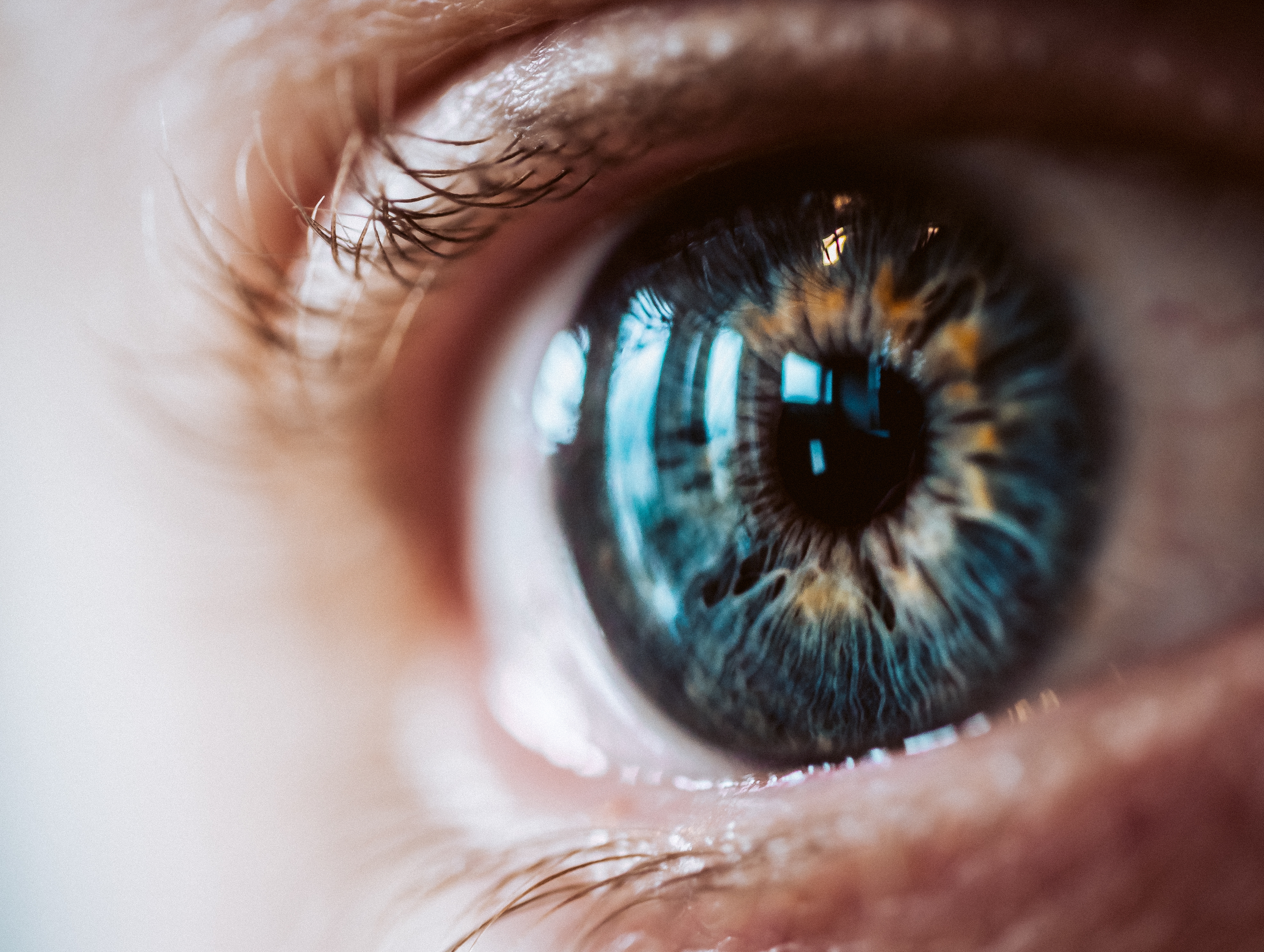
What if your eyes could heal like your skin—regrowing lost cells, reversing damage, and restoring vision once thought gone forever?
For most of us, that’s science fiction. Over 300 million people worldwide face progressive blindness from conditions like retinitis pigmentosa and glaucoma. Once the light-sensing neurons in the retina are gone, there’s no natural way back. But nature has its exceptions. Zebrafish, for instance, can regenerate damaged retinal nerves with ease. Humans? Not even close.
That might be about to change.
Researchers have uncovered a critical reason why our eyes don’t repair themselves—and more importantly, how we might fix it. The discovery centers on a single protein quietly sabotaging the retina’s ability to regenerate. By removing this roadblock, scientists have reactivated a dormant healing process in the eyes of mice, restoring sight through regeneration—not replacement.
This breakthrough could redefine what’s possible for millions living with vision loss. Here’s how it works.
Why the Eye Can’t Heal Itself

The retina is one of the most delicate and vital parts of the eye, packed with specialized nerve cells that detect light and send visual information to the brain. Once these cells are damaged—by disease, injury, or age—they don’t grow back. That’s why conditions like glaucoma, macular degeneration, and retinitis pigmentosa often lead to permanent vision loss.
But this isn’t true for all animals. Zebrafish and some amphibians can regenerate retinal nerve cells with ease. In these species, support cells in the retina called Müller glia (MG) transform into neural progenitor cells, which then multiply and replace the lost neurons. It’s a built-in repair system that keeps their vision intact—even after injury.
In mammals, MG cells also react to retinal damage, but they stop short of regeneration. Instead of fully transforming into neuron-producing cells, they briefly activate and then return to their dormant state. Scientists have long believed that mammals simply lack the necessary “go” signals for regeneration—or worse, are actively producing “stop” signals that block it.
Recent research confirms that’s exactly what’s happening. A key difference is the presence of Prox1, a protein that gets transferred into MG cells from nearby retinal neurons after injury. This protein doesn’t belong in MG—it’s not made by them. But once it enters these cells, it acts like a chemical lock, stopping their transformation into neuron-producing cells. In zebrafish, this transfer doesn’t happen. That difference may be the reason their retinas can regenerate while ours cannot.
This discovery has shifted the focus from trying to artificially force regeneration to something much simpler: removing the block that’s already there.
How Scientists Unlocked Retinal Regeneration

The real game-changer came when researchers identified how to release the regenerative potential of Müller glia (MG) in mammals: by stopping the transfer of Prox1, the very protein that shuts down their ability to regenerate.
Prox1 isn’t inherently harmful—it plays a normal role in helping nerve cells mature. But after retinal injury, it migrates from neighboring neurons into MG cells, where it doesn’t belong. There, it acts like a brake pedal, keeping these support cells from transforming into the progenitor cells needed to repair retinal damage.
Researchers tested what would happen if they blocked Prox1 from entering MG cells. In lab mice, they used a specially designed antibody—essentially a molecular sponge—that binds to Prox1 in the space between cells, preventing it from being absorbed by MG. They also delivered this antibody via gene therapy, using a virus (AAV2) to help retinal cells continuously produce the Prox1-blocking agent.
The results were striking. Once Prox1 was blocked, MG cells began reprogramming into retinal progenitor cells (RPCs). These newly activated RPCs not only multiplied but also began replacing damaged retinal neurons. In mouse models of retinitis pigmentosa—a disease that usually causes permanent blindness—treated eyes showed increased numbers of healthy photoreceptors and measurable improvement in vision.
This isn’t just a lab experiment that nudged a few cells into behaving differently. It’s the first time scientists have induced long-term retinal regeneration in mammals—something that was previously thought to be impossible.
By targeting the right protein at the right place, the team didn’t just enhance healing—they unlocked a regenerative system that was already built into the eye but suppressed by default.
Gene Therapy vs. Antibodies: The Race to Regenerate Vision

At the core of this new therapy is a simple idea: if Prox1 is the problem, block it before it can do damage. Researchers developed two key strategies to do exactly that—one using antibodies and the other using gene therapy.
- Antibody-based approach: The first method involves injecting a lab-engineered antibody directly into the eye. This antibody binds to Prox1 in the space between retinal cells, preventing it from entering Müller glia (MG). Without Prox1 interfering, MG cells regain their ability to transform into retinal progenitor cells—cells that can multiply and rebuild the damaged retina.
- Gene therapy approach: The second method uses an adeno-associated virus (AAV2), a tool commonly used in retinal gene therapy. Scientists modified the virus to carry instructions for making a Prox1-blocking antibody. Once injected, the virus infects specific retinal cells and turns them into antibody factories, continuously producing the blocker over time. This allowed for sustained Prox1 suppression and long-lasting regenerative effects—up to six months in mouse models.
Both approaches led to the same outcome: MG cells re-entered the cell cycle, transformed into RPCs, and began generating new retinal neurons. In models of degenerative eye diseases like retinitis pigmentosa, treated mice had thicker photoreceptor layers and improved vision, as measured by electroretinograms (ERG) and visual behavior tests.
In one model with early-onset degeneration, newly regenerated rod photoreceptors began functioning—but the effect faded over time as the underlying genetic disease destroyed the new cells. In contrast, in late-onset models—where degeneration happens more slowly—vision improvements were more stable, showing that timing matters: early intervention yields better results.
The Timeline for a Vision Restoration Cure

So far, this regenerative breakthrough has been tested only in mice—but the results are promising enough to raise real hope for future human treatment.
In multiple mouse models of retinitis pigmentosa (RP), including both early- and late-onset forms of the disease, blocking Prox1 led to the regeneration of lost photoreceptors. These regenerated cells weren’t just present under the microscope—they were functional. Mice regained measurable visual acuity and retinal responsiveness. In one model, vision was restored for several months after treatment, a first in mammalian studies of retinal regeneration.
Importantly, human relevance isn’t just speculative. Researchers found that Prox1 builds up in Müller glia from human RP patients, just like in mice. In contrast, healthy donor retinas showed no such accumulation. This suggests the same mechanism that blocks regeneration in mice may also be at work in humans—and could be reversed using the same approach.

The therapy also showed greater benefits when delivered before vision loss was complete. In mice with slower-developing retinal degeneration, treatment not only restored photoreceptor layers but preserved visual function over a longer period. That’s especially relevant for human patients, who often receive diagnoses early in disease progression.
Clinical trials in humans are still in development, with the first likely to begin by 2028, according to the researchers. The biotech company behind the therapy, Celliaz Inc., is currently optimizing the antibody and testing it in multiple animal models to ensure safety and long-term effectiveness.
If successful in humans, this would be the first treatment to not just delay retinal degeneration—but actively reverse it by regrowing nerve cells that were once considered permanently lost. For millions living with vision loss and no effective cure, that shift from managing decline to promoting recovery could be life-changing.
Expert-Backed Strategies to Slow Eye Damage

While regenerative treatments like Prox1-blocking therapy are still in development, there are practical steps you can take today to protect your vision—especially if you’re at risk for retinal diseases. Here’s what experts recommend:
- Get regular eye exams: Many retinal conditions progress silently before symptoms appear. Annual comprehensive eye exams can detect early signs of diseases like glaucoma or age-related macular degeneration (AMD), allowing for early intervention.
- Manage chronic conditions like diabetes and hypertension: Both high blood sugar and high blood pressure can damage the blood vessels that support your retina. Keeping these under control is one of the most effective ways to prevent vision loss.
- Wear UV-blocking sunglasses: Chronic exposure to ultraviolet light can speed up retinal aging and increase your risk of conditions like macular degeneration. A good pair of sunglasses isn’t just fashion—it’s preventive medicine.
- Eat for eye health: Foods rich in antioxidants, like leafy greens, carrots, sweet potatoes, and fish high in omega-3 fatty acids, can help protect retinal cells. Nutrients like lutein, zeaxanthin, and zinc are especially beneficial for retinal function.
- Know your family history: Many retinal diseases are genetic. If vision problems run in your family, share that information with your eye doctor so they can monitor you more closely or start screenings earlier.
- Pay attention to changes in vision: Don’t ignore blurry spots, sudden flashes, or difficulty seeing in low light. These could be early signs of retinal damage and should be checked out promptly.
By following these expert recommendations, you can take proactive steps to safeguard your vision and catch potential issues early, ensuring better eye health for the future.
A Future Where Vision Loss Isn’t Permanent
For the first time, science is offering a credible path to reversing retinal damage—not just slowing it down. By uncovering how a single protein, Prox1, shuts off the eye’s natural repair system, researchers have opened the door to therapies that could regenerate lost neurons and restore sight.
This isn’t speculative optimism—it’s grounded in solid biology, tested in animal models, and on track for human trials within a few years. The ability to restore vision by reactivating dormant repair mechanisms inside the eye changes how we think about blindness. It moves the conversation from managing decline to repairing damage.
But timing matters. The earlier this kind of therapy can be delivered, the greater the chance it has to preserve and rebuild function. That makes regular eye care and early diagnosis more important than ever.
The idea that vision loss might one day be reversible isn’t a distant dream—it’s a real, developing field. And if progress continues at this pace, we may soon be living in a future where losing your sight no longer means it’s gone for good.
Sources:
- Pang, J., Chang, B., Kumar, A., Nusinowitz, S., Noorwez, S. M., Li, J., Rani, A., Foster, T. C., Chiodo, V. A., Doyle, T., Li, H., Malhotra, R., Teusner, J. T., McDowell, J. H., Min, S., Li, Q., Kaushal, S., & Hauswirth, W. W. (2005). Gene therapy restores Vision-Dependent behavior as well as retinal structure and function in a mouse model of RPE65 Leber congenital amaurosis. Molecular Therapy, 13(3), 565–572. https://doi.org/10.1016/j.ymthe.2005.09.001
- Lee, E. J., Kim, M., Park, S., Shim, J. H., Cho, H., Park, J. A., Park, K., Lee, D., Kim, J. H., Jeong, H., Matsuzaki, F., Kim, S., Kim, J., Yang, H., Lee, J., & Kim, J. W. (2025). Restoration of retinal regenerative potential of Müller glia by disrupting intercellular Prox1 transfer. Nature Communications, 16(1). https://doi.org/10.1038/s41467-025-58290-8
