
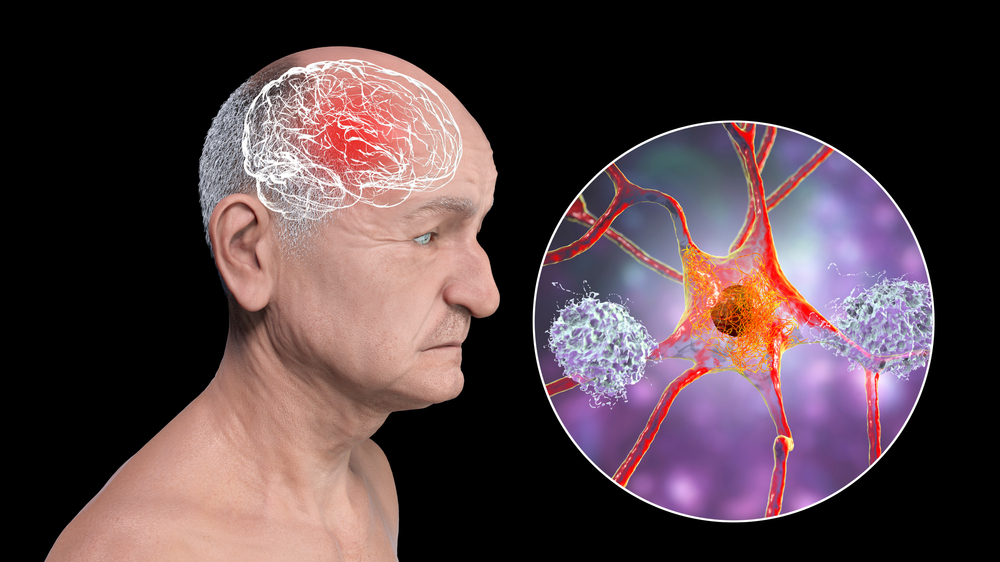
What if the manicured greens just down the road were quietly affecting your brain health?
A new study has uncovered a striking link between living near golf courses and an increased risk of Parkinson’s disease—a progressive neurological disorder that affects nearly 1.2 million Americans. Researchers found that people who live within a mile of a golf course face more than double the odds of developing Parkinson’s compared to those who live farther away. And it’s not the game or the grass itself—it’s what’s being sprayed on it.
Pesticides used to maintain the pristine look of golf courses are now under scrutiny, with mounting evidence suggesting they may be quietly seeping into nearby drinking water and drifting through the air. The closer you live, the greater your exposure. And for communities relying on groundwater, the risk appears even higher.
This isn’t a fringe concern. It’s part of a growing pattern linking long-term environmental exposures to serious, chronic diseases. Let’s break down what the science says—and what it means for people living near the fairways.
The Toxic Truth Behind Golf’s Perfect Greens

Golf courses may appear serene, but behind the perfectly manicured greens is an often-overlooked public health concern: heavy pesticide use.
To maintain the lush appearance expected of golf courses, especially in the U.S., these facilities rely on aggressive pesticide application—up to 15 times more than is typical in many European countries. These chemicals include substances long associated with neurological damage, such as paraquat, rotenone, chlorpyrifos, and 2,4-D. Several of these are known to cause oxidative stress and damage to dopamine-producing neurons in the brain, a hallmark of Parkinson’s disease.
This connection isn’t new. Paraquat and rotenone, for example, have been used in lab studies to deliberately induce Parkinson-like symptoms in animals. And while those studies focused on high exposures, this new research raises concerns about chronic low-level exposure in residential settings—especially when people live near areas where these chemicals are used consistently over years or decades.
The problem isn’t just with pesticide drift through the air. Many golf courses are located in groundwater-sensitive areas, where chemicals can leach into the aquifer and contaminate the drinking water supply. In the study, people living in water service areas with both a golf course and vulnerable groundwater had up to 92% higher odds of developing Parkinson’s compared to those in areas without a golf course.
Golf courses are often located in suburban or semi-rural neighborhoods—places where residents may not expect environmental risks. Yet the combination of chemical runoff, airborne pesticide exposure, and shared water systems may be creating long-term risks that are not obvious until conditions like Parkinson’s appear, sometimes decades later.
How Researchers Uncovered the Risk

To understand whether living near a golf course actually raises the risk of Parkinson’s disease, researchers from the Mayo Clinic and Barrow Neurological Institute designed a large, population-based case-control study using health records from over two decades. The data came from the Rochester Epidemiology Project, which links medical records across multiple counties in southern Minnesota and western Wisconsin—giving researchers access to long-term, real-world health and address history for thousands of individuals.
The study identified 450 confirmed cases of Parkinson’s disease diagnosed between 1991 and 2015. Each of these was matched with up to 20 controls—people of the same age and sex who had not been diagnosed with Parkinson’s. All diagnoses were reviewed by a movement disorder specialist to confirm accuracy, going beyond billing codes to verify clinical symptoms and onset.
What set this study apart was its detailed geographic mapping. Researchers used satellite data and GIS technology to precisely map the locations of 139 golf courses in the study area. Then, they measured the exact distance between each participant’s home address—2 to 3 years before symptom onset—and the nearest golf course. This time lag helped account for Parkinson’s long latency period.
In addition to distance, researchers evaluated drinking water sources, analyzing data from 224 water service areas and over 700 municipal wells. They determined whether each water service area was groundwater-based or used private wells, whether the groundwater was considered vulnerable (e.g., due to porous soils or shallow bedrock), and whether municipal wells were located on golf courses.
To isolate the role of environmental exposure, they controlled for multiple potential confounders including age, sex, race, income, urban vs. rural setting, and frequency of healthcare use. Advanced statistical modeling—including logistic regression and spline analysis—was used to evaluate the association between proximity to golf courses and Parkinson’s risk.
This isn’t about vilifying golf—it’s about scrutinizing the widespread use of neurotoxic pesticides in places where people live, drink, and breathe every day. The concern is real, and the evidence is growing.
You Don’t Have to Play Golf to Be at Risk

If you live near a golf course—or rely on municipal water sourced from groundwater in the same area—you may be exposed to low levels of pesticides linked to Parkinson’s disease, even if you’ve never set foot on the green.
This study makes something very clear: environmental exposure isn’t limited to farms or industrial zones. It can come from well-kept, residential-adjacent spaces like golf courses, especially when they’re located in areas where groundwater is easily contaminated or where dense housing may increase exposure to airborne chemicals.
For the average person, the most important takeaway is proximity. Living within 3 miles of a golf course was consistently linked to a higher risk of Parkinson’s, with the highest risk seen between 1 and 2 miles. This risk was compounded for those getting their tap water from groundwater systems serving areas with golf courses, particularly in vulnerable geological zones. That includes regions with sandy soil, shallow bedrock, or other conditions that allow pesticides to seep into the aquifer more easily.
You don’t need to panic—but awareness matters. People often assume that because a neighborhood looks clean, green, and safe, it is safe. But the study shows that appearance doesn’t always reflect what’s happening in the environment over time.
It also underscores a broader issue: many environmental health risks are silent, cumulative, and long-term. The air you breathe, the water you drink, and the location of your home can all shape your health over decades—not just your genetics or lifestyle.
For people living near golf courses, especially those in areas with known groundwater vulnerability, it’s worth asking questions about water quality, pesticide use transparency, and local public health monitoring. This is a reminder that what surrounds your home matters, even if it looks perfectly maintained.
How to Protect Yourself If You Live Near a Golf Course

If you live near a golf course—or suspect your drinking water may be affected—it’s worth taking simple, informed steps to reduce potential exposure and advocate for safer practices in your community. Here’s where to start:
1. Find out where your water comes from: Contact your local water utility or city public works department to ask:
- Is your water sourced from groundwater or surface water?
- Is your water system located in a vulnerable groundwater area (e.g., shallow bedrock or sandy soil)?
- Are there any golf courses within the boundaries of your water service area?
This basic information can help you understand whether your household may be exposed through tap water.
2. Consider a certified water filter: If your water source is groundwater and you live near a golf course, using a NSF-certified filter that targets pesticides (such as those rated for VOCs or specific herbicides) may offer an added layer of protection. Pitcher filters won’t cut it—you’ll need one tested for chemical removal at the faucet or whole-house level.

3. Limit outdoor exposure after spraying: If you live very close to a golf course, find out whether local laws require pesticide application notices. Some regions mandate public disclosure when pesticides are sprayed. Avoid outdoor activities during and after spray events, and keep windows closed if you live downwind.
4. Ask your local officials about oversight: Reach out to your city council or environmental health agency to ask:
- Are there guidelines for pesticide use near residential zones?
- Is there regular testing of groundwater in vulnerable areas?
- Can residents access water quality reports specific to their neighborhood?
Awareness leads to pressure—and pressure leads to change.
5. Start a local conversation: If you live in a neighborhood adjacent to a golf course, talk to neighbors. Many people aren’t aware of the potential risks. Organizing community interest can be the first step toward demanding better monitoring, transparency, or even reduced chemical use on nearby golf courses.
These steps won’t eliminate risk completely, but they can reduce unnecessary exposure—and push the system toward greater accountability. In the absence of sweeping federal regulation, local awareness and action often fill the gap.
Why Prevention Needs More Attention
Parkinson’s disease is on the rise—and fast. Globally, more than 11.8 million people are living with the condition, and that number is projected to grow sharply in the coming decades. Despite this surge, only about 2 to 3 cents of every research dollar for Parkinson’s goes toward prevention, according to Dr. Michael Okun of the Parkinson’s Foundation. That imbalance speaks volumes.
The growing body of research linking environmental exposures to Parkinson’s makes one thing clear: we’re not just dealing with bad genetic luck. Pesticides, air pollution, and contaminated water are emerging as real, measurable risk factors. And many of these exposures are entirely preventable.
What this new study adds is specificity. It doesn’t just suggest that “chemicals might play a role”—it shows that living near a common community feature, like a golf course, is associated with a dramatically higher risk of Parkinson’s. That risk becomes even greater when groundwater is involved. This should be a wake-up call for public health agencies and policymakers.
Yet in most parts of the U.S., pesticide application on golf courses is loosely regulated. There’s often no mandatory public disclosure of when or how much is being sprayed, and testing for contaminants in groundwater isn’t done systematically. This lack of oversight is a blind spot—and the health costs are likely accumulating silently.
Prevention doesn’t mean shutting down golf courses. It means taking basic, reasonable steps:
- Reducing use of high-risk pesticides.
- Mandating buffer zones between spraying and homes.
- Improving water monitoring in vulnerable areas.
- Funding public education on environmental exposures.
The science is catching up. The policies need to follow.
How We Can Reduce Parkinson’s Risk Now

The message from this study is direct: where you live—and what’s in the air and water around you—can shape your risk for serious diseases like Parkinson’s. Living near a golf course may double or even triple that risk, especially when groundwater contamination is part of the picture. These aren’t rare, isolated conditions. Golf courses exist in thousands of communities across the U.S., often surrounded by homes, schools, and public parks.
This isn’t a call to panic—it’s a call to action.
Public health policy needs to catch up with the science. That means stricter oversight of pesticide use on golf courses, especially those near residential areas and vulnerable groundwater zones. It means requiring transparency when chemicals are applied and improving routine testing of community water supplies. And it means shifting more funding toward prevention—not just treatment—of neurodegenerative diseases.
For individuals, it’s about awareness and local advocacy. Learn where your water comes from. Ask your city about pesticide practices. Share this information with neighbors and local officials. These are small steps, but they create pressure—and pressure drives change.
The science is no longer vague. It’s specific, localized, and actionable. Now, the responsibility shifts from researchers to regulators, from institutions to individuals. Because preventing Parkinson’s doesn’t start in the doctor’s office—it starts in the neighborhoods where we live.
Source:
- Krzyzanowski, B., Mullan, A. F., Dorsey, E. R., Chirag, S. S., Turcano, P., Camerucci, E., Bower, J. H., & Savica, R. (2025). Proximity to golf courses and risk of Parkinson disease. JAMA Network Open, 8(5), e259198. https://doi.org/10.1001/jamanetworkopen.2025.9198
